Hiroshima Peace Memorial (Atomic Bomb Dome)
広島平和記念碑(原爆ドーム)

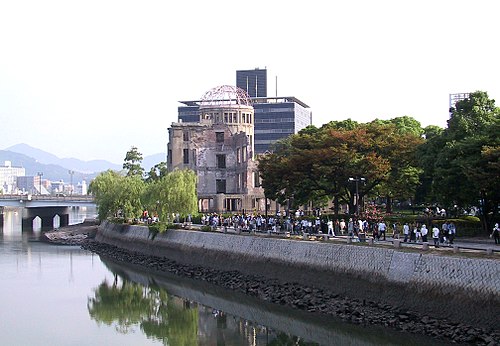
The iconic ruin of the Hiroshima Prefectural Industrial Promotion Hall, preserved as a memorial to the atomic bombing of August 6, 1945.
Images


History
The Hiroshima Peace Memorial, commonly known as the Atomic Bomb Dome (Genbaku Dome), is the skeletal ruin of the former Hiroshima Prefectural Industrial Promotion Hall. Designed by the Czech architect Jan Letzel, the building was completed on 5 April 1915 and opened that August as the Hiroshima Prefectural Commercial Exhibition Hall, displaying and selling local products and hosting art exhibitions. It was renamed the Industrial Promotion Hall in 1933, and by 1944 its rooms were being used as offices by government agencies.
At 8:15 a.m. on 6 August 1945 the B-29 Enola Gay dropped "Little Boy", the first atomic bomb used in warfare. It exploded about 600 metres above the city; the hall stood only about 160 metres from the hypocenter, almost directly beneath the burst. The three-storey main structure was destroyed in an instant and all of the roughly 30 people working inside were killed, but because the blast came from nearly overhead, the steel frame of the central dome and parts of the outer walls remained standing — one of very few structures left upright near ground zero. Hiroshima City estimates that about 140,000 people had died by the end of 1945.
In the postwar years citizens began calling the ruin the Atomic Bomb Dome. Opinion on its future was long divided between those who wanted the painful reminder removed and those who wanted it kept as a witness. In 1966 the city council resolved to preserve it permanently; the first conservation work followed in 1967, and surveys and repairs have continued periodically. It was designated a national historic site in 1995 and inscribed on the UNESCO World Heritage List in December 1996 as a stark symbol of the destructive power of nuclear weapons and a monument to peace.
Together with the Peace Memorial Park across the Motoyasu River and the Hiroshima Peace Memorial Museum, the Dome forms one of the world's foremost sites of remembrance. Its interior is closed to visitors, who view the ruin and interpretive panels from the surrounding paths. Each year on 6 August the city holds its Peace Memorial Ceremony in the park.
Categories
Related events
Related themes
Sources
- 原爆ドーム - Wikipedia(日本語)Website