All historic sites
Sites in the Japanese home islands are shown by default; switch the Region menu to see Taiwan, Korea and Manchuria.
417 sites · page 1 of 18

32nd Army Headquarters Bunker (Shuri Castle Underground)
第32軍司令部壕
A massive underground tunnel complex constructed beneath Shuri Castle in Naha, Okinawa, serving as the supreme headquarters of the Imperial Japanese Army 32nd Army during the Battle of Okinawa. Built from December 1944 by mobilized labor including Okinawan civilians and students, the complex extended approximately 1,000 meters in total length at a depth of up to 30 meters below the castle. Lieutenant General Mitsuru Ushijima commanded the entire Japanese defense of Okinawa from this bunker until May 27, 1945, when the headquarters was evacuated southward to Mabuni. The tunnels were demolished with explosives during the retreat. Seriously wounded soldiers unable to walk were left behind, and many died. The site remains largely sealed and inaccessible, distinct from the Former Navy Underground HQ in Tomigusuku commanded by Rear Admiral Ota.

Bank of Japan Head Office
日本銀行本店
The headquarters of Japan's central bank in Nihonbashi, Chuo Ward, Tokyo. Designed by Tatsuno Kingo and completed in 1896, it is the first major Western-style institutional building in Japan designed by a Japanese architect. During WWII, the Bank of Japan directed wartime monetary policy — financing military expenditure through unlimited government bond purchases, issuing military scrip (gunpyo) for occupied territories, and managing the wartime inflation that devastated the economy. After surrender, it became the center of Allied occupation financial reforms including the Dodge Line stabilization. Designated a National Important Cultural Property in 1974.

Bansei Tokko Peace Museum
万世特攻平和祈念館
War museum in Minamisatsuma commemorating the 201 airmen who died at Bansei Air Base, the last airfield built by the Imperial Japanese Army and a special attack (kamikaze) base. The museum displays the salvaged wreck of an Aichi E13A1 reconnaissance seaplane — the only surviving example in Japan — recovered from the nearby sea floor in 1992, along with farewell letters, photographs, and personal effects of the pilots, including the iconic 1945 photograph of 17-year-old Corporal Yukio Araki holding a puppy with his 72nd Shinbu Squadron comrades the day before their final mission.

Chidorigafuchi National Cemetery
千鳥ヶ淵戦没者墓苑
Chidorigafuchi National Cemetery is Japan's national, non-sectarian tomb for unidentified war dead, located beside the Imperial Palace moat in Chiyoda, Tokyo. Established in 1959 by the Japanese government, the cemetery enshrines approximately 370,485 sets of remains (as of May 2023) of servicemen, military support personnel, and civilians who perished overseas during the Second Sino-Japanese War and World War II but whose identities could not be determined. The central Hexagonal Hall (六角堂, Rokkakudō) houses a gilt bronze urn bestowed by Emperor Shōwa containing symbolic remains from various battlefields, along with a massive five-ton ceramic coffin — one of the largest ceramic objects in the world — fired at 1,700°C from stones gathered across Pacific and Asian war zones. Each spring, the government holds a formal Ceremony of Reverence (拝礼式) attended by members of the Imperial Family, the Prime Minister, and senior officials to honor the unknown dead.

Chiran Dispersed Kamikaze Staging Sites
知覧周辺特攻基地群遺跡
Scattered across the countryside around Chiran Airfield in southern Kagoshima, these dispersed wartime sites include aircraft revetments, the triangular barracks where kamikaze pilots spent their final hours, a radio communications bunker, ammunition magazines, and other infrastructure ruins separate from the main peace museum complex.

Chiran Peace Museum for Kamikaze Pilots
知覧特攻平和会館
The Chiran Peace Museum commemorates the 1,036 Imperial Japanese Army pilots who flew kamikaze missions during the Battle of Okinawa in 1945, many departing from the adjacent Chiran Airfield.

Cornerstone of Peace
平和の礎
The Cornerstone of Peace (Heiwa no Ishiji) is a memorial monument in Okinawa Peace Memorial Park, Mabuni, Itoman, inscribed with the names of over 240,000 people — all those who died in the Battle of Okinawa regardless of nationality or military or civilian status, together with Okinawans who died in the wars from 1931 to 1945. Unveiled on 23 June 1995, the 50th anniversary of the battle's end, its concentric arcs of black granite steles stretch over 2,200 metres and list names from Okinawa, mainland Japan, the United States, the United Kingdom, Korea, and Taiwan.
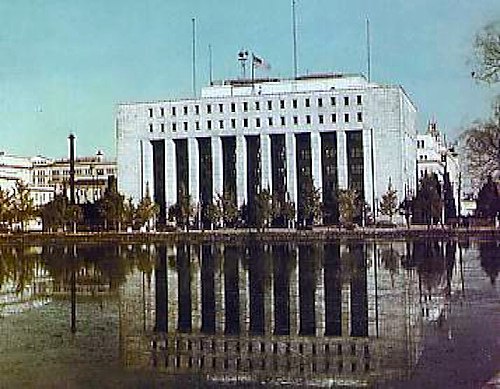
Dai-ichi Life Insurance Building (GHQ SCAP Headquarters)
第一生命館(GHQ総司令部)
The Dai-ichi Life Insurance Building in Tokyo served as General Douglas MacArthur's SCAP headquarters from 1945 to 1952, overseeing the occupation and reconstruction of Japan.

Former 4th Division Headquarters (MIRAIZA OSAKA-JO)
旧陸軍第四師団司令部庁舎(MIRAIZA大阪城)
The former headquarters building of the Imperial Japanese Army 4th Division, erected in 1931 on the Honmaru (inner bailey) of Osaka Castle. Constructed in Romanesque revival style with public donations totalling 1.5 million yen to commemorate the enthronement of Emperor Hirohito, the reinforced-concrete building was completed simultaneously with the reconstruction of the Osaka Castle main tower. After the 4th Division relocated in 1940 and the building survived wartime air raids without major damage, it served successively as the Central District Army HQ, US occupation forces facility, Osaka City Police HQ, Osaka Prefectural Police HQ, and the Osaka City Museum (1960–2001). Reopened in October 2017 as the commercial complex MIRAIZA OSAKA-JO, the building retains its striking military-Romanesque exterior — including corner turrets, scratch-tile cladding, and a symmetrical winged facade — making it one of the finest surviving examples of Showa-era military architecture in Japan.

Former Army General Staff Office Site
旧陸軍参謀本部跡
The Imperial Japanese Army General Staff Office (参謀本部, Sanbō Honbu) stood at Miyakezaka, Nagatacho, Chiyoda Ward — the nerve center of all Army operational planning from 1878 to 1941. Designed by Italian architect Giovanni Vincenzo Cappelletti, the Renaissance-style red-brick headquarters was completed in 1881 on the former Ii clan estate overlooking the Imperial Palace moat. Distinct from the Army Ministry (陸軍省) which handled administration, the General Staff held supreme command authority over war plans, intelligence, troop deployments, cartography, and military operations. In December 1941, the General Staff relocated to the Ichigaya compound; the Miyakezaka building was destroyed by Allied bombing in 1945. The site is now occupied by the National Diet Forecourt (国会前庭) and the former Kensei Kinenkan (憲政記念館) area.
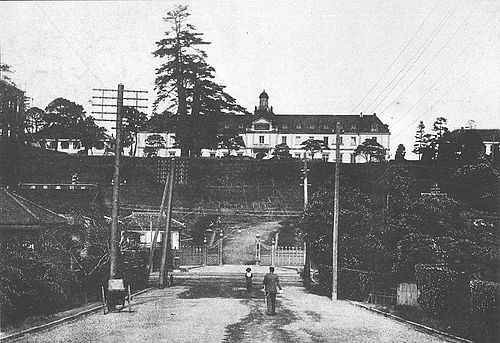
Former Army Ministry Site (Ichigaya Heights)
旧陸軍省跡(市ヶ谷台)
The site of the former Imperial Japanese Army Ministry (陸軍省) at Ichigaya Heights in Shinjuku, Tokyo — the supreme administrative headquarters of the Japanese Army, which moved here from Miyakezaka in December 1941 and remained until 1945. During the Pacific War, it housed the Army Ministry, the Army General Staff Office, and the Imperial General Headquarters Army Section, serving as the nerve center for all wartime military decision-making. On the night of August 14–15, 1945, the compound became the focal point of the Kyūjō Incident (宮城事件), an attempted military coup by army officers seeking to prevent Emperor Hirohito's surrender broadcast.

Former Hiroshima Army Clothing Depot
旧広島陸軍被服支廠
The largest surviving A-bombed structure in Hiroshima, this former Imperial Japanese Army clothing depot was built in 1913 as a facility for manufacturing, storing, and distributing military uniforms and equipment. Located 2.67 km from the atomic bomb hypocenter, the four reinforced-concrete and brick warehouse buildings, laid out in an L-shape, survived the blast and were immediately used as emergency relief stations. Designated a National Important Cultural Property in January 2024 after years of preservation-versus-demolition controversy.

Former Home Ministry Site (Central Government Building No. 2)
旧内務省跡(中央合同庁舎第2号館)
The Ministry of Home Affairs (内務省, Naimu-shō) was the most powerful cabinet ministry of the Empire of Japan, controlling police, civil administration, Shinto affairs, public works, and local government from 1873 to 1947. During WWII it served as the nerve center of domestic control, operating the Special Higher Police (特高警察, Tokkō) for thought-crime suppression, administering the Air Defense General Headquarters (防空総本部) for civilian air-raid preparedness, and enforcing wartime mobilization of the populace. Its Kasumigaseki headquarters, a reinforced-concrete building completed in 1933 (Shōwa 8), was demolished after the ministry's forced dissolution by GHQ/SCAP on December 31, 1947. The site is now occupied by Central Government Building No. 2 (中央合同庁舎第2号館), housing the Ministry of Internal Affairs and Communications, National Police Agency, and other agencies — the direct bureaucratic successors of the wartime Home Ministry.

Former IJA 5th Division Headquarters Site (Hiroshima Castle)
広島第五師団司令部跡
The site of the Imperial Japanese Army 5th Division Headquarters, located within the grounds of Hiroshima Castle (鯉城, Rijō — "Carp Castle") in Naka-ku, Hiroshima. The 5th Division (第五師団), nicknamed the "Carp Division" (鯉師団, Koi Shidan) after the castle's alternate name, was established in 1888 from the earlier Hiroshima Garrison (広島鎮台, 1873). The division was one of the IJA's most celebrated combat formations: it fought in the First Sino-Japanese War, the Russo-Japanese War, and the Second Sino-Japanese War before achieving fame as the spearhead of the Malaya Campaign and the Battle of Singapore (December 1941 – February 1942) under the 25th Army of Lieutenant General Yamashita Tomoyuki. The division's bicycle-mounted troops became famous for their rapid advance down the Malay Peninsula. During the First Sino-Japanese War (1894–95), the castle's Honmaru briefly housed the Imperial General Headquarters (大本営) with Emperor Meiji in residence. On 6 August 1945, the atomic bomb destroyed the entire castle complex, killing many of the troops of the Chūgoku Military District headquarters and other units stationed there. The castle's main tower was reconstructed in 1958; today the Honmaru preserves the stone foundations of the Imperial General Headquarters and memorial markers.

Former Imperial Guards Division Headquarters
旧近衛師団司令部庁舎
The Former Imperial Guards Division Headquarters is a red-brick Gothic-style building completed in 1910 in Kitanomaru Park, Tokyo. As the command center of the elite Imperial Guards Division (近衛師団), it was the nerve center of the Kyūjō Incident on the night of August 14–15, 1945, when young army officers led by Major Kenji Hatanaka occupied the Imperial Palace grounds in a failed coup to prevent Japan's surrender. Lieutenant General Takeshi Mori, commander of the 1st Imperial Guards Division, was murdered here when he refused to join the conspiracy. Designated a National Important Cultural Property in 1972, the building formerly housed the National Museum of Modern Art Crafts Gallery (1977–2020).

Former Imperial Household Ministry (Imperial Household Agency)
旧宮内省跡(宮内庁)
The former Imperial Household Ministry (宮内省) building within the Tokyo Imperial Palace grounds served as the administrative center managing all affairs of the Imperial household during WWII. On the night of August 14, 1945, Emperor Showa recorded the Gyokuon-hōsō (Jewel Voice Broadcast) announcing Japan's surrender in a room of this building. Hours later, rebel officers of the Kyūjō Incident stormed the palace searching for the recording discs to prevent the broadcast, but failed to find them. The building now serves as the Imperial Household Agency (宮内庁).

Former Japanese Navy Underground Headquarters
旧海軍司令部壕
An underground tunnel complex in Tomigusuku, Okinawa, built in 1944 by approximately 3,000 Navy construction troops as the headquarters of the Imperial Japanese Navy during the Battle of Okinawa. Rear Admiral Minoru Ota commanded roughly 4,000 naval personnel from this 450-meter-long, 20-meter-deep bunker until June 13, 1945, when he and his staff committed suicide as American forces closed in. Over 2,000 remains were discovered when the tunnels were unsealed in the 1950s. Approximately 300 meters of tunnels have been open to the public since 1970 as a peace memorial.

Former Kure Naval District Headquarters (JMSDF Kure Regional Command)
呉鎮守府跡(海上自衛隊呉地方総監部)
The Kure Naval District (呉鎮守府, Kure Chinjufu), established on July 1, 1889, was the second of the Imperial Japanese Navy's four major naval districts (alongside Yokosuka, Sasebo, and Maizuru). Its jurisdiction encompassed the Seto Inland Sea and the Pacific coasts from Wakayama to Yamaguchi, eastern/northern Kyushu, and all of Shikoku — the strategic heart of Japan's maritime defense. The current headquarters building (第一庁舎), completed in 1907 (Meiji 40), is a two-story brick-and-granite Western-style structure with a central dome, replacing the original 1889 building that was damaged in the 1905 Geiyo Earthquake. During WWII, the district administered the Kure Naval Arsenal (Japan's largest shipyard, builder of battleship Yamato), submarine bases, torpedo factories, naval hospitals, and training centers. In the war's final months, devastating American air raids on July 1-2 and July 24-28, 1945, destroyed much of the base and city, burning the headquarters building to its brick shell. Reconstructed postwar, the building has served as the JMSDF Kure Regional Command (呉地方総監部) headquarters since the mid-1950s, making it one of Japan's longest continuously used naval administrative facilities. Designated as part of Japan Heritage Story #035 "Guardports" (鎮守府), the complex includes historic red-brick warehouses (built c.1900) and underground air-raid shelter tunnels.

Former Ministry of Commerce & Industry → Ministry of Munitions Site (METI Building)
旧商工省→軍需省跡(経済産業省総合庁舎)
Site of the wartime Ministry of Munitions (軍需省, Gunjushō), established November 1, 1943 by reorganizing the Ministry of Commerce and Industry (商工省) and absorbing the Planning Board's national mobilization functions. Prime Minister Tōjō Hideki concurrently served as the first Minister of Munitions, concentrating wartime production control in his own hands. The ministry directed all military-industrial production — aircraft, ordnance, shipbuilding, and strategic materials — under a centralized command economy. Located at Kasumigaseki 1-3-1, Chiyoda Ward, the site is now occupied by the Ministry of Economy, Trade and Industry (METI) headquarters, the direct bureaucratic successor through the lineage of Commerce Ministry → Munitions Ministry → Commerce Ministry (restored 1945) → MITI (1949) → METI (2001).

Former Ministry of Finance Building (Current MOF Headquarters)
旧大蔵省庁舎(現財務省本庁舎)
The former Ministry of Finance headquarters in Kasumigaseki, Chiyoda Ward, Tokyo, served as the nerve center of Japan's wartime economic control apparatus. Construction began in 1934 under architect Okuma Yoshikuni of the Ministry of Finance Construction Bureau, but was interrupted by the Second Sino-Japanese War. The building reached provisional completion in 1940 and official completion in 1943. Its robust reinforced concrete structure with protective layers on the roof allowed it to survive the devastating Tokyo air raids of 1945, while many buildings in the area — including the German Embassy in nearby Nagatachō — were destroyed. The surviving exterior walls were retained and incorporated into the postwar restoration. After being requisitioned by GHQ as U.S. military offices and barracks from 1945 to 1955, the building was returned to Japan and underwent extensive renovation through 1963. It remains in active use as the Ministry of Finance and National Tax Agency headquarters, and underwent major base-isolation seismic retrofitting between 2015 and 2020.

Former Ministry of Foreign Affairs Building
外務省旧庁舎
The Ministry of Foreign Affairs at Kasumigaseki, Chiyoda Ward, Tokyo, was the nerve center of Japanese wartime diplomacy. The original Western-style building designed by French architect Boinville was completed in 1881 but destroyed in the 1923 Great Kanto Earthquake. The rebuilt ministry served as the site where the Potsdam Declaration was received, translated, and deliberated upon in July–August 1945, and where the Instrument of Surrender was prepared. Foreign Minister Mamoru Shigemitsu departed from this building on September 2, 1945 to sign the surrender aboard USS Missouri. The wartime building was destroyed in the May 25, 1945 air raids on Tokyo. The current complex (North Building 1960, Central/South Buildings 1970) designed by Hideo Kosaka occupies the same Kasumigaseki site.

Former Naval General Staff Headquarters
軍令部跡
The Naval General Staff (軍令部, Gunreibu) was the highest operational command organ of the Imperial Japanese Navy, separate from the Navy Ministry (海軍省) which handled administration. Directly subordinate to the Emperor, the Naval General Staff was responsible for all naval strategy, war planning, and fleet operations, including the planning of the Pearl Harbor attack in 1941. Located in Kasumigaseki, Chiyoda Ward, adjacent to the Navy Ministry, the original building was demolished postwar. A stone monument erected in 1985 at Central Government Building No. 5 marks the site.
Former Navy Ministry
海軍省
The Ministry of the Navy (海軍省, Kaigun-shō) was a cabinet-level ministry of the Empire of Japan responsible for the administrative affairs of the Imperial Japanese Navy from 1872 to 1945. Located in a distinctive red-brick building designed by Josiah Conder in Kasumigaseki, Chiyoda Ward, it served as the administrative nerve center of the IJN throughout WWII, complementing the Army Ministry (陸軍省) at Ichigaya. The building was demolished postwar and replaced by Central Government Building No. 1, which now houses the Ministry of Agriculture, Forestry and Fisheries (農林水産省).

Former Navy Owada Communications Unit
旧海軍大和田通信隊(大和田通信所)
The Imperial Japanese Navy's primary signals intelligence and radio interception facility, established in 1936 on the Musashino Plateau straddling Niiza (Saitama) and Kiyose (Tokyo). The Owada Communications Unit intercepted the "Tora Tora Tora" message confirming the Pearl Harbor attack on December 8, 1941, tracked B-29 bomber communications from Tinian and Saipan, noted the aircraft that dropped the atomic bombs on Hiroshima and Nagasaki as unusual planes operating from Tinian, and received the Potsdam Declaration broadcast — symbolically bookending Japan's Pacific War from first strike to final surrender. After 1945 the site was requisitioned by U.S. forces and remains an active American communications facility (USAF Owada Communication Site, FAC 3056) to this day.