Nagasaki Peace Park (Peace Statue)
長崎平和公園(平和祈念像)
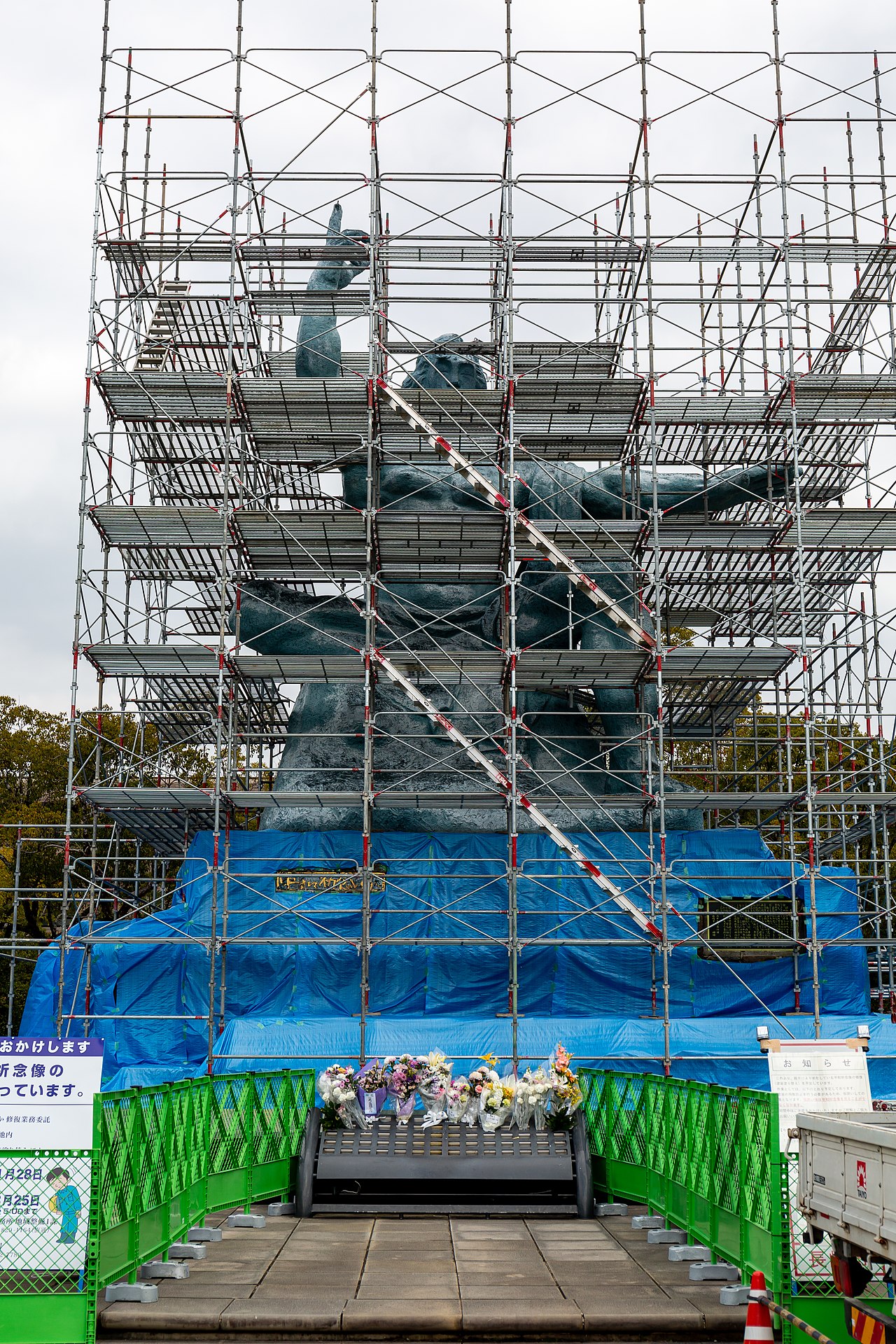
A memorial park in Nagasaki's Urakami district opened in 1950, centered on the iconic 9.7-meter bronze Peace Statue by sculptor Kitamura Seibō. The park commemorates the atomic bombing of August 9, 1945 and serves as a site for the annual Peace Memorial Ceremony, with international peace monuments donated by nations worldwide.
Images


History
Nagasaki Peace Park (長崎平和公園) occupies a hillside in the Urakami district of Nagasaki, immediately north of the atomic bomb hypocenter. The park was established under the Nagasaki International Culture City Construction Law enacted in 1949, and opened on August 1, 1950 as the International Peace Park; its Peace Statue was unveiled on August 8, 1955 — ten years after the bombing. The park spans approximately 18.6 hectares.
The park's centerpiece is the Peace Statue (平和祈念像), a 9.7-meter-tall bronze sculpture weighing approximately 30 tonnes, mounted on a 4-meter pedestal. It was created by Kitamura Seibō (北村西望, 1884–1987), a sculptor born in what is now Minamishimabara, Nagasaki Prefecture. Nagasaki City planned the statue to mark the tenth anniversary of the bombing. Its raised right hand points skyward to warn of the threat of nuclear weapons, while the horizontally extended left arm symbolizes eternal peace. The gently closed eyes represent a prayer for the repose of the atomic bomb victims' souls. The folded right leg signifies meditation, while the left foot rests on the ground, expressing readiness to stand and rescue the people of the world.
At the southern entrance stands the Fountain of Peace (平和の泉), constructed in August 1969 to honor the countless victims who perished searching desperately for water in the devastated city. A black stone plaque in front of the fountain bears lines from a poem by Sachiko Yamaguchi, who was nine years old at the time of the bombing: "I was thirsty beyond endurance. There was something oily on the surface of the water, but I wanted water so badly that I drank it just as it was."
In 1978 the city established the Peace Symbols Zone, inviting nations worldwide to donate monuments expressing their hopes for peace. Today the upper park contains a garden of sculptures from countries across the globe, including works from the Soviet Union, China, Czechoslovakia, Brazil, Turkey, the Netherlands, and many others. Other notable features include the Nagasaki Peace Bell, the Towers of Folded Cranes (折鶴の塔) flanking the Peace Statue, and the preserved ruins of Urakami Prison — one of the structures closest to the hypocenter.
Every year on August 9, the anniversary of the atomic bombing, the Nagasaki Peace Memorial Ceremony is held before the Peace Statue. The Mayor of Nagasaki delivers the formal Peace Declaration, broadcast nationally, reaffirming the city's commitment to nuclear abolition. At 11:02 a.m. — the exact moment of the detonation — a moment of silence is observed.
Categories
Related themes
Sources
- 平和公園 (長崎市) - WikipediaWebsite
- 平和祈念像 - WikipediaWebsite