Tongxiao Shrine
通霄神社
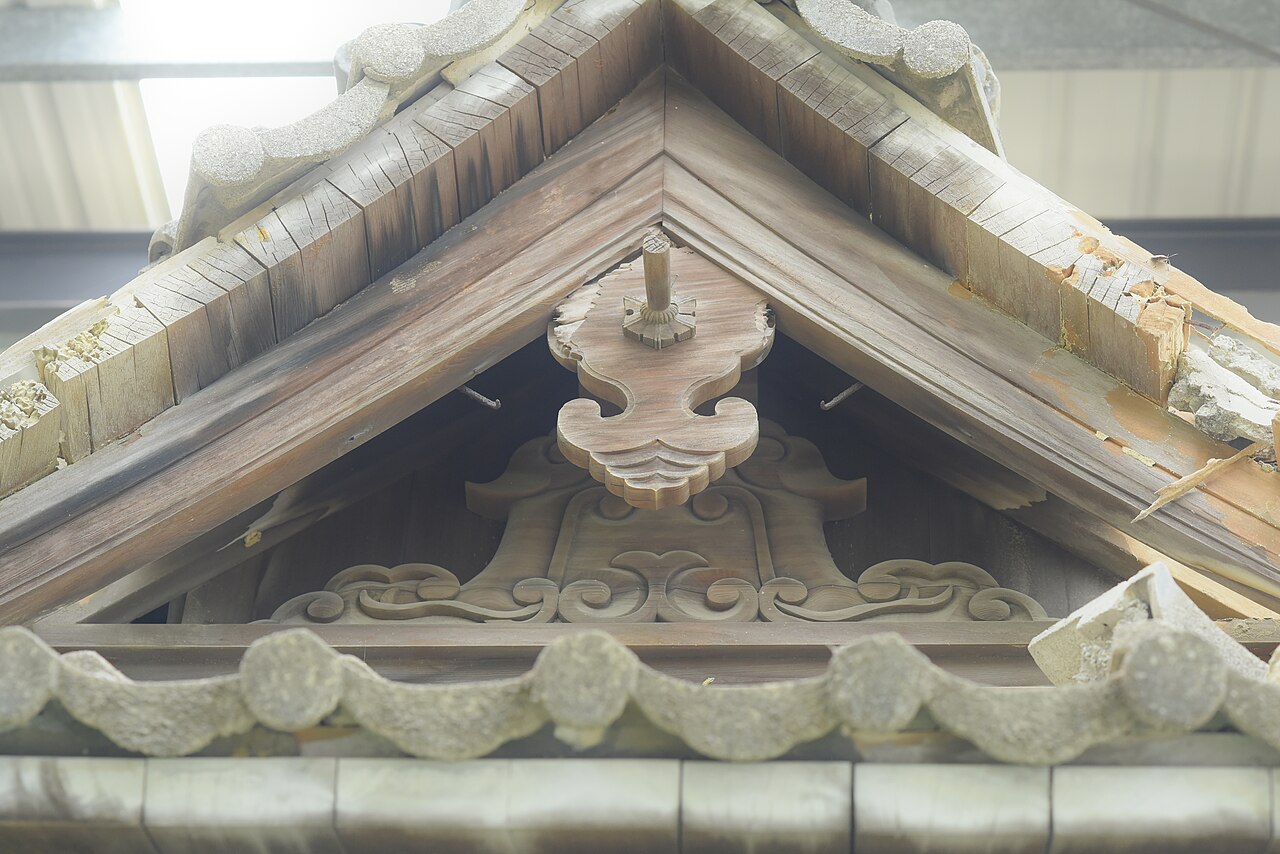
Tongxiao Shrine is a well-preserved Japanese colonial-era Shinto shrine in Tongxiao Township, Miaoli County, Taiwan, built in 1937 on Tiger Head Mountain. One of the few surviving shrine complexes in Taiwan, it retains its worship hall, stone lanterns, and torii base, and was converted into a martyrs' shrine after Japan's surrender in 1945.
Images


History
Tongxiao Shrine (通霄神社) is a rare surviving Japanese colonial-era Shinto shrine located on the slopes of Tiger Head Mountain (虎頭山) in Tongxiao Township, Miaoli County, Taiwan. Completed in January 1937 (Showa 12), the shrine was one of approximately 200 Shinto shrines erected across Taiwan during the Japanese colonial period (1895–1945). It originally enshrined Amaterasu Ōmikami (天照大神), the supreme deity of Shinto, and Prince Kitashirakawa Yoshihisa (北白川宮能久親王), an Imperial Japanese prince who led the Guard Division southward through Taiwan during the 1895 Japanese invasion and reportedly encamped in the Tongxiao area before his death.
The shrine complex originally included two shinmei-style torii gates, a haiden (worship hall) with a gabled roof, a honden (main sanctuary) on a raised stone platform, a shamusho (administrative office), a temizusha (ritual purification basin), and 18 stone lanterns constructed between 1937 and 1938. The complex was designed in the classic shinmei-zukuri architectural style, reflecting the austere simplicity characteristic of State Shinto shrines.
Following Japan's surrender in August 1945 and the subsequent retrocession of Taiwan to the Republic of China, most Japanese shrines across the island were dismantled or destroyed. Tongxiao Shrine, however, was repurposed rather than demolished. In the late 1940s (1947 by some accounts; after 1949 according to others), the Tongxiao Township mayor converted the worship hall into the Tongxiao Zhonglie Shrine (通霄忠烈祠), a martyrs' shrine dedicated to honoring fallen ROC soldiers and the Ming loyalist hero Koxinga (Zheng Chenggong). The roof was modified with traditional Fujianese-style curved ridges and adorned with the KMT party emblem, creating a distinctive hybrid of Japanese shrine architecture and Chinese temple ornamentation. The main sanctuary (honden) was dismantled, leaving only its stone foundation.
The shrine suffered damage during the devastating Jiji earthquake of September 21, 1999. In November 2002, the Miaoli County government designated Tongxiao Shrine as a registered historical building, recognizing its unique architectural and cultural significance. Restoration work was completed in 2005, and further renovation of the rest house (休憩所) was finished in 2022. Today the shrine stands as one of Taiwan's best-preserved examples of Japanese colonial religious architecture, with visible traces of both its Japanese origins and its postwar Chinese transformation — including bullet marks on some stone surfaces attributed to postwar target practice or political vandalism.
Categories
Related themes
Sources
- 通霄神社 - 維基百科(中文)Website