Former Hiroshima Army Clothing Depot
旧広島陸軍被服支廠
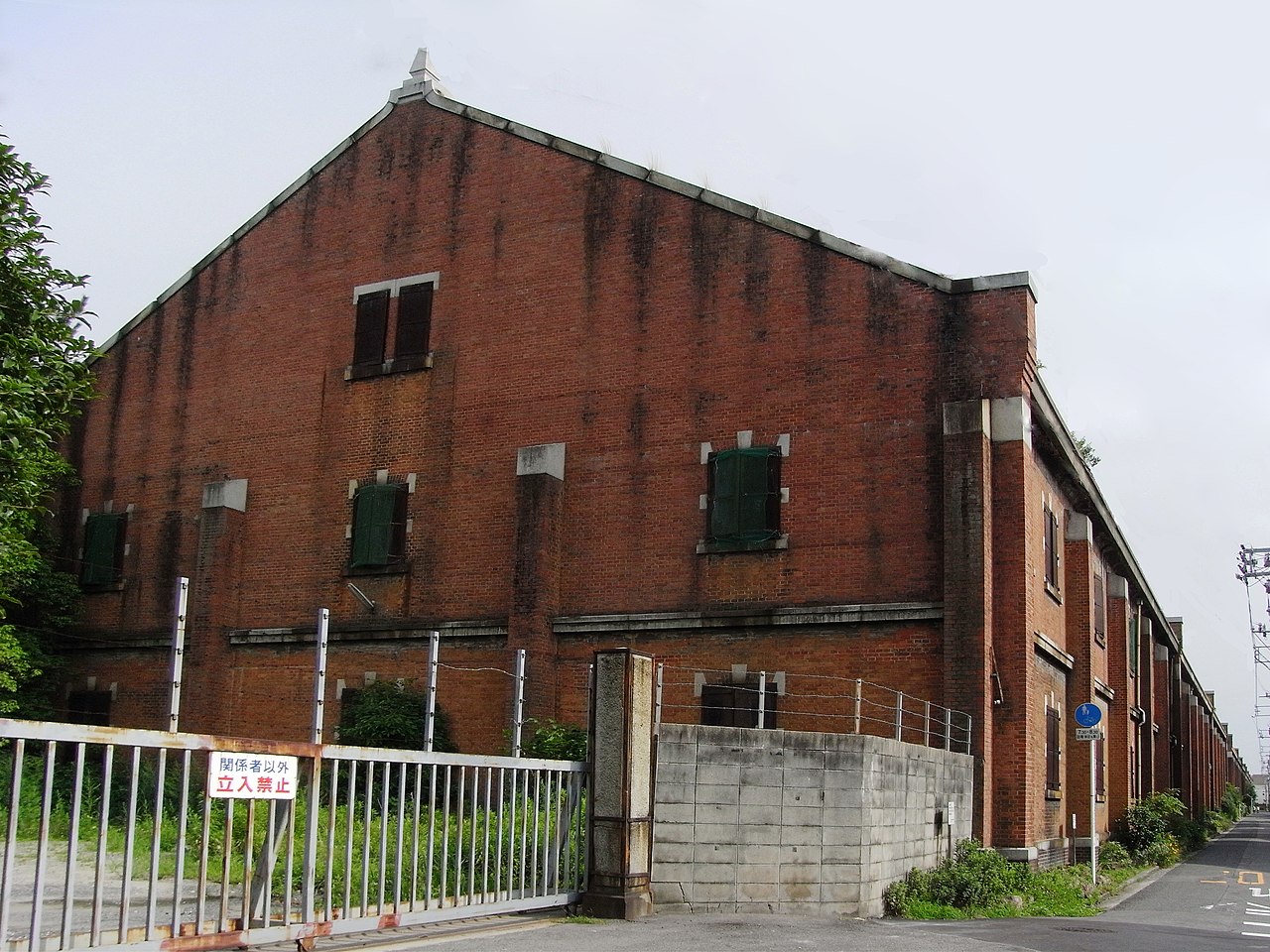
The largest surviving A-bombed structure in Hiroshima, this former Imperial Japanese Army clothing depot was built in 1913 as a facility for manufacturing, storing, and distributing military uniforms and equipment. Located 2.67 km from the atomic bomb hypocenter, the four reinforced-concrete and brick warehouse buildings, laid out in an L-shape, survived the blast and were immediately used as emergency relief stations. Designated a National Important Cultural Property in January 2024 after years of preservation-versus-demolition controversy.
Images


History
The Former Hiroshima Army Clothing Depot (旧広島陸軍被服支廠, Kyū Hiroshima Rikugun Hifuku Shishō) is the largest surviving structure among all A-bombed buildings in Hiroshima. Located in the Deshio district of Minami-ku, the complex consists of four warehouse buildings laid out in an L-shape, completed in August 1913 (Taishō 2; Hiroshima Prefecture's own documents give 1914) — about the same time as Tokyo Station, another celebrated red-brick landmark in Japan.
The depot was established as a branch of the Imperial Japanese Army's clothing supply system, responsible for the manufacturing, repair, storage, and distribution of military uniforms, boots, caps, and accoutrements for soldiers. The warehouses, each approximately 94 meters in length, represent a transitional architectural style between the historicist architecture of the Meiji period and the modernist architecture of the Shōwa period. Their exteriors feature red brick cladding, but due to Japan's seismic conditions, the structural walls are reinforced concrete — making these among the oldest reinforced concrete buildings in Japan. The design prioritizes function over ornamentation, with minimal decorative touches.
On August 6, 1945, the atomic bomb "Little Boy" detonated 2.67 kilometers from the depot. While the rooftops suffered significant damage and iron doors on Building No. 3 remain warped from the blast to this day, the buildings' reinforced concrete construction enabled them to withstand both the shock wave and the subsequent firestorm that destroyed most of central Hiroshima. In the immediate aftermath, the depot was converted into a makeshift relief station where thousands of injured and irradiated victims sought shelter. Many perished within the warehouse walls; survivors later recalled the floors covered with the dead and dying.
After the war, the buildings served various civilian purposes: the Hiroshima Higher Normal School used them as classrooms for approximately seven years; subsequently they were converted into student dormitories and later became warehouses for Nippon Express (日本通運). Three of the four buildings are owned by Hiroshima Prefecture, while the fourth belongs to the national government.
The preservation controversy became a major public issue beginning around 2019, when Hiroshima Prefecture announced plans to retain only one building and demolish the other two it owned, citing the high cost of seismic reinforcement and a 2017 structural survey indicating a high risk of collapse in a major earthquake. This decision provoked strong opposition from hibakusha (atomic bomb survivors), heritage advocates, and the general public. Online petitions demanding full preservation of the buildings gathered large numbers of signatures.
The tide turned in 2021 when the prefecture commissioned a formal cultural property assessment. On November 24, 2023, Japan's Cultural Affairs Council recommended designation as a National Important Cultural Property. The official designation was granted on January 19, 2024, under the name "Former Hiroshima Army Clothing Depot Warehouse Facility" (旧広島陸軍被服支廠倉庫施設). Following this designation, the decision was made to preserve all four buildings. Seismic reinforcement construction began in autumn 2024, with a target completion date of fiscal year 2026. Full-scale planning for the buildings' future utilization is expected to begin approximately three years after seismic work is completed.
The depot stands as one of very few surviving large-scale munitions-related facilities in Japan and serves as an irreplaceable physical witness to both Japan's military-industrial history and the catastrophic human cost of the atomic bombing.
Categories
Related themes
Sources
- 広島陸軍被服支廠 - WikipediaWebsite
- 広島県:旧広島陸軍被服支廠Government