Imperial Japanese Army
大日本帝国陸軍
Headquarters, divisions, schools, arsenals and airfields of the Imperial Japanese Army.
History
The Imperial Japanese Army was organised around the Army Ministry, the General Staff Office and the Inspectorate General of Military Training in Tokyo, with regional divisions garrisoned in castle towns across Japan and its overseas territories. This theme gathers the command centres, division and regiment sites, army schools, arsenals and army airfields that made up that system; the coastal fortresses built from the Meiji era and the works prepared for the final defence of the home islands are treated under the Homeland Defence theme.
The Army was created in the early Meiji years. The Conscription Ordinance of 1873 established universal male service, and in 1888 the regional garrisons were reorganised as divisions. Divisional headquarters and infantry regiments were mostly placed inside or beside former castles, so that castle towns such as Sendai, Kanazawa, Nagoya, Osaka, Hiroshima and Kumamoto became "military cities" whose barracks, parade grounds, army hospitals and officers' clubs formed part of the urban fabric. Through the Sino-Japanese and Russo-Japanese Wars the Army grew to more than a dozen standing divisions and garrisoned Korea, Manchuria and Taiwan. After the Manchurian Incident of 1931 the actions of field armies repeatedly drove national policy; full-scale war with China began in 1937, and from 1941 the fronts extended across Southeast Asia and the Pacific. The Army swelled from seventeen divisions before the war to some five and a half million men at the surrender, and the collapse of supply caused mass deaths from starvation and disease.
The Army is a key to the politics and society of wartime Japan. The independence of the supreme command and the active-duty rule for service ministers allowed it to make and break cabinets; the reservists' association, youth schools and military drill in schools carried its discipline into local society; and conscription tied almost every household to the front. Atrocities in occupied territories and POW camps were prosecuted at the Tokyo Trial and in Class B and C trials across Asia, and their assessment still affects Japan's relations with its neighbours. The Army Ministry was abolished on December 1, 1945.
Under this theme visitors will find former division and regiment headquarters, barracks, gates and guardhouses; the sites of the Military Academy, cadet schools and branch schools; surviving buildings of the Tokyo, Osaka and Kokura arsenals; shelters and runway remains at army airfields; and army cemeteries and memorial towers. Much former army land became universities, parks, hospitals and government offices after the war, or remains in use by the Self-Defense Forces and U.S. Forces Japan.
Related sites (157)

Chiran Peace Museum for Kamikaze Pilots
知覧特攻平和会館
The Chiran Peace Museum commemorates the 1,036 Imperial Japanese Army pilots who flew kamikaze missions during the Battle of Okinawa in 1945, many departing from the adjacent Chiran Airfield.

Matsushiro Underground Imperial Headquarters
松代大本営地下壕
A massive underground bunker complex built in 1944-1945 beneath three mountains in Matsushiro, Nagano, intended to relocate Japan's Imperial government in the event of an Allied invasion.

Noborito Laboratory (IJA 9th Technical Research Institute)
登戸研究所(陸軍第九技術研究所)
A top-secret Imperial Japanese Army research institute that developed covert warfare tools including counterfeit currency, balloon bombs, and biological weapons, now preserved as a peace education museum.

Imperial Japanese Army Nakano School Site
陸軍中野学校跡
Site of the Imperial Japanese Army Nakano School (陸軍中野学校, Rikugun Nakano Gakkō), Japan's primary intelligence and covert operations training academy from 1938 to 1945. Over 2,500 graduates were trained in espionage, sabotage, guerrilla warfare, propaganda, and counterintelligence. Notable alumni include Second Lieutenant Hiroo Onoda, who continued guerrilla operations on Lubang Island in the Philippines until 1974. The original campus at Nakano 4-chome, Tokyo, has been completely redeveloped; a stone monument (陸軍中野学校址碑) stands in the grounds of the Tokyo Metropolitan Police Hospital, with an information panel in adjacent Nakano Shiki no Mori Park.

Former 4th Division Headquarters (MIRAIZA OSAKA-JO)
旧陸軍第四師団司令部庁舎(MIRAIZA大阪城)
The former headquarters building of the Imperial Japanese Army 4th Division, erected in 1931 on the Honmaru (inner bailey) of Osaka Castle. Constructed in Romanesque revival style with public donations totalling 1.5 million yen to commemorate the enthronement of Emperor Hirohito, the reinforced-concrete building was completed simultaneously with the reconstruction of the Osaka Castle main tower. After the 4th Division relocated in 1940 and the building survived wartime air raids without major damage, it served successively as the Central District Army HQ, US occupation forces facility, Osaka City Police HQ, Osaka Prefectural Police HQ, and the Osaka City Museum (1960–2001). Reopened in October 2017 as the commercial complex MIRAIZA OSAKA-JO, the building retains its striking military-Romanesque exterior — including corner turrets, scratch-tile cladding, and a symmetrical winged facade — making it one of the finest surviving examples of Showa-era military architecture in Japan.

Former Japanese Navy Underground Headquarters
旧海軍司令部壕
An underground tunnel complex in Tomigusuku, Okinawa, built in 1944 by approximately 3,000 Navy construction troops as the headquarters of the Imperial Japanese Navy during the Battle of Okinawa. Rear Admiral Minoru Ota commanded roughly 4,000 naval personnel from this 450-meter-long, 20-meter-deep bunker until June 13, 1945, when he and his staff committed suicide as American forces closed in. Over 2,000 remains were discovered when the tunnels were unsealed in the 1950s. Approximately 300 meters of tunnels have been open to the public since 1970 as a peace memorial.

Akeno Army Flying School
明野陸軍飛行学校
The Imperial Japanese Army's premier fighter pilot training center, established in 1921 as a branch of the Army Aviation School and independent from 1924. Located in Mie Prefecture, the school specialized in aerial gunnery and air combat tactics, producing Japan's top fighter aces including Tateo Kato of the famed "Kato Hayabusa Squadron." Today the site is JGSDF Camp Akeno, home to the Ground Self-Defense Force Aviation School and the Akeno Aviation Memorial Hall.

Iwahana Explosives Factory Ruins (Gunma-no-Mori Park)
岩鼻火薬製造所跡(群馬の森)
Site of the Iwahana Explosives Manufacturing Plant (1882–1945), established as the Tokyo Artillery Arsenal's gunpowder factory in Takasaki, Gunma Prefecture. It was the Imperial Japanese Army's sole black-powder and dynamite production facility — and the birthplace of dynamite manufacturing in Japan (1906). The sprawling 1.07-million-square-meter complex produced black powder, smokeless powder, and up to 180 tons of dynamite per month at peak capacity with nearly 4,000 workers. A catastrophic explosion in December 1938 killed 13 workers and damaged 560 nearby homes. After Japan's surrender in 1945, the grounds were divided among Nippon Kayaku Co., the Japan Atomic Energy Agency, and the prefectural Gunma-no-Mori Park (opened 1974). The park preserves blast-protection earthworks, concrete tunnel passages, ammunition magazine ruins, a firing-range embankment, and the "Birthplace of Dynamite in Japan" memorial stone (erected 1973).

Ichigaya Memorial Hall
市ヶ谷記念館
Ichigaya Memorial Hall preserves the auditorium of the former Imperial Japanese Army Ministry Building No. 1, which served as the Army Ministry and Imperial General Headquarters during WWII, the courtroom for the International Military Tribunal for the Far East (Tokyo Trials, 1946–1948), and the site of Yukio Mishima's attempted coup and ritual suicide in 1970. The hall was relocated and reconstructed within the Ministry of Defense compound in 2000.

Manmo Pioneer Peace Memorial Museum
満蒙開拓平和記念館
The only museum in Japan dedicated to the history of the Manchurian-Mongolian colonization program. Located in Achi Village, Nagano Prefecture — the prefecture that sent the most emigrants to Manchuria — the museum commemorates the approximately 270,000 Japanese agricultural settlers dispatched to Manchukuo under government schemes from the 1930s onward. Of these, an estimated 80,000 perished from starvation, disease, Soviet attack, and mass suicide following the Soviet invasion of August 1945, when the Kwantung Army abandoned the defenseless settlers.

Hamamatsu Army Flying School
浜松陸軍飛行学校
The Imperial Japanese Army's primary bombing and heavy aviation training center, established in 1933 around a bombing training section created in 1925. Hamamatsu was among the first Japanese cities attacked by B-29 Superfortresses and suffered devastating firebombing raids in 1945. Today the site is JASDF Hamamatsu Air Base, home to the Air Park (浜松広報館) aviation museum.

Otsu Fu-Go Balloon Bomb Launch Base Site
風船爆弾大津放球基地跡
Remnants of the largest of three launch bases used for Operation Fu-Go (ふ号作戦), Japan's intercontinental balloon bomb campaign of 1944–1945. Located on the Pacific coast of Kitaibaraki, the Otsu base was the regimental headquarters with its own hydrogen plant and 18 launch pads (27 by some accounts); the balloon regiment as a whole numbered about 2,000 men. A concrete launch pad and the "Wasureji Peace Monument" (わすれじ平和の碑) mark the site today.

Kokura Arsenal Ruins
小倉陸軍造兵廠跡
Site of the Kokura Army Arsenal (1916–1945), the largest munitions factory in southern Japan and the primary target for the Fat Man atomic bomb on August 9, 1945. Cloud cover and smoke from the previous night's firebombing of nearby Yawata forced the B-29 Bockscar to divert to its secondary target, Nagasaki — an event known as "the Luck of Kokura." The arsenal grounds now host Katsuyama Park, the Kitakyushu Central Library, and a peace memorial with the Nagasaki Bell.

Tokyo Bay Surrender Site
東京湾降伏調印地点
The waters of Tokyo Bay where Japan formally surrendered aboard USS Missouri on September 2, 1945.

Okunoshima Poison Gas Museum
大久野島毒ガス資料館
A museum on Okunoshima Island documenting Japan's secret chemical weapons program that produced over 6,000 tons of poison gas between 1929 and 1945. The island was erased from wartime maps to conceal its mustard gas and lewisite production facilities, at what was the Imperial Japanese Army's only poison gas factory, whose output grew with the demands of the war in China.

Osaka Army Arsenal
大阪砲兵工廠
The largest army arsenal in Japan, producing artillery, ammunition, and armored vehicles.

Tachiarai Peace Memorial Museum
筑前町立大刀洗平和記念館
A museum built on the former site of the Tachiarai Army Airfield, once the largest military airfield in Kyushu. It preserves approximately 1,800 wartime artifacts, including the world's only intact Nakajima Ki-27 fighter and a Mitsubishi A6M Zero, commemorating the airfield's history, the devastating March 1945 air raid, and the young pilots who trained there before kamikaze missions.

Imperial General Headquarters
大本営
The supreme military command center of the Japanese armed forces during World War II, located in central Tokyo.

RIKEN Institute
理化学研究所
Japan's premier scientific research institute, involved in wartime nuclear research (Ni-Go project).

Tomogashima (Yura Fortress Battery Ruins)
友ヶ島(由良要塞 砲台群跡)
A group of four uninhabited islands in the Kitan Strait between Wakayama and Awaji Island, fortified from 1890 as part of the Yura Fortress system to defend the western entrance to Osaka Bay. The Imperial Japanese Army built five artillery batteries with modern guns on the main island of Okinoshima over a 16-year period. Designated a restricted military zone and erased from maps during WWII, the fortress was never used in combat as war shifted to aerial warfare. Abandoned after 1945, the overgrown brick-and-stone battery ruins — especially the iconic Third Battery — have earned Tomogashima the nickname "Japan's Castle in the Sky" (Laputa). Now part of the Setonaikai National Park.

Tsuchizaki Minato History Museum (Tsuchizaki Air Raid Exhibition)
土崎みなと歴史伝承館(土崎空襲展示室)
The Tsuchizaki Minato History Museum preserves the memory of the Tsuchizaki Air Raid of August 14-15, 1945 — Japan's last aerial bombardment in WWII. On the night Emperor Hirohito had already decided to surrender, 132 B-29 bombers of the 315th Bombardment Wing struck the Nippon Oil Akita Refinery, dropping 12,047 bombs (953.9 tons) over four hours. Over 250 people were killed. The museum's air raid exhibition hall displays a bomb-damaged warehouse column from the refinery, with projection mapping recreating the devastation.

Niigata City History Museum (Minatopia)
新潟市歴史博物館 みなとぴあ
Municipal history museum opened in 2004 at the mouth of the Shinano River, built around the nationally designated Important Cultural Property "Former Niigata Customs House" (1869) — the only surviving original treaty port customs building in Japan. The museum's permanent exhibition covers Niigata's history as one of five ports opened by the 1858 Treaty of Amity and Commerce, its wartime role as a strategic port for military logistics to the Asian continent, and its designation as an atomic bomb target city in 1945. The grounds include the restored former Daishi Bank branch and the restored customs stone warehouse and landing stage.

Yomitan Airfield Ruins (Yontan Airfield)
読谷飛行場跡
Ruins of a Japanese Army airfield built in 1944 at Yomitan Village on Okinawa's west coast. On April 1, 1945 — the first day of the Battle of Okinawa (Operation Iceberg) — U.S. forces seized it within hours of landing, making it the first airfield captured on Okinawa. It later served as a major American air base; the B-29 Bockscar landed here after the Nagasaki atomic bombing. Nearby Chibichiri-gama cave witnessed a mass civilian suicide on April 2, 1945.

Kumamoto Castle & Former IJA 6th Division Headquarters Site
熊本城・陸軍第六師団司令部跡
Kumamoto Castle, one of Japan's three premier castles, served as the home base of the Imperial Japanese Army 6th Division from 1888 to 1945. The 6th Division, recruited primarily from southern Kyushu, was one of the most combat-experienced formations in the IJA: it fought in the Sino-Japanese War, Russo-Japanese War, and the Siberian Intervention before becoming notorious as one of the principal assault divisions in the Battle of Nanking (December 1937), where it stormed the Zhonghua Gate sector under Lieutenant General Tani Hisao. During the Pacific War, the division fought in the Solomon Islands campaign (Bougainville). The castle grounds housed the division headquarters (a 1917 building on the Honmaru), barracks for the 13th Infantry Regiment, supply depots, an army hospital, and ammunition stores — occupying roughly 270,000 square meters of the city center and transforming Kumamoto into a garrison city (軍都). The castle survived the July 1945 firebombing raids but the original headquarters building was destroyed; its site is now part of the restored Kumamoto Castle Park. The castle's concrete-reconstructed main tower (1960) sustained severe damage in the 2016 Kumamoto earthquakes and was fully restored in 2021.

Former Hiroshima Army Clothing Depot
旧広島陸軍被服支廠
The largest surviving A-bombed structure in Hiroshima, this former Imperial Japanese Army clothing depot was built in 1913 as a facility for manufacturing, storing, and distributing military uniforms and equipment. Located 2.67 km from the atomic bomb hypocenter, the four reinforced-concrete and brick warehouse buildings, laid out in an L-shape, survived the blast and were immediately used as emergency relief stations. Designated a National Important Cultural Property in January 2024 after years of preservation-versus-demolition controversy.

Metabaru Airfield Ruins
目達原飛行場跡
Former Imperial Japanese Army airfield in Yoshinogari Town, Saga Prefecture, established in 1943 as a branch of the Tachiarai Army Flight School. The base trained student pilots and served as a staging point for Army special attack (tokubetsu kōgeki) operations during the final months of WWII, with the 273rd Shinbu Squadron and other kamikaze units departing via Metabaru en route to forward bases in southern Kyushu. The site is now JGSDF Camp Metabaru, with the former main gate pillars and a 1992 memorial monument preserved outside the base perimeter.

Former 11th Division Headquarters (Nogi Museum), Zentsuji
旧陸軍第十一師団司令部(乃木館)
The headquarters of the Imperial Japanese Army 11th Division, completed in 1898 (Meiji 31) in Zentsuji, Kagawa Prefecture — the only divisional headquarters on the island of Shikoku. The Renaissance-style Western building with plastered walls and a hipped-and-gabled tile roof was the command post of General Nogi Maresuke, who served as the first divisional commander from 1898 to 1901. The 11th Division recruited soldiers from all four Shikoku prefectures and fought in the Russo-Japanese War (Battle of Port Arthur and Mukden under Nogi's Third Army), fought at Shanghai in 1937 and was stationed in Manchuria from 1938, and returned to Shikoku in April 1945 for homeland defense of Tosa Bay. The Zentsuji garrison also housed one of the first Allied POW camps in the Japanese Home Islands (January 1942), holding American servicemen captured on Guam and Wake Island. Today the building serves as the Nogi Museum (乃木館) within JGSDF Camp Zentsuji, home of the 14th Brigade. Remarkably, the original headquarters, red-brick armories, barracks, and the adjacent Kaikosha officers' club (Important Cultural Property, 1903) all survive in situ — an exceptionally rare ensemble of Meiji-era military architecture still in active use.

Tokorozawa Aviation Memorial Park & Museum
所沢航空記念公園・所沢航空発祥記念館
The birthplace of Japanese aviation, established in 1911 as Japan's first military airfield. On April 5, 1911, Captain Tokugawa Yoshitoshi piloted a Henri Farman biplane in the inaugural flight from Tokorozawa. The site evolved into the Imperial Japanese Army's central aviation training and research complex, housing the Army Aviation School (1919), the Army Aviation Technical School (1935), and the Army Aviation Maintenance School (1938). During WWII, the airfield served as a key Army Air Force installation; in June 1945, a tokkotai (special attack) unit was formed here. After Japan's surrender, the site was seized by the U.S. military as the Tokorozawa Communications Base. Land was gradually returned from 1971, and the 50.2-hectare Tokorozawa Aviation Memorial Park opened in 1978, with the Tokorozawa Aviation Museum (所沢航空発祥記念館) inaugurated in 1993.

Miyakonojo Airfield Ruins (East & West)
都城飛行場跡(都城東・西飛行場)
Site of two Imperial Japanese Army airfields in southern Kyushu from which 79 Shinbu (Army special attack) pilots flew Ki-84 Hayate fighters on 17 kamikaze sorties against the U.S. fleet off Okinawa between April 6 and July 1, 1945. The West Airfield (built 1934, expanded to 1,200 m runway by 1945) launched the first mission on April 6; after devastating air raids on April 27–28 destroyed it, operations shifted to the East Airfield (built 1944 on converted rice paddies by the Navy, later transferred to Army use). Today, stone monuments at both former airfield sites and the Hayate Shinbu Special Attack Corps Memorial in Toshima Park (former Army cemetery) preserve the memory of the young pilots, most aged 18–23, who never returned.

Kakamigahara Airfield (Gifu Air Base)
各務原飛行場
Japan's second-oldest military airfield, established in 1917 in Gifu Prefecture. On April 1, 1939, test pilot Katsuzo Shima made the maiden flight of the Mitsubishi A6M Zero prototype here — the fighter that would become Imperial Japan's most iconic warplane. During WW2, the adjacent Kawasaki aircraft factory mass-produced Ki-61 Hien fighters at peak rates of 200 per month. The airfield survived devastating B-29 raids in 1945 and today serves as JASDF Gifu Air Base, with the Gifu-Kakamigahara Air and Space Museum preserving the site's aviation heritage.
Haranomachi Army Airfield
原町陸軍飛行場
Former Imperial Japanese Army airfield in Minamisōma, Fukushima Prefecture, established in 1936 as the Hibarigahara Airfield and converted to a military flight training facility in 1940. During the final year of the Pacific War it served as a kamikaze special-attack training base, training pilots of 14 tokkōtai units that fought in the Philippines, off Okinawa and in the homeland. The Nakoso Fu-Go balloon bomb launch base lay about 90 km to the south on the same Hamadōri coast, though no operational link between the two is documented. A memorial at Jingasaki Park Cemetery, erected in 1971, records 71 airmen from the airfield who died in special-attack units.

32nd Army Headquarters Bunker (Shuri Castle Underground)
第32軍司令部壕
A massive underground tunnel complex constructed beneath Shuri Castle in Naha, Okinawa, serving as the supreme headquarters of the Imperial Japanese Army 32nd Army during the Battle of Okinawa. Built from December 1944 by mobilized labor including Okinawan civilians and students, the complex extended approximately 1,000 meters in total length at a depth of up to 30 meters below the castle. Lieutenant General Mitsuru Ushijima commanded the entire Japanese defense of Okinawa from this bunker until May 27, 1945, when the headquarters was evacuated southward to Mabuni. The tunnels were demolished with explosives during the retreat. Seriously wounded soldiers unable to walk were left behind, and many died. The site remains largely sealed and inaccessible, distinct from the Former Navy Underground HQ in Tomigusuku commanded by Rear Admiral Ota.

Bansei Tokko Peace Museum
万世特攻平和祈念館
War museum in Minamisatsuma commemorating the 201 airmen who died at Bansei Air Base, the last airfield built by the Imperial Japanese Army and a special attack (kamikaze) base. The museum displays the salvaged wreck of an Aichi E13A1 reconnaissance seaplane — the only surviving example in Japan — recovered from the nearby sea floor in 1992, along with farewell letters, photographs, and personal effects of the pilots, including the iconic 1945 photograph of 17-year-old Corporal Yukio Araki holding a puppy with his 72nd Shinbu Squadron comrades the day before their final mission.

Kadena Air Base (Former Japanese Middle Airfield)
嘉手納飛行場
Originally the Imperial Japanese Army's Middle Airfield (中飛行場), urgently constructed from May 1944 on forcibly requisitioned land in Kadena, Okinawa. Captured by the U.S. 7th Infantry Division on April 1, 1945 — the first day of the Battle of Okinawa — it was rapidly rebuilt and expanded into what became the largest U.S. Air Force installation in the Pacific. Known as the "Keystone of the Pacific," Kadena remains an active U.S. military base; together with the adjoining ammunition storage area it occupies about 82% of Kadena Town's land area, serving as a potent symbol of the continuity of American military occupation in Okinawa.

Former 32nd Infantry Regiment Barracks Site (Kajō Park)
旧歩兵第三十二連隊兵営跡(霞城公園)
The former garrison site of the Imperial Japanese Army 32nd Infantry Regiment, located within the Ninomaru (second bailey) of Yamagata Castle (also known as Kajō, "Mist Castle"). The regiment was formed at Akita in 1896 and brought to Yamagata in 1898, after the city purchased the castle grounds and donated them to the Army; it kept the castle as its home garrison for nearly half a century until Japan's surrender in 1945. The 32nd Regiment fought in every major conflict of modern Japan — the Russo-Japanese War, the Siberian Intervention, the invasion of Manchuria, the Second Sino-Japanese War, and ultimately the Battle of Okinawa, where the regiment was virtually annihilated. After the war, the military land was transferred to Yamagata City and opened in 1949 as Kajō Park. Today the park preserves the reconstructed Ninomaru Higashi-Ōtemon Gate (1991), the Honmaru Ichimonji Gate, stone monument markers for the 32nd Regiment, and approximately 1,500 cherry trees originally planted by returning soldiers in 1906. It remains one of the most significant former military garrison sites in the Tōhoku region.

Yokaichi Airfield & Nunobiki Aircraft Revetments
八日市飛行場・布引掩体群
One of Japan's earliest military airfields, established in 1922 in Shiga Prefecture's Okinogahara plain. The site's most significant surviving remains are the Nunobiki Revetment Group — 17 aircraft shelters constructed in 1944–1945 along a 2-kilometer stretch of the Nunobiki Hills, a rare surviving wartime aircraft shelter complex in Shiga Prefecture. The airfield hosted the Army Aviation 3rd Regiment, and later the 244th Fighter Regiment that defended the homeland against B-29 raids. Actor Toshiro Mifune served here as a private first class in charge of the cookhouse.

Former 16th Division Headquarters (Seibo Jogakuin)
旧陸軍第十六師団司令部庁舎(聖母女学院)
The former headquarters of the Imperial Japanese Army 16th Division, completed in 1908 in the Fukakusa district of Fushimi-ku, Kyoto. Designed by the Army Ministry and constructed by Matsumura-gumi, this two-story red-brick building with a copper-plate roof is one of the finest surviving examples of Meiji-era military architecture in Japan. The 16th Division, recruited from the Kyoto region, gained lasting notoriety for its role in the Nanjing Massacre of December 1937 and was later virtually annihilated during the Battle of Leyte in 1944–45. After the war, the building and surrounding military grounds were transferred to the Catholic educational foundation Seibo Jogakuin in 1948, where it now serves as the main hall of Kyoto Seibo Gakuin. Designated a Nationally Registered Tangible Cultural Property, the building retains its imposing classical facade with a columned entrance and triangular pediment, and still bears traces of black camouflage paint applied during wartime air-raid precautions.

Ashiya Air Field
芦屋飛行場
An Imperial Japanese Army airfield in Fukuoka Prefecture, built around 1940 and established as an Army air base by 1942, used for fighter interception of B-29 raids and as a staging base for Army kamikaze (Shinbu-tai) special attack sorties during the final months of WWII. Now the JASDF Ashiya Air Base.

Kashiwa Airfield & Shusui Rocket Interceptor Site
柏飛行場・秋水関連遺跡
The Imperial Japanese Army airfield in Kashiwa, Chiba Prefecture, designated as the operational base for the J8M/Ki-200 "Shusui" — Japan's only rocket-powered interceptor, reverse-engineered from the German Me 163 Komet. Underground fuel storage bunkers for the Shusui's volatile hydrogen peroxide and hydrazine propellants survive in the Hanano-i residential area, representing Japan's most ambitious late-war aviation technology program.

Tachikawa Airfield & Army Air Arsenal
立川飛行場・立川陸軍航空工廠
The center of Imperial Japanese Army aviation industry, established in 1922 in western Tokyo. Tachikawa Airfield housed the Army Air Arsenal (陸軍航空工廠) and the Tachikawa Aircraft Company, which together produced over 6,000 aircraft including the Ki-36, Ki-55, and Ki-43 Hayabusa fighters. The complex also contained the Army Air Technical Research Institute (陸軍航空技術研究所). Devastated by 13 air raids from February 1945, the site became US Tachikawa Air Base after the war. Following reversion to Japan in 1977, the western portion was transformed into the Showa Commemorative National Government Park (国営昭和記念公園), opened in 1983.

Chofu Airfield
調布飛行場
A major Imperial Japanese Army airfield in western Tokyo, home to the elite 244th Flight Regiment (飛行第244戦隊) that defended the capital against B-29 Superfortress raids using Ki-61 Hien (飛燕) fighters. The 244th became famous for ramming attacks (体当たり) against B-29s, and its commander Major Teruhiko Kobayashi was the youngest sentai leader in the IJAAF. Four concrete aircraft revetments (掩体壕) survive in the surrounding parks and neighborhoods.

Nakajima Aircraft Ota Plant
中島飛行機太田製作所
The headquarters factory of Nakajima Aircraft Company — Japan's largest wartime aircraft manufacturer — located in Ota, Gunma Prefecture. Founded by Chikuhei Nakajima in 1917 as a modest research workshop, it grew into an industrial colossus producing iconic fighters including the Ki-43 Hayabusa, Ki-44 Shoki, Ki-84 Hayate, and Ki-49 Donryu heavy bomber. At peak wartime production the Ota complex employed over 100,000 workers. Targeted by seven major B-29 bombing raids between late 1944 and August 1945, the factory was devastated — the February 10, 1945 raid alone killed 152 people and destroyed the eastern half of the plant. After dissolution under Allied occupation, the company's legacy was reborn as Fuji Heavy Industries (1953), now SUBARU Corporation, whose Gunma Manufacturing Division Main Plant occupies the original site at Subaru-cho 1-1, Ota City.

Naval Technical Research Institute
海軍技術研究所
The Imperial Japanese Navy's foremost scientific and engineering research establishment, headquartered in Meguro, Tokyo from 1930 to 1945. Founded in 1923 by merging the Naval Ordnance Arsenal Research Department, Naval Ship Type Test Institute, and Naval Aircraft Test Institute, the institute conducted advanced research across chemistry, physics, electrical engineering, shipbuilding, and aviation. Its massive hydrodynamic test tanks were used to refine the hull design of the battleship Yamato. The Electrical Research Division was the center of Japan's naval radar (電探, dentan) development, where engineers including Commander Yoji Ito developed cavity magnetrons and the Type 22 shipborne search radar. The site now serves as the Ministry of Defense Meguro District, housing the Acquisition, Technology & Logistics Agency (ATLA) Ship Equipment Research Institute and JSDF staff colleges.

Narashino Army School
陸軍習志野学校
The Imperial Japanese Army's primary chemical warfare (poison gas) training school, established in 1933 in Narashino, Chiba Prefecture. Complementary to Okunoshima Island (which manufactured chemical weapons), Narashino specialized in the operational use, defense, and tactical deployment of chemical agents. The school graduated 3,074 officers between 1939 and 1945, and was described by US intelligence as "splendidly equipped, well staffed, and effective." The former site in Izumi-cho now includes "Narashino no Mori" (Narashino Forest), where concrete foundations and an animal memorial tower remain.

Army Aeronautical Inspection Department (Tama Army Airfield)
陸軍航空審査部(多摩陸軍飛行場)
The Imperial Japanese Army's central organization for testing, evaluating, and approving all new aircraft and aviation weapons, established in October 1942 at the Tama Army Airfield (present-day Yokota Air Base) in Fussa, western Tokyo. Staffed by Japan's most elite test pilots, the department evaluated every prototype fighter, bomber, and reconnaissance aircraft — including the Ki-61 Hien, Ki-84 Hayate, and captured Allied aircraft such as the P-51 Mustang and B-17. In the final months of the war, its fighter squadron served as an emergency interceptor unit defending the capital against B-29 raids. After Japan's surrender in September 1945, the U.S. 1st Cavalry Division occupied the intact airfield, discovering approximately 280 of the IJA's most advanced aircraft. The site was renamed Yokota Air Base and remains a major U.S. Air Force installation today.

Army Technical Research Institute (Tama Army Technical Research Institute)
陸軍技術研究所(多摩陸軍技術研究所)
Site of the Imperial Japanese Army's vast weapons and electronics research complex (陸軍技術研究所, Rikugun Gijutsu Kenkyūjo) in Koganei and Kodaira, western Tokyo. Spanning approximately 175 hectares of farmland forcibly acquired between 1940 and 1942, the facility housed six numbered research institutes investigating firearms, explosives, communications, radar (denpa heiki), and materials science. In June 1943, the radar-specialized Tama Army Technical Research Institute (多摩陸軍技術研究所) was established here by consolidating electromagnetic-wave weapons divisions, becoming the Imperial Army's primary radar development center. The "Ta" prefix in all Army radar designations — Tachi (ground), Tase (shipborne), Taki (airborne) — derives from "Tama." Over 60 types of radar and electronic warfare devices were developed here before 1945. The site was converted postwar into Tokyo Gakugei University, the National Institute of Information and Communications Technology (NICT), and Tokyo Salesio Gakuen; only boundary stones inscribed "陸軍" survive as physical traces.

Former Navy Ministry
海軍省
The Ministry of the Navy (海軍省, Kaigun-shō) was a cabinet-level ministry of the Empire of Japan responsible for the administrative affairs of the Imperial Japanese Navy from 1872 to 1945. Located in a distinctive red-brick building designed by Josiah Conder in Kasumigaseki, Chiyoda Ward, it served as the administrative nerve center of the IJN throughout WWII, complementing the Army Ministry (陸軍省) at Ichigaya. The building was demolished postwar and replaced by Central Government Building No. 1, which now houses the Ministry of Agriculture, Forestry and Fisheries (農林水産省).

Former Residence of Hideki Tojo
東條英機邸跡
Site of wartime Prime Minister Hideki Tojo's private residence in Yoga, Setagaya, Tokyo. On September 11, 1945, when GHQ military police arrived to arrest him as a suspected Class-A war criminal, Tojo shot himself in the chest with a pistol in his study but missed his heart and survived. American journalists and photographers who had gathered outside captured the dramatic scene, and the resulting photographs — showing Tojo slumped in a chair, bleeding from his self-inflicted wound — were transmitted worldwide and became some of the most iconic images of the immediate postwar period. After receiving emergency blood transfusions from American military doctors, Tojo recovered and was transferred to Sugamo Prison. He was tried before the International Military Tribunal for the Far East and executed on December 23, 1948. The residence no longer exists; the site is now occupied by a Rissho Kosei-kai (立正佼成会) church building, with a small stone marker reading "東條英機邸跡" on the grounds.

Former Imperial Guards Division Headquarters
旧近衛師団司令部庁舎
The Former Imperial Guards Division Headquarters is a red-brick Gothic-style building completed in 1910 in Kitanomaru Park, Tokyo. As the command center of the elite Imperial Guards Division (近衛師団), it was the nerve center of the Kyūjō Incident on the night of August 14–15, 1945, when young army officers led by Major Kenji Hatanaka occupied the Imperial Palace grounds in a failed coup to prevent Japan's surrender. Lieutenant General Takeshi Mori, commander of the 1st Imperial Guards Division, was murdered here when he refused to join the conspiracy. Designated a National Important Cultural Property in 1972, the building formerly housed the National Museum of Modern Art Crafts Gallery (1977–2020).

Imperial Palace / Obunko Annex
皇居・御文庫附属室
The Obunko Annex (御文庫附属室) is an underground bunker within the Fukiage Gardens of the Imperial Palace in Tokyo, constructed by the Imperial Japanese Army in 1941 as a bomb-proof shelter for Emperor Showa. With 3-meter-thick reinforced concrete walls and a total protective layer of 14.3 meters, it was among the strongest air defense facilities in wartime Japan. Its 60-square-meter conference room was the site of the two most consequential meetings of the Pacific War: the Supreme War Direction Council on August 10, 1945, and the Imperial Conference (御前会議) on August 14, 1945, where Emperor Hirohito issued the "Sacred Decision" (聖断, Seidan) to accept the Potsdam Declaration and end the war. The Obunko Annex is not open to the public, as it lies within the restricted Fukiage Gardens; visitors can access the Imperial Palace Outer Gardens (皇居外苑) and view the palace from the Nijubashi Bridge area.

February 26 Incident Memorial Statue
二・二六事件慰霊像
A statue of Kannon (Buddhist goddess of mercy) erected in 1965 at the former site of the Tokyo Army Military Prison in Shibuya, where 15 of the officers and civilians condemned for the February 26 Incident were executed by firing squad on July 12, 1936, and four more on August 19, 1937. The memorial, commissioned by the Busshinkai (an organization of bereaved families), commemorates both the executed officers and all victims of the incident. It stands adjacent to the Shibuya Government Building complex, south of the NHK Broadcasting Center.

Kumagaya Army Air School
熊谷陸軍飛行学校
The Imperial Japanese Army's primary training center for young aviation soldiers (少年飛行兵), established in December 1935 in Saitama Prefecture. The school trained thousands of teenage pilot cadets at its main campus and branch schools including the Okegawa sub-school. Kumagaya city was devastated by one of the last B-29 firebombing raids of the war on the night of August 14-15, 1945 — less than 12 hours before Japan's surrender announcement. Today the former school site is JASDF Kumagaya Air Base, while the restored Okegawa branch is a peace memorial hall.

Narimasu Airfield Ruins (Hikarigaoka Park)
成増飛行場跡(光が丘公園)
A hastily constructed Imperial Japanese Army airfield in northwestern Tokyo, completed in late 1943 as a B-29 interceptor base. Home to the elite 47th Air Regiment (飛行第47戦隊) equipped with Ki-44 Shoki fighters, and the Shinten Seiku Tai — a special air-to-air ramming attack unit formed to defend the capital. Postwar the site became U.S. military housing "Grant Heights" (1947–1973), then redeveloped as the Hikarigaoka residential district and park.

Ozuki Airfield (Shimonoseki Army Airfield)
小月飛行場(下関陸軍飛行場)
A military airfield in Shimonoseki, Yamaguchi Prefecture, built by the Ministry of Communications (1937–1940) and transferred to the Imperial Japanese Army in April 1940. During WWII, the 4th Sentai operated Ki-45 Toryu twin-engine fighters from Ozuki for homeland air defense, engaging B-29 bombers from the June 1944 Yawata raid onward. The 12th Air Division HQ was based here from July 1944. Post-war, the base passed through U.S./NZ occupation, police reserve, JGSDF, and JASDF hands before becoming a JMSDF installation in 1964. Today it serves as the Maritime Self-Defense Force's primary flight school operating Fuji T-5 trainers.

Former Army General Staff Office Site
旧陸軍参謀本部跡
The Imperial Japanese Army General Staff Office (参謀本部, Sanbō Honbu) stood at Miyakezaka, Nagatacho, Chiyoda Ward — the nerve center of all Army operational planning from 1878 to 1941. Designed by Italian architect Giovanni Vincenzo Cappelletti, the Renaissance-style red-brick headquarters was completed in 1881 on the former Ii clan estate overlooking the Imperial Palace moat. Distinct from the Army Ministry (陸軍省) which handled administration, the General Staff held supreme command authority over war plans, intelligence, troop deployments, cartography, and military operations. In December 1941, the General Staff relocated to the Ichigaya compound; the Miyakezaka building was destroyed by Allied bombing in 1945. The site is now occupied by the National Diet Forecourt (国会前庭) and the former Kensei Kinenkan (憲政記念館) area.

Cabinet Information Bureau
情報局(内閣情報局)
The Cabinet Information Bureau (情報局, Jōhōkyoku) was the wartime Japanese government's central organ for propaganda, censorship, press control, and information management. Established on December 6, 1940 under Prime Minister Konoe Fumimaro, it consolidated the information functions of the Army, Navy, Foreign Ministry, and Home Ministry into a single agency of several hundred staff. It directed the control of press, publishing and broadcasting, and published the influential propaganda magazine Shashin Shūhō. Its offices were initially housed in the Imperial Theatre (帝国劇場) in Marunouchi, Chiyoda-ku, Tokyo, before moving in 1942 to Miyakezaka and then to the Home Ministry building. Abolished on December 31, 1945.

Kawasaki Aircraft Gifu Plant
川崎航空機工業 岐阜工場
Kawasaki Aircraft Industries' Gifu Works, adjacent to Kakamigahara Airfield in Gifu Prefecture, was one of Imperial Japan's most important aircraft manufacturing facilities. Established in 1922 as the Kakamigahara Branch Works of Kawasaki Dockyard, the plant was renamed Gifu Works in 1939. During World War II, the factory mass-produced the Ki-61 Hien (Flying Swallow) — the Imperial Japanese Army's only mass-produced liquid-cooled inline-engine fighter — with approximately 3,000 Ki-61s and 275 Ki-100 conversions built here. Peak production reached 200 aircraft per month. On June 22, 1945, 44 B-29 Superfortresses devastated the factory complex with 2,000-lb and 4,000-lb bombs, killing 169 people including 63 Kawasaki workers and mobilized students. Today the site continues as Kawasaki Heavy Industries' Aerospace Systems Gifu Works, manufacturing military and civilian aircraft.

Army Aviation Maintenance School
陸軍航空整備学校
The Imperial Japanese Army's central institution for training aviation maintenance personnel, established in 1938 at Tokorozawa Airfield in Saitama Prefecture. Created by transferring maintenance training from the Army Aviation Technical School, the school educated officer candidates, non-commissioned officers, and youth aviation soldiers (少年航空兵) in aircraft maintenance and repair. Renamed the Tokorozawa Army Aviation Maintenance School (所沢陸軍航空整備学校) in 1943 when a sister school opened at Kakamigahara, Gifu Prefecture. The school operated until February 1945, when it was reorganized into the 3rd Air Training Corps (第3航空教育団). Its legacy is preserved at Tokorozawa Aviation Memorial Park, where the Youth Aviation Soldier Statue (少年航空兵像) — originally erected on the school grounds in 1944 — still stands.

Mabuni Hill (End of the Battle of Okinawa)
摩文仁の丘(沖縄戦終焉之地)
Mabuni Hill (摩文仁の丘), known to American forces as "Hill 89", is the coral limestone hill in Itoman City, Okinawa, where organized Japanese resistance in the Battle of Okinawa ended on 23 June 1945. At dawn that morning, 32nd Army Commander-in-Chief Lieutenant General Ushijima Mitsuru and Chief of Staff Lieutenant General Cho Isamu committed ritual suicide (jiketsu) at the mouth of the command post cave on the cliff face. Their deaths marked the formal end of 82 days of fighting that claimed an estimated 200,000 lives — nearly half of them Okinawan civilians. Today the hilltop and surrounding slopes form the heart of Okinawa Peace Memorial Park, with the Reimei Tower (黎明之塔, erected 1952) marking the suicide site, the Memorial Path lined with cenotaphs erected by many of Japan's prefectures, and numerous regimental and unit memorials dotting the hillside.

Former Army Kaikōsha (Kudan Kaikan Terrace)
旧陸軍偕行社(九段会館テラス)
Originally built in 1934 as the Gunjin Kaikan (Military Personnel Hall) in the Imperial Crown Style, this building at Kudan in Chiyoda served as the martial law headquarters during the February 26 Incident (1936), was requisitioned by GHQ as "Army Hall" after the war, and later operated as Kudan Kaikan by the Japan War-Bereaved Families Association. After earthquake damage in 2011, the site was redeveloped as Kudan Kaikan Terrace (2022), preserving the registered tangible cultural property façade while adding a modern 17-story tower.

Former IJA 2nd Division Headquarters Site (Sendai Castle)
仙台第二師団司令部跡
The site of the Imperial Japanese Army 2nd Division Headquarters, located within the ni-no-maru (second bailey) of Sendai Castle (Aoba Castle) in Sendai, Miyagi Prefecture. The 2nd Division — known as the "Sendai Division" (仙台師団) or by its code name "Isamu" (勇) — was established in 1888 from the former Sendai Garrison and became one of the IJA's most battle-tested formations. It fought in the Sino-Japanese War, Russo-Japanese War, and the Siberian Intervention before suffering catastrophic losses at Guadalcanal in 1942–43, where it lost over 7,000 men in a campaign that included the disastrous Battle for Henderson Field under Lieutenant General Maruyama Masao. The division later fought in Burma and ended the war in French Indochina. The headquarters and surrounding military facilities in the castle grounds were destroyed in the Sendai air raids of 10 July 1945. After postwar occupation by U.S. forces as "Camp Sendai," the ni-no-maru site became Tohoku University's Kawauchi Campus. The broader Sendai Castle site (Aobayama Park) preserves the iconic stone walls and the equestrian statue of Date Masamune on the honmaru.

Former 7th Division Headquarters Site (Hokuchin Memorial Museum)
旭川第七師団司令部跡(北鎮記念館)
Site of the Imperial Japanese Army 7th Division headquarters in Asahikawa, Hokkaido — the elite "Hokuchin" (Pacifier of the North) force responsible for the northern defense of Japan. Formed in 1896 from Tondenhei (soldier-farmer) units that had colonized Hokkaido, the 7th Division earned a fearsome reputation as one of the IJA's most battle-hardened formations. It fought at the Siege of Port Arthur and Battle of Mukden in the Russo-Japanese War (1904–05), suffered devastating losses at the Battles of Khalkhin Gol (Nomonhan Incident) against Soviet armour in 1939, and its North Sea Detachment seized Attu in June 1942, the island whose garrison was annihilated in May 1943 in the first Japanese "gyokusai" (honorable death) of the Pacific War. The Hokuchin Memorial Museum, established in 1963 adjacent to the JGSDF Camp Asahikawa, preserves approximately 2,500 artefacts spanning the Tondenhei era through the 7th Division's campaigns, including the relocated gate piers of the original 1902 headquarters building.

Former IJA 5th Division Headquarters Site (Hiroshima Castle)
広島第五師団司令部跡
The site of the Imperial Japanese Army 5th Division Headquarters, located within the grounds of Hiroshima Castle (鯉城, Rijō — "Carp Castle") in Naka-ku, Hiroshima. The 5th Division (第五師団), nicknamed the "Carp Division" (鯉師団, Koi Shidan) after the castle's alternate name, was established in 1888 from the earlier Hiroshima Garrison (広島鎮台, 1873). The division was one of the IJA's most celebrated combat formations: it fought in the First Sino-Japanese War, the Russo-Japanese War, and the Second Sino-Japanese War before achieving fame as the spearhead of the Malaya Campaign and the Battle of Singapore (December 1941 – February 1942) under the 25th Army of Lieutenant General Yamashita Tomoyuki. The division's bicycle-mounted troops became famous for their rapid advance down the Malay Peninsula. During the First Sino-Japanese War (1894–95), the castle's Honmaru briefly housed the Imperial General Headquarters (大本営) with Emperor Meiji in residence. On 6 August 1945, the atomic bomb destroyed the entire castle complex, killing many of the troops of the Chūgoku Military District headquarters and other units stationed there. The castle's main tower was reconstructed in 1958; today the Honmaru preserves the stone foundations of the Imperial General Headquarters and memorial markers.

Kanazawa Castle & Former IJA 9th Division Headquarters Site
金沢城・陸軍第九師団司令部跡
Kanazawa Castle served as the home base of the Imperial Japanese Army 9th Division from 1898 to 1940, when the division relocated permanently to Manchuria. The 9th Division, recruited from the Hokuriku region (Ishikawa, Toyama, and Fukui prefectures), was renowned as one of the IJA's most elite formations. Under Lieutenant General Oshima Hisanao and General Nogi Maresuke's Third Army, the division stormed the fortified heights of Port Arthur during the Russo-Japanese War (1904-05), assaulting forts such as Panlongshan (盤龍山) and Erlongshan (二龍山) — suffering catastrophic casualties with all regimental commanders wounded. In the Second Sino-Japanese War, the division fought at Shanghai (1937), the Nanking Campaign, and the Wuhan Campaign. Transferred from Manchuria to Okinawa in July 1944 as the core of the 32nd Army's defense, the 9th Division was controversially extracted to Taiwan in November 1944 for the Philippines reinforcement chain — a decision later called "the blunder of a lifetime" by Imperial General Headquarters staff, as it fatally weakened Okinawa's defenses. The division ended the war in Taiwan without further combat. The original 1898 Western-style headquarters building on the castle's Ninomaru was relocated in 1968 to nearby Ishibiki and now serves as part of the National Crafts Museum (国立工芸館), designated a registered tangible cultural property.

Former 3rd Division Headquarters, Nagoya
名古屋第三師団司令部跡
The former headquarters site of the Imperial Japanese Army 3rd Division, one of the oldest divisions in the Japanese military, garrisoned within the Sannomaru (outer bailey) of Nagoya Castle from 1873. Originally established as the Nagoya Garrison (名古屋鎮台) in 1873 and reorganized as the 3rd Division in 1888, this was the command centre for a division that fought in every major Japanese conflict from the First Sino-Japanese War through the Pacific War — including the Battle of Shanghai (1937) and the advance on Nanjing under General Iwane Matsui. The division headquarters occupied the castle grounds until it deployed for overseas operations. After the 1945 air raids destroyed much of Nagoya Castle, the military facilities were dismantled. Today a deteriorating brick wall (煉瓦塀) approximately 50 metres long on Demachi-dōri street near the Ninomaru intersection is the primary surviving remnant of the 3rd Division headquarters compound. The site is now occupied by the Water Resources Organization Chubu Branch (水資源機構中部支社).

Former 18th Division Headquarters (Chrysanthemum Division), Kurume
久留米第十八師団司令部跡(菊兵団)
The former headquarters site of the Imperial Japanese Army 18th Division — the renowned "Chrysanthemum Division" (菊兵団, Kiku Heidan) — located in the Suwanomachi district of Kurume City, Fukuoka Prefecture. Established on 13 November 1907 as part of the post-Russo-Japanese War military expansion, the 18th Division bore the chrysanthemum (菊) as its tsūshōgō code name, the same flower that serves as the Imperial crest. Recruiting primarily from Kyushu, the division took part in the "Malayan Blitzkrieg" (マレー電撃戦) from December 1941 under the 25th Army of Lieutenant General Yamashita Tomoyuki, and in the capture of Singapore in February 1942. Transferred to Burma under the 15th Army, the division fought Chinese and American forces in the Hukawng Valley of northern Burma (1943–1944) and at Meiktila in 1945, losing over 20,000 of its 31,444 men. The former divisional headquarters site — used by the 18th Division from 1907 to 1925 and afterwards by the 12th Division, transferred from Kokura — is now occupied by the Kurume Tax Office (久留米税務署). A memorial stele for the 18th Division stands in nearby Suwanomachi Park, while the adjacent JGSDF Camp Kurume (久留米駐屯地) preserves related military heritage in its public relations museum.

Imperial Japanese Army Preparatory Officer School Site (Shinbudai)
陸軍予科士官学校跡(振武台)
Site of the Imperial Japanese Army Preparatory Officer School (陸軍予科士官学校), which trained officer cadets aged 16-19 from 1937 to 1945. Relocated from Ichigaya, Tokyo to this former golf course in Asaka in autumn 1941; Emperor Showa personally bestowed the name "Shinbudai" (振武台, "Invigorate Martial Spirit Plateau") on December 9, 1943. Approximately 15,000 students — including international cadets from China, Thailand, Mongolia, the Philippines, and India — trained here before the war's end. The site is now JGSDF Camp Asaka, headquarters of the Eastern Army, and home to the Shinbudai Memorial Museum (振武臺記念館) which preserves school artifacts. The adjacent Asaka Shooting Range hosted shooting events at both the 1964 and 2020 Tokyo Olympics.

Former IJA 10th Division Headquarters Site, Himeji Castle
姫路第十師団司令部跡
The headquarters site of the Imperial Japanese Army 10th Division (鉄兵団, "Iron Division"), established on 1 October 1898 within the eastern grounds of Himeji Castle, Hyogo Prefecture. The 10th Division recruited soldiers primarily from Hyogo, Okayama, Tottori, and parts of Shimane prefectures. Its first commander was Lieutenant General Prince Fushimi Sadanaru. The division compiled a distinguished and ultimately tragic combat record spanning every major conflict of modern Japan: the Russo-Japanese War (Battles of Hsimucheng, Liaoyang, Shaho, and Mukden), the Manchurian Incident (1931), and the Second Sino-Japanese War — where it suffered a serious reverse at the Battle of Taierzhuang (March–April 1938), the first major Chinese victory of the war and a devastating blow to the myth of Japanese invincibility. In 1944, the division was transferred from Manchuria to the Philippines under the 14th Area Army and was virtually annihilated during the Battle of Luzon in 1945. At its peak the Himeji garrison comprised over 100 military buildings across the castle grounds, including the division headquarters on the eastern side, barracks for the 39th Infantry Regiment to the southwest, a garrison hospital, and ammunition depots. The devastating American firebombing of July 3–4, 1945 destroyed nearly all military structures, though Himeji Castle's main keep miraculously survived. Today only two original military buildings remain: the red-brick former weapons warehouse (now the Himeji City Museum of Art, a Registered Tangible Cultural Property built in 1905) and the former division commander's residence (now the Junshin-kai headquarters).

Toyohashi Army Training School (Reserve Officer School)
豊橋陸軍教導学校(予備士官学校)
A major Imperial Japanese Army training complex on the Takashinohara plateau in Toyohashi, Aichi Prefecture, established in 1927 as one of three army NCO training schools (教導学校). In 1939, a Reserve Officer School (予備士官学校) for Class-A officer candidates was co-located on the same grounds. By 1943 the training school was reorganized into the Second Toyohashi Army Reserve Officer School, which went on training reserve officers until the war's end. The former 15th Division headquarters building (1908) survives as the Aichi University Memorial Hall, a nationally registered tangible cultural property.

Former IJA 8th Division Headquarters Site, Hirosaki
弘前第八師団司令部跡
The Imperial Japanese Army 8th Division (第八師団) was established on 1 October 1898 in Hirosaki, Aomori Prefecture, as part of the post-Sino-Japanese War military expansion. Recruited primarily from the Tohoku prefectures of Aomori, Akita, and Yamagata, the division was one of the northernmost formations in the IJA and became synonymous with the identity of Hirosaki as a "garrison city" (軍都). The division headquarters building, designed by prominent Aomori architect Horie Sakichi, was erected on what is now the Hirosaki University Bunkyocho campus, while the Sannomaru (third enclosure) of Hirosaki Castle served as the army weapons arsenal (兵器支廠). The 8th Division fought in the Russo-Japanese War (Battle of Heikoutai, 1905), the Siberian Intervention (1921), and was permanently stationed in Manchuria from 1940 as the core anti-Soviet defense force along the eastern border. In 1944, the division deployed to the Philippines, where the 5th Infantry Regiment fought at Leyte and the main force defended Luzon until Japan's surrender in August 1945. Within Hirosaki Park (弘前公園), vestiges of the military era survive: the Sannomaru retains the rear gate and pathways of the former weapons arsenal, while the Kita-no-kuruwa houses the Butokuden (武徳殿), a Meiji-era martial arts hall now repurposed as a rest facility. The former Division Commander's Residence (旧第八師団長官舎, 1917), a half-timbered Western-style building, is now a nationally registered tangible cultural property operating as a Starbucks Coffee shop — one of the most architecturally distinctive Starbucks outlets in Japan.

Ujina Port (Imperial Army Transport Port)
広島宇品港(陸軍輸送港)
The Imperial Japanese Army's most critical embarkation port since the First Sino-Japanese War (1894). Constructed in 1889 under Hiroshima Prefecture Governor Senda Sadaaki, Ujina Port served as the primary departure point for continental troop deployments across every major conflict from the Sino-Japanese War through World War II. The Army Ship Command (船舶司令部), known by the code name "Akatsuki" (暁部隊), was headquartered here, commanding over 300,000 personnel and 1,000+ transport vessels. After the atomic bombing on August 6, 1945, the Ship Command — located approximately 4.6 km from the hypocenter — organized the first large-scale rescue operations in the devastated city.

Former Honjo Army Clothing Depot Site
旧陸軍被服本廠跡(本所)
Site of the Imperial Japanese Army Clothing Depot Headquarters (陸軍被服本廠), established in 1890 in Honjo Ward on the former grounds of the Edo-era Honjo Rice Storehouse (本所御蔵). The depot manufactured and distributed military uniforms, boots, caps, cloaks, blankets, canteens, and other equipment for the entire Japanese Army, expanding massively during the Sino-Japanese (1894–95) and Russo-Japanese (1904–05) Wars. After the depot relocated to Akabane in 1919, the vacant site was sold in 1922 to the Ministry of Communications and the City of Tokyo, the latter for park development. On September 1, 1923, during the Great Kanto Earthquake, approximately 40,000 refugees crowded onto the open ground — and a catastrophic fire tornado swept through, killing an estimated 38,000 people in the single deadliest concentration of casualties in the earthquake. The site later became Yokoamicho Park, the location of Tokyo Memorial Hall. During the March 10, 1945 firebombing of Tokyo, the surrounding Honjo-Fukagawa area was at the epicenter of the deadliest air raid in human history.

Imperial Japanese Army Medical School Site
陸軍軍医学校跡
Site of the Imperial Japanese Army Medical School (陸軍軍医学校, Rikugun Gun'i Gakkō) in Toyama, Shinjuku — the parent institution of Unit 731 and home to the Epidemic Prevention Research Laboratory (防疫研究室) directed by Shirō Ishii. Established in 1886 and relocated to Toyama in 1929, it served as the intellectual and organizational nucleus for Japan's biological and chemical warfare programs. In July 1989, construction workers unearthed over 100 human skeletal remains from the site, many bearing marks of surgical experimentation — a discovery widely believed to be linked to Unit 731's human experiments. The school grounds are now occupied by the National Institute of Infectious Diseases, beside the former National Center for Global Health and Medicine (国立国際医療研究センター); the two were merged into the Japan Institute for Health Security in 2025.

Former Army Provisions Depot (Fukagawa)
旧陸軍糧秣本廠跡(深川)
The headquarters of the Imperial Japanese Army's provisions supply system, established in 1897 on the former Etchujima drill ground in Fukagawa, Koto Ward, Tokyo. The depot was responsible for the procurement, manufacture, storage, and distribution of food for soldiers and fodder for military horses across the entire army. Operating from the Meiji era through Japan's defeat in 1945, it was the central node in a nationwide network of branch depots including Ujina (Hiroshima, 1903) and Osaka (1908). The site at Etchujima 1-chome is now occupied by the Yamatane Corporation warehouse complex, with no original military structures remaining above ground.

Wulai Takasago Volunteer Corps Memorial Park
高砂義勇隊紀念園區
A memorial park in Wulai District, New Taipei City, Taiwan, commemorating the approximately 4,000 Taiwanese indigenous people — primarily Atayal — conscripted by the Imperial Japanese Army as "Takasago Volunteers" (高砂義勇隊) and sent to fight in the jungles of Southeast Asia and the Pacific during World War II. Estimates of the dead range from about 2,800 to more than 3,000. The cenotaph was relocated here on 8 February 2006 with funds raised by Japanese donors, and the renovated park reopened on 30 June 2022.

Tainan Airfield (present-day Tainan Airport)
台南飛行場(現台南空港)
Major Imperial Japanese military airfield in southwestern Taiwan, operational from 1937. Home of the elite Tainan Air Group (台南海軍航空隊) whose Zero fighter pilots — including aces Saburō Sakai, Hiroyoshi Nishizawa, and Junichi Sasai — launched the devastating December 8, 1941 attack on Clark and Iba airfields in the Philippines. The base remained a naval air station (765th Naval Air Group from February 1945) while Taiwan's airfields served as staging points for special attack (tokko) sorties during the 1945 Okinawa campaign. Repeatedly bombed by American B-24 and B-25 aircraft from March to July 1945.

Hsinchu Airfield (Shinchiku Airfield)
新竹飛行場
A major Imperial Japanese military airfield in northern Taiwan established in 1936, and the target of the first American air raid on Formosa on November 25, 1943, when 14th Air Force and Chinese-American Composite Wing B-25s claimed some 40 Japanese aircraft destroyed on the ground. Shinchiku received the greatest tonnage of American bombs among all locations on Taiwan during the war. Now an active Republic of China Air Force base.

Keelung Fortress (Baimiweng Fort and Battery Complex)
基隆要塞(白米甕砲台)
The Keelung Fortress was the principal coastal defense system protecting northern Taiwan, centered on the strategic port of Keelung (Kiirun). Originally established during the Qing Dynasty with batteries guarding the harbor approaches, the fortress complex was substantially expanded and modernized by the Imperial Japanese Army from 1899 under the "Keelung Fortress Defense (Permanent) Essentials" plan. The most prominent surviving installation is the Baimiweng Fort (白米甕砲台), completed in 1902 with four 203.5mm Armstrong cannons at 70 meters elevation, representing the apex of Japanese colonial coastal artillery design in Taiwan. The fortress system included batteries at Dawulun, Gangziliao, Sheliao East, Ershawan, and Shiqiuling, collectively forming a ring of fire around Keelung Harbor. During WWII, the fortress defended against Allied air and naval operations targeting Keelung port. Today the batteries are designated as municipal monuments and national historic sites.

Pingtung Airfield (Pingtung Air Force Base)
屏東飛行場(屏東空軍基地)
A major Imperial Japanese Army air base in colonial Taiwan, established in 1920 as the island's first airfield. Originally used for aerial policing of indigenous areas, it became a full military base in 1927 when the IJA 8th Air Regiment relocated from Tachiarai, Kyushu. The two-field complex served as a critical staging point for Japan's southern advance and was repeatedly bombed by USAAF B-29s and carrier aircraft in 1944-1945. Now the ROCAF's Pingtung Air Force Base (north and south fields); civil flights from the north field ended in 2011.

Hualien Harbor Airfield (Karenko Airfield)
花蓮港飛行場
A major Imperial Japanese Army airfield on the east coast of Taiwan, established in 1936 as a dual military-civil airfield. During the final months of WWII, it served as one of Taiwan's principal kamikaze staging bases for Operation Ten-Go (天號作戰). Between April and July 1945, eleven kamikaze sorties launched from Hualien, sending 25 special attack pilots on one-way missions against Allied forces at Okinawa — by some accounts second only to Hakkachō Airfield in total kamikaze departures from Taiwan. The site is now ROCAF Hualien Air Base.

Keelung Port (Kiirun Naval Port)
基隆港
The largest port in northern Taiwan and a major Imperial Japanese Navy base during World War II. Originally developed as a commercial gateway between Taiwan and Japan, Keelung Port also served as a naval base, repair facility, and military shipping hub for operations toward China, the Philippines, and Palau. It was subjected to devastating US Army Air Force bombing raids in 1944–1945, culminating in the catastrophic June 1945 Keelung Air Raid.

Shirakawa POW Camp (Taiwan Camp No. 4)
白河捕虜収容所(臺灣俘虜収容所第四分所)
Shirakawa POW Camp (Taiwan POW Camp No. 4) was a Japanese prisoner-of-war camp established in June 1943 at the former Neijiao Army Exercise Ground (內角陸軍演習所) in Baihe District, Tainan, colonial Taiwan. Known as the "officers' camp," it held 300–500 Allied prisoners — predominantly senior military officers and colonial officials from the United States, United Kingdom, Netherlands, and Australia — although the very highest-ranking captives held at Karenko, the group of Lt-Gen Arthur Percival (the British commander who surrendered Singapore) and governors such as Sir Shenton Thomas (Straits Settlements), are recorded as having been sent to Taihoku Camp No. 5 rather than to Shirakawa. Transferred primarily from Karenko (Hualien) Camp, prisoners were forced to perform agricultural labour on starvation rations. The camp served as a de facto hospital camp from late 1944 after most of the senior officers were transferred to Manchuria in the autumn of 1944. The camp operated until August 1945 and was liberated following Japan's surrender. In November 2013, the Taiwan POW Camps Memorial Society dedicated a memorial stone at the site entrance. Today the former camp grounds remain under military control as the Neijiao Military Camp (內角營區), now the Army Southern Region Testing and Evaluation Center.

Kagi Airfield (Chiayi Air Base)
嘉義飛行場
A Japanese Army airfield established in 1936 in Kagi (Chiayi), southern Taiwan (Formosa), as the base of the Army's 14th Air Regiment. From early 1944 through August 1945, it was repeatedly targeted by USAAF and USN air raids, including B-29 strategic bombing from Chengdu and carrier strikes during the Formosa Air Battle. The site is now the Republic of China Air Force Chiayi Air Base, home to the 4th Tactical Fighter Wing equipped with F-16V fighters.

Taichung Shuinan Airfield
台中飛行場
The Imperial Japanese Army's largest airfield in central Taiwan, established around 1936–1940 in Taichū Prefecture. The airfield served as both a military base and the only civilian airport in the prefecture, operating scheduled flights to Japan proper. During the final months of the Pacific War, Shuinan hosted kamikaze special attack units and was heavily bombed by U.S. carrier aircraft on January 3, 1945. A surviving WW2-era machine gun bunker (機槍堡) is designated a historic building. The former airfield site is now the Shuinan Economic and Trade Park (水湳經貿園區).

Former Taiwan Army Headquarters
台湾軍司令部跡
The Taiwan Army Headquarters (台湾軍司令部) was the supreme military command of the Imperial Japanese Army on Taiwan, established in 1919, with its headquarters at Shoin-chō 3-chōme (now 172 Bo'ai Road, Zhongzheng District), Taipei. Originally commanding garrison forces on the island, it became the basis of the 10th Area Army (第十方面軍), formed on September 22, 1944, to prepare for the anticipated Allied invasion of Taiwan (Operation Causeway). General Rikichi Andō served as the last commander, simultaneously holding the post of Governor-General of Taiwan. The headquarters building, constructed around 1920, was among the buildings damaged in the U.S. Fifth Air Force's Taipei Air Raid of May 31, 1945. After Japan's surrender, Andō signed the instrument of surrender at the nearby Taipei Public Auditorium (now Zhongshan Hall) on October 25, 1945. The former headquarters building survives and is now used by the Ministry of National Defense's reserve command.

Taihoku Prisoner of War Camp No. 6
台北捕虜収容所第六分所
Taihoku Prisoner of War Camp No. 6, located in the Dazhi district of Taipei (then Taihoku), was one of the principal Allied POW camps in Japanese-occupied Taiwan (Formosa) during World War II. Operational from November 1942 to September 1945, the camp held approximately 500 prisoners at any given time — almost entirely British troops, initially of the Royal Artillery and the Indian 11th Division's signals unit, captured at the fall of Singapore and transported aboard the hellship England Maru. The 74 POWs who died in captivity were victims of malnutrition, tropical disease, and harsh forced labor including park and lake construction, farming, and work in bus and railway repair shops. In its final year the camp served as a transit hub for prisoners being shipped to Japan and Manchuria. The site is now occupied by the Republic of China Ministry of National Defense headquarters in Dazhi, where a memorial stele was erected in 2011 by the Taiwan POW Camps Memorial Society.

Yuanlin (Inrin) POW Camp
台湾俘虜収容所員林分所
Allied prisoner-of-war camp operated by the Imperial Japanese Army in the town of Inrin (員林, present-day Yuanlin City), Changhua County (then Taichū Prefecture), Taiwan. The site actually comprised two distinct facilities: the Inrin Camp, opened on 1 July 1944 in an old hotel for approximately 100 sick POWs from the Taichū (Taichung) Camp, which had been evacuated after a typhoon flood; and a Temporary Camp, set up in a local school in November 1944 to house 382 American and British survivors of the hellship Hokusen Maru. The Inrin Camp closed on 5 March 1945, with the remaining 43 prisoners moved to Toroku Camp; the Temporary Camp operated until 16 January 1945 when POWs were shipped onward to Japan. No POW deaths were recorded at the Temporary Camp.

Taiwan Kenpeitai Headquarters Site
台湾憲兵隊本部跡
Site of the headquarters of the Taiwan Kenpeitai (臺灣憲兵隊), the Imperial Japanese Army military police force responsible for maintaining military order, conducting intelligence operations, and suppressing anti-Japanese resistance across colonial Taiwan from 1895 to 1945. Originally established in August 1895 immediately after Japan's acquisition of Taiwan, the Kenpeitai headquarters was located in the Nogi-chō (乃木町) district of Taipei, an area now bounded by modern-day Zhonghua Road, Changsha Street, and Yanping South Road in Zhongzheng District. The organization underwent multiple reorganizations — unified as the 13th Military Police Unit in 1904, renamed the Taiwan Kenpeitai in 1907, and elevated to a full Taiwan Kenpeitai Command (臺灣憲兵隊司令部) in May 1942 to strengthen wartime security and counter-espionage. The Kenpeitai played a central role in the early military pacification campaigns against Taiwanese armed resistance (1895–1902), colonial-era political surveillance, and wartime security enforcement. After Japan's surrender in 1945, the site was taken over by the Republic of China military police and continues to serve military functions to this day.

Ershawan Battery (Tenable Gate of the Sea)
二沙湾砲台(海門天険)
A national historic monument in Keelung, Taiwan, originally built in 1840 during the Opium War by Qing official Yao Ying to repel British naval forces. Destroyed during the Sino-French War in 1884, the battery was rebuilt at its current hilltop location by Governor Liu Mingchuan between 1886 and 1889, incorporating German-engineered Armstrong breech-loading guns. Occupied by French forces (who renamed it Fort La Galissonnière) during the Keelung Campaign of 1884–1885, and briefly bombarded by five Japanese warships during the 1895 Battle of Keelung. Under Japanese colonial rule the fort lost its military significance and fell into disrepair. Designated a Class One National Historic Monument in 1983, the site preserves Qing-era stone gates, gun emplacements, ammunition depots, barracks, and wells.

Sheliao Island Battery Group (Heping Island / Peace Island)
社寮島砲台群(和平島)
A multi-layered coastal defense fortification complex on Heping Island (formerly Sheliao Island) at the entrance to Keelung Harbor in northern Taiwan. The site bears traces of four successive colonial powers — Spain (1626), the Dutch (1642), the Qing dynasty (1886–1891), and Imperial Japan (1901–1945). The extant East and West batteries were entirely rebuilt by the Imperial Japanese Army between 1901 and 1903 as part of the Keelung Fortress system in preparation for the Russo-Japanese War. Armed with 27 cm Canet-pattern (加式) guns, the batteries employed a "mountain-embracing" (抱山式) concealment design that hid gun positions from seaward observation. The batteries were registered as historic buildings in 2004 and upgraded to Keelung municipal monuments in 2006.
Shuishang Airfield (Kagi South Airfield)
水上飛行場
A Japanese Army airfield established in 1936 in Shuishang (水上庄), Kagi District, southern Taiwan (Formosa). Home to the 14th Flying Regiment (飛行第十四聯隊) under the 3rd Air Group Command, it served as a key fighter and bomber base throughout the Second Sino-Japanese War and the Pacific War. Repeatedly attacked by USAAF and USN aircraft from 1944 to 1945, the site later became the civilian Chiayi Airport (嘉義機場, ICAO: RCKU) adjacent to the military Chiayi Air Base.

Koshun Airfield (Hengchun Airfield)
恒春飛行場
The southernmost military airfield in wartime Taiwan (Formosa), located on the Hengchun Peninsula in Pingtung County. Established by the Japanese Army by 1941, the airfield served as a forward staging base for operations against the Philippines. Aircraft of the 50th Air Regiment (飛行第50戦隊) equipped with Nakajima Ki-27 fighters launched from Koshun to attack American forces in the Philippine Islands during the opening phase of the Pacific War in December 1941. Later in the war, the airfield functioned primarily as an emergency landing field for both Army and Navy aircraft, and was subjected to repeated Allied air raids from February through June 1945. The site remained unused for decades before reopening as the civilian Hengchun Airport in 2004.

Kokan Airfield (Ching Chuan Kang Air Base Predecessor)
公館飛行場(清泉崗基地前身)
Imperial Japanese Navy airfield built on the Dadu Plateau in Taichung, central Taiwan. Originally constructed in 1936 (it was also known as Toyohara Airfield), the facility was requisitioned and expanded by the Navy in 1943 as Kokan Airfield (公館飛行場). By 1944 a satellite runway to the west was under construction. The base was attacked by US Navy carrier aircraft on January 3, 1945. After the war, the site was massively expanded as Kung Kuan Air Base, renamed Ching Chuan Kang (CCK) in 1966, and served as one of the largest US Air Force bases in the Far East during the Vietnam War era. It is now shared between the ROCAF 3rd Tactical Fighter Wing and Taichung International Airport.

Former IJA Taiwan Infantry 2nd Regiment Barracks
原日軍臺灣歩兵第二聯隊営舎
The former barracks of the Imperial Japanese Army Taiwan Infantry 2nd Regiment (臺灣步兵第二聯隊), located on what is now the Guangfu Campus of National Cheng Kung University (NCKU) in Tainan's East District. Established in 1907 (Meiji 40) as one of only two infantry regiments garrisoned in Taiwan — both uniquely bearing the prefix "Taiwan" (臺灣) in their designation — the 2nd Regiment was responsible for defending all of southern Taiwan south of the Zhuoshui River, with its headquarters and main barracks in Tainan's Asahi-chō (旭町). The permanent barracks were constructed in two phases: the first phase (1902–1904) established basic facilities, while the second phase (1910–1912) produced the ornate red-brick buildings with Roman arched colonnades that survive today as National Monuments. During WWII, as the Taiwan Army (臺灣軍) was reorganized into the 10th Area Army in 1944 for the decisive defense of Taiwan against anticipated Allied invasion, the barracks — whose regiment had left with the 48th Division in 1940–41 — continued in use as an army base in the south. After Japan's surrender in August 1945, the compound was taken over by ROC Army units (the 2nd, 8th, and 10th Armies) and renamed Guangfu Camp (光復營區). In 1966, the site was transferred to NCKU, becoming the Guangfu Campus. Three surviving barracks buildings — now housing the Department of History, the Department of Industrial Design (Dacheng Hall), and the Institute of Art Studies (Lixian Building) — were designated National Monuments on 10 November 2003, representing the most complete surviving Japanese-era permanent military barracks in Taiwan.

Longtan Airfield
龍潭飛行場
A concealed Imperial Japanese Army airfield constructed in the second half of 1944 in Longtan (龍潭), Taoyuan, northern Taiwan (Formosa). The base housed the 20th Fighter Squadron and the Makoto 16th Special Attack Squadron, operating 26 Nakajima Ki-43 Hayabusa and 14 Ki-84 Hayate fighters. During Operation Ten (天號作戰) in spring 1945, at least one special attack (tokkou) mission departed from Longtan. After the war, the site became the Republic of China Army Aviation 601st Brigade base (龍城營區), which remains an active military installation.
18th Infantry Regiment Barracks Site (Toyohashi Park)
歩兵第十八連隊兵営跡(豊橋公園)
The former Yoshida Castle grounds housed the 18th Infantry Regiment from 1885 until the end of the Pacific War. Gates, a sentry post and other military remains survive in today's public Toyohashi Park.

Sakura Army Regiment Site (National Museum of Japanese History)
佐倉陸軍連隊跡(国立歴史民俗博物館)
The former garrison site of the Imperial Japanese Army Infantry 2nd and 57th Regiments in Sakura, Chiba Prefecture. The 2nd Regiment, formed in 1874, was garrisoned here (its headquarters from 1884) until it moved to Mito in 1908, and was replaced by the 57th Regiment in 1909. The 57th Regiment served in WWII as part of the 1st Division and was nearly annihilated in the Battle of Leyte in 1944–1945. The site now houses the National Museum of Japanese History (Rekihaku), which opened in 1983, while military-era gates and structures remain on the grounds.

Matsuyama Castle & Former IJA 22nd Infantry Regiment Site
松山城・陸軍歩兵第二十二連隊跡
Matsuyama Castle in Ehime Prefecture served as the garrison of the Imperial Japanese Army 22nd Infantry Regiment from the 1880s to 1945. The castle's Sannomaru (third bailey, present-day Shiroyama Park / Horinouchi) housed the regimental barracks, while the Ninomaru (second bailey) became an army hospital. The 22nd Regiment, famed as the "Iyo Nikudan Rentai" (Iyo Flesh-Bullet Regiment) for its ferocity in the Russo-Japanese War, belonged to the 11th Division and later the 24th Division before being annihilated in the Battle of Okinawa in June 1945. Matsuyama also hosted Japan's first prisoner-of-war camp during the Russo-Japanese War (1904–05), where approximately 6,000 Russian POWs were treated with notable humanity. Today the castle grounds are a public park and National Historic Site, with the reconstructed castle tower standing as one of Japan's twelve original castle keeps.

Maebashi Army Airfield Ruins (Tsutsumigaoka Airfield)
陸軍前橋飛行場跡(堤ヶ岡飛行場)
An Imperial Japanese Army airfield built in 1943-1944 in Gunma Prefecture for pilot training and air defense. The Utsunomiya Army Flight School operated a training unit here, and a Nakajima Aircraft branch factory assembled Ki-84 Hayate fighters on site. Maebashi city was one of the last cities firebombed by B-29s on August 5, 1945, the night before Hiroshima.

Former Nippon Kogaku (Nikon) Oi Plant
日本光学工業大井製作所跡
Site of the former Nippon Kogaku Kogyo (now Nikon Corporation) Oi Plant in Shinagawa, Tokyo — the company's founding factory established in 1918. During WWII, this facility was the nerve center of Japan's military optical industry, producing bombsights, rangefinders, periscopes, and binoculars for the Imperial Japanese Navy and Army. At its wartime peak, Nippon Kogaku operated up to 20 factories with 25,000 employees. The Oi Plant notably produced the massive 15-meter rangefinders installed on the battleships Yamato and Musashi. After the war the company reinvented itself as the camera maker Nikon; in 2024 Nikon moved its headquarters back to the site.

Imperial Japanese Army Provisions Depot (Etchujima)
陸軍糧秣本廠
The central provisions depot of the Imperial Japanese Army, located at Etchujima in Fukagawa (present-day Koto Ward, Tokyo). Established in 1897 on the site of a former military drill ground, the depot was responsible for procuring, manufacturing, and storing food provisions for soldiers and fodder for military horses across the entire army. The facility operated continuously until Japan's surrender in 1945 and was heavily damaged in the Tokyo firebombing raids of March 1945. The site was subsequently used as a JGSDF camp until 1960 and has since been completely redeveloped.

Former Tokyo Army Garrison Hospital (National Center for Global Health and Medicine)
旧陸軍衛戍病院跡(国立国際医療研究センター)
Site of the former Tokyo First Army Garrison Hospital (東京第一陸軍病院), the Imperial Japanese Army's principal hospital in Tokyo and one of its oldest. Established in 1868 as a provisional army hospital to treat Boshin War casualties, it was relocated to its current site in Toyama, Shinjuku in 1929. Throughout the Pacific War the hospital treated vast numbers of wounded soldiers from all theaters and established branch hospitals nationwide. After Japan's surrender in 1945 it was transferred to the Ministry of Health and Welfare as the National Tokyo First Hospital, and has since evolved into the National Center for Global Health and Medicine (NCGM), a leading research hospital.

Nakajima Aircraft Utsunomiya Plant
中島飛行機宇都宮製作所
Nakajima Aircraft Company's Utsunomiya Plant was a major aircraft assembly facility established in January 1944 in Utsunomiya City, Tochigi Prefecture. The plant was dedicated to producing the Ki-84 Hayate (疾風, 'Frank'), the Imperial Japanese Army's most advanced fighter of the war, completing 727 aircraft by July 1945. Some accounts also credit the plant with a share of Ki-43 Hayabusa (隼, 'Oscar') production. The site survived Allied bombing largely intact and after the war became Fuji Heavy Industries (now Subaru Corporation) Aerospace Division, which continues aircraft manufacturing at the same location today.

Noborito Research Institute — Ikuta Branch (Balloon Bomb Production Facility)
陸軍登戸研究所 生田分室
Main compound of the Imperial Japanese Army's Ninth Technical Research Institute (Noborito Research Institute), located in the Ikuta hills of Kawasaki City. It served as a key site for the First Department's Fu-Go balloon bomb program, where research, development, and coordination of the intercontinental balloon weapon took place from 1937 to 1945. The washi-paper balloon envelopes, bonded with konnyaku paste, were made by mobilized students and workers at sites across Japan. Today the site is preserved as the Meiji University Peace Education Noborito Research Institute Museum on the Ikuta Campus, housed in the surviving Building 36.

Fukuoka POW Camp Headquarters
福岡俘虜収容所本所
The headquarters of the Fukuoka Prisoner of War Camp system, the largest POW camp network in western Japan during World War II. Established on January 1, 1943, within the Western District Army Headquarters compound in Fukuoka City, the administrative office oversaw more than 30 branch camps across Kyushu and, initially, Yamaguchi and Hiroshima prefectures, where thousands of Allied POWs — American, British, Australian, and Dutch — were forced to labor in coal mines, shipyards, and factories. The camp system was commanded by Colonel Ijyu Sugasawa and later Colonel Manjiro Fukumoto. Sugasawa was executed for war crimes after the war. The headquarters itself held no prisoners, serving purely as the administrative nerve center for the entire Fukuoka camp group.
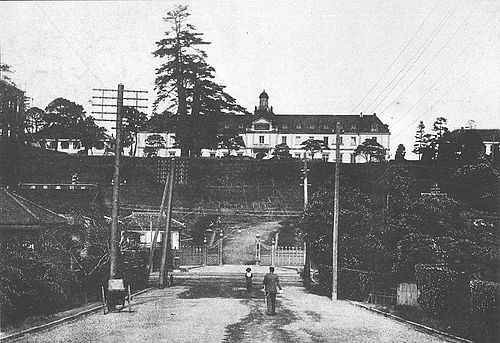
Former Army Ministry Site (Ichigaya Heights)
旧陸軍省跡(市ヶ谷台)
The site of the former Imperial Japanese Army Ministry (陸軍省) at Ichigaya Heights in Shinjuku, Tokyo — the supreme administrative headquarters of the Japanese Army, which moved here from Miyakezaka in December 1941 and remained until 1945. During the Pacific War, it housed the Army Ministry, the Army General Staff Office, and the Imperial General Headquarters Army Section, serving as the nerve center for all wartime military decision-making. On the night of August 14–15, 1945, the compound became the focal point of the Kyūjō Incident (宮城事件), an attempted military coup by army officers seeking to prevent Emperor Hirohito's surrender broadcast.

Second Naval Fuel Depot (Yokkaichi)
第二海軍燃料廠
The Second Naval Fuel Depot (第二海軍燃料廠) in Yokkaichi, Mie Prefecture was Imperial Japan's largest oil refinery, with a daily capacity of 25,000 barrels. Established in 1941 in the Shiohama district, it produced aviation gasoline, liquid fuels, and lubricating oil for the Imperial Japanese Navy. The facility and its associated Utsube River Oil Refinery were ranked first among Japan's aviation fuel production centers by 1945. From June to August 1945, US B-29 bombers of the 315th Bombardment Wing conducted repeated precision raids that destroyed the refinery complex. Yokkaichi itself was firebombed on June 18, 1945, killing 736 civilians. After the war, the site was converted to civilian petrochemical use and became the foundation of the Yokkaichi industrial kombinat.
Wakkanai Naval Communications Base (Red Brick Communications Station)
旧海軍大湊通信隊稚内分遣隊幕別送信所(赤れんが通信所)
A former Imperial Japanese Navy communications base in Wakkanai, Hokkaido, established in 1931 as a transmitter station for northern defense. Directly linked to Navy General Headquarters, the station relayed the coded Pearl Harbor attack order "Niitakayama Nobore 1208" in December 1941, received General Kuribayashi's final message from Iwo Jima in March 1945, and remained in contact with the northern front through the end of the war. The distinctive red brick buildings, completed in 1941, were designated Wakkanai Municipal Cultural Properties in 2023.

Hiroshima Army Youth School Ruins
広島陸軍幼年学校跡
Ruins of the Imperial Japanese Army Youth School (Rikugun Yōnen Gakkō) in Hiroshima, established in 1897 to train boy cadets aged 13–16 as future army officers. Located in the Motomachi district north of Hiroshima Castle, the school was destroyed by the atomic bombing on August 6, 1945. Students had been evacuated to the mountains weeks earlier, but staff and hospitalized students perished. Gate pillars and a monument stone remain at the site today.

Numazu Air Raid Site
沼津大空襲跡
Site of the devastating July 17, 1945 firebombing of Numazu City by 130 B-29 bombers of the USAAF 58th Bombardment Wing. The raid dropped 1,039 tons of incendiary bombs, destroying 9,523 buildings and killing 274 people. The U.S. Strategic Bombing Survey recorded an 89.5% destruction rate — one of the highest of any Japanese city in WWII.

Johnson Air Base Site (JASDF Iruma Air Base)
ジョンソン基地跡(航空自衛隊入間基地)
Originally established in 1938 as Irumagawa Airfield for the Imperial Japanese Army Air Force Academy, this base served as a training facility during WWII. After Japan's surrender in 1945, the U.S. Fifth Air Force took control and renamed it Johnson Air Base in honor of Lt. Col. Gerald R. Johnson, a USAAF ace killed during a typhoon approach. Fully returned to Japan in 1978, it now operates as JASDF Iruma Air Base and hosts a popular annual air show on Culture Day.

Washington Heights Site (Yoyogi Park)
ワシントンハイツ跡(代々木公園)
Site of the largest U.S. military dependent housing complex in occupied Japan, built in 1946 on the former Imperial Japanese Army Yoyogi Parade Ground. The 92.4-hectare compound housed 827 family units with schools, churches, and theaters. Returned to Japan in 1964 for the Tokyo Olympics, it is now Yoyogi Park and the National Gymnasium.

Tokyo Second Army Arsenal (Itabashi Powder Works)
東京第二陸軍造兵廠(板橋火薬製造所)
Site of the Imperial Japanese Army's Second Tokyo Arsenal, Japan's first government-operated gunpowder factory established in 1876 on the former Kaga Domain estate in Itabashi. The facility produced explosives, propellants, and ammunition components, and housed the Army Explosives Research Institute. Designated a National Historic Site in 2017, the surviving brick structures and ballistic testing tunnels are preserved in Kaga Park.

Shizuoka Air Raid Site
静岡大空襲跡
Site of the devastating June 19, 1945 firebombing of Shizuoka by 137 B-29 bombers of the USAAF 314th Bombardment Wing. The two-wave incendiary attack dropped 13,211 bombs, destroying 66.1% of the city center, killing about 1,950 civilians (1,952 in the most widely cited count) and injuring between 5,000 and 12,000 depending on the source. Shizuoka was targeted as the 15th largest Japanese city and a key point on the Tokaido corridor linking Tokyo and Osaka.

Shiraume Memorial Tower (Shiraume Student Nurse Corps)
白梅之塔(白梅学徒隊慰霊碑)
The Shiraume Memorial Tower (白梅之塔) in Itoman City, Okinawa, commemorates the Shiraume Student Nurse Corps (白梅学徒隊), composed of 46 fourth-year students from Okinawa Prefectural Second Girls' High School who were mobilized as auxiliary nurses for the Imperial Japanese Army's 24th Division First Field Hospital during the Battle of Okinawa. Twenty-two of the students perished during the battle, many killed during the chaotic retreat southward after the hospital was dissolved on June 4, 1945. Originally erected as a simple stone marker in January 1948, the memorial was rebuilt in 1951 and renovated to its current form in 1992. The site marks the location of a natural cave (gama) in the Maesato district where surviving students took shelter during the final days of the battle. Though less internationally known than the Himeyuri Student Corps from a different school, the Shiraume Corps represents one of nine female student mobilization units in Okinawa and stands as an important testament to the tragic wartime exploitation of young women.

Site of the Army Youth Pilot School, Tokorozawa
陸軍少年飛行兵学校跡
The site where the Imperial Japanese Army's youth pilot training system was born in 1934. The Tokorozawa Army Flying School began accepting teenage boys (initially aged 15 to under 19) as aviation cadets (少年飛行兵) to train them as pilots, navigators, and maintenance technicians for the Army Air Service. As Japan's war losses mounted, the program expanded dramatically from 170 initial recruits to thousands per cohort, eventually producing over 45,000 young airmen across multiple schools by war's end in 1945. Today the former school grounds are part of Tokorozawa Aviation Memorial Park, where the Youth Aviation Soldier Statue (少年航空兵像) stands as a memorial to the teenage cadets who served.

Jiadong Shrine Ruins
佳冬神社跡
Jiadong Shrine (佳冬神社, Katō Jinja) was a Shinto shrine built in 1936 in Jiadong Township, Pingtung County, Taiwan, under Japan's "one village, one shrine" policy. Serving both the local community and soldiers stationed at the adjacent Jiadong Army Airfield, it was one of southern Taiwan's most complete shrine complexes, stretching 140 meters from its first torii gate to the main hall. After Japan's defeat in 1945 the shrine was abolished (its demolition is dated to 1946 in some accounts) and its buildings gradually disappeared, but significant remnants — including the first torii, one pillar of the second, a sacred bridge, and stone lantern bases — survive today. Designated a Pingtung County Historical Building in 2012, it is one of Taiwan's few well-preserved Japanese shrine ruins.

Beitou Public Bathhouse (Beitou Hot Spring Museum)
北投温泉公共浴場(北投温泉博物館)
The Beitou Hot Spring Museum, originally built in 1913 as the Hokutō Public Bathhouse — described as the largest and most lavish public bathhouse of its day, and often called the largest in East Asia — served multiple roles during the Japanese colonial era in Taiwan. During the Russo-Japanese War (1904–05), the Imperial Japanese Army established a convalescent hospital in Beitou for wounded soldiers, and throughout the colonial period the hot spring district functioned as a rest and recuperation area for military personnel, government officials, and elites. During WWII, inns in Beitou are said to have hosted kamikaze pilots for their final meals, and wounded soldiers were treated in the district. Some accounts also associate the area with wartime comfort stations (慰安所). After decades of neglect following Japan's withdrawal in 1945, the bathhouse was restored and reopened as a museum in 1998.

Chaozhou Airfield
潮州飛行場
A Japanese Army airfield established in the 1930s in Chaozhou Township, Pingtung County, southern Taiwan. It served as a fighter base during WWII, housing Ki-43 Hayabusa and Ki-84 Hayate fighters for the defense of southern Formosa, and was divided into two sections — Chaozhou Airfield and Chaozhou East Airfield.

Taitung Airfield
台東飛行場
A Japanese military airfield in Taitung, eastern Taiwan, established during WWII. Both Imperial Japanese Army and Navy aviation units are reported to have been stationed here. Reportedly laid out with four parallel runways, it served as a key air defense facility for eastern Taiwan. The site is now Taitung Airport (Fongnian Airport).

Keelung Fortress Command Headquarters
基隆要塞司令部
Command headquarters of the Keelung Fortress (基隆要塞), the highest military command center for coastal defense in northern Taiwan during Japanese colonial rule. Established in 1903, the fortress command oversaw battery positions across the Keelung, Jinshan, Tamsui, Hsinchu, and Houlong areas. The current reinforced concrete headquarters building was completed in 1929, designed by Governor-General's Office architect Asai Shin'ichi. During WWII, the command directed the Keelung Fortress Heavy Artillery Regiment and coordinated air defense during the 1944 Taiwan Air Battle. Designated a Keelung municipal historic site in 2010 and restored for public access in 2022.

Tachiarai Army Airfield
大刀洗陸軍飛行場
An Imperial Japanese Army airfield once described as the largest in East Asia, established in 1919 in Fukuoka Prefecture. Tachiarai served as the principal army pilot training center with 18 branch schools, and became a key staging base for kamikaze operations in the final months of WWII. Devastating B-29 raids on March 27 and 31, 1945 killed several hundred to about 1,000 people (figures vary by source), including 31 schoolchildren sheltering in Tonta Forest.

Bombing of Aomori
青森大空襲
On the night of July 28–29, 1945, 62 B-29 Superfortress bombers of the USAAF 58th Bombardment Wing firebombed Aomori, a prefectural capital and critical transportation hub linking Honshu to Hokkaido via the Seikan Ferry. The resulting firestorm destroyed 88% of the city, burned 18,045 homes, and left an estimated 1,767 civilians dead or wounded; the city's memorial records 1,018 deaths. Aomori ranked among the most thoroughly devastated cities in the entire strategic bombing campaign against Japan.

Matsumoto Castle
松本城
Matsumoto Castle, one of Japan's twelve original castles and a designated National Treasure, is said to have been identified during 1945 as a potential relocation site for the Eastern Army District Command (東部軍管区司令部) under the Ketsu-Go homeland defense plan. Located in central Nagano Prefecture alongside the nearby Matsushiro Underground Imperial Headquarters, the castle and its surrounding area were being prepared as part of a last-stand defense zone in the mountainous interior of Honshu, far from vulnerable coastal cities. The castle itself, built between 1504 and 1594, survived the war intact and remains one of the finest preserved original castle keeps in Japan.

Sendai Air Raid Site
仙台空襲跡
The site of the devastating firebombing of Sendai on July 10, 1945, when 123 B-29 bombers destroyed five square kilometers of the city center — the largest city in the Tohoku region and headquarters of the IJA 2nd Division. Over 1,000 civilians were killed and nearly 12,000 buildings burned in the two-hour incendiary attack.

Fengshan Airfield
鳳山飛行場
A late-war Japanese military airfield in the Fengshan area of Kaohsiung, Taiwan — listed as opened in December 1944 in what is now Daliao District — and the surrounding Fengshan military complex. The area served as a military staging area for southern operations during WWII; after the war the airfield was abandoned, while the former drill grounds and depots at Fengshan became the home of the ROC Military Academy and Army Infantry School.

Chikan Tower (Former Japanese Army Garrison Hospital)
赤崁楼(旧・陸軍衛戍病院)
Originally Fort Provintia built by the Dutch East India Company in 1653, Chikan Tower in Tainan was converted into a Japanese Army Garrison Hospital (陸軍衛戍病院) after Japan began colonial rule of Taiwan in 1895. The historic fortress complex, including the Haishen Temple and Wenchang Pavilion, served military medical purposes during the Japanese period before being restored as one of Taiwan's most important national historic monuments.

Imperial Japanese Army Toyama School Site
陸軍戸山学校跡
Site of the Imperial Japanese Army Toyama School (陸軍戸山学校, Rikugun Toyama Gakkō), established in 1873 in Shinjuku, Tokyo as the army's premier institution for infantry combat research and training. The school specialized in marksmanship, bayonet techniques, swordsmanship, gymnastics, and military music, and its military band was one of the most celebrated in Japan. During WWII, the adjacent Army Medical School conducted bacteriological warfare research linked to Unit 731. In 1989, the discovery of over 100 human remains at the nearby former Army Medical School site sparked major controversy over Japan's wartime biological experimentation program. The school closed in September 1945; today the area hosts the Japan Institute for Health Security (into which the National Center for Global Health and Medicine was reorganized in April 2025), Toyama Park, and residential developments, with memorial markers preserving the site's history.

Imperial Japanese Army Academy Site (Camp Zama)
陸軍士官学校跡(座間キャンプ)
Site of the Imperial Japanese Army Academy (陸軍士官学校, Rikugun Shikan Gakkō), the principal officer training school for the Imperial Japanese Army, which relocated from Ichigaya, Tokyo to Sagamihara-Zama in 1937. Emperor Hirohito personally named the campus "Sōbudai" (相武台) and attended graduation ceremonies. From 1937 to 1945, approximately 18,476 officer cadets were trained here before being deployed across the Pacific theater. After Japan's surrender in September 1945, the U.S. 1st Cavalry Division occupied the grounds, which subsequently became "Camp Zama." The base remains an active U.S. Army installation today, serving as the headquarters of U.S. Army Japan, while preserving several wartime-era monuments including the restored Sōbudai stone marker and original barracks buildings.

Meiji Seimei Kan (GHQ Annex)
明治生命館(GHQ別館)
A masterpiece of Greek Revival architecture completed in 1934 in Marunouchi, Tokyo. Requisitioned by GHQ after WWII, the building served as the U.S. Far East Air Forces (FEAF) headquarters and hosted the Allied Council for Japan, where General MacArthur delivered his opening address in April 1946. Designated as a National Important Cultural Property in 1997 — the first Showa-era building to receive this honor.

Former Sanadayama Army Cemetery
旧真田山陸軍墓地
Japan's first and largest former Imperial Japanese Army cemetery, established in 1871 in Tennoji Ward, Osaka. The site contains over 5,100 gravestones and a memorial ossuary holding more than 8,200 remains of soldiers who died in conflicts spanning from the Satsuma Rebellion (1877) through the Pacific War (1945), making it an unparalleled repository of Japan's modern military history.

Former IJA Central Special Intelligence Division Site
旧陸軍中央特種情報部跡
Site of the Imperial Japanese Army's Central Special Intelligence Division (中央特種情報部, Chūō Tokushu Jōhōbu), one of Japan's most secretive wartime signals intelligence organizations. Originally established in 1933 as the North Tama Army Communications Station in present-day Higashi-Kurume City, the unit was responsible for radio intercept, code-breaking, and cryptanalysis of Allied and foreign military communications. As the war situation deteriorated, operations were partially relocated to a welfare facility in the Takaido area of Suginami Ward, Tokyo. The division played a critical role in Japan's SIGINT efforts throughout the Pacific War.
20th Infantry Regiment Site (Camp Fukuchiyama and Historical Museum)
歩兵第二十聯隊跡(福知山駐屯地・垣将集館)
The former barracks of the 20th Infantry Regiment remain in military use at Camp Fukuchiyama. An officers' assembly building dating from the regiment's 1898 arrival survives as a historical museum, accessible by advance arrangement.

Sagami Army Arsenal Ruins
相模陸軍造兵廠跡
Site of the Sagami Army Arsenal (1938–1945), one of the Imperial Japanese Army's major ordnance factories in Sagamihara, Kanagawa Prefecture. The arsenal manufactured tanks, armored vehicles, and heavy weapons, employing up to 30,000 workers at its wartime peak. After Japan's surrender in 1945, the facility was seized by the U.S. Army and converted into the Sagami General Depot, which remains an active American military logistics base today.

Former Taipei Army Cemetery (Liuzhangli)
台北陸軍墓地跡(六張犁)
Site of the former Imperial Japanese Army cemetery in the Liuzhangli area of Taipei's Da'an District. Established during the Japanese colonial period to inter soldiers who died in service in Taiwan, the cemetery was part of the broader Liuzhangli burial grounds that served Taipei's Japanese community. After Japan's defeat in 1945, the military graves were largely cleared as part of de-Japanization efforts, with scattered tombstones remaining among the hillside terrain. The area was subsequently incorporated into the Taipei Municipal Cemetery system and later became associated with the burial of White Terror political victims in the 1950s.

Former Second General Army Headquarters
旧陸軍第二総軍司令部跡
The headquarters of the Imperial Japanese Army's Second General Army (第二総軍), established in Hiroshima in April 1945 under Field Marshal Hata Shunroku to coordinate the defense of western Japan against the anticipated Allied invasion (Operation Ketsu-Go). The command was responsible for all military operations across western Honshū, Shikoku, and Kyūshū. On August 6, 1945, the atomic bombing of Hiroshima devastated the headquarters and its subordinate organizations; by some estimates as many as 20,000 military personnel in the city were killed.

Matsuyama Air Raid Site
松山大空襲跡
Site of the devastating firebombing of Matsuyama City on July 26, 1945, when 128 B-29 Superfortress bombers of the 73rd Bombardment Wing dropped 896 tons of incendiary munitions over approximately two hours, killing 251 people and destroying 55% of the city's housing. The raid displaced 62,200 residents — 53% of the city population — and reduced much of the castle-town center to ashes, though Matsuyama Castle on Mount Katsuyama survived the firestorm.

Saga Air Raid Site
佐賀空襲跡
Site of the August 5, 1945 firebombing of Saga City by 65 B-29 Superfortress bombers of the USAAF 58th Bombardment Wing. Launching from Tinian in the Mariana Islands, the aircraft dropped 459 tons of incendiary and high-explosive ordnance on southern Saga and surrounding villages between 11:30 PM and 1:00 AM, destroying 443 structures and killing 61 civilians. A memorial stone inscribed "B29空爆焦土" (B-29 Bombing Scorched Earth) stands in the city to commemorate the victims.

Ichinomiya Fu-Go Balloon Bomb Launch Base Site
風船爆弾一宮打上基地跡
Site of the Second Battalion launch base for Operation Fu-Go (ふ号作戦), located on the Pacific coast of Ichinomiya Town, Chiba Prefecture. One of three bases that launched approximately 9,300 hydrogen balloon bombs toward North America between November 1944 and April 1945. The base operated six launch stations with 700 personnel. Today only an informational panel put up by the town of Ichinomiya commemorates the site.

Former Imperial Japanese Army Meteorological Department
陸軍気象部跡
Site of the Imperial Japanese Army Meteorological Department (陸軍気象部, later renamed Army Central Meteorological Department 陸軍中央気象部), the military weather intelligence organization that provided critical meteorological forecasting for Imperial Army operations throughout the Pacific War. Established in 1938 at Mabashi 4-chome (now Koenji-kita 4-chome), Suginami Ward, Tokyo, the department conducted research on military meteorology, tested weather instruments, and operated a vast network of observation stations across Japan, Korea, Manchuria, and occupied territories. The site is now Mabashi Park (馬橋公園); the Kishō Shrine (気象神社), originally built within the compound in 1944, survives as a relocated sub-shrine at nearby Koenji Hikawa Shrine — said to be Japan's only weather shrine.

Jinhae Guard District (Chinkai Naval Base)
鎮海警備府
The Imperial Japanese Navy's largest naval base on the Korean Peninsula, established in 1904 during the Russo-Japanese War on Jinhae Bay. Elevated to Guard District (警備府) status in November 1941, it served as a key operational hub for naval operations in the Sea of Japan and Korea Strait throughout the Pacific War. The site remains a major Republic of Korea Navy base.

Yongsan Garrison
龍山基地
Yongsan Garrison in Seoul was the principal Imperial Japanese Army base on the Korean Peninsula, home from 1908 to the headquarters of the Korea Garrison Army and its successor the Korea Army (朝鮮軍). Established during the Russo-Japanese War when Japan purchased approximately 3 million tsubo of land in Yongsan, the base became the nerve center of Japanese military control over Korea throughout the colonial period (1910-1945). After Japan's defeat, U.S. Army forces of the 7th Infantry Division occupied the garrison in September 1945. It subsequently served as the headquarters of United States Forces Korea (USFK) and the U.S. Eighth Army for over seven decades. As of 2018, USFK relocated to Camp Humphreys in Pyeongtaek, and the roughly 2.5 km² site — which still contains many Japanese-era brick buildings — is being returned to South Korea for conversion into a major public park.

Unit 731 Site (Pingfang, Harbin)
731部隊跡(ハルビン平房区)
The former headquarters of Unit 731 (731部隊), the Imperial Japanese Army's covert biological and chemical warfare research unit, located in the Pingfang District of Harbin, Manchuria (now Heilongjiang Province, China). Operational from 1936 to 1945 and led by Surgeon Lieutenant General Shiro Ishii (with Masaji Kitano in command from 1942 to 1945), the facility conducted large-scale human experimentation and developed biological weapons including plague, anthrax, and cholera. At least 3,000 prisoners, and by some estimates 10,000 or more — referred to by the dehumanizing codename "maruta" (丸太, logs) — perished in experiments. The site is now preserved as the Unit 731 Museum (侵華日軍第七三一部隊罪証陳列館), a national-level memorial and war crimes evidence exhibition hall that opened in 1985 and was extensively renovated with a new main building in 2015.

Former Kwantung Army Headquarters (Hsinking/Changchun)
関東軍司令部跡(新京)
Site of the headquarters of the Kwantung Army (関東軍, Kantō-gun), the Imperial Japanese Army's most powerful overseas field army, located in Hsinking (新京, now Changchun), the capital of the puppet state of Manchukuo. Built between 1932 and 1934 at Xinfa Road No. 577, the imposing building served as the nerve center from which the Kwantung Army exercised de facto control over Manchuria. The army orchestrated the Mukden Incident of September 18, 1931 — the false-flag operation that provided the pretext for Japan's conquest of Manchuria — and subsequently administered the region through the puppet government of Manchukuo. At its peak strength of over 700,000 troops in 1941, the Kwantung Army was the largest single Japanese military formation. The building survives today as the office of the CPC Jilin Provincial Committee and is designated a Major Historical and Cultural Site Protected at the National Level.

Mukden Incident Site (September 18th History Museum)
柳条湖事件跡(九・一八歴史博物館)
Site of the Mukden Incident (September 18, 1931), the staged railway bombing by the Kwantung Army that served as the pretext for Japan's invasion of Manchuria. Lieutenant Suemori Kawamoto detonated dynamite on the South Manchuria Railway near Mukden (modern Shenyang), blaming Chinese soldiers. This false flag operation led directly to the Japanese occupation of Manchuria and the creation of the puppet state Manchukuo, setting Japan on its path toward full-scale war in Asia.

Former Manchukuo State Council (Xinjing/Changchun)
満洲国国務院跡(新京/長春)
The State Council (国務院) of Manchukuo served as the executive administrative headquarters of the Japanese puppet state from 1932 to 1945. Designed by Japanese architect Tatsuro Ishii and completed in 1936, the imposing reinforced-concrete building with its distinctive pseudo-oriental roof stood at the northern end of Xinmin Avenue, at the head of the government quarter popularly known as the "Eight Grand Ministries" (八大部), in the purpose-built capital of Xinjing (modern-day Changchun). While Manchukuoan ministers nominally headed each department, Japanese vice-ministers appointed by the Kwantung Army wielded the real power. After Japan's defeat in 1945, the building passed through Soviet and Chinese Nationalist hands before becoming part of Jilin University. Designated a Major Historical and Cultural Site Protected at the National Level in 2013, the building now houses the College of Basic Medical Sciences of Jilin University and stands as one of Changchun's most prominent landmarks of the Manchukuo era.
Kenebetsu No. 1 Airfield Covered Aircraft Shelter No. 1
旧陸軍計根別第一飛行場1号有蓋掩体
A surviving concrete aircraft shelter from the Army's Kenebetsu airfield complex, built around 1942–1943. It remains on private pasture in Betsukai and may not be entered or approached across the field.
Former Fourth Infantry Regiment Barracks (Sendai City Museum of History and Folklore)
旧歩兵第四連隊兵舎(仙台市歴史民俗資料館)
A surviving wooden Army barracks in Tsutsujigaoka Park, used until August 1945 and later moved within the former military grounds. It now houses Sendai's history and folklore museum.
Uji Army Gunpowder Factory Remains (Uji Garrison)
宇治火薬製造所跡(宇治駐屯地)
A former army explosives factory that continued production through 1945. Part of its extensive grounds is now Uji Garrison, where an altered nineteenth-century brick water tower survives; access is controlled.
Kori Army Ammunition Factory Site (Myokenyama Chimney)
香里製造所跡(妙見山の煙突)
A surviving boiler chimney marks the former Kori ammunition factory in Hirakata. The works dried propellant delivered from Uji and filled shells and bombs; the chimney now stands within a working water facility with limited public openings.
Former Tokyo First Army Arsenal Headquarters (Chuo Park Cultural Center)
旧東京第一陸軍造兵廠本部事務所(中央公園文化センター)
The former arsenal headquarters survives in Tokyo's Jujo district as a public cultural center. Built in 1930, it connects the area's wartime arms industry with its later use by U.S. forces and conversion to civic facilities.
Okegawa Branch of the Kumagaya Army Flying School
旧熊谷陸軍飛行学校桶川分教場(桶川飛行学校平和祈念館)
The Army flying school's separate Okegawa campus preserves restored barracks and service buildings. It trained pilots before becoming a special-attack training facility in 1945 and later housing returnees.
Fuji Army Airfield Site and Reclamation Monument
富士飛行場跡(開拓記念碑)
A short-lived Army training airfield opened near the Fuji River mouth in 1944. Its grounds were reclaimed after the war; a relocated monument and the area's street pattern recall the lost airfield.
Kawagoe Army Arsenal Site (Fukuoka Ammunition Factory)
東京第一陸軍造兵廠川越製造所跡(福岡工場・火工廠)
The former ammunition works in present-day Fujimino operated from 1937 to 1945, producing cartridges, fuzes and other munitions components. Its grounds now contain civic buildings, housing, schools and factories; the marker represents the former site around city hall.
Hisai Army Barracks and Former 30th Infantry Brigade Headquarters
久居陸軍兵営跡・旧歩兵第三十旅団司令部(久居駐屯地)
Camp Hisai occupies the former Imperial Army barracks established in 1908. Its surviving 30th Infantry Brigade headquarters now houses a museum of the units stationed here; visits to this active military camp require advance arrangements.
Former 2nd Antiaircraft Regiment Searchlight Training Building
旧陸軍高射砲第二連隊照空予習室
A surviving concrete air-defense training building in Kashiwa's Nedo district used projected aircraft images indoors and rangefinding equipment on its roof. Later converted into a fire station, it is now a registered cultural property; entry is prohibited.
Inba Airfield Site and Open-Air Aircraft Revetment
印旛飛行場跡・無蓋掩体壕
An earthen aircraft revetment survives beside a flood-control pond in Inzai. It recalls the Inba pilot-training airfield's wartime conversion to an army fighter base.