Taiwan Governor-General Communications Bureau
臺灣總督府交通局遞信部
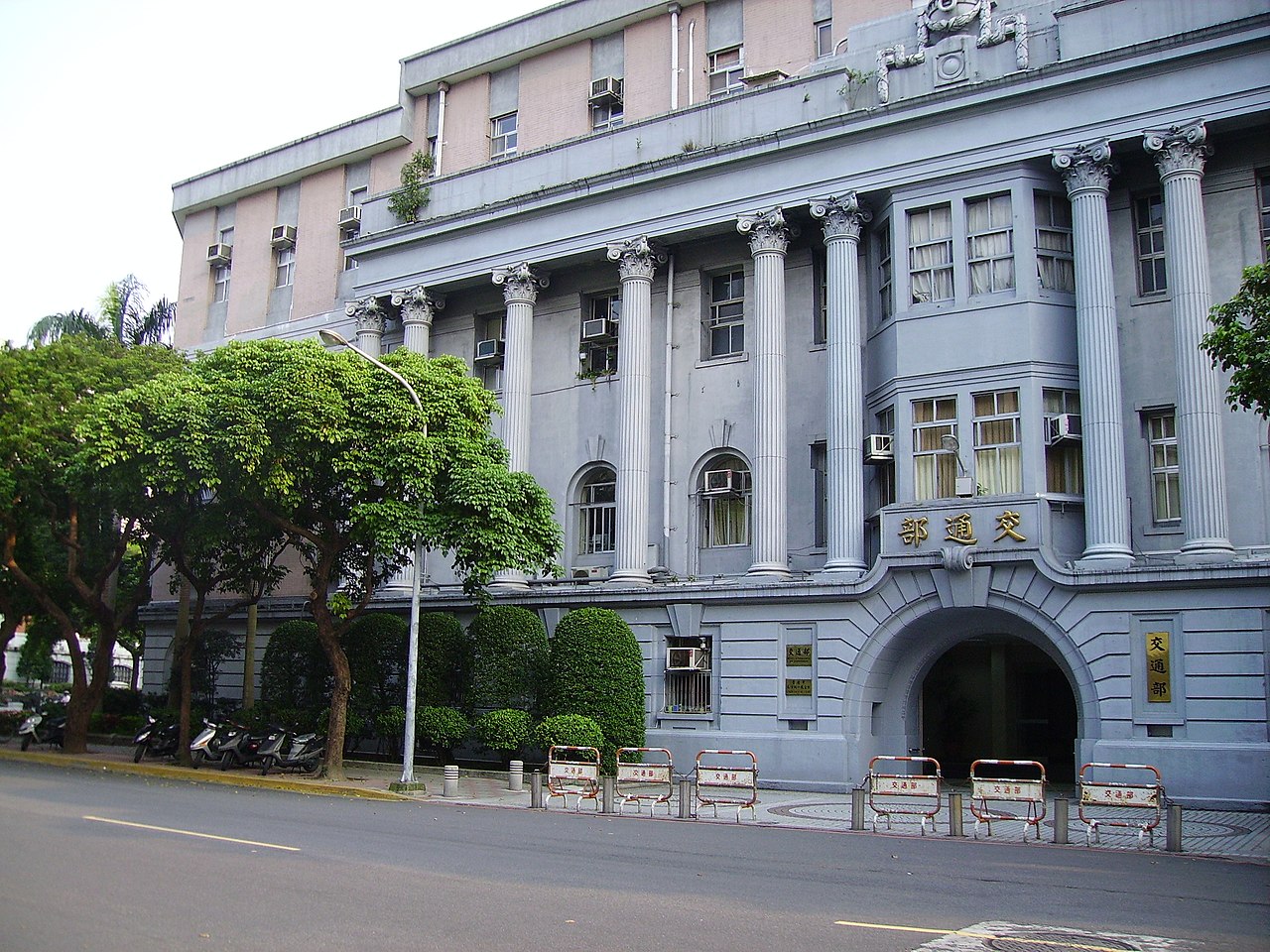
The Communications Bureau (遞信部) of the Taiwan Governor-General's Office, completed in 1924–1925 and designed by Moriyama Matsunosuke. This Western classical building on Changsha Street in Taipei managed all postal, telegraph, telephone, and broadcasting services across colonial Taiwan, and served as a critical hub for wartime communications control and censorship. Now a designated municipal historic monument housing the Academia Historica.
Images


History
The Communications Bureau (遞信部) of the Taiwan Governor-General's Transportation Bureau was one of the most important colonial administrative organs in Japanese-ruled Taiwan. Established as part of a major government reorganization in 1924, the bureau assumed control over all postal services, telegraph and telephone networks, maritime communications, savings operations, and later broadcasting across the island.
Construction of the imposing headquarters building on Changsha Street in central Taipei began on 17 March 1923; the main structure was finished in 1924, when the staff moved in that March, and the heritage register dates the completed building to 1925. It was designed by the renowned colonial architect Moriyama Matsunosuke of the Governor-General's Civil Engineering Bureau. The three-story structure combined steel-reinforced concrete with brick construction and featured a distinctive Western classical facade. The ground floor was treated with rusticated stone-effect walls, while the main entrance on the north facade featured a grand arched portal. The second and third floors showcased twelve tall Greek Composite columns along the front, with four Ionic columns on the east side, creating an exceptionally ornate classical composition. The building was also equipped with elevators and sophisticated fire prevention systems, reflecting its importance as a key government facility.
During the Pacific War, the Communications Bureau played a critical role in Japan's wartime apparatus in Taiwan. It controlled all civilian and military communications infrastructure, implemented censorship of telegraph and postal correspondence, managed radio broadcasting for propaganda purposes, and coordinated maritime communication networks essential for convoy operations in the South Pacific theater. The building itself was struck by three bombs during the May 31, 1945 Allied air raids on Taipei, sustaining damage to its rooftop, but was quickly repaired and continued operations until Japan's surrender.
After the war, the building was taken over by the Republic of China government. It served successively as the headquarters of the Postal and Telegraph Administration Bureau, and from 1956 to 2006 as the Ministry of Transportation and Communications (交通部) headquarters. Around 1971, a fourth floor was added and rear structures were demolished to accommodate growing needs. The building was designated a Taipei Municipal Historic Monument in 1998. In 2003, the front archway suffered severe fire damage from a vehicle-borne attack. After the Ministry relocated in November 2006, the building was transferred to the Academia Historica (國史館), which has used it as its Taipei headquarters since 2010.
Today the building stands as one of the finest surviving examples of Japanese colonial government architecture in Taipei, its classical columns and arched entrance a testament to the administrative ambitions of the Governor-General's regime. It is open to the public as the Academia Historica, preserving both its architectural heritage and its role in Taiwan's complex colonial and postwar history.
Categories
Related themes
Sources
- 臺灣總督府交通局遞信部 - 維基百科Website