Wartime Government
戦時政府
The political and administrative apparatus that governed Japan during the war.
History
This theme covers the political and administrative institutions that governed Japan during the war: the Emperor and the court, the Cabinet and ministries, the Imperial Diet, Imperial General Headquarters, and mobilisation bodies such as the Imperial Rule Assistance Association. Most were concentrated in Nagatachō, Kasumigaseki and around the Imperial Palace in Tokyo, where the great wartime decisions were made — to widen the war in China, to conclude the Tripartite Pact, to go to war with the United States and Britain, and to accept the Potsdam Declaration.
Japan's wartime government operated under the Meiji Constitution of 1889 with the Emperor as sovereign. Ministers advised the Emperor individually and the prime minister had no power of command over his colleagues, while the supreme command of the armed forces lay outside the cabinet, exercised through the Army and Navy general staffs. Party cabinets ended after the May 15 Incident of 1932, and the military's political voice grew further after the February 26 Incident of 1936. After war with China began in 1937 the government created the Planning Board and passed the National General Mobilization Law; in 1940 the parties dissolved and the Imperial Rule Assistance Association was formed, and in 1943 the Munitions and Greater East Asia Ministries were set up. Key institutions included the Imperial General Headquarters, the Cabinet, and various ministries that coordinated military strategy, economic mobilization, and civilian control from Tokyo; the Liaison Conference meant to link them (from 1944 the Supreme Council for the Direction of the War) never overcame the separate agendas of Army, Navy and government.
The theme matters because it shows that wartime Japan was run not by a single dictator but by several mutually checking organs with blurred responsibility, a structure that helps explain both the escalation of the war and the slowness of its ending. In August 1945 the Supreme Council and cabinet deadlocked over the Potsdam Declaration, and the issue was settled only by the Emperor's decision at Imperial Conferences. After the war GHQ pressed for constitutional revision, bodies such as the Home Ministry were dismantled, and the Constitution of Japan, in force from 1947, established popular sovereignty and parliamentary cabinet government.
Under this theme visitors will find the National Diet Building, the former prime minister's residence, former ministry buildings, places around the Imperial Palace associated with the Imperial Conferences, the sites of Imperial General Headquarters and the Army and Navy high commands, and the intended relocation sites for government and headquarters prepared for the final battle, such as Matsushiro in Nagano. Many buildings remain in government use and can be seen only from outside or on open days.
Related sites (243)

Imperial General Headquarters
大本営
The supreme military command center of the Japanese armed forces during World War II, located in central Tokyo.

Matsushiro Underground Imperial Headquarters
松代大本営地下壕
A massive underground bunker complex built in 1944-1945 beneath three mountains in Matsushiro, Nagano, intended to relocate Japan's Imperial government in the event of an Allied invasion.
Yasukuni Shrine and Yūshūkan Museum
靖國神社・遊就館
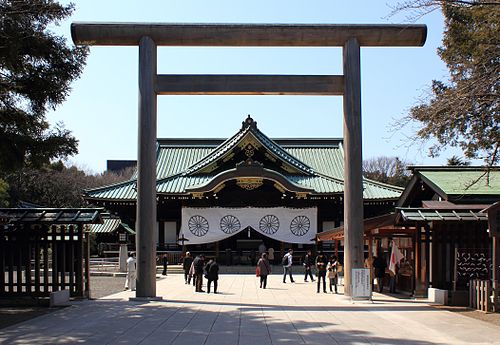
A Shinto shrine in Chiyoda, Tokyo, established in 1869 to enshrine Japan's war dead, and its affiliated military museum Yūshūkan. The shrine enshrines approximately 2,466,532 souls including 14 Class A war criminals.
Dai-ichi Life Insurance Building (GHQ SCAP Headquarters)
第一生命館(GHQ総司令部)
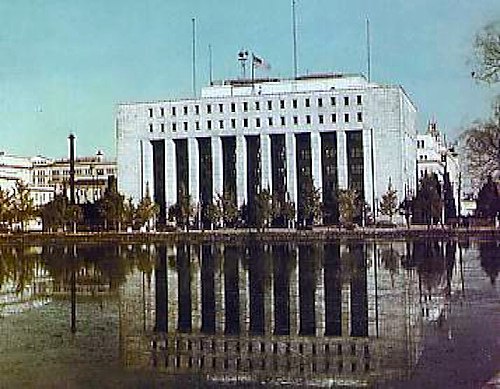
The Dai-ichi Life Insurance Building in Tokyo served as General Douglas MacArthur's SCAP headquarters from 1945 to 1952, overseeing the occupation and reconstruction of Japan.

Ichigaya Memorial Hall
市ヶ谷記念館
Ichigaya Memorial Hall preserves the auditorium of the former Imperial Japanese Army Ministry Building No. 1, which served as the Army Ministry and Imperial General Headquarters during WWII, the courtroom for the International Military Tribunal for the Far East (Tokyo Trials, 1946–1948), and the site of Yukio Mishima's attempted coup and ritual suicide in 1970. The hall was relocated and reconstructed within the Ministry of Defense compound in 2000.

Manmo Pioneer Peace Memorial Museum
満蒙開拓平和記念館
The only museum in Japan dedicated to the history of the Manchurian-Mongolian colonization program. Located in Achi Village, Nagano Prefecture — the prefecture that sent the most emigrants to Manchuria — the museum commemorates the approximately 270,000 Japanese agricultural settlers dispatched to Manchukuo under government schemes from the 1930s onward. Of these, an estimated 80,000 perished from starvation, disease, Soviet attack, and mass suicide following the Soviet invasion of August 1945, when the Kwantung Army abandoned the defenseless settlers.

Monument of the Nine Maidens
九人の乙女の碑
A memorial in Wakkanai Park commemorating nine young female telephone operators at the Maoka Post Office in Karafuto (southern Sakhalin), who took their own lives with potassium cyanide on August 20, 1945, rather than abandon their switchboards during the Soviet assault on Maoka. Their final transmission — "Everyone, this is the end. Goodbye, goodbye" — is inscribed on the monument. Erected in 1963, it stands as a symbol of civilian sacrifice in the closing days of the Pacific War.

Suzuki Kantarō Memorial Museum
鈴木貫太郎記念館
Memorial museum in Sekiyado, Noda City, Chiba Prefecture, dedicated to Baron Kantarō Suzuki (1868–1948), the 42nd Prime Minister of Japan who led the nation to accept the Potsdam Declaration and end World War II. Opened in 1963, the museum preserves over 1,000 personal belongings, ceremonial attire, and documents, as well as an oil painting depicting the fateful Imperial Conference (Gozen Kaigi) of August 9–10, 1945. The museum has been closed since October 2019 due to damage from Typhoon Hagibis and structural concerns.

Gakuto Shutsujin Send-off Site (Former Meiji Jingu Gaien Stadium)
出陣学徒壮行の地(明治神宮外苑競技場跡)
Site of the iconic October 21, 1943 student-soldier send-off ceremony (学徒出陣壮行会), where approximately 25,000 university students marched in heavy rain at the Meiji Jingu Gaien Stadium before being dispatched to the front lines. The event, broadcast live on national radio, symbolized total mobilization as Japan conscripted its university students after revoking their draft deferments. The former stadium was demolished in 1956 and replaced by the National Olympic Stadium (1958), which itself was rebuilt as the current Japan National Stadium (2019). A stone monument, "出陣学徒壮行の地," erected in 1993 near the Sendagaya Gate, commemorates the thousands of students who never returned.

Sugamo Prison Site (Sunshine 60)
巣鴨プリズン跡(東池袋中央公園)
Sugamo Prison, originally built in 1895, was commandeered by Allied occupation forces after WWII to hold suspected war criminals awaiting trial before the International Military Tribunal for the Far East. On December 23, 1948, seven Class-A war criminals — including former Prime Minister Hideki Tojo — were executed by hanging here. A total of 60 war criminals were executed at the site. The war-criminal prison closed in 1958 (1962 by some accounts); the buildings were demolished in 1971 and replaced by the Sunshine City commercial complex (anchored by the 240-meter Sunshine 60 skyscraper) which opened in 1978. A small stone monument inscribed "Pray for Eternal Peace" (永久平和を願って) stands in adjacent Higashi-Ikebukuro Central Park, near the former gallows location.

Imperial Japanese Army Nakano School Site
陸軍中野学校跡
Site of the Imperial Japanese Army Nakano School (陸軍中野学校, Rikugun Nakano Gakkō), Japan's primary intelligence and covert operations training academy from 1938 to 1945. Over 2,500 graduates were trained in espionage, sabotage, guerrilla warfare, propaganda, and counterintelligence. Notable alumni include Second Lieutenant Hiroo Onoda, who continued guerrilla operations on Lubang Island in the Philippines until 1974. The original campus at Nakano 4-chome, Tokyo, has been completely redeveloped; a stone monument (陸軍中野学校址碑) stands in the grounds of the Tokyo Metropolitan Police Hospital, with an information panel in adjacent Nakano Shiki no Mori Park.

Chidorigafuchi National Cemetery
千鳥ヶ淵戦没者墓苑
Chidorigafuchi National Cemetery is Japan's national, non-sectarian tomb for unidentified war dead, located beside the Imperial Palace moat in Chiyoda, Tokyo. Established in 1959 by the Japanese government, the cemetery enshrines approximately 370,485 sets of remains (as of May 2023) of servicemen, military support personnel, and civilians who perished overseas during the Second Sino-Japanese War and World War II but whose identities could not be determined. The central Hexagonal Hall (六角堂, Rokkakudō) houses a gilt bronze urn bestowed by Emperor Shōwa containing symbolic remains from various battlefields, along with a massive five-ton ceramic coffin — one of the largest ceramic objects in the world — fired at 1,700°C from stones gathered across Pacific and Asian war zones. Each spring, the government holds a formal Ceremony of Reverence (拝礼式) attended by members of the Imperial Family, the Prime Minister, and senior officials to honor the unknown dead.

Former 4th Division Headquarters (MIRAIZA OSAKA-JO)
旧陸軍第四師団司令部庁舎(MIRAIZA大阪城)
The former headquarters building of the Imperial Japanese Army 4th Division, erected in 1931 on the Honmaru (inner bailey) of Osaka Castle. Constructed in Romanesque revival style with public donations totalling 1.5 million yen to commemorate the enthronement of Emperor Hirohito, the reinforced-concrete building was completed simultaneously with the reconstruction of the Osaka Castle main tower. After the 4th Division relocated in 1940 and the building survived wartime air raids without major damage, it served successively as the Central District Army HQ, US occupation forces facility, Osaka City Police HQ, Osaka Prefectural Police HQ, and the Osaka City Museum (1960–2001). Reopened in October 2017 as the commercial complex MIRAIZA OSAKA-JO, the building retains its striking military-Romanesque exterior — including corner turrets, scratch-tile cladding, and a symmetrical winged facade — making it one of the finest surviving examples of Showa-era military architecture in Japan.

Kumamoto Castle & Former IJA 6th Division Headquarters Site
熊本城・陸軍第六師団司令部跡
Kumamoto Castle, one of Japan's three premier castles, served as the home base of the Imperial Japanese Army 6th Division from 1888 to 1945. The 6th Division, recruited primarily from southern Kyushu, was one of the most combat-experienced formations in the IJA: it fought in the Sino-Japanese War, Russo-Japanese War, and the Siberian Intervention before becoming notorious as one of the principal assault divisions in the Battle of Nanking (December 1937), where it stormed the Zhonghua Gate sector under Lieutenant General Tani Hisao. During the Pacific War, the division fought in the Solomon Islands campaign (Bougainville). The castle grounds housed the division headquarters (a 1917 building on the Honmaru), barracks for the 13th Infantry Regiment, supply depots, an army hospital, and ammunition stores — occupying roughly 270,000 square meters of the city center and transforming Kumamoto into a garrison city (軍都). The castle survived the July 1945 firebombing raids but the original headquarters building was destroyed; its site is now part of the restored Kumamoto Castle Park. The castle's concrete-reconstructed main tower (1960) sustained severe damage in the 2016 Kumamoto earthquakes and was fully restored in 2021.

Former 11th Division Headquarters (Nogi Museum), Zentsuji
旧陸軍第十一師団司令部(乃木館)
The headquarters of the Imperial Japanese Army 11th Division, completed in 1898 (Meiji 31) in Zentsuji, Kagawa Prefecture — the only divisional headquarters on the island of Shikoku. The Renaissance-style Western building with plastered walls and a hipped-and-gabled tile roof was the command post of General Nogi Maresuke, who served as the first divisional commander from 1898 to 1901. The 11th Division recruited soldiers from all four Shikoku prefectures and fought in the Russo-Japanese War (Battle of Port Arthur and Mukden under Nogi's Third Army), fought at Shanghai in 1937 and was stationed in Manchuria from 1938, and returned to Shikoku in April 1945 for homeland defense of Tosa Bay. The Zentsuji garrison also housed one of the first Allied POW camps in the Japanese Home Islands (January 1942), holding American servicemen captured on Guam and Wake Island. Today the building serves as the Nogi Museum (乃木館) within JGSDF Camp Zentsuji, home of the 14th Brigade. Remarkably, the original headquarters, red-brick armories, barracks, and the adjacent Kaikosha officers' club (Important Cultural Property, 1903) all survive in situ — an exceptionally rare ensemble of Meiji-era military architecture still in active use.

32nd Army Headquarters Bunker (Shuri Castle Underground)
第32軍司令部壕
A massive underground tunnel complex constructed beneath Shuri Castle in Naha, Okinawa, serving as the supreme headquarters of the Imperial Japanese Army 32nd Army during the Battle of Okinawa. Built from December 1944 by mobilized labor including Okinawan civilians and students, the complex extended approximately 1,000 meters in total length at a depth of up to 30 meters below the castle. Lieutenant General Mitsuru Ushijima commanded the entire Japanese defense of Okinawa from this bunker until May 27, 1945, when the headquarters was evacuated southward to Mabuni. The tunnels were demolished with explosives during the retreat. Seriously wounded soldiers unable to walk were left behind, and many died. The site remains largely sealed and inaccessible, distinct from the Former Navy Underground HQ in Tomigusuku commanded by Rear Admiral Ota.

Former 32nd Infantry Regiment Barracks Site (Kajō Park)
旧歩兵第三十二連隊兵営跡(霞城公園)
The former garrison site of the Imperial Japanese Army 32nd Infantry Regiment, located within the Ninomaru (second bailey) of Yamagata Castle (also known as Kajō, "Mist Castle"). The regiment was formed at Akita in 1896 and brought to Yamagata in 1898, after the city purchased the castle grounds and donated them to the Army; it kept the castle as its home garrison for nearly half a century until Japan's surrender in 1945. The 32nd Regiment fought in every major conflict of modern Japan — the Russo-Japanese War, the Siberian Intervention, the invasion of Manchuria, the Second Sino-Japanese War, and ultimately the Battle of Okinawa, where the regiment was virtually annihilated. After the war, the military land was transferred to Yamagata City and opened in 1949 as Kajō Park. Today the park preserves the reconstructed Ninomaru Higashi-Ōtemon Gate (1991), the Honmaru Ichimonji Gate, stone monument markers for the 32nd Regiment, and approximately 1,500 cherry trees originally planted by returning soldiers in 1906. It remains one of the most significant former military garrison sites in the Tōhoku region.

Former 16th Division Headquarters (Seibo Jogakuin)
旧陸軍第十六師団司令部庁舎(聖母女学院)
The former headquarters of the Imperial Japanese Army 16th Division, completed in 1908 in the Fukakusa district of Fushimi-ku, Kyoto. Designed by the Army Ministry and constructed by Matsumura-gumi, this two-story red-brick building with a copper-plate roof is one of the finest surviving examples of Meiji-era military architecture in Japan. The 16th Division, recruited from the Kyoto region, gained lasting notoriety for its role in the Nanjing Massacre of December 1937 and was later virtually annihilated during the Battle of Leyte in 1944–45. After the war, the building and surrounding military grounds were transferred to the Catholic educational foundation Seibo Jogakuin in 1948, where it now serves as the main hall of Kyoto Seibo Gakuin. Designated a Nationally Registered Tangible Cultural Property, the building retains its imposing classical facade with a columned entrance and triangular pediment, and still bears traces of black camouflage paint applied during wartime air-raid precautions.

NHK Museum of Broadcasting
NHK放送博物館
The NHK Museum of Broadcasting stands atop Atago Hill in Minato, Tokyo — the birthplace of Japanese broadcasting. Station JOAK made Japan's first radio broadcast on March 22, 1925, from a temporary studio in Shibaura, and began regular broadcasting from its permanent station on this hill that July. On August 15, 1945, the Gyokuon-hōsō (Jewel Voice Broadcast) — Emperor Hirohito's historic radio address announcing Japan's surrender — was transmitted via NHK's broadcasting network, and the original Gyokuon-ban recording disc is preserved in this museum. Opened in 1956 as the world's first museum dedicated to broadcasting.

Former Navy Ministry
海軍省
The Ministry of the Navy (海軍省, Kaigun-shō) was a cabinet-level ministry of the Empire of Japan responsible for the administrative affairs of the Imperial Japanese Navy from 1872 to 1945. Located in a distinctive red-brick building designed by Josiah Conder in Kasumigaseki, Chiyoda Ward, it served as the administrative nerve center of the IJN throughout WWII, complementing the Army Ministry (陸軍省) at Ichigaya. The building was demolished postwar and replaced by Central Government Building No. 1, which now houses the Ministry of Agriculture, Forestry and Fisheries (農林水産省).

Konoe Fumimaro's Tekigaiso Villa
荻外荘(近衞文麿旧宅)
Tekigaiso was the private residence of Prince Konoe Fumimaro, three-time Prime Minister of Japan, located in the quiet residential area of Ogikubo, Suginami Ward, Tokyo. Originally built in 1927 by architect Itō Chūta as a villa for Imperial physician Irisawa Tatsukichi, the estate was purchased by Konoe in 1937 and named 'Tekigaiso' by elder statesman Saionji Kinmochi. The villa served as a de facto second seat of government during Konoe's premierships. The 'Ogikubo Conference' of July 19, 1940, held here between Konoe, Tōjō Hideki, Matsuoka Yōsuke, and Yoshida Zengo, laid the groundwork for the Tripartite Pact with Nazi Germany and Fascist Italy and the concept of the Greater East Asia Co-Prosperity Sphere. The 'Tekigaiso Conference' of October 12, 1941, where Tōjō refused any concession on withdrawing from China, led directly to Konoe's resignation and Tōjō's appointment as Prime Minister, setting Japan on an irreversible path to war with the United States. On December 16, 1945, Konoe took his own life by potassium cyanide in his study at Tekigaiso, the day he was to report to GHQ on war crimes charges. Designated a National Historic Site in 2016, the villa was restored by Suginami Ward and opened to the public in December 2024.

Former Residence of Hideki Tojo
東條英機邸跡
Site of wartime Prime Minister Hideki Tojo's private residence in Yoga, Setagaya, Tokyo. On September 11, 1945, when GHQ military police arrived to arrest him as a suspected Class-A war criminal, Tojo shot himself in the chest with a pistol in his study but missed his heart and survived. American journalists and photographers who had gathered outside captured the dramatic scene, and the resulting photographs — showing Tojo slumped in a chair, bleeding from his self-inflicted wound — were transmitted worldwide and became some of the most iconic images of the immediate postwar period. After receiving emergency blood transfusions from American military doctors, Tojo recovered and was transferred to Sugamo Prison. He was tried before the International Military Tribunal for the Far East and executed on December 23, 1948. The residence no longer exists; the site is now occupied by a Rissho Kosei-kai (立正佼成会) church building, with a small stone marker reading "東條英機邸跡" on the grounds.

Former Imperial Guards Division Headquarters
旧近衛師団司令部庁舎
The Former Imperial Guards Division Headquarters is a red-brick Gothic-style building completed in 1910 in Kitanomaru Park, Tokyo. As the command center of the elite Imperial Guards Division (近衛師団), it was the nerve center of the Kyūjō Incident on the night of August 14–15, 1945, when young army officers led by Major Kenji Hatanaka occupied the Imperial Palace grounds in a failed coup to prevent Japan's surrender. Lieutenant General Takeshi Mori, commander of the 1st Imperial Guards Division, was murdered here when he refused to join the conspiracy. Designated a National Important Cultural Property in 1972, the building formerly housed the National Museum of Modern Art Crafts Gallery (1977–2020).

Imperial Palace / Obunko Annex
皇居・御文庫附属室
The Obunko Annex (御文庫附属室) is an underground bunker within the Fukiage Gardens of the Imperial Palace in Tokyo, constructed by the Imperial Japanese Army in 1941 as a bomb-proof shelter for Emperor Showa. With 3-meter-thick reinforced concrete walls and a total protective layer of 14.3 meters, it was among the strongest air defense facilities in wartime Japan. Its 60-square-meter conference room was the site of the two most consequential meetings of the Pacific War: the Supreme War Direction Council on August 10, 1945, and the Imperial Conference (御前会議) on August 14, 1945, where Emperor Hirohito issued the "Sacred Decision" (聖断, Seidan) to accept the Potsdam Declaration and end the war. The Obunko Annex is not open to the public, as it lies within the restricted Fukiage Gardens; visitors can access the Imperial Palace Outer Gardens (皇居外苑) and view the palace from the Nijubashi Bridge area.

Former Residence of Yoshida Shigeru (Oiso)
旧吉田茂邸(大磯)
The Former Residence of Yoshida Shigeru in Oiso, Kanagawa Prefecture, was the private home of Japan's most consequential postwar Prime Minister, Shigeru Yoshida (1878–1967). Originally purchased in 1884 by his adoptive father Yoshida Kenzo as a seaside villa, Shigeru Yoshida made it his primary residence from 1945 until his death in 1967. From this estate overlooking Sagami Bay and Mount Fuji, Yoshida orchestrated Japan's postwar reconstruction and negotiated the 1951 San Francisco Peace Treaty that ended the Allied occupation. The residence became a destination for the politicians of the so-called "Yoshida School" (吉田学校) — the group of largely ex-bureaucrat Diet members Yoshida had recruited, including future prime ministers Ikeda Hayato and Sato Eisaku — who continued to call on him here after his retirement. The main building, designed by renowned architect Yoshida Isoya in a modern sukiya style with all-cypress construction by Kyoto palace carpenters, burned down in March 2009. It was rebuilt with the help of public donations on the basis of original plans and photographs, and Oiso Town reopened the site to the public in April 2017 as an annex of the Oiso Town Local History Museum within Oiso Joyama Park.

February 26 Incident Memorial Statue
二・二六事件慰霊像
A statue of Kannon (Buddhist goddess of mercy) erected in 1965 at the former site of the Tokyo Army Military Prison in Shibuya, where 15 of the officers and civilians condemned for the February 26 Incident were executed by firing squad on July 12, 1936, and four more on August 19, 1937. The memorial, commissioned by the Busshinkai (an organization of bereaved families), commemorates both the executed officers and all victims of the incident. It stands adjacent to the Shibuya Government Building complex, south of the NHK Broadcasting Center.

Takahashi Korekiyo Memorial Park
高橋是清翁記念公園
A public park in Akasaka, Minato Ward, on the site of the former residence of Finance Minister Korekiyo Takahashi (1854-1936), who was assassinated here by rebel soldiers during the February 26 Incident. Takahashi, a former Prime Minister who had served seven times as finance minister, was killed in his bedroom at the age of 81. The site was donated to Tokyo City in 1938 and opened as a memorial park in 1941; it features traditional Japanese landscaping and a bronze statue of Takahashi.
Kensoji Temple — Grave of the Twenty-Two Samurai
賢崇寺(二十二士之墓)
A Soto Zen temple in Moto-Azabu, Minato Ward, housing the graves of the "Twenty-Two Samurai" (二十二士之墓) — the nineteen officers executed for their role in the February 26 Incident, plus two who committed suicide (Captain Shiro Nonaka and Captain Hisashi Kono) and Lieutenant Colonel Saburo Aizawa executed for the 1935 Aizawa Incident. The gravestone was erected in 1952 by the Busshinkai; annual memorial services are held on February 26 and July 12.

Former Privy Council Building
旧枢密院庁舎
The former Privy Council Building within the Imperial Palace grounds housed Japan's supreme advisory body to the Emperor (1888–1947). The Privy Council deliberated on and passed the declaration of war against the United States and Britain on December 8, 1941, and approved other critical wartime national policies. The Neo-Renaissance building, completed in 1921, now serves as the Imperial Guard Headquarters.

Yokohama War Crimes Tribunal (BC-Class Trials)
横浜軍事法廷(BC級戦犯裁判)
The Yokohama War Crimes Tribunal was held at the Yokohama District Court from 1946 to 1949 by the U.S. Eighth Army to try Class-B and Class-C Japanese war criminals. A total of 319 trials involving 996 defendants were conducted, resulting in 854 convictions including 124 death sentences (51 carried out). The courtroom has been preserved and relocated to the Toin Gakuen Memorial Academium.

Former Prime Minister's Official Residence (now PM's Residential Quarters)
旧首相官邸(現・首相公邸)
The former Prime Minister's Official Residence, completed in 1929 in Nagatacho, Chiyoda Ward, Tokyo, served as both the workplace and residence of successive prime ministers through the most turbulent decades of modern Japanese history. Designed by Shimomoto Muraji in an Art Deco style influenced by Frank Lloyd Wright, the building witnessed the May 15 Incident (1932), the February 26 Incident (1936), wartime cabinet meetings under Tojo Hideki and Suzuki Kantaro, and the final deliberations leading to Japan's surrender in August 1945. In 2002, when a new Kantei was built adjacent, the old building was relocated 50 meters south by hikiya (building-moving) technique and renovated into the Prime Minister's Residential Quarters (Kōtei), preserving its 1929 Art Deco appearance.

Former Ministry of Foreign Affairs Building
外務省旧庁舎
The Ministry of Foreign Affairs at Kasumigaseki, Chiyoda Ward, Tokyo, was the nerve center of Japanese wartime diplomacy. The original Western-style building designed by French architect Boinville was completed in 1881 but destroyed in the 1923 Great Kanto Earthquake. The rebuilt ministry served as the site where the Potsdam Declaration was received, translated, and deliberated upon in July–August 1945, and where the Instrument of Surrender was prepared. Foreign Minister Mamoru Shigemitsu departed from this building on September 2, 1945 to sign the surrender aboard USS Missouri. The wartime building was destroyed in the May 25, 1945 air raids on Tokyo. The current complex (North Building 1960, Central/South Buildings 1970) designed by Hideo Kosaka occupies the same Kasumigaseki site.
Former Naval General Staff Headquarters
軍令部跡
The Naval General Staff (軍令部, Gunreibu) was the highest operational command organ of the Imperial Japanese Navy, separate from the Navy Ministry (海軍省) which handled administration. Directly subordinate to the Emperor, the Naval General Staff was responsible for all naval strategy, war planning, and fleet operations, including the planning of the Pearl Harbor attack in 1941. Located in Kasumigaseki, Chiyoda Ward, adjacent to the Navy Ministry, the original building was demolished postwar. A stone monument erected in 1985 at Central Government Building No. 5 marks the site.

National Diet Building
国会議事堂
The National Diet Building in Nagatacho, Chiyoda, Tokyo, completed in 1936 after 17 years of construction, served as the seat of the Imperial Diet throughout WWII. Within its chambers, wartime Japan's most consequential legislation was enacted — the National Mobilization Law (1938), extraordinary military budgets, and declarations of war. The 1942 Yokusan Election, the only wartime general election, filled these halls with Imperial Rule Assistance Association-endorsed representatives who rubber-stamped the Tojo government's war policies. The building was deliberately spared from Allied firebombing.

Former Army General Staff Office Site
旧陸軍参謀本部跡
The Imperial Japanese Army General Staff Office (参謀本部, Sanbō Honbu) stood at Miyakezaka, Nagatacho, Chiyoda Ward — the nerve center of all Army operational planning from 1878 to 1941. Designed by Italian architect Giovanni Vincenzo Cappelletti, the Renaissance-style red-brick headquarters was completed in 1881 on the former Ii clan estate overlooking the Imperial Palace moat. Distinct from the Army Ministry (陸軍省) which handled administration, the General Staff held supreme command authority over war plans, intelligence, troop deployments, cartography, and military operations. In December 1941, the General Staff relocated to the Ichigaya compound; the Miyakezaka building was destroyed by Allied bombing in 1945. The site is now occupied by the National Diet Forecourt (国会前庭) and the former Kensei Kinenkan (憲政記念館) area.

Former Yokohama Specie Bank Headquarters (Kanagawa Prefectural Museum of Cultural History)
旧横浜正金銀行本店本館
The former headquarters of the Yokohama Specie Bank (横浜正金銀行), Japan's preeminent wartime foreign-exchange bank, completed in 1904 in German Neo-Baroque style. Designed by Tsumaki Yorinaka and Endo Oto, the three-story stone-and-brick building with its iconic octagonal dome served as the nerve center of Japan's international financial operations, including wartime foreign-exchange controls and management of enemy-nation assets under the 1941 Enemy Property Control Law. After Japan's surrender, the bank was designated a Closed Institution by GHQ/SCAP in 1946 and dissolved, with operations transferred to the newly established Bank of Tokyo. The building survived both the 1923 Great Kanto Earthquake (losing its dome to fire) and the devastating 1945 Yokohama air raids. Designated a National Important Cultural Property in 1969, it now houses the Kanagawa Prefectural Museum of Cultural History.

Former Ministry of Finance Building (Current MOF Headquarters)
旧大蔵省庁舎(現財務省本庁舎)
The former Ministry of Finance headquarters in Kasumigaseki, Chiyoda Ward, Tokyo, served as the nerve center of Japan's wartime economic control apparatus. Construction began in 1934 under architect Okuma Yoshikuni of the Ministry of Finance Construction Bureau, but was interrupted by the Second Sino-Japanese War. The building reached provisional completion in 1940 and official completion in 1943. Its robust reinforced concrete structure with protective layers on the roof allowed it to survive the devastating Tokyo air raids of 1945, while many buildings in the area — including the German Embassy in nearby Nagatachō — were destroyed. The surviving exterior walls were retained and incorporated into the postwar restoration. After being requisitioned by GHQ as U.S. military offices and barracks from 1945 to 1955, the building was returned to Japan and underwent extensive renovation through 1963. It remains in active use as the Ministry of Finance and National Tax Agency headquarters, and underwent major base-isolation seismic retrofitting between 2015 and 2020.

Former Home Ministry Site (Central Government Building No. 2)
旧内務省跡(中央合同庁舎第2号館)
The Ministry of Home Affairs (内務省, Naimu-shō) was the most powerful cabinet ministry of the Empire of Japan, controlling police, civil administration, Shinto affairs, public works, and local government from 1873 to 1947. During WWII it served as the nerve center of domestic control, operating the Special Higher Police (特高警察, Tokkō) for thought-crime suppression, administering the Air Defense General Headquarters (防空総本部) for civilian air-raid preparedness, and enforcing wartime mobilization of the populace. Its Kasumigaseki headquarters, a reinforced-concrete building completed in 1933 (Shōwa 8), was demolished after the ministry's forced dissolution by GHQ/SCAP on December 31, 1947. The site is now occupied by Central Government Building No. 2 (中央合同庁舎第2号館), housing the Ministry of Internal Affairs and Communications, National Police Agency, and other agencies — the direct bureaucratic successors of the wartime Home Ministry.

Cabinet Information Bureau
情報局(内閣情報局)
The Cabinet Information Bureau (情報局, Jōhōkyoku) was the wartime Japanese government's central organ for propaganda, censorship, press control, and information management. Established on December 6, 1940 under Prime Minister Konoe Fumimaro, it consolidated the information functions of the Army, Navy, Foreign Ministry, and Home Ministry into a single agency of several hundred staff. It directed the control of press, publishing and broadcasting, and published the influential propaganda magazine Shashin Shūhō. Its offices were initially housed in the Imperial Theatre (帝国劇場) in Marunouchi, Chiyoda-ku, Tokyo, before moving in 1942 to Miyakezaka and then to the Home Ministry building. Abolished on December 31, 1945.

Old Prime Minister's Official Residence (Surrender Rescript Drafting Site)
旧内閣総理大臣官邸(終戦の詔書起草地)
The old Prime Minister's Official Residence (旧官邸, completed 1929) in Nagatacho, Chiyoda, Tokyo, was where Chief Cabinet Secretary Sakomizu Hisatsune and his team drafted the Imperial Rescript on the Termination of the War (終戦の詔書) between August 10 and 14, 1945. Working under extreme secrecy within the Cabinet Secretariat offices of the Kantei, Sakomizu, Chinese classics scholar Kawata Mizuho, and other Cabinet staff produced the historic document through which Emperor Hirohito announced Japan's acceptance of the Potsdam Declaration. The rescript was finalized during the Cabinet meeting on August 14 and broadcast to the nation at noon the following day. The 1929 building now serves as the Prime Minister's Residential Quarters (首相公邸).

Chiune Sugihara Memorial Hall
杉原千畝記念館
Memorial museum in Yaotsu, Gifu Prefecture — the hometown of Chiune Sugihara (1900–1986), a Japanese diplomat known as "Japan's Schindler." As vice-consul in Kaunas, Lithuania in the summer of 1940, Sugihara defied Foreign Ministry orders and hand-wrote over 2,100 transit visas for Jewish refugees fleeing Nazi persecution, ultimately saving an estimated 6,000 lives. Opened in 2000 on Jindō-no-Oka (Hill of Humanity), the museum preserves his legacy through a replica of the Lithuanian consulate office, original visa documents, and testimonials from survivors and their descendants.

Mitsui Main Building
三井本館
The Mitsui Main Building (三井本館) is a seven-storey neoclassical office building in Nihonbashi-Muromachi, Chuo Ward, Tokyo, completed in 1929 as the headquarters of the Mitsui Zaibatsu — the largest and oldest of Japan's four great zaibatsu conglomerates. Designed by the American firm Trowbridge & Livingston in Beaux-Arts style after the previous building was destroyed in the 1923 Great Kanto Earthquake, it served as the nerve center of Mitsui's wartime economic empire encompassing some 270 companies involved in banking, trading, mining, shipbuilding, and munitions. During WWII, Mitsui played a central role in Japan's wartime economic control system, channeling resources for military procurement, expanding into occupied territories, and employing forced labor including Allied POWs. Following Japan's surrender, GHQ ordered the dissolution of Mitsui as part of zaibatsu dismantlement. Designated a National Important Cultural Property in 1998, the building today houses Mitsui Fudosan headquarters and the Mitsui Memorial Museum.

Hotel New Grand
ホテルニューグランド
A landmark Western-style hotel in Yokohama opened in 1927, designed by architect Watanabe Jin. On August 30, 1945, General Douglas MacArthur spent his first night in occupied Japan in Room 315 after landing at Atsugi Airfield. The room is preserved today as the "MacArthur's Suite" with his original writing desk and chair, making it one of the most tangible relics of the Allied occupation's opening chapter.

Mabuni Hill (End of the Battle of Okinawa)
摩文仁の丘(沖縄戦終焉之地)
Mabuni Hill (摩文仁の丘), known to American forces as "Hill 89", is the coral limestone hill in Itoman City, Okinawa, where organized Japanese resistance in the Battle of Okinawa ended on 23 June 1945. At dawn that morning, 32nd Army Commander-in-Chief Lieutenant General Ushijima Mitsuru and Chief of Staff Lieutenant General Cho Isamu committed ritual suicide (jiketsu) at the mouth of the command post cave on the cliff face. Their deaths marked the formal end of 82 days of fighting that claimed an estimated 200,000 lives — nearly half of them Okinawan civilians. Today the hilltop and surrounding slopes form the heart of Okinawa Peace Memorial Park, with the Reimei Tower (黎明之塔, erected 1952) marking the suicide site, the Memorial Path lined with cenotaphs erected by many of Japan's prefectures, and numerous regimental and unit memorials dotting the hillside.

Former Army Kaikōsha (Kudan Kaikan Terrace)
旧陸軍偕行社(九段会館テラス)
Originally built in 1934 as the Gunjin Kaikan (Military Personnel Hall) in the Imperial Crown Style, this building at Kudan in Chiyoda served as the martial law headquarters during the February 26 Incident (1936), was requisitioned by GHQ as "Army Hall" after the war, and later operated as Kudan Kaikan by the Japan War-Bereaved Families Association. After earthquake damage in 2011, the site was redeveloped as Kudan Kaikan Terrace (2022), preserving the registered tangible cultural property façade while adding a modern 17-story tower.

Yokohama Customs House (Queen's Tower)
横浜税関本関庁舎(クイーンの塔)
The Yokohama Customs headquarters, completed in 1934, is an iconic waterfront building nicknamed "Queen's Tower" for its distinctive Islamic-style green-domed tower rising 51 meters. One of the famed "Yokohama Three Towers," it was requisitioned by the US Eighth Army on August 30, 1945, and served as an Allied occupation facility until 1953, making it a key symbol of both prewar modernity and postwar occupation in Yokohama.

Bank of Japan Head Office
日本銀行本店
The headquarters of Japan's central bank in Nihonbashi, Chuo Ward, Tokyo. Designed by Tatsuno Kingo and completed in 1896, it is the first major Western-style institutional building in Japan designed by a Japanese architect. During WWII, the Bank of Japan directed wartime monetary policy — financing military expenditure through unlimited government bond purchases, issuing military scrip (gunpyo) for occupied territories, and managing the wartime inflation that devastated the economy. After surrender, it became the center of Allied occupation financial reforms including the Dodge Line stabilization. Designated a National Important Cultural Property in 1974.

Former IJA 2nd Division Headquarters Site (Sendai Castle)
仙台第二師団司令部跡
The site of the Imperial Japanese Army 2nd Division Headquarters, located within the ni-no-maru (second bailey) of Sendai Castle (Aoba Castle) in Sendai, Miyagi Prefecture. The 2nd Division — known as the "Sendai Division" (仙台師団) or by its code name "Isamu" (勇) — was established in 1888 from the former Sendai Garrison and became one of the IJA's most battle-tested formations. It fought in the Sino-Japanese War, Russo-Japanese War, and the Siberian Intervention before suffering catastrophic losses at Guadalcanal in 1942–43, where it lost over 7,000 men in a campaign that included the disastrous Battle for Henderson Field under Lieutenant General Maruyama Masao. The division later fought in Burma and ended the war in French Indochina. The headquarters and surrounding military facilities in the castle grounds were destroyed in the Sendai air raids of 10 July 1945. After postwar occupation by U.S. forces as "Camp Sendai," the ni-no-maru site became Tohoku University's Kawauchi Campus. The broader Sendai Castle site (Aobayama Park) preserves the iconic stone walls and the equestrian statue of Date Masamune on the honmaru.

Former 7th Division Headquarters Site (Hokuchin Memorial Museum)
旭川第七師団司令部跡(北鎮記念館)
Site of the Imperial Japanese Army 7th Division headquarters in Asahikawa, Hokkaido — the elite "Hokuchin" (Pacifier of the North) force responsible for the northern defense of Japan. Formed in 1896 from Tondenhei (soldier-farmer) units that had colonized Hokkaido, the 7th Division earned a fearsome reputation as one of the IJA's most battle-hardened formations. It fought at the Siege of Port Arthur and Battle of Mukden in the Russo-Japanese War (1904–05), suffered devastating losses at the Battles of Khalkhin Gol (Nomonhan Incident) against Soviet armour in 1939, and its North Sea Detachment seized Attu in June 1942, the island whose garrison was annihilated in May 1943 in the first Japanese "gyokusai" (honorable death) of the Pacific War. The Hokuchin Memorial Museum, established in 1963 adjacent to the JGSDF Camp Asahikawa, preserves approximately 2,500 artefacts spanning the Tondenhei era through the 7th Division's campaigns, including the relocated gate piers of the original 1902 headquarters building.

Former IJA 5th Division Headquarters Site (Hiroshima Castle)
広島第五師団司令部跡
The site of the Imperial Japanese Army 5th Division Headquarters, located within the grounds of Hiroshima Castle (鯉城, Rijō — "Carp Castle") in Naka-ku, Hiroshima. The 5th Division (第五師団), nicknamed the "Carp Division" (鯉師団, Koi Shidan) after the castle's alternate name, was established in 1888 from the earlier Hiroshima Garrison (広島鎮台, 1873). The division was one of the IJA's most celebrated combat formations: it fought in the First Sino-Japanese War, the Russo-Japanese War, and the Second Sino-Japanese War before achieving fame as the spearhead of the Malaya Campaign and the Battle of Singapore (December 1941 – February 1942) under the 25th Army of Lieutenant General Yamashita Tomoyuki. The division's bicycle-mounted troops became famous for their rapid advance down the Malay Peninsula. During the First Sino-Japanese War (1894–95), the castle's Honmaru briefly housed the Imperial General Headquarters (大本営) with Emperor Meiji in residence. On 6 August 1945, the atomic bomb destroyed the entire castle complex, killing many of the troops of the Chūgoku Military District headquarters and other units stationed there. The castle's main tower was reconstructed in 1958; today the Honmaru preserves the stone foundations of the Imperial General Headquarters and memorial markers.

Kanazawa Castle & Former IJA 9th Division Headquarters Site
金沢城・陸軍第九師団司令部跡
Kanazawa Castle served as the home base of the Imperial Japanese Army 9th Division from 1898 to 1940, when the division relocated permanently to Manchuria. The 9th Division, recruited from the Hokuriku region (Ishikawa, Toyama, and Fukui prefectures), was renowned as one of the IJA's most elite formations. Under Lieutenant General Oshima Hisanao and General Nogi Maresuke's Third Army, the division stormed the fortified heights of Port Arthur during the Russo-Japanese War (1904-05), assaulting forts such as Panlongshan (盤龍山) and Erlongshan (二龍山) — suffering catastrophic casualties with all regimental commanders wounded. In the Second Sino-Japanese War, the division fought at Shanghai (1937), the Nanking Campaign, and the Wuhan Campaign. Transferred from Manchuria to Okinawa in July 1944 as the core of the 32nd Army's defense, the 9th Division was controversially extracted to Taiwan in November 1944 for the Philippines reinforcement chain — a decision later called "the blunder of a lifetime" by Imperial General Headquarters staff, as it fatally weakened Okinawa's defenses. The division ended the war in Taiwan without further combat. The original 1898 Western-style headquarters building on the castle's Ninomaru was relocated in 1968 to nearby Ishibiki and now serves as part of the National Crafts Museum (国立工芸館), designated a registered tangible cultural property.

Imperial Rule Assistance Association HQ Site
大政翼賛会本部跡
Site of the central headquarters of the Imperial Rule Assistance Association (大政翼賛会, Taisei Yokusankai), the totalitarian ruling political organization established by Prime Minister Fumimaro Konoe on October 12, 1940. Headquartered first in the requisitioned Tokyo Kaikan in Marunouchi (1940–42) and later reportedly in the Kasumigaseki government district, the IRAA served as the instrument of one-party rule that dissolved all existing political parties and mobilized the entire nation for total war. It was formally dissolved on June 13, 1945.

Former Ministry of Communications (Teishin-shō)
旧逓信省(通信院)
The Ministry of Communications (逓信省, Teishin-shō) was a Cabinet-level ministry of the Empire of Japan that administered postal services, telegraph, telephone, and broadcasting. During WWII, it served as the central hub for wartime communications control and postal censorship. Its headquarters stood in the Ōtemachi district of Chiyoda Ward, Tokyo, before being reorganized into the Communications Agency (通信院) in 1943 and the Communications Board (逓信院) in 1945.

Former Ministry of Commerce & Industry → Ministry of Munitions Site (METI Building)
旧商工省→軍需省跡(経済産業省総合庁舎)
Site of the wartime Ministry of Munitions (軍需省, Gunjushō), established November 1, 1943 by reorganizing the Ministry of Commerce and Industry (商工省) and absorbing the Planning Board's national mobilization functions. Prime Minister Tōjō Hideki concurrently served as the first Minister of Munitions, concentrating wartime production control in his own hands. The ministry directed all military-industrial production — aircraft, ordnance, shipbuilding, and strategic materials — under a centralized command economy. Located at Kasumigaseki 1-3-1, Chiyoda Ward, the site is now occupied by the Ministry of Economy, Trade and Industry (METI) headquarters, the direct bureaucratic successor through the lineage of Commerce Ministry → Munitions Ministry → Commerce Ministry (restored 1945) → MITI (1949) → METI (2001).

Former 3rd Division Headquarters, Nagoya
名古屋第三師団司令部跡
The former headquarters site of the Imperial Japanese Army 3rd Division, one of the oldest divisions in the Japanese military, garrisoned within the Sannomaru (outer bailey) of Nagoya Castle from 1873. Originally established as the Nagoya Garrison (名古屋鎮台) in 1873 and reorganized as the 3rd Division in 1888, this was the command centre for a division that fought in every major Japanese conflict from the First Sino-Japanese War through the Pacific War — including the Battle of Shanghai (1937) and the advance on Nanjing under General Iwane Matsui. The division headquarters occupied the castle grounds until it deployed for overseas operations. After the 1945 air raids destroyed much of Nagoya Castle, the military facilities were dismantled. Today a deteriorating brick wall (煉瓦塀) approximately 50 metres long on Demachi-dōri street near the Ninomaru intersection is the primary surviving remnant of the 3rd Division headquarters compound. The site is now occupied by the Water Resources Organization Chubu Branch (水資源機構中部支社).

Former Ministry of Education Site
旧文部省跡
Site of the former Ministry of Education (文部省) in Kasumigaseki, Chiyoda Ward, Tokyo — the wartime nerve center of Japan's education control apparatus. The Ministry directed the 1935 Kokutai Meichō Statement (國體明徴声明), enforced thought control through the Teaching Bureau (教学局), nationalized all textbooks, converted elementary schools into National People's Schools (国民学校) in 1941, and orchestrated the 1943 Gakuto Shutsujin (学徒出陣) student conscription. The original 1933 reinforced-concrete building survived the war and air raids; its Sakurada-dōri facade was preserved as a Registered Tangible Cultural Property in 2007 when the site was redeveloped into the Kasumigaseki Common Gate complex.

Former 18th Division Headquarters (Chrysanthemum Division), Kurume
久留米第十八師団司令部跡(菊兵団)
The former headquarters site of the Imperial Japanese Army 18th Division — the renowned "Chrysanthemum Division" (菊兵団, Kiku Heidan) — located in the Suwanomachi district of Kurume City, Fukuoka Prefecture. Established on 13 November 1907 as part of the post-Russo-Japanese War military expansion, the 18th Division bore the chrysanthemum (菊) as its tsūshōgō code name, the same flower that serves as the Imperial crest. Recruiting primarily from Kyushu, the division took part in the "Malayan Blitzkrieg" (マレー電撃戦) from December 1941 under the 25th Army of Lieutenant General Yamashita Tomoyuki, and in the capture of Singapore in February 1942. Transferred to Burma under the 15th Army, the division fought Chinese and American forces in the Hukawng Valley of northern Burma (1943–1944) and at Meiktila in 1945, losing over 20,000 of its 31,444 men. The former divisional headquarters site — used by the 18th Division from 1907 to 1925 and afterwards by the 12th Division, transferred from Kokura — is now occupied by the Kurume Tax Office (久留米税務署). A memorial stele for the 18th Division stands in nearby Suwanomachi Park, while the adjacent JGSDF Camp Kurume (久留米駐屯地) preserves related military heritage in its public relations museum.

Port of Humanity Tsuruga Museum
人道の港 敦賀ムゼウム
A museum at Tsuruga Port in Fukui Prefecture commemorating the approximately 6,000 Jewish refugees who landed here between 1940 and 1941 carrying transit visas issued by Japanese consul Chiune Sugihara in Kaunas, Lithuania. The museum also documents 763 Polish orphans who arrived at Tsuruga in the 1920s. Originally opened in 2008, the museum was extensively renovated and reopened on November 3, 2020, with a facade recreating four historic Western-style buildings from the port area.

Imperial Japanese Army Preparatory Officer School Site (Shinbudai)
陸軍予科士官学校跡(振武台)
Site of the Imperial Japanese Army Preparatory Officer School (陸軍予科士官学校), which trained officer cadets aged 16-19 from 1937 to 1945. Relocated from Ichigaya, Tokyo to this former golf course in Asaka in autumn 1941; Emperor Showa personally bestowed the name "Shinbudai" (振武台, "Invigorate Martial Spirit Plateau") on December 9, 1943. Approximately 15,000 students — including international cadets from China, Thailand, Mongolia, the Philippines, and India — trained here before the war's end. The site is now JGSDF Camp Asaka, headquarters of the Eastern Army, and home to the Shinbudai Memorial Museum (振武臺記念館) which preserves school artifacts. The adjacent Asaka Shooting Range hosted shooting events at both the 1964 and 2020 Tokyo Olympics.

Former IJA 10th Division Headquarters Site, Himeji Castle
姫路第十師団司令部跡
The headquarters site of the Imperial Japanese Army 10th Division (鉄兵団, "Iron Division"), established on 1 October 1898 within the eastern grounds of Himeji Castle, Hyogo Prefecture. The 10th Division recruited soldiers primarily from Hyogo, Okayama, Tottori, and parts of Shimane prefectures. Its first commander was Lieutenant General Prince Fushimi Sadanaru. The division compiled a distinguished and ultimately tragic combat record spanning every major conflict of modern Japan: the Russo-Japanese War (Battles of Hsimucheng, Liaoyang, Shaho, and Mukden), the Manchurian Incident (1931), and the Second Sino-Japanese War — where it suffered a serious reverse at the Battle of Taierzhuang (March–April 1938), the first major Chinese victory of the war and a devastating blow to the myth of Japanese invincibility. In 1944, the division was transferred from Manchuria to the Philippines under the 14th Area Army and was virtually annihilated during the Battle of Luzon in 1945. At its peak the Himeji garrison comprised over 100 military buildings across the castle grounds, including the division headquarters on the eastern side, barracks for the 39th Infantry Regiment to the southwest, a garrison hospital, and ammunition depots. The devastating American firebombing of July 3–4, 1945 destroyed nearly all military structures, though Himeji Castle's main keep miraculously survived. Today only two original military buildings remain: the red-brick former weapons warehouse (now the Himeji City Museum of Art, a Registered Tangible Cultural Property built in 1905) and the former division commander's residence (now the Junshin-kai headquarters).

Toyohashi Army Training School (Reserve Officer School)
豊橋陸軍教導学校(予備士官学校)
A major Imperial Japanese Army training complex on the Takashinohara plateau in Toyohashi, Aichi Prefecture, established in 1927 as one of three army NCO training schools (教導学校). In 1939, a Reserve Officer School (予備士官学校) for Class-A officer candidates was co-located on the same grounds. By 1943 the training school was reorganized into the Second Toyohashi Army Reserve Officer School, which went on training reserve officers until the war's end. The former 15th Division headquarters building (1908) survives as the Aichi University Memorial Hall, a nationally registered tangible cultural property.

Former Soviet Embassy (now Embassy of Russia)
旧ソビエト連邦大使館(現ロシア大使館)
The former Soviet Embassy in Tokyo's Azabudai district (now the Embassy of Russia) was the site where Soviet Ambassador Yakov Malik was to deliver the formal declaration of war against Japan on August 8–9, 1945, abrogating the Soviet–Japanese Neutrality Pact of 1941. Foreign Minister Molotov informed Ambassador Satō in Moscow at 5 p.m. Moscow time (11 p.m. JST) on August 8, and Malik subsequently met Foreign Minister Tōgō in Tokyo on August 10 to formally deliver the notification. The Soviet invasion of Manchuria commenced at midnight on August 9, becoming a decisive factor in Japan's surrender.

Moji Port (Former Moji Customs & Mojiko Retro)
門司港(旧門司税関・門司港レトロ)
Imperial Japan's most critical continental gateway port, handling over 2 million troops and vast quantities of military supplies shipped to Manchuria, China, and Korea from the 1930s through 1945. The 1912 Renaissance-style red-brick Former Moji Customs building — designed under the supervision of master architect Tsumaki Yorinaka — survives as the district's iconic landmark. After the war, Moji Port served as a major repatriation port receiving hundreds of thousands of returning soldiers and civilians. Designated a Japan Heritage site as part of the "Nostalgic Kanmon Strait" cultural landscape.

Former US Embassy Tokyo (Current US Embassy)
旧アメリカ大使館(現アメリカ大使館)
The US Embassy compound in Akasaka, Minato, Tokyo, has occupied the same site since 1890. The Ambassador's Residence, completed in 1931 by architects H. Van Buren Magonigle and Antonin Raymond, was the venue for pre-war US-Japan negotiations (1941) led by Ambassador Joseph C. Grew. On December 8, 1941 (Japan time), following Pearl Harbor, diplomatic relations were severed and embassy staff were interned on the compound grounds until repatriation via exchange ship in June 1942. During the Allied Occupation (1945–1952), General Douglas MacArthur used the Ambassador's Residence as his personal quarters. On September 27, 1945, Emperor Hirohito made a historic visit to MacArthur at this residence — their famous photograph together, taken by Lt. Gaetano Faillace, became one of the most iconic images of the postwar era. Hirohito and MacArthur met eleven times in all between 1945 and 1951, beginning with this visit.

Yokohama North Dock (Mizuho Wharf)
横浜ノース・ドック(瑞穂埠頭)
Yokohama's Mizuho Wharf, constructed from 1925 to 1945 as a major foreign-trade pier, became a major wartime port for shipping munitions and materiel across the Pacific. Seized by US occupation forces on September 2, 1945, it served as the principal Army port for the Korean and Vietnam Wars, and remains an active US military installation (FAC 3067) in the heart of Yokohama today.

Former IJA 8th Division Headquarters Site, Hirosaki
弘前第八師団司令部跡
The Imperial Japanese Army 8th Division (第八師団) was established on 1 October 1898 in Hirosaki, Aomori Prefecture, as part of the post-Sino-Japanese War military expansion. Recruited primarily from the Tohoku prefectures of Aomori, Akita, and Yamagata, the division was one of the northernmost formations in the IJA and became synonymous with the identity of Hirosaki as a "garrison city" (軍都). The division headquarters building, designed by prominent Aomori architect Horie Sakichi, was erected on what is now the Hirosaki University Bunkyocho campus, while the Sannomaru (third enclosure) of Hirosaki Castle served as the army weapons arsenal (兵器支廠). The 8th Division fought in the Russo-Japanese War (Battle of Heikoutai, 1905), the Siberian Intervention (1921), and was permanently stationed in Manchuria from 1940 as the core anti-Soviet defense force along the eastern border. In 1944, the division deployed to the Philippines, where the 5th Infantry Regiment fought at Leyte and the main force defended Luzon until Japan's surrender in August 1945. Within Hirosaki Park (弘前公園), vestiges of the military era survive: the Sannomaru retains the rear gate and pathways of the former weapons arsenal, while the Kita-no-kuruwa houses the Butokuden (武徳殿), a Meiji-era martial arts hall now repurposed as a rest facility. The former Division Commander's Residence (旧第八師団長官舎, 1917), a half-timbered Western-style building, is now a nationally registered tangible cultural property operating as a Starbucks Coffee shop — one of the most architecturally distinctive Starbucks outlets in Japan.

Ujina Port (Imperial Army Transport Port)
広島宇品港(陸軍輸送港)
The Imperial Japanese Army's most critical embarkation port since the First Sino-Japanese War (1894). Constructed in 1889 under Hiroshima Prefecture Governor Senda Sadaaki, Ujina Port served as the primary departure point for continental troop deployments across every major conflict from the Sino-Japanese War through World War II. The Army Ship Command (船舶司令部), known by the code name "Akatsuki" (暁部隊), was headquartered here, commanding over 300,000 personnel and 1,000+ transport vessels. After the atomic bombing on August 6, 1945, the Ship Command — located approximately 4.6 km from the hypocenter — organized the first large-scale rescue operations in the devastated city.

South Manchuria Railway Tokyo Office Site
南満州鉄道株式会社東京支社跡
The South Manchuria Railway Company (南満州鉄道株式会社, commonly known as Mantetsu/満鉄) maintained its Tokyo branch office as the critical liaison between the colonial enterprise in Manchuria and the Japanese government in the capital. Originally established at Azabu-Mamiana-chō in 1907 when the headquarters relocated to Dalian, the Tokyo office later moved to Akasaka-ku Aoi-chō 2-banchi (present-day Toranomon 2-chōme), where a purpose-built reinforced concrete building was completed in 1936 during President Yōsuke Matsuoka's tenure. The "Mantetsu Building" (満鉄ビル) served as the nerve center for the company's Japan-side operations — lobbying the Diet, coordinating with the military and zaibatsu, managing investment flows, and operating the Manchuria Resource Exhibition Hall (満洲資源陳列所) which showcased Manchurian natural resources and industrial potential to investors and policymakers. After Japan's defeat in 1945, the building was requisitioned by SCAP/GHQ and repurposed as a U.S. Embassy annex and residence for occupation forces families. The original structure was demolished and replaced by the current Mitsui O.S.K. Lines Building (商船三井ビルディング, formerly Toranomon Dai Building) completed in 1979.

Former German Embassy Site (now Embassy of Germany)
旧ドイツ大使館跡(現・ドイツ連邦共和国大使館)
The wartime German Embassy in Tokyo was the diplomatic base of Nazi Germany in Japan during the Axis alliance. Originally located in Nagatacho (designed by Josiah Conder, completed 1897), the embassy served as the operational headquarters for Tripartite Pact diplomacy and was also the workplace of legendary Soviet spy Richard Sorge, who operated under cover as a press attaché. The compound — encompassing approximately 18,300 m² with ambassador and minister residences, old and new office buildings, and military attaché offices — was completely destroyed in the devastating B-29 air raid of May 25, 1945. After the war, the Nagatacho site was repurposed for the National Diet Library (1961). As compensation, the Japanese government sold the former Koizumi Sakutaro estate in Minami-Azabu to West Germany for the symbolic price of one yen, where the Embassy of the Federal Republic of Germany stands today.

Former Army Provisions Depot (Fukagawa)
旧陸軍糧秣本廠跡(深川)
The headquarters of the Imperial Japanese Army's provisions supply system, established in 1897 on the former Etchujima drill ground in Fukagawa, Koto Ward, Tokyo. The depot was responsible for the procurement, manufacture, storage, and distribution of food for soldiers and fodder for military horses across the entire army. Operating from the Meiji era through Japan's defeat in 1945, it was the central node in a nationwide network of branch depots including Ujina (Hiroshima, 1903) and Osaka (1908). The site at Etchujima 1-chome is now occupied by the Yamatane Corporation warehouse complex, with no original military structures remaining above ground.

Former Nippon Kangyo Bank Headquarters
日本勧業銀行本店跡
Site of the former headquarters of Nippon Kangyo Bank (日本勧業銀行) in Uchisaiwaicho, Chiyoda Ward, Tokyo. During WWII, the bank served as the central institution for issuing wartime government bonds (戦時公債), lottery-style savings bonds (割増金付戦時債券), and the "Victory Tickets" (勝札) that became the precursor to Japan's modern national lottery (宝くじ). The original Meiji-era building (1899, designed by Tsumaki Yorinaka) was sold and relocated in 1926 and succeeded by a second head office completed in 1929; the site later became the Dai-Ichi Kangyo Bank Head Office Building (1981) and subsequently the Mizuho Bank Uchisaiwaicho Head Office Building, which was demolished in 2022 for redevelopment.

Taiwan Governor-General's Office
台湾総督府
The Taiwan Governor-General's Office (台灣總督府), completed in 1919, served from then until 1945 as the supreme administrative center of Japanese colonial rule over Taiwan (1895–1945). Designed by Uheiji Nagano and modified by Matsunosuke Moriyama, the Renaissance-style building with its iconic 60-meter central tower was the tallest structure in the Taipei Basin during Japanese rule. On May 31, 1945, it was directly hit during the devastating Raid on Taipei by 117 U.S. B-24 Liberator bombers (118 in some accounts), suffering extensive fire damage. Restored in 1947–1948, it now serves as the Presidential Office Building of the Republic of China (Taiwan).

Taiwan Grand Shrine
臺灣神宮
The Taiwan Grand Shrine (Taiwan Jingū) was the highest-ranking Shinto shrine in colonial Taiwan, originally established in 1901 as the Taiwan Shrine (Taiwan Jinja) on Jiantan Mountain beside Maruyama (Yuanshan) in Taihoku (Taipei). Dedicated to Prince Kitashirakawa Yoshihisa and the three pioneering deities (Kaitaku Sanjin), it was elevated to Grand Shrine status in 1944 when Amaterasu was enshrined. On October 23, 1944, a Japanese military aircraft crashed beside the newly built shrine precinct, and the resulting fire destroyed many of its structures. The shrine was never repaired; after Japan's surrender the original site was cleared for the Taiwan Hotel, which was renamed the Grand Hotel Taipei in 1952 and still stands on the original Jiantan Mountain site today.

Wulai Takasago Volunteer Corps Memorial Park
高砂義勇隊紀念園區
A memorial park in Wulai District, New Taipei City, Taiwan, commemorating the approximately 4,000 Taiwanese indigenous people — primarily Atayal — conscripted by the Imperial Japanese Army as "Takasago Volunteers" (高砂義勇隊) and sent to fight in the jungles of Southeast Asia and the Pacific during World War II. Estimates of the dead range from about 2,800 to more than 3,000. The cenotaph was relocated here on 8 February 2006 with funds raised by Japanese donors, and the renovated park reopened on 30 June 2022.

Tainan Prefecture Office
台南州庁
The Tainan Prefecture Office (台南州廳) was the highest administrative center in Tainan during the Japanese colonial period of Taiwan. Designed by prominent architect Moriyama Matsunosuke and completed in 1916, the Late Renaissance-style building served as the seat of the Tainan Prefectural Government. On March 1, 1945, U.S. B-24 bombers devastated the building during the Great Tainan Air Raid, with incendiary bombs destroying the Mansard roof, watchtowers, and all wooden structural elements, leaving only the outer walls standing. After the war it was roughly repaired for the ROC Air Force Supply Command (1949) and then served as Tainan City Hall from 1969 until 1997. Following extensive restoration, it reopened in 2003 as the National Museum of Taiwan Literature, Taiwan's first national museum dedicated to literary arts.

Taipei Prefecture Office
台北州庁
The Taipei Prefecture Office (台北州廳), completed in 1915 as the office of Taihoku-chō (台北廳), was from 1920 the administrative headquarters of Taihoku Prefecture (台北州) during Japanese colonial rule over Taiwan (1895–1945). Designed by prominent colonial architect Matsunosuke Moriyama (森山松之助), the Renaissance-style red brick building served as the seat of government for northern Taiwan — encompassing modern-day Taipei, Keelung, and Yilan. After Japan's surrender in 1945 the building passed to the Republic of China authorities, and since 1958 it has housed the Control Yuan (監察院). It is designated a National Monument (國定古蹟) and is considered one of the best-preserved post-Renaissance colonial buildings in Taiwan.

Former Kaohsiung City Hall (Kaohsiung Museum of History)
旧高雄市役所(高雄市立歴史博物館)
The former Kaohsiung City Hall (高雄市役所, Takao Shiyakusho), completed in September 1939 during the Japanese colonial period, is one of the finest surviving examples of Imperial Crown Style (帝冠式) architecture in Taiwan. Designed by architect Ōno Yonezirō of the Shimizu Corporation, the reinforced-concrete building was erected on the banks of the Love River (formerly Takao River) in the Sakaemachi district (present-day Yancheng District). The building served as the administrative centre of Takao City under Japanese rule, functioning within the broader colonial governance structure headed by the Takao Prefecture Hall (高雄州廳). After Japan's surrender in August 1945, the building was taken over as the Kaohsiung City Government office, serving this role until January 1992. Designated a municipal historic site in 2004, it reopened in October 1998 as the Kaohsiung Museum of History — Taiwan's first municipal history museum.

Shirakawa POW Camp (Taiwan Camp No. 4)
白河捕虜収容所(臺灣俘虜収容所第四分所)
Shirakawa POW Camp (Taiwan POW Camp No. 4) was a Japanese prisoner-of-war camp established in June 1943 at the former Neijiao Army Exercise Ground (內角陸軍演習所) in Baihe District, Tainan, colonial Taiwan. Known as the "officers' camp," it held 300–500 Allied prisoners — predominantly senior military officers and colonial officials from the United States, United Kingdom, Netherlands, and Australia — although the very highest-ranking captives held at Karenko, the group of Lt-Gen Arthur Percival (the British commander who surrendered Singapore) and governors such as Sir Shenton Thomas (Straits Settlements), are recorded as having been sent to Taihoku Camp No. 5 rather than to Shirakawa. Transferred primarily from Karenko (Hualien) Camp, prisoners were forced to perform agricultural labour on starvation rations. The camp served as a de facto hospital camp from late 1944 after most of the senior officers were transferred to Manchuria in the autumn of 1944. The camp operated until August 1945 and was liberated following Japan's surrender. In November 2013, the Taiwan POW Camps Memorial Society dedicated a memorial stone at the site entrance. Today the former camp grounds remain under military control as the Neijiao Military Camp (內角營區), now the Army Southern Region Testing and Evaluation Center.

Wushe Incident Memorial Park (Mona Rudao Memorial Park)
霧社事件紀念公園(莫那魯道紀念公園)
The Wushe Incident Memorial Park in Ren'ai Township, Nantou County, Taiwan, commemorates the 1930 Wushe Incident (霧社事件) — the largest armed uprising by indigenous Taiwanese against Japanese colonial rule. Led by Seediq chief Mona Rudao, warriors from six communities attacked a Japanese sports day gathering on 27 October 1930, killing 134 Japanese. The brutal suppression that followed claimed over 600 Seediq lives. Established in 1953, the park houses Mona Rudao's tomb (remains interred in 1973), the Anti-Japanese Monument, and a bronze group sculpture of Seediq warriors. The incident inspired the 2011 blockbuster film "Warriors of the Rainbow: Seediq Bale."

Taichung Prefectural Hall
台中州庁
Baroque-Mansard government building designed by Moriyama Matsunosuke (森山松之助) and constructed 1913–1934 as the administrative headquarters of Taichū Prefecture (台中州) during Japanese colonial rule. Designated a national monument (國定古蹟) in 2019, the hall served as the wartime seat of the prefectural governor overseeing mobilization, rationing, and civil defense across present-day Taichung, Changhua, and Nantou. After 1945 it became the Taichung City Government office.

Railway Department of the Office of the Governor-General of Taiwan (Railway Department Park)
台湾総督府交通局鉄道部(鉄道部園区)
The Railway Department of the Office of the Governor-General of Taiwan was the colonial administrative headquarters for railway transport across Taiwan from 1919 to 1945. Located adjacent to the Taipei North Gate (北門), the English half-timbered main building (brick below, timber above) was designed by architect Moriyama Matsunosuke and completed in two phases in 1919 and 1920, replacing the earlier Qing-dynasty Taipei Machinery Bureau on the same site. During the war years the department managed all military logistics rail movements across the island, coordinating troop transport, materiel shipments, and industrial freight for Japan's southern front operations. After 1945 the complex served as the headquarters of the Taiwan Railways Administration (TRA) until 1990. Designated a National Monument in 2007, the six surviving structures — including the main hall, dining hall, octagonal lavatory building, power room, engineering office, and 1943 wartime command center — underwent meticulous restoration. The park reopened in July 2020 as a branch of the National Taiwan Museum, exhibiting Taiwan's railway heritage from the colonial era through the postwar period.

Former Taiwan Gokoku Shrine (now National Revolutionary Martyrs' Shrine)
台灣護國神社跡(現・國民革命忠烈祠)
Site of the Taiwan Gokoku Shrine (台灣護國神社), established in 1942 at Dazhi (大直) in Taipei, just east of the Taiwan Shrine's new precinct near Yuanshan (圓山), to enshrine the Taiwan-related war dead already enshrined at Tokyo's Yasukuni Shrine — those who died in Taiwan and people from or resident in Taiwan who died in Japan's service. Part of the nationwide gokoku jinja (護國神社) system created under rising wartime militarism to memorialize the war dead. After Japan's defeat, the ROC government converted the shrine in 1946 into the Taiwan Provincial Martyrs' Shrine. In 1969, under President Chiang Kai-shek's direction, the site was completely rebuilt in Chinese palatial style modeled after Beijing's Hall of Supreme Harmony, becoming the National Revolutionary Martyrs' Shrine (國民革命忠烈祠), dedicated to roughly 400,000 ROC soldiers and civilians (published figures range from about 390,000 to over 400,000) who died in conflicts from the Xinhai Revolution through the Taiwan Strait crises.

Bank of Taiwan Head Office Building
臺灣銀行本店
The Bank of Taiwan Head Office Building (completed 1937) at No. 120, Section 1, Chongqing South Road, Taipei, was the financial nerve center of Japanese colonial Taiwan. Designed by architect Yoshitoki Nishimura in a neoclassical style with massive granite Corinthian columns, the three-story reinforced-concrete building replaced an earlier 1903 structure damaged by termites. As the sole issuer of Taiwanese yen banknotes from 1899, the Bank of Taiwan financed colonial industrial expansion, wartime military procurement, and trade networks spanning South China and Southeast Asia. The building sustained roof damage during Allied air raids on Taipei in 1945, was repaired postwar, and resumed operations on May 20, 1946 under ROC administration. Designated a Taipei Municipal Historic Site in 1998, it remains the active headquarters of the Bank of Taiwan.

Taiwan Governor-General's Monopoly Bureau
台湾総督府専売局
The Taiwan Governor-General's Monopoly Bureau (臺灣總督府專賣局), built 1912–1922 and designed by Matsunosuke Moriyama, was the administrative headquarters of Japan's colonial monopoly system in Taiwan. The Bureau controlled the production and sale of opium, camphor, salt, tobacco, alcohol, matches, petroleum, and measuring instruments — revenues that at their peak constituted about 40% of the colonial government's total income. The Renaissance-style red-brick building on Nanchang Road in Taipei survives today as the headquarters of the Taiwan Tobacco and Liquor Corporation, designated a National Monument in 1998.

Hsinchu Shrine Ruins
新竹神社跡
Hsinchu Shrine (新竹神社, Shinchiku Jinja) was the largest and highest-ranked Shinto shrine in colonial Shinchiku Prefecture, Taiwan. Completed in 1918 and elevated to Kokuhei Shosha (國幣小社) in 1942 — the first shrine in Taiwan to receive this national rank — it stood on the slopes of Niupushan (牛埔山) in northern Hsinchu City. After Japan's defeat the site passed to military use, and from 1992 to 2018 it housed a detention and processing centre for unauthorised entrants from mainland China (新竹靖廬). Today it is one of Taiwan's best-preserved Japanese shrine ruins, designated a Hsinchu City Monument in 2001, and a phased restoration project is under way.

Former Taiwan Army Headquarters
台湾軍司令部跡
The Taiwan Army Headquarters (台湾軍司令部) was the supreme military command of the Imperial Japanese Army on Taiwan, established in 1919, with its headquarters at Shoin-chō 3-chōme (now 172 Bo'ai Road, Zhongzheng District), Taipei. Originally commanding garrison forces on the island, it became the basis of the 10th Area Army (第十方面軍), formed on September 22, 1944, to prepare for the anticipated Allied invasion of Taiwan (Operation Causeway). General Rikichi Andō served as the last commander, simultaneously holding the post of Governor-General of Taiwan. The headquarters building, constructed around 1920, was among the buildings damaged in the U.S. Fifth Air Force's Taipei Air Raid of May 31, 1945. After Japan's surrender, Andō signed the instrument of surrender at the nearby Taipei Public Auditorium (now Zhongshan Hall) on October 25, 1945. The former headquarters building survives and is now used by the Ministry of National Defense's reserve command.

Shinchiku Prefecture Office (now Hsinchu City Government)
新竹州庁(現・新竹市政府)
The former Shinchiku Prefecture Office (新竹州廳) is a two-story reinforced-brick building, begun in 1925 and brought into use after its ridge-raising ceremony in November 1927 (1926 is often given as the completion date), at the administrative heart of Hsinchu City, Taiwan. Constructed during the Japanese colonial period as the seat of Shinchiku Prefecture — one of five prefectures (州) governing Taiwan from 1920 — the building is a landmark example of Japanese-Western hybrid (和洋混合) colonial architecture, combining a Western neoclassical body with an Eastern-style sloped tile roof. Its U-shaped plan features a prominent double-columned portico entrance flanked by twin towers, interior Roman-arched corridors, and balconies on three sides designed for Taiwan's subtropical climate. The portico was extended in 1932. During the Pacific War, the building served as the nerve centre for Shinchiku Prefecture's wartime mobilization, civil defence, and resource allocation across a vast jurisdiction encompassing modern-day Hsinchu City, Hsinchu County, Taoyuan City, and Miaoli County. In 1944–45 Hsinchu suffered repeated Allied bombing raids targeting its airfield and railway facilities; the Prefecture Office survived. After Japan's surrender on 15 August 1945, the building was handed over to the Republic of China administration on 25 October 1945 and has since served alternately as the Hsinchu County and Hsinchu City government offices, housing the city government continuously since the county government moved to Zhubei in 1989. Designated a provincial monument in 1998 and later reclassified as a National Monument (國定古蹟), the building continues to house city government functions; the nearby former Hsinchu City Hall (新竹市役所), a separate building, has housed the Hsinchu City Art Gallery (新竹市美術館) since 2007.

Takao Shrine Ruins (now Kaohsiung Martyrs' Shrine)
高雄神社跡(現高雄忠烈祠)
The former Takao Shrine (高雄神社), established in 1910 as Takao Kotohira Shrine on Shoushan (壽山) in Kaohsiung, was the most important Shinto shrine in colonial Takao Prefecture. Elevated to prefectural shrine rank (県社) in 1932, it served as a spiritual center for Japanese colonial rule in southern Taiwan. After Japan's surrender in 1945 the shrine was converted into a martyrs' shrine; the Japanese structures were demolished in 1974 under a rebuilding plan launched in 1973 and replaced by the current Chinese palace-style Kaohsiung Martyrs' Shrine, completed in 1978. Remnants of the original shrine — stone lantern bases, komainu guardian lions, and the torii approach — survive on the grounds.

Remains of Taipei Prison (Huaguang Community Ruins)
台北刑務所跡(華光社区遺構)
The Taipei Prison (臺北刑務所, Taihoku Keimushō) was a major colonial detention facility built by the Japanese Government-General of Taiwan around 1904, modeled on European radial prison designs. Located around present-day Jinshan South Road in Taipei, it served as the primary incarceration site for political prisoners throughout the Japanese colonial period (1895–1945). Following the 1923 "Police Incident" (治警事件), prominent anti-Japanese activists including Chiang Wei-shui (蔣渭水), Lin Youchun (林幼春), Tsai Pei-huo (蔡培火), and Lai He (賴和) were imprisoned here. During WWII, the prison also held captured Allied airmen — on June 19, 1945, fourteen American airmen were executed there after a perfunctory trial, just 57 days before Japan's surrender. After the war, the prison grounds became government dormitories known as the Huaguang Community (華光社區). Sections of the original stone prison wall survive along Jinshan South Road: a north wall of about 90 meters, designated a Taipei City monument in 1998, and a south wall designated in 2013. The walls were constructed using stones recycled from the dismantled Qing Dynasty Taipei City Wall.

Former Tainan Shrine (now Tainan Art Museum Building 2)
台南神社跡(現・台南市美術館2館)
Tainan Shrine (台南神社, Tainan Jinja) was a major Shinto shrine built in 1920–1923 in Tainan, Taiwan, enshrining Prince Kitashirakawa Yoshihisa who died during the 1895 Japanese invasion. Elevated to Kanpei Chūsha (官幣中社, mid-rank state shrine) in 1925, it was one of the most important colonial shrines in southern Taiwan. After Japan's defeat the shrine was converted into the Tainan Martyrs' Shrine (台南忠烈祠) in 1946; in 1969 the Martyrs' Shrine was relocated to its present South District location on Jiankang Road and the former shrine buildings were demolished.

Zhishanyan Shrine Ruins (Six Teachers Memorial)
芝山巖神社跡(六氏先生祭祀地)
The ruins of Zhishanyan Shrine (芝山巖神社), a Shinto shrine established in February 1930 on the hilltop of Zhishanyan (芝山岩) in Shilin, Taipei, commemorating the "Six Teachers" (六氏先生) — six Japanese educators killed by Taiwanese resistance fighters on 1 January 1896 in the Zhishanyan Incident (芝山巖事件). The shrine enshrined 330 educators who contributed to Japan's colonial education system in Taiwan and was regarded as the "sacred site of Taiwan education" (臺灣教育の聖地). Adjacent to the Qing-dynasty Huiji Temple (惠濟宮), the hilltop site also contained the Itō Hirobumi-calligraphed "Monument to Fallen Education Officials" (學務官僚遭難之碑, erected 1 July 1896) and the joint grave of the Six Teachers. After Japan's defeat in 1945, the KMT government demolished the shrine, destroyed the monument and graves, and converted the hilltop into a restricted military zone protecting the nearby Shilin Official Residence. The military restrictions were lifted in the 1980s; the Six Teachers' grave was rebuilt in 1995 and the monument restored in 2000. Today the scattered shrine ruins — stone steps, foundation stones, and defensive structures — remain in Zhishan Park alongside the restored memorials.

Taihoku Prisoner of War Camp No. 6
台北捕虜収容所第六分所
Taihoku Prisoner of War Camp No. 6, located in the Dazhi district of Taipei (then Taihoku), was one of the principal Allied POW camps in Japanese-occupied Taiwan (Formosa) during World War II. Operational from November 1942 to September 1945, the camp held approximately 500 prisoners at any given time — almost entirely British troops, initially of the Royal Artillery and the Indian 11th Division's signals unit, captured at the fall of Singapore and transported aboard the hellship England Maru. The 74 POWs who died in captivity were victims of malnutrition, tropical disease, and harsh forced labor including park and lake construction, farming, and work in bus and railway repair shops. In its final year the camp served as a transit hub for prisoners being shipped to Japan and Manchuria. The site is now occupied by the Republic of China Ministry of National Defense headquarters in Dazhi, where a memorial stele was erected in 2011 by the Taiwan POW Camps Memorial Society.

Yuanlin (Inrin) POW Camp
台湾俘虜収容所員林分所
Allied prisoner-of-war camp operated by the Imperial Japanese Army in the town of Inrin (員林, present-day Yuanlin City), Changhua County (then Taichū Prefecture), Taiwan. The site actually comprised two distinct facilities: the Inrin Camp, opened on 1 July 1944 in an old hotel for approximately 100 sick POWs from the Taichū (Taichung) Camp, which had been evacuated after a typhoon flood; and a Temporary Camp, set up in a local school in November 1944 to house 382 American and British survivors of the hellship Hokusen Maru. The Inrin Camp closed on 5 March 1945, with the remaining 43 prisoners moved to Toroku Camp; the Temporary Camp operated until 16 January 1945 when POWs were shipped onward to Japan. No POW deaths were recorded at the Temporary Camp.

National Taiwan Museum (Former Taiwan Governor-General Museum)
国立台湾博物館(旧台湾総督府博物館)
Taiwan's oldest museum, founded in 1908 by the Japanese colonial government as the Taiwan Governor-General's Museum (臺灣總督府民政部殖產局附屬博物館) to commemorate the completion of the North-South Railway. The current Renaissance-style building, designed by architects Nomura Ichirō and Araki Eiichi, was completed in 1915 within Taihoku New Park (now 228 Peace Park). It served as the colony's foremost cultural and scientific institution throughout the Japanese era.

Taiwan Cultural Association Site (Da-An Hospital / Chiang Wei-shui Memorial Park)
台湾文化協会跡(大安医院・蔣渭水記念公園)
Site of the Taiwan Cultural Association (台灣文化協會), the most important non-violent anti-Japanese resistance organization in colonial Taiwan, founded on 17 October 1921 by physician-activist Chiang Wei-shui (蔣渭水, 1890–1931) at Blessed Imelda's School (靜修女中) in Dadaocheng, Taipei. The association's headquarters and Taipei branch were established at Chiang's Da-An Hospital (大安醫院) on Taiping Street (太平町, today's Yanping North Road Section 2). Now commemorated by the Chiang Wei-shui Memorial Park (蔣渭水紀念公園) in Datong District.

Takao Port Station (Hamasen Railway Cultural Park)
高雄港驛(ハマセン鉄道文化園区)
Originally Takao Station (打狗驛), Kaohsiung's first railway station built in 1900 during Japanese colonial rule. It served as a critical rail-to-port logistics hub connecting Taiwan's longitudinal railway to Kaohsiung Harbor for military and industrial material transport. Renamed Kaohsiung Port Station (高雄港驛) in 1941 when it became a dedicated freight terminal. Largely destroyed by US air raids late in the war, rebuilt in 1947, and continued operating until 2008. Now preserved as the Hamasen Railway Cultural Park and Takao Railway Museum.

Taihoku Imperial University (now National Taiwan University)
台北帝国大学(現・国立台湾大学)
Taihoku Imperial University (台北帝国大学), established on March 16, 1928, was the seventh of Japan's nine imperial universities and the highest institution of learning in colonial Taiwan. Located in Taihoku (Taipei) with faculties of Literature & Politics, Science & Agriculture, Medicine (1936), and Engineering (1943), it served as the academic center for Japan's "southward advance" (南進) policy. Wartime research institutes — the Tropical Medicine Research Institute (1939), the Southern Humanities Research Institute (1943), and the Southern Resources Science Research Institute (1943) — conducted strategic studies on tropical diseases, Southeast Asian resources, and ethnography to support the empire's expansion into the South Seas. Students were mobilized under the 1943 gakuto shutsujin (学徒出陣) conscription. The university hospital was damaged during the May 31, 1945 Taipei Air Raid. After Japan's surrender, the university was renamed National Taiwan University (國立臺灣大學) in November 1945 under ROC administration.

Tapani Incident Memorial Park (Xilai Temple Incident Memorial)
噍吧哖事件記念園区(西来庵事件記念園区)
Memorial park in Yujing District, Tainan, commemorating the Tapani Incident (噍吧哖事件) of 1915 — the largest and bloodiest armed uprising against Japanese colonial rule in Taiwan. Led by Yu Qingfang (余清芳), Luo Jun (羅俊), and Jiang Ding (江定), the revolt combined folk religion and millenarian beliefs with armed resistance. The park was established in 2015 on the centennial of the incident, occupying renovated Japanese-era buildings of the former Yujing Sugar Factory (玉井糖廠), and features exhibition halls displaying historical photographs, weapons, and documents from the uprising.

Taipei Post Office (Beimen Post Office)
台北郵便局(現・北門郵局)
The Taipei Post Office, completed in 1930 during Japanese colonial rule, served as Taiwan's largest postal and telecommunications hub. Designed by Governor-General's Office architect Kuriyama Shunichi in reinforced concrete with eclectic Western-classical styling, the building housed both postal services and telegraph/telephone operations under the Taiwan Governor-General's Communications Bureau (臺灣總督府逓信部). During the Pacific War it functioned as a critical node in Japan's wartime communications control network across Taiwan, managing censorship of mail, military postal routing, and telegraph traffic. The building survived the devastating Taipei Air Raid of May 31, 1945 largely intact and stands today beside the Qing-era North Gate (承恩門, Beimen) as a designated municipal historic site.

War and Peace Memorial Park and Theme Hall
戦争と平和紀念公園
A memorial park and museum on Cijin Island, Kaohsiung, commemorating the approximately 207,000 Taiwanese conscripts who served in the Japanese Imperial forces and later in the ROC military during the Chinese Civil War and Korean War. The park came into use in 2004–05 and its Theme Hall opened on 20 May 2009; it was built through the long advocacy of veteran Hsu Chao-jung (許昭榮), who self-immolated at the site on 20 May 2008 in protest against the city council's decision to rename the park and what he saw as official neglect of Taiwanese veterans.

Taiwan Tower (Okinawa Peace Memorial Park)
台湾の塔
A memorial tower in the Okinawa Peace Memorial Park at Mabuni, Itoman, unveiled on 25 June 2016 to honour the approximately 30,000 Taiwanese who died serving in the Japanese Imperial military during World War II. The monument bears the signature line of then-President Tsai Ing-wen and stands among roughly 50 prefectural and national memorial towers on Mabuni Hill, the site of the final fighting of the Battle of Okinawa.

Former IJA Taiwan Infantry 2nd Regiment Barracks
原日軍臺灣歩兵第二聯隊営舎
The former barracks of the Imperial Japanese Army Taiwan Infantry 2nd Regiment (臺灣步兵第二聯隊), located on what is now the Guangfu Campus of National Cheng Kung University (NCKU) in Tainan's East District. Established in 1907 (Meiji 40) as one of only two infantry regiments garrisoned in Taiwan — both uniquely bearing the prefix "Taiwan" (臺灣) in their designation — the 2nd Regiment was responsible for defending all of southern Taiwan south of the Zhuoshui River, with its headquarters and main barracks in Tainan's Asahi-chō (旭町). The permanent barracks were constructed in two phases: the first phase (1902–1904) established basic facilities, while the second phase (1910–1912) produced the ornate red-brick buildings with Roman arched colonnades that survive today as National Monuments. During WWII, as the Taiwan Army (臺灣軍) was reorganized into the 10th Area Army in 1944 for the decisive defense of Taiwan against anticipated Allied invasion, the barracks — whose regiment had left with the 48th Division in 1940–41 — continued in use as an army base in the south. After Japan's surrender in August 1945, the compound was taken over by ROC Army units (the 2nd, 8th, and 10th Armies) and renamed Guangfu Camp (光復營區). In 1966, the site was transferred to NCKU, becoming the Guangfu Campus. Three surviving barracks buildings — now housing the Department of History, the Department of Industrial Design (Dacheng Hall), and the Institute of Art Studies (Lixian Building) — were designated National Monuments on 10 November 2003, representing the most complete surviving Japanese-era permanent military barracks in Taiwan.

Taiwan Governor-General High Court (Judicial Building)
台湾総督府高等法院
The highest court of colonial Taiwan under Japanese rule, housed in the landmark 1934 Judicial Building in Taipei. After Japan's surrender, the building served as a venue for war crimes tribunals and later became the seat of the Republic of China's Judicial Yuan.

Kensei Elementary School (postwar Taipei City Hall, now MOCA Taipei)
建成小学校(戦後の台北市政府、現・台北当代芸術館)
This building — the post-war Taipei City Government office, not the Japanese-era Taihoku City Office (台北市役所), which stood on the site of today's Executive Yuan — was originally constructed in 1921 as the Kensei Elementary School (建成小學校) for Japanese children during the colonial period. After Japan's surrender in 1945, it was converted into the Taipei City Government headquarters, serving as the administrative centre of the city for nearly five decades until 1994. Designated a municipal historic site in 1996, the building was transformed into the Museum of Contemporary Art Taipei (MOCA Taipei), which opened in May 2001 as the first museum in Taiwan dedicated exclusively to contemporary art.

Taipei Public Hall (Zhongshan Hall)
台北公会堂
Taipei Public Hall (台北公会堂, Taihoku Kōkaidō), completed in 1936, was the largest public assembly hall in colonial Taiwan. On 25 October 1945, the Japanese surrender ceremony for Taiwan took place on its second floor, where Governor-General Andō Rikichi formally surrendered to General Chen Yi, marking the end of fifty years of Japanese colonial rule over Taiwan. Renamed Zhongshan Hall (中山堂) after the war, it is now designated a National Historic Site and serves as a civic cultural centre in Taipei.

Taipei Broadcasting Bureau (Taihoku Hōsōkyoku)
台北放送局(JFAK)
The Taipei Broadcasting Bureau (台北放送局, call sign JFAK) was the central radio broadcasting station of colonial Taiwan; it began experimental broadcasts in 1928, and its surviving performance hall was built by the Governor-General's Office in 1930. On August 15, 1945, it relayed the Emperor's Gyokuon-hōsō surrender broadcast to the people of Taiwan, marking the end of Japanese rule. In 1947, the station was seized by protesters during the 228 Incident to broadcast calls for resistance. Since 1997 the building has served as the Taipei 228 Memorial Museum.

Taiwan Kenpeitai Headquarters Site
台湾憲兵隊本部跡
Site of the headquarters of the Taiwan Kenpeitai (臺灣憲兵隊), the Imperial Japanese Army military police force responsible for maintaining military order, conducting intelligence operations, and suppressing anti-Japanese resistance across colonial Taiwan from 1895 to 1945. Originally established in August 1895 immediately after Japan's acquisition of Taiwan, the Kenpeitai headquarters was located in the Nogi-chō (乃木町) district of Taipei, an area now bounded by modern-day Zhonghua Road, Changsha Street, and Yanping South Road in Zhongzheng District. The organization underwent multiple reorganizations — unified as the 13th Military Police Unit in 1904, renamed the Taiwan Kenpeitai in 1907, and elevated to a full Taiwan Kenpeitai Command (臺灣憲兵隊司令部) in May 1942 to strengthen wartime security and counter-espionage. The Kenpeitai played a central role in the early military pacification campaigns against Taiwanese armed resistance (1895–1902), colonial-era political surveillance, and wartime security enforcement. After Japan's surrender in 1945, the site was taken over by the Republic of China military police and continues to serve military functions to this day.

Taiwan Electric Power Company Headquarters
臺灣電力株式會社本社
Headquarters of the Taiwan Electric Power Company (台灣電力株式會社), established in 1919 as a semi-governmental enterprise during the Japanese colonial period. Located behind the Governor-General's Office in Taipei, the company managed all electricity generation and distribution across Taiwan, including the landmark Sun Moon Lake hydroelectric project, providing critical power for wartime industrial production. The headquarters was destroyed by American bombing in 1945; it is listed among the buildings hit in the Taipei Air Raid of May 31.

Taiwan Shrine Sandō (Chokushi Road)
臺灣神社參道(勅使街道)
The Taiwan Shrine Sandō was the grand ceremonial approach road leading from central Taihoku (Taipei) to the Taiwan Grand Shrine on Jiantan Mountain beside Maruyama. Originally constructed in 1901 and known as Chokushi Kaidō (Imperial Envoy's Road), the route was significantly widened in the 1930s into a broad tree-lined boulevard, reported as about 40 meters wide, to project Japanese imperial authority. Lined with stone lanterns, torii gates, and culminating at the Meiji Bridge over the Keelung River, it served as the sacred axis connecting the colonial capital to its highest-ranking Shinto shrine. After Japan's defeat, the road was renamed in 1946 Zhongshan North Road (中山北路) after Sun Yat-sen, and it remains one of Taipei's most important north-south thoroughfares today.

Taiwan Nichinichi Shinpō (Taiwan Daily News)
台湾日日新報社
The Taiwan Nichinichi Shinpō (臺灣日日新報) was the largest, most influential, and longest-running newspaper in colonial Taiwan, published from 1898 to 1944. Headquartered in the Sakaemachi district of Taipei (present-day intersection of Zhonghua Road and Hengyang Road), the newspaper served as the principal propaganda organ of the Taiwan Governor-General's Office, shaping public opinion throughout Japanese colonial rule and the Pacific War.

Matsuyama Castle & Former IJA 22nd Infantry Regiment Site
松山城・陸軍歩兵第二十二連隊跡
Matsuyama Castle in Ehime Prefecture served as the garrison of the Imperial Japanese Army 22nd Infantry Regiment from the 1880s to 1945. The castle's Sannomaru (third bailey, present-day Shiroyama Park / Horinouchi) housed the regimental barracks, while the Ninomaru (second bailey) became an army hospital. The 22nd Regiment, famed as the "Iyo Nikudan Rentai" (Iyo Flesh-Bullet Regiment) for its ferocity in the Russo-Japanese War, belonged to the 11th Division and later the 24th Division before being annihilated in the Battle of Okinawa in June 1945. Matsuyama also hosted Japan's first prisoner-of-war camp during the Russo-Japanese War (1904–05), where approximately 6,000 Russian POWs were treated with notable humanity. Today the castle grounds are a public park and National Historic Site, with the reconstructed castle tower standing as one of Japan's twelve original castle keeps.
Former Supreme Military Council Site (Miyakezaka)
旧軍事参議院跡(三宅坂)
The Supreme Military Council (軍事参議院, Gunji Sangiin) was the highest military advisory body to the Emperor of Japan, established in 1903 at Miyakezaka, Chiyoda-ku, Tokyo, near the Imperial Palace. Comprising senior generals and admirals, it advised on national defense policy and military strategy. Its posts became largely honorary over time, though the councillors retained influence in Army personnel matters, until its abolition in November 1945. The site now houses the National Diet Front Garden and the Kensei Kinenkan (Constitutional Memorial Hall).

Former Manchukuo Embassy Site (Moto-Azabu, Tokyo)
旧満洲国大使館跡(東京都港区元麻布)
The former Manchukuo Embassy in Tokyo was located at the present-day site of the Embassy of the People's Republic of China in Moto-Azabu, Minato-ku. The building, originally designed by architect Antonin Raymond in 1922 as the residence of Viscount Goto Shinpei (a former Foreign Minister and Mayor of Tokyo), was converted into the Manchukuo Embassy in 1932 when Japan established the puppet state of Manchukuo in northeast China. The embassy represented the diplomatic facade of Japan's continental expansion until the building was destroyed in the devastating Tokyo air raid of May 25, 1945. After the war, the site was repurposed as the Republic of China embassy and later became the embassy of the People's Republic of China, which occupies the location to this day.

Former Ministry of Communications Savings Bureau (Iikura, Azabu)
逓信省貯金局跡(麻布飯倉)
The Otemachi (Chiyoda Ward, Tokyo) site of the Ministry of Communications (逓信省), used here to represent the ministry's Savings Bureau — whose own office building, completed in 1930, actually stood in Iikura, Azabu (present-day Azabudai, Minato Ward). During WWII the bureau managed the wartime postal savings mobilization system, channeling citizens' deposits into war bonds to finance the military effort. The Ministry of Communications also oversaw wartime censorship of mail and telecommunications. The Teishin Building on the Otemachi site housed the Teishin Comprehensive Museum (逓信総合博物館, known as "Tei-Park") from 1964 until its closure in 2013, and was demolished by 2015 to make way for the Otemachi Place redevelopment.
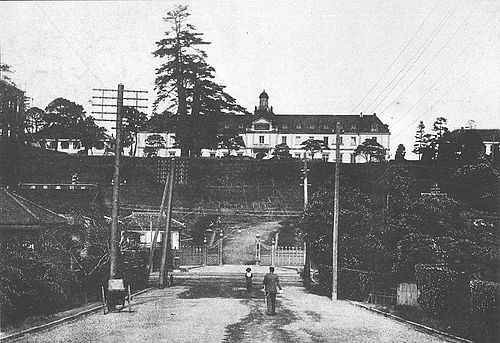
Former Army Ministry Site (Ichigaya Heights)
旧陸軍省跡(市ヶ谷台)
The site of the former Imperial Japanese Army Ministry (陸軍省) at Ichigaya Heights in Shinjuku, Tokyo — the supreme administrative headquarters of the Japanese Army, which moved here from Miyakezaka in December 1941 and remained until 1945. During the Pacific War, it housed the Army Ministry, the Army General Staff Office, and the Imperial General Headquarters Army Section, serving as the nerve center for all wartime military decision-making. On the night of August 14–15, 1945, the compound became the focal point of the Kyūjō Incident (宮城事件), an attempted military coup by army officers seeking to prevent Emperor Hirohito's surrender broadcast.

Former Italian Embassy, Tokyo
旧イタリア大使館
The former Italian Embassy in Mita, Minato-ku, Tokyo served as the diplomatic headquarters of Axis partner Italy in Japan during WWII. After Italy's armistice with the Allies in September 1943, the embassy became a site of dramatic diplomatic division, with most staff siding against the Japanese-backed Italian Social Republic. The official residence was destroyed in the April 1945 Tokyo air raids.

Former Residence of Prime Minister Koiso Kuniaki
小磯國昭旧邸跡
Site of the former Tokyo residence of General Kuniaki Koiso (1880–1950), the 41st Prime Minister of Japan who led the wartime cabinet from July 1944 to April 1945 during the final desperate phase of World War II. Koiso, previously Governor-General of Korea and known as "The Tiger of Korea," was convicted as a Class A war criminal at the International Military Tribunal for the Far East and sentenced to life imprisonment. He died of esophageal cancer in Sugamo Prison in 1950.

Yokohama Commonwealth War Cemetery
横浜英連邦戦死者墓地
Yokohama War Cemetery in Hodogaya-ku is the only Commonwealth War Graves Commission cemetery in Japan, holding the remains of 1,555 Allied servicemen — primarily British, Australian, Canadian, New Zealand, and Indian personnel who died as prisoners of war in Japanese captivity during World War II. Constructed after the war by the Australian War Graves group, the cemetery also houses a shrine containing an urn with the ashes of 335 soldiers, sailors, and airmen from Commonwealth nations, the United States, and the Netherlands. The site, a former children's recreation ground requisitioned in 1946, has been visited by Queen Elizabeth II (1975), Princess Diana (1995), and Prince William (2015).

Kashihara Jingu
橿原神宮
Kashihara Jingu is a Shinto shrine in Kashihara, Nara Prefecture, dedicated to Emperor Jimmu, the mythical first emperor of Japan. Founded in 1890, it became the focal point of the massive Kigen 2600 celebrations in 1940, drawing approximately 10 million visitors that year, and served as a key site for kokutai (national polity) ideology and spiritual mobilization during wartime Japan.

Takao Prefectural Office (Kaohsiung)
高雄州庁
The Takao (Kaohsiung) Prefectural Office was the seat of the administration of Takao Prefecture in southern Taiwan during the Japanese colonial period. Completed in 1931 in the modern Romanesque architectural style along the Love River, it served as the seat of governance for Takao Prefecture, which encompassed present-day Kaohsiung City and Pingtung County. The building was damaged by American air raids during World War II. After the war, it was repaired and converted into the Kaohsiung District Court. Major renovations in 1966 stripped much of the original ornamentation, and the building was ultimately demolished in 1987 for court reconstruction. The site is located near the former Takao City Hall, now the Kaohsiung Museum of History.

Taiwan Governor-General Central Research Institute
台湾総督府中央研究所
The Central Research Institute of the Taiwan Governor-General's Office (台湾総督府中央研究所) was established in 1921 by merging earlier research bodies into a unified institution in Taipei. It conducted comprehensive research across agriculture, forestry, industry, and tropical hygiene — fields directly supporting colonial resource exploitation and wartime logistics. The institute was dissolved in 1939 and split into four successor organizations. Its original French Renaissance-style building (built 1907–1909) was damaged during WWII bombing and later demolished in stages (1971 and 1996).

Taihoku Higher School (now National Taiwan Normal University)
台湾総督府台北高等学校
Taihoku Higher School (台北高等学校) was the most elite preparatory institution in colonial Taiwan, established in 1922 by the Government-General of Taiwan. As the only higher school (高等学校) on the island, it was, until a university preparatory course opened in 1941, the only route on the island into the imperial universities, most notably Taihoku Imperial University. Admission was highly competitive and Taiwanese students were a small minority; the school educated future leaders including Lee Teng-hui, who later became President of the Republic of China. During the final years of the war, students were mobilized for the war effort. After Japan's surrender in 1945, the institution was reorganized and its campus became the foundation of what is now National Taiwan Normal University (NTNU), whose heritage buildings from the Japanese colonial era are designated historic sites by Taipei City.

Taiwan Governor-General Weather Observatory
臺灣總督府氣象臺
Established in 1896 as the Taihoku (Taipei) Observatory during Japanese colonial rule and upgraded in 1938, the Taiwan Governor-General Weather Observatory was the central meteorological institution for the island, providing critical typhoon warnings, aviation weather support, and military meteorological intelligence during WWII. The site continues as the headquarters of the Central Weather Administration (formerly Central Weather Bureau) in Taipei.

Jiadong Shrine Ruins
佳冬神社跡
Jiadong Shrine (佳冬神社, Katō Jinja) was a Shinto shrine built in 1936 in Jiadong Township, Pingtung County, Taiwan, under Japan's "one village, one shrine" policy. Serving both the local community and soldiers stationed at the adjacent Jiadong Army Airfield, it was one of southern Taiwan's most complete shrine complexes, stretching 140 meters from its first torii gate to the main hall. After Japan's defeat in 1945 the shrine was abolished (its demolition is dated to 1946 in some accounts) and its buildings gradually disappeared, but significant remnants — including the first torii, one pillar of the second, a sacred bridge, and stone lantern bases — survive today. Designated a Pingtung County Historical Building in 2012, it is one of Taiwan's few well-preserved Japanese shrine ruins.

Beitou Public Bathhouse (Beitou Hot Spring Museum)
北投温泉公共浴場(北投温泉博物館)
The Beitou Hot Spring Museum, originally built in 1913 as the Hokutō Public Bathhouse — described as the largest and most lavish public bathhouse of its day, and often called the largest in East Asia — served multiple roles during the Japanese colonial era in Taiwan. During the Russo-Japanese War (1904–05), the Imperial Japanese Army established a convalescent hospital in Beitou for wounded soldiers, and throughout the colonial period the hot spring district functioned as a rest and recuperation area for military personnel, government officials, and elites. During WWII, inns in Beitou are said to have hosted kamikaze pilots for their final meals, and wounded soldiers were treated in the district. Some accounts also associate the area with wartime comfort stations (慰安所). After decades of neglect following Japan's withdrawal in 1945, the bathhouse was restored and reopened as a museum in 1998.

Taiwan Sugar Manufacturing Company Headquarters
台湾製糖株式会社本社
Headquarters of the Taiwan Sugar Manufacturing Company (Taiwan Seito), one of the largest sugar enterprises in colonial Taiwan. Founded by the Mitsui zaibatsu in 1900, the company pioneered modern sugar refining on the island and came to control about a dozen mills across Taiwan.

Old Kaohsiung Station Building
高雄驛(旧駅舎)
The Old Kaohsiung Station, completed in 1941 by Shimizu Corporation in the Imperial Crown Style (帝冠様式), is one of the finest examples of Japanese colonial railway architecture in Taiwan. During WWII it served as a critical military transportation hub for southern Taiwan, facilitating troop and supply movements for the Japanese Imperial forces. The 2,500-tonne building was moved 82.6 meters in 2002 to accommodate railway underground construction, then returned to its original location in 2021 as the centerpiece of the new Kaohsiung Main Station complex.

Taiwan Development Company Headquarters Site
台湾拓殖株式会社本社跡
Former headquarters of the Taiwan Development Company (Taiwan Takushoku Kabushiki Kaisha), a major Japanese "national policy company" (kokusaku kaisha) established in 1936 to direct colonial resource exploitation across Taiwan and Southeast Asia. Located in the Sakaemachi (榮町) commercial district of Taipei, the company controlled mining, agriculture, forestry, fisheries, and industrial development, playing a central role in wartime resource mobilization before it was closed down after the war and formally dissolved in 1947.

Taiwan Fruit Company (Banana Pier, Kaohsiung)
臺灣青果株式會社
The Taiwan Fruit Company (臺灣青果株式會社) was a Japanese colonial-era monopoly enterprise that controlled banana exports from Taiwan to Japan. Established in 1924 under the auspices of the Taiwan Governor-General's Office, the company operated from facilities near Kaohsiung Port, where bananas — Taiwan's second-largest export commodity after sugar — were inspected, packed, and shipped to Japanese markets. The Banana Pier warehouse (香蕉棚) at Pier No. 3 of Kaohsiung Port, however, is a post-war structure built in 1963 for the revived banana export trade; it is a registered historic building of Kaohsiung City, not a surviving facility of the colonial company.

Taoyuan Shrine (Taoyuan Martyrs' Shrine)
桃園神社
The Taoyuan Shrine (桃園神社), built in 1938 during the Japanese colonial period, is the best-preserved Japanese Shinto shrine remaining in Taiwan. Originally constructed as part of the Kōminka movement to promote Japanese identity among Taiwanese, the shrine was converted into the Taoyuan Martyrs' Shrine (忠烈祠) after World War II. Unlike most Japanese shrines in Taiwan that were demolished after 1945, the Taoyuan Shrine survived due to lack of funds for demolition and was designated a historic monument in 1994.

Taihoku Station (Third-Generation Building)
台北驛(第三代駅舎)
The third-generation Taipei Station, completed in 1940 and in service by 1941 in modernist style, was the principal railway station in colonial Taiwan and a critical military transportation hub during WWII. It was demolished in 1986.

Western Trunk Line Coastal Section (Dachia–Changhua)
縦貫線海線(台中海線・大甲—彰化)
The Coastal Line (海線) of Taiwan's Western Trunk Railway, completed in 1922, was built between Zhunan and Changhua along the island's western seaboard as a strategic alternative to the congested Mountain Line (山線). Designed for military transport redundancy and industrial freight capacity, it became essential wartime infrastructure ensuring uninterrupted north-south logistics across Taiwan.

Songshan Tobacco Factory (Songshan Cultural and Creative Park)
松山煙草工場
The Songshan Tobacco Factory was built in 1937 as the Matsuyama Tobacco Plant of the Taiwan Governor-General's Monopoly Bureau, and is described as Taiwan's first modern specialised cigarette factory. During WWII, the factory produced cigarettes for both military and civilian consumption across the Japanese Empire. Featuring outstanding modernist industrial architecture designed by Japanese planners, the factory employed about 1,200 workers when production began in 1939. After ceasing operations in 1998, the complex was designated a municipal historic site in 2001 and reopened in 2011 as the Songshan Cultural and Creative Park.

Former Tainan Butokuden (Martial Arts Hall)
台南武徳殿
The Former Tainan Butokuden (原臺南武德殿), completed in 1936, is one of the largest surviving martial arts training halls (武德殿) built by the Dai Nippon Butoku Kai in colonial Taiwan. Located adjacent to the Confucius Temple in Tainan's West Central District, this reinforced concrete structure blends traditional Japanese shrine architecture with modern construction techniques. Designed by the Tainan Prefectural Government's Civil Engineering Division, it served as the regional center for kendo and judo training, promoting bushido spirit and militaristic education among Japanese colonists and Taiwanese subjects. The building is reported to have been damaged during American air raids in the closing stages of World War II but survived. Designated a Tainan municipal historic site in 1998, it now serves as the auditorium for Zhongyi Elementary School and stands as one of the finest examples of Butokuden architecture in Taiwan.

Taipei Sake Factory (Huashan 1914 Creative Park)
台北酒工場(専売局台北酒工場)
Established in 1914 as a private sake brewery by Nihon Hōjō Kabushiki Kaisha, the Taipei Sake Factory was taken over by the Taiwan Governor-General's Monopoly Bureau in 1922 and became one of the largest alcohol production facilities in colonial Taiwan. During WWII, the factory produced industrial alcohol for military use alongside sake and wines. After the war, it continued as a state-run winery until 1987. Now preserved as Huashan 1914 Creative Park, it is one of Taipei's most important cultural heritage sites and creative venues.

Kaohsiung Butokuden (Martial Arts Hall)
高雄武徳殿
The Kaohsiung Butokuden, completed in 1924, is the highest-ranking and earliest-built martial arts training hall (武德殿) among all surviving butokuden in Taiwan. Originally named Shinbukan (振武館), it served as the headquarters of the Takao Prefecture branch of the Dai Nippon Butoku Kai, where police officers, civil servants, and students practiced kendo, judo, and other martial arts as part of Japan's bushido spirit education and wartime militarism programs.

Taroko (Truku) War Site
太魯閣戦争跡
Site of the Truku War (太魯閣戰爭, May–August 1914), the largest military campaign in colonial Taiwan's history. Governor-General Sakuma Samata mobilized a force usually put at around 20,000 soldiers, police and labourers to subjugate the Truku indigenous people in the mountainous Taroko Gorge region, in a campaign of roughly three months that reshaped Japan's colonial control over Taiwan's indigenous territories.

Taichung Prefectural Taichung First Middle School
台中州立台中第一中学校
Founded on May 1, 1915 as the first middle school in Taiwan established through Taiwanese initiative, the Taichung First Middle School (now Taichung First Senior High School) was created after central Taiwan gentry — led by Lin Xiantang (林獻堂), Lin Lietang (林烈堂), and others — petitioned the Japanese colonial government and raised over 240,000 yen to fund a school for Taiwanese students who were excluded from Japanese-only secondary institutions. The school's founding monument declares: "We Taiwanese people initially had no middle school; it is self-created here." During the kōminka (皇民化) period from 1937 onward, the school was subject to intensified Japanization policies, and in the final years of WWII students were mobilized for the war effort. The school remains active today as Taichung Municipal Taichung First Senior High School, with the original lecture hall preserved as a registered historical building.

Taiwan Governor-General Taipei Industrial School
台湾総督府台北工業学校
Colonial-era industrial school established in 1912 by the Taiwan Governor-General's Office in Taipei's Da'an District, now the campus of National Taipei University of Technology (Taipei Tech). As Taiwan's first industrial education institution, it trained technicians and industrial workers essential to the colony's modernization. During WWII, students were mobilized to work in military factories supporting Japan's war effort. The 1926 Red Building (紅樓) survives as a designated municipal historic site.

Wushe Public School Site
霧社公学校跡
The site of the former Wushe (Musha) Public School in Ren'ai Township, Nantou County, where the Wushe Incident — the largest armed anti-Japanese colonial uprising in Taiwan — began on October 27, 1930. Seediq warriors led by Chief Mona Rudao attacked during a Japanese athletics day ceremony, killing 134 Japanese nationals in the initial assault.

Qidong Street Japanese Official Residences
幸町職務官舎群(齊東街日式宿舎)
A cluster of preserved Japanese colonial-era official residences along Qidong Street in Taipei's Zhongzheng District, originally built in the 1920s-1940s as the Saiwaichō (幸町) civil servant housing group for high-ranking colonial officials. Among the first batch of Japanese dormitory groups in Taiwan to receive area-wide preservation under the Cultural Heritage Preservation Act, the site is regarded as Taipei's best-preserved quarter of historic buildings, housing the Taiwan Literature Base and the Taipei Qin Hall.

Taiwan Railway Hotel
台湾鉄道ホテル
Taiwan's first Western-style luxury hotel, built in 1908 by the Governor-General's Railway Department near Taipei Station. The three-story German-influenced brick building served as a premier accommodation for Japanese officials and foreign dignitaries throughout the colonial period until its destruction by American air raids on May 31, 1945.

Governor-General's Residence (Taipei Guest House)
台湾総督官邸(台北賓館)
Built in 1901 as the official residence of the Governor-General of Taiwan during Japanese colonial rule, this Baroque-style mansion served as the venue for official receptions and state ceremonies. After WWII, the Treaty of Taipei was signed here in 1952, and it is now a designated national historic monument known as the Taipei Guest House.

Taiwan Education Association Hall (228 National Memorial Museum)
台湾教育会館
Built in 1931 as the Taiwan Education Association Hall during the Japanese colonial period, this modernist building served as the center for colonial education policy and wartime mobilization. After WWII, it housed the Taiwan Provincial Consultative Council and became an important site related to the February 28 Incident (1947). Now designated a historic site, it operates as the National 228 Memorial Museum.

Kenkou Shrine
建功神社
Kenkou Shrine (建功神社) was a unique Shinto shrine in Taipei, established in 1928 to honor individuals who contributed to Japanese colonial rule of Taiwan. Unlike most wartime shrines that solely commemorated war dead, Kenkou Shrine enshrined all those who had died in battle, on duty or in disasters in Taiwan since 1895 — soldiers, administrators, educators, police officers and others, Japanese and Taiwanese alike — as having "built merit" (建功) for the empire. Designed by prominent colonial architect Ide Kaoru, the shrine featured an unprecedented hybrid architectural style combining Japanese, Chinese, and Western elements, most notably a striking dome atop the main hall — a radical departure from traditional shrine architecture. After Japan's surrender in 1945, the shrine was converted into the National Central Library in the 1950s, and the site became part of the Nanhai Academy (南海學園) cultural complex. Today the former shrine building houses the National Taiwan Arts Education Center, and surviving stone balustrades (玉垣) from the original shrine can still be seen on the grounds.

Former Tainan Prison Site
台南刑務所跡
Tainan Prison (台南刑務所) was a major colonial-era correctional facility built in 1904 during the Japanese rule of Taiwan, designed by architect Yamashita Keijiro. Located between the old Xiaonanmen and Xiaoximen gates of Tainan city, it was the second-largest prison in colonial Taiwan after Taihoku Prison, featuring a radial floor plan with five male cell wings and separate women's quarters. The prison was used to incarcerate political prisoners — including those arrested during the 1915 Tapani Incident — as well as common criminals. Inmates were subjected to forced labor in workshops surrounding the cell blocks. In the mid-1980s prison operations relocated to a new facility in Guiren District, and the main compound was demolished from September 1986. Several auxiliary structures survive as designated cultural heritage sites, including the former martial arts hall (要道館), official residences, the prison director's quarters, and dormitory remains, some now repurposed as the Blueprint Cultural and Creative Park (藍曬圖文創園區) near the Tainan Art Museum.

Jiaobanshan Resort (Kakaban-san Lodge)
角板山賓館
Jiaobanshan Resort is a historic mountain retreat in Fuxing District, Taoyuan City, Taiwan. The original Kakaban-san Guest House was completed in 1914 of hinoki cypress and was later prepared for Crown Prince Hirohito's 1923 Taiwan tour (台灣行啟), although he did not use it. Located in the traditional territory of the Atayal indigenous people, the hilltop site later became President Chiang Kai-shek's favourite retreat, who reportedly found the scenery reminiscent of his hometown Xikou in Zhejiang. The current villa dates to 1960 and was opened to the public in 1995.

Keelung Fortress Command Headquarters
基隆要塞司令部
Command headquarters of the Keelung Fortress (基隆要塞), the highest military command center for coastal defense in northern Taiwan during Japanese colonial rule. Established in 1903, the fortress command oversaw battery positions across the Keelung, Jinshan, Tamsui, Hsinchu, and Houlong areas. The current reinforced concrete headquarters building was completed in 1929, designed by Governor-General's Office architect Asai Shin'ichi. During WWII, the command directed the Keelung Fortress Heavy Artillery Regiment and coordinated air defense during the 1944 Taiwan Air Battle. Designated a Keelung municipal historic site in 2010 and restored for public access in 2022.

Taiwan Governor-General Monopoly Bureau, Chiayi Branch
台湾総督府専売局嘉義支局
The Chiayi Branch of the Taiwan Governor-General's Monopoly Bureau, built in 1936 and designed by architect Umezawa Setsujiro in a modernist style combining Art Deco elements. The three-story reinforced concrete building managed the tobacco, alcohol, camphor, and salt monopolies in the Chiayi area during the Japanese colonial period. Now preserved as the Chiayi Art Museum, it is a designated municipal historic site.

Taichung Park & Taichung Shrine Ruins
台中公園・台中神社跡
Taichung Park, established in 1903 during the Japanese colonial period, is one of Taiwan's oldest public parks. It originally housed the first-generation Taichung Shrine (台中神社, est. 1911), whose remnants — including stone lanterns, a torii gate laid on its side, bronze horses and stone lions — still survive in the park grounds. The park's iconic Huixin Pavilion (湖心亭), built in 1908 on the central lake, is a designated municipal monument and Taichung's best-known landmark.

Ximen Red House (Former Ximen Market)
西門紅楼(旧西門市場)
Often described as Taiwan's first government-built public market, completed in 1908 during the Japanese colonial era. Designed by architect Kondō Jūrō (近藤十郎) of the Taiwan Governor-General's Office, the distinctive red brick octagonal structure (八角堂) in Taipei's Wanhua District is one of the most iconic Japanese colonial-era commercial buildings in Taiwan. It survived WWII bombing and is now a designated municipal heritage site and cultural-creative hub.

Taiwan Governor-General Library Site
臺灣總督府圖書館跡
Site of the Taiwan Governor-General Library (臺灣總督府圖書館), the only official public library in colonial Taiwan, established in 1914 and opened in 1915 on Bo'ai Road, Taipei. Designed by architect Kondō Jūrō, the building originally served as the Governor-General's Lottery Bureau. By 1943, the library housed nearly 200,000 volumes, including invaluable collections on Taiwan, Southeast Asia, and the South Pacific that supported Japan's "southward advance" (南進政策) research. The building was destroyed by Allied bombing in 1945, but the final director Yamanaka Shō evacuated approximately 190,000 volumes to four locations across Taipei before the destruction. After the war, the collections were transferred to the Taiwan Provincial Library (now the National Taiwan Library in Zhonghe). The original site is now occupied by the Ministry of National Defense Bo'ai Building.

Taiwan Governor-General Telephone Exchange Bureau
臺灣總督府電話交換局
The central telephone exchange building for colonial Taiwan, completed in 1937 in the modernist style by architect Suzuoki Ryoichi under the Communications Bureau (遞信部) of the Governor-General's Office. Located on Shoin-cho (書院町) in Taipei, it housed the first automatic telephone switching system in Taiwan, replacing the earlier manual exchange. Designated a Taipei Municipal Historic Site in 1998, the building now serves as the Chunghwa Telecom Bo'ai Service Center.

Nikko Kanaya Hotel
日光金谷ホテル
Japan's oldest surviving resort hotel, established in 1873 in Nikko, Tochigi Prefecture. During World War II, the hotel served as wartime evacuation housing and was requisitioned by GHQ as a special service hotel for U.S. military personnel from October 1945 to February 1952.

Former NHK Tokyo Broadcasting Hall
NHK東京放送会館跡
The former headquarters of NHK (Japan Broadcasting Corporation) in Uchisaiwaicho, Chiyoda, Tokyo, operational from 1938 to 1973. On August 15, 1945, Emperor Hirohito's historic Gyokuon-hōsō (Jewel Voice Broadcast) announcing Japan's surrender was transmitted from Studio 8 (R-208) in this building. During the preceding night, rebel officers of the Kyūjō Incident attempted to seize the building to prevent the broadcast, confining approximately 60 staff members in Studio 1. The building was demolished in 1978 and the site is now occupied by Hibiya City, with a broadcasting memorial monument marking the location.

Matsumoto Castle
松本城
Matsumoto Castle, one of Japan's twelve original castles and a designated National Treasure, is said to have been identified during 1945 as a potential relocation site for the Eastern Army District Command (東部軍管区司令部) under the Ketsu-Go homeland defense plan. Located in central Nagano Prefecture alongside the nearby Matsushiro Underground Imperial Headquarters, the castle and its surrounding area were being prepared as part of a last-stand defense zone in the mountainous interior of Honshu, far from vulnerable coastal cities. The castle itself, built between 1504 and 1594, survived the war intact and remains one of the finest preserved original castle keeps in Japan.

Domei News Agency Headquarters (Shisei Kaikan)
同盟通信社本社跡(市政会館)
The Domei News Agency (同盟通信社, Dōmei Tsūshinsha) was the sole official news agency of the Empire of Japan from 1936 to 1945. Operating under direct government control from its Tokyo headquarters, Domei monopolized all domestic and international news distribution, serving as a critical instrument of wartime propaganda and information management. With approximately 5,500 employees and bureaus spanning from China to Southeast Asia, the agency controlled the flow of information throughout the Japanese empire. After GHQ ordered a halt to its overseas foreign-language service, Domei dissolved itself on October 31, 1945. Its operations were split between Kyodo News (general reporting) and Jiji Press (economic reporting) on November 1, 1945. From 1942 its headquarters was in the Shisei Kaikan (市政会館) in Hibiya Park, which still stands; the successor Kyodo News moved from there in 1966 to its own Kyodo Tsushin Kaikan (共同通信会館) in Toranomon, Minato-ku.

Former Mitsui & Co. Taipei Branch
三井物産株式会社台北支店
The former Taipei branch of Mitsui & Co. (三井物産), Japan's largest trading conglomerate (zaibatsu), built from 1920, completed in 1922 and located at No. 54 Guanqian Road in Taipei's Zhongzheng District. Credited to Hirano Yūzō and Nomura Ichirō and built in the Tatsuno-style Renaissance Revival manner, the three-story building served as the headquarters for Mitsui's extensive colonial trading, banking, and insurance operations in Taiwan. Mitsui & Co. was instrumental in exporting Taiwan's key commodities — tea, rice, sugar, camphor, salt, and tobacco — while investing across virtually all sectors of the colonial economy. Originally situated in Dadaocheng along the Tamsui River, Mitsui relocated to the prestigious Honmachi (本町) commercial district as Taipei's economic center shifted. Its present simplified modernist form dates either from a 1940 rebuilding or, according to other research, from a 1946–1947 reconstruction by architect Lu Shu-sen after Allied bomb damage in 1945. After the war it served as the Veterans Affairs Council headquarters (until 1988), then housed Taiwan Land Bank offices, and later the Supreme Prosecutors' Special Investigation Division. Designated a Taipei City Municipal Historic Site in 1998, the building is currently owned by Taiwan Land Bank and remains closed to the public.

Nippon Kangyo Bank Taipei Branch (Now Land Bank Exhibition Hall)
日本勧業銀行台北支店(現・国立台湾博物館土銀展示館)
The Taipei branch of the Nippon Kangyo Bank (日本勧業銀行), completed in 1933 during the Japanese colonial era, was a major financial institution managing agricultural and industrial loans critical to colonial Taiwan's economic development. Designed by the bank's own building section with a monumental colonnade and Mayan Revival ornament, and built by Obayashi-gumi, the building exemplified Japanese colonial ambitions to project permanence and modernity. After Taiwan's retrocession in 1945, the building became the headquarters of the Land Bank of Taiwan (臺灣土地銀行) until 1965. Designated a municipal heritage site in 1991, it was extensively restored and reopened in 2010 as the National Taiwan Museum Land Bank Exhibition Hall (國立臺灣博物館土銀展示館), now housing natural history exhibits including large-scale dinosaur fossils and a preserved historical bank vault.

Qishan Old Street Stone Arcade
旗山老街(石拱圈亭仔腳)
Qishan Old Street (旗山老街) in Kaohsiung's Qishan District is one of the best-preserved Japanese colonial-era commercial streets in southern Taiwan. Developed from 1903 under Japan's urban improvement plan ("市街改正"), the street features distinctive Baroque-style facades built between 1925 and 1930 by wealthy banana and sugar merchants. Its most iconic feature is the stone arcade (石拱圈亭仔腳), a covered walkway constructed of sandstone arches — each arch said to be composed of 33 cut sandstone blocks — dating to the 1910s–1920s. The street flourished alongside the sugar industry and the sugar railway that reached Qishan in 1910, which transported sugar, bananas, and goods to Kaohsiung's port. Designated a historic building in 2005, Qishan Old Street remains a vibrant commercial district and a living testament to Taiwan's Japanese colonial architectural heritage.

Nenggao Cross-Ridge Trail
能高越嶺道
A major Japanese colonial-era mountain trail crossing the Central Mountain Range between Nantou and Hualien counties in Taiwan. Built in 1917-1918 by the Japanese colonial government with 16 garrison stations for aboriginal control and police administration, it later became the route for Taiwan's first east-west power transmission line in the 1950s.

Hehuan Cross-Ridge Road (Wushe to Taroko)
合歓越嶺道(霧社—太魯閣)
A military road built across the Central Mountain Range by the Japanese colonial government during the 1914 Taroko War. Stretching from Wushe in Nantou to Taroko in Hualien, the road served as the primary route for the "aboriginal pacification" (理蕃) campaign to subjugate the Truku people, and later became the basis for the modern Central Cross-Island Highway.
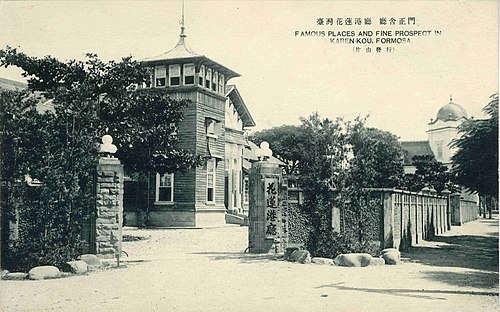
Karenko Prefectural Government Office Site
花蓮港庁舎跡
The Karenko (花蓮港) Prefectural Government Office was the highest administrative authority for the Hualien area of eastern Taiwan during the Japanese colonial period. Established in 1909 when Taiwan was reorganized from twenty to twelve prefectures, the office oversaw a vast mountainous territory corresponding to present-day Hualien County; Taitung remained a separate prefecture. The original wooden building was destroyed by fire in 1910 and rebuilt as a Japanese-Western hybrid structure. A modernist concrete building replaced it around 1936. After Japan's surrender in 1945, the building served as the Hualien County Government headquarters until earthquake damage forced relocation to the current Meilun district site.

Taito Prefectural Government Office Site
台東庁庁舎跡
Site of the Taito Prefectural Government Office (台東廳舍), the administrative center for southeastern Taiwan during the Japanese colonial period (1897–1945). The original 1899 office was built with materials shipped from Kobe, Japan, and located on Malan Ridge Street. After damage from termites, a 1909 earthquake, and a devastating 1919 typhoon, a new reinforced concrete two-story building was completed in July 1922 at a cost of 96,500 yen. After Japan's surrender, the building served as the Taitung County Government headquarters until renovations began in 1975.

Ruisui Immigrant Village Site
瑞穂移民村(水尾移民村)
Site of a Japanese government-sponsored immigrant village (官營移民村) established from the mid-1920s in Ruisui Township, Hualien County, eastern Taiwan. Part of the colonial policy to settle Japanese farmers in Taiwan's East Rift Valley, the village specialized in tobacco cultivation and was one of over ten immigrant settlements established along the eastern coast during the Japanese colonial period (1895-1945).

Kashino Immigrant Village Ruins (Longtian Village)
鹿野移民村跡(龍田村)
Remnants of a Japanese government-sponsored immigrant village established in 1915 in Luye Township, Taitung County, Taiwan. Originally known as Kashino Village (鹿野村), it was one of the most significant colonial-era planned settlements on Taiwan's east coast, retaining well-preserved Japanese-style buildings, street grids, and the former Shikano Village Office.

Songshan Brick Kiln (Taiwan Renga Co. Matsuyama Factory)
松山煉瓦工場(台湾煉瓦株式会社松山工場)
A major brick kiln factory in the Songshan area of Taipei operated by Taiwan Renga Co. (台灣煉瓦株式會社), which was founded in 1913 and acquired the Songshan works in 1918. The factory produced TR-branded red bricks used in colonial-era construction across Taiwan, employing Hoffmann kilns (八卦窯) for continuous mass production. The Taiwan Renga Company, founded by Ushiroku Shintarō (後宮信太郎), was the dominant brick manufacturer during the Japanese colonial period, supplying building materials for government offices, railways, and infrastructure throughout the island.

Green Island White Terror Memorial Park
白色テロ緑島記念園区(火焼島)
The Green Island White Terror Memorial Park is a 32-hectare memorial complex on Green Island (Ludao), Taitung County, Taiwan, preserving the former political prison facilities where thousands of dissidents were detained during the White Terror era (1949–1987). Originally a vagrants' shelter under Japanese colonial rule when the island was known as Kashoto (火燒島), the site housed the New Life Correction Center from 1951 and, after 1970, the notorious Oasis Villa prison. Named a human rights memorial park in 2001, formally opened in December 2002 and transferred to the National Human Rights Museum in 2018, the park now serves as Taiwan's most significant site of conscience for political persecution.

Anping Old Fort (Fort Zeelandia)
安平古堡(旧熱蘭遮城)
Originally Fort Zeelandia, built by the Dutch East India Company from 1624 to 1634, this fortress in Anping, Tainan is one of Taiwan's oldest fortifications. During Japanese colonial rule (1895-1945), the remaining Dutch structures were largely demolished and the site was used for customs officials' housing and a customs club. The Japanese authorities built a brick platform over the ruins and, around 1944, an air-defence watchtower that — remodelled after the war — remains a landmark today.

Kikumoto Department Store
菊元百貨店
Taiwan's first modern department store, opened in 1932 in Sakaechō (榮町), Taihoku (Taipei) by Japanese entrepreneur Eiji Shigeta. The seven-story building — nicknamed 'Seven-Storied Sky' (七重天) — was the second tallest structure in colonial Taiwan after the Governor-General's Office. It featured Taiwan's first commercial passenger elevator and became the symbol of modernity and consumer culture in Japanese-ruled Taipei. The building still stands at 148-150 Boai Road in Zhongzheng District, now occupied by Cathay United Bank, and was designated a historic building by Taipei City Government in 2017.

Rinzai Gokoku Zen Temple (Linji Huguo Chan Temple)
臨濟宗護國禪寺(鎮南山護國禪寺)
The largest surviving Japanese Buddhist temple from the colonial era in Taiwan, originally built in 1900-1912 as Chin'nanzan Gokoku-ji by order of Governor-General Kodama Gentaro. The temple served as a "nation-protecting" (護國) prayer site for the Japanese Empire and housed the headquarters of the Rinzai Zen school in Taiwan. Its main hall (大雄寶殿) is one of the few remaining Japanese-period wooden Buddhist halls in Taiwan, now designated a Taipei municipal historic monument.

Chikan Tower (Former Japanese Army Garrison Hospital)
赤崁楼(旧・陸軍衛戍病院)
Originally Fort Provintia built by the Dutch East India Company in 1653, Chikan Tower in Tainan was converted into a Japanese Army Garrison Hospital (陸軍衛戍病院) after Japan began colonial rule of Taiwan in 1895. The historic fortress complex, including the Haishen Temple and Wenchang Pavilion, served military medical purposes during the Japanese period before being restored as one of Taiwan's most important national historic monuments.

Taiwan Governor-General Tainan Hospital (now MOHW Tainan Hospital)
台湾総督府台南医院(現・衛生福利部台南医院)
The earliest large public modern hospital in Tainan, established in 1896 as one of the first modern medical institutions under the Taiwan Governor-General. The hospital treated both military and civilian patients throughout the colonial era and suffered significant bomb damage during Allied air raids in 1944, forcing evacuation of its outpatient services. Now operating as the Ministry of Health and Welfare Tainan Hospital, it is one of Taiwan's oldest continuously operating hospitals.

Taiwan Governor-General Communications Bureau
臺灣總督府交通局遞信部
The Communications Bureau (遞信部) of the Taiwan Governor-General's Office, completed in 1924–1925 and designed by Moriyama Matsunosuke. This Western classical building on Changsha Street in Taipei managed all postal, telegraph, telephone, and broadcasting services across colonial Taiwan, and served as a critical hub for wartime communications control and censorship. Now a designated municipal historic monument housing the Academia Historica.

Former Outer Garden of Taiwan Shrine (Dazhi)
台湾神社外苑跡(大直)
The outer grounds (gaien) around the Taiwan Gokoku Shrine in the Dazhi area of Taipei — formally the outer garden of the Taiwan Shrine (臺灣神社外苑), within which the Gokoku Shrine stood — encompassing the surrounding military training facilities, sacred forest, and ceremonial approach areas distinct from the main shrine precinct. Planned from the late 1930s as part of the Taiwan Grand Shrine (台灣神宮) relocation project, the outer garden was designed to include martial arts training halls, ceremonial venues, and athletic facilities. During the war, Allied POWs from the nearby Taihoku No. 6 Camp were forced to perform earthworks and railroad construction in this area. The outer grounds now form part of the parkland and military zones surrounding the National Revolutionary Martyrs' Shrine.

Toyoda Immigrant Village Ruins
豐田移民村跡
Ruins of a Japanese government-sponsored immigrant village established in 1913 in Shoufeng Township, Hualien County, Taiwan. One of the best-preserved colonial-era settlement sites in eastern Taiwan, featuring the former Toyoda Shrine (now Biliansi Temple), original torii gate, stone lanterns, guardian lion statues, and remnants of Japanese-era irrigation infrastructure.

Jingzaijiao Tile-paved Salt Fields
北門井仔脚瓦盤塩田
Taiwan's oldest surviving salt field, established in 1818 during the Qing dynasty and operated under the Japanese colonial government's salt monopoly system from 1895 to 1945. During WWII, salt production here supported Japan's military and industrial needs. Now restored as a cultural heritage tourism site in Beimen District, Tainan.

Taichung Prison Martial Arts Hall
臺中刑務所演武場
A martial arts training hall (budokan) built in 1937 as part of the Taichung Prison complex during the Japanese colonial period. Used for kendo and judo practice by prison officials and police, it is the only surviving Japanese-era martial arts hall in Taichung. The symmetrical building features a traditional Japanese irimoya-style roof with a central shrine flanked by judo and kendo training areas. After a devastating fire in 2006, it was meticulously restored by 2010 and operated as the Daohe Liuyi Cultural Center from 2012 to 2023.

Dihua Street (Dadaocheng)
迪化街(大稲埕・永楽町通り)
Historic commercial street in the Dadaocheng (大稻埕) area of Datong District, Taipei, Taiwan. Known as Eiraku-chō (永楽町) during the Japanese colonial period (1895–1945), the street underwent major urban improvement under Japanese rule, resulting in distinctive Baroque-style shophouse facades. It served as the commercial heart of the Taiwanese business community throughout the colonial era, trading in tea, Chinese medicinal herbs, fabrics, and dried goods. The "Ten Consecutive Buildings" (十連棟), completed in 1912, are among the best-preserved examples of Japanese colonial-era commercial architecture in Taipei. The street itself largely escaped wartime air raids, preserving its historic streetscape.

Guanziling Hot Spring
関子嶺温泉
One of Taiwan's "Four Great Hot Springs" during the Japanese colonial period, discovered by Japanese troops in 1898 in present-day Baihe District, Tainan. Famous for its rare alkaline mud spring water (泥漿溫泉), the area was developed as a resort destination with bathhouses and inns under Japanese rule and came to be styled "the foremost spirit spring under heaven" (天下第一靈泉).

Bopiliao Historic Block
剝皮寮歴史街区
A remarkably preserved historic street in Taipei's Wanhua District, spanning the Qing Dynasty, Japanese colonial, and postwar eras. During Japanese rule, the 1905 Urban Improvement Plan (市區改正) transformed the area by opening Guangzhou Street behind the old shophouses, creating distinctive "two-faced shops" with Qing-era facades on one side and Western-influenced Japanese colonial facades on the other. Designated as school land in 1941, which inadvertently preserved the streetscape from redevelopment for decades.

Xinfu Market (Shintomicho Public Market)
新富町食料品小売市場
A horseshoe-shaped modernist public market built in 1935 during the Japanese colonial period in Wanhua District, Taipei. One of the best-preserved Japanese-era public market buildings in Taiwan, it was designated a Taipei City historic site in 2006 and reopened in 2017 as the U-mkt (新富町文化市場), a cultural and creative space combining food education, exhibitions, and community programs.

Taichung Second Public Market
台中市第二小売市場(新富町市場)
Public market built in 1917 by the Japanese colonial government in the Shintomichō (新富町) district of Taichung, Taiwan. Designed with a distinctive hexagonal central tower and three radial wings, it served as the primary marketplace for Japanese residents and affluent customers, earning the nickname "the Japanese market." Rebuilt in 1936 after a fire, the market remains one of the oldest surviving public market buildings in central Taiwan and continues to operate as an active traditional market with over 300 vendors.

Donghe Zen Temple (Soto Zen Daihonzan Taiwan Branch)
曹洞宗大本山台灣別院(東和禪寺)
The headquarters of Soto Zen Buddhism in colonial Taiwan, established in 1908 in Taipei's Dongmen District. Originally named Soto-shu Daihonzan Taiwan Betsuin (曹洞宗大本山台灣別院), it was one of the largest Japanese Buddhist temple complexes on the island. The reinforced-concrete main hall was completed in 1923, and a distinctive bell tower combining Edo and Momoyama architectural styles was added in 1930. After 1945 the temple was renamed Donghe Zen Temple (東和禪寺). The original main hall was demolished in 1993, but the bell tower survives as a designated Taipei City historic monument, restored in 2006.

Sun Moon Lake Hanbi Lou (The Lalu Historic Site)
日月潭涵碧楼
A Japanese-era lakeside inn on the Hanbi Peninsula of Sun Moon Lake — dated to 1901 in the popular account, but to 1916 in period records — Hanbi Lou was rebuilt as a two-story cypress guesthouse in 1928. It was reportedly prepared for Crown Prince Hirohito's 1923 tour of Taiwan, although he did not visit the lake. It later served as President Chiang Kai-shek's retreat. The Japanese building was demolished in 1966, its successor was destroyed in the 1999 earthquake, and a modern luxury hotel (The Lalu) opened beside the site in 2002, with a memorial hall preserving its history.

Meiji Bridge Site (Zhongshan Bridge)
明治橋跡(中山橋)
The Meiji Bridge (明治橋), later renamed Zhongshan Bridge (中山橋), was an iconic reinforced concrete arch bridge spanning the Keelung River in Taipei, connecting the colonial capital to the Taiwan Grand Shrine on Maruyama hill. Originally built as an iron truss bridge in 1901, it was reconstructed in 1933 as a graceful three-arch concrete bridge with granite railings from Tokuyama, Yamaguchi Prefecture, and ornamental bronze lamp columns — widely regarded as the most beautiful bridge in colonial Taiwan. In the 1927 "Eight Scenic Spots of Taiwan" selection, Taiwan Shrine was named one of two special sites ranked apart from the eight, and the bridge served as the ceremonial gateway on the approach road (參道) to the Taiwan Shrine. After Japan's defeat it was renamed Zhongshan Bridge in 1946. The bridge was controversially dismantled from December 2002 under Mayor Ma Ying-jeou's administration, ostensibly for flood control along the Keelung River. Its 435 stone and concrete components were stored at a riverside site for potential future reconstruction, but as of 2026 they remain in open-air storage, weathering and deteriorating with no confirmed relocation plan.

Tainan Broadcasting Bureau (Tainan Hōsōkyoku)
臺南放送局(JFBK)
The Tainan Broadcasting Bureau (臺南放送局, call sign JFBK) was the regional radio broadcasting station for southern Taiwan, established in 1932 by the Taiwan Broadcasting Association within South Gate Park. It broadcast news, cultural programming, wartime propaganda, and relayed the Emperor's surrender announcement on August 15, 1945. Now a designated municipal historic monument, the building serves as the Tainan South Gate Film Center.

Camphor Factory Ruins (Nanzhuang / Daxi)
樟脳工場跡(南庄・大渓)
Ruins and heritage sites associated with Taiwan's camphor industry in Nanzhuang (Miaoli County) and Daxi (Taoyuan). During the Japanese colonial period (1895–1945), Taiwan supplied roughly 80% of the world's camphor. The colonial government established a monopoly in 1899, with camphor bureaus in Miaoli and other mountain-adjacent prefectures. The industry's expansion into indigenous mountain territories was a primary driver of the "aboriginal pacification" (理蕃) policy, leading to violent conflicts such as the 1902 Nanzhuang Incident. Camphor was essential for manufacturing celluloid, smokeless gunpowder, and medicines, making Taiwan a strategically vital colony.

Taiwan Governor-General Central Research Institute, Hygiene Department
台湾総督府中央研究所衛生部
The Hygiene Department of the Taiwan Governor-General's Central Research Institute was the principal public health research facility in colonial Taiwan. Established in 1909 and reorganized in 1921, it conducted critical research on tropical diseases including malaria, plague, and dengue fever, and produced vaccines and serums essential for military and civilian health throughout the Japanese colonial period and during WWII.

Taiwan Governor-General Keelung Quarantine Station
台湾総督府基隆検疫所
A port quarantine station established by the Taiwan Governor-General's Office in Keelung in 1899 as part of Japan's systematic public health modernization of colonial Taiwan. The facility was critical for preventing plague, cholera, and other infectious diseases from entering the island through its busiest international port.

Former Taiwan Provincial Administrative Executive Office (now Executive Yuan)
台湾省行政長官公署跡(現・行政院)
Built between 1937 and 1940 as the Taipei Municipal Office during the Japanese colonial period, this building became the headquarters of the Taiwan Provincial Administrative Executive Office (台灣省行政長官公署) after Japan's surrender in 1945. Under Chief Administrator Chen Yi, it served as the highest governing authority during the turbulent postwar transition. On February 28, 1947, protesters marching to this building were fired upon by guards, a pivotal moment in the February 28 Incident (228事件) that triggered island-wide unrest. The building later housed the Taiwan Provincial Government and has served as the Executive Yuan (行政院) of the Republic of China since 1957. Designated a national historic site in 1998, it remains one of the most significant colonial-era government buildings in Taiwan.

Former Jodo-shu Taipei Betsu-in (Now Shandao Temple)
淨土宗台北別院(現・善導寺)
Originally established in 1895 as the Jodo-shu (Pure Land Buddhism) propagation center in Taipei, the Jodo-shu Taipei Betsu-in was the headquarters of Japanese Pure Land Buddhism in colonial Taiwan. The current reinforced-concrete main hall was designed by architect Hatakeyama Kisaburo and completed in 1937. After Japan's surrender in 1945, the temple was seized by the Taipei municipal government and later transferred to Chinese Buddhist management, becoming Shandao Temple (善導寺). It is described as the largest surviving establishment among the Japanese-era Buddhist temples of Taipei, although the 1937 main hall itself was demolished in 1998.

Imperial Japanese Army Academy Site (Camp Zama)
陸軍士官学校跡(座間キャンプ)
Site of the Imperial Japanese Army Academy (陸軍士官学校, Rikugun Shikan Gakkō), the principal officer training school for the Imperial Japanese Army, which relocated from Ichigaya, Tokyo to Sagamihara-Zama in 1937. Emperor Hirohito personally named the campus "Sōbudai" (相武台) and attended graduation ceremonies. From 1937 to 1945, approximately 18,476 officer cadets were trained here before being deployed across the Pacific theater. After Japan's surrender in September 1945, the U.S. 1st Cavalry Division occupied the grounds, which subsequently became "Camp Zama." The base remains an active U.S. Army installation today, serving as the headquarters of U.S. Army Japan, while preserving several wartime-era monuments including the restored Sōbudai stone marker and original barracks buildings.

Meiji Seimei Kan (GHQ Annex)
明治生命館(GHQ別館)
A masterpiece of Greek Revival architecture completed in 1934 in Marunouchi, Tokyo. Requisitioned by GHQ after WWII, the building served as the U.S. Far East Air Forces (FEAF) headquarters and hosted the Allied Council for Japan, where General MacArthur delivered his opening address in April 1946. Designated as a National Important Cultural Property in 1997 — the first Showa-era building to receive this honor.

Former Japanese Red Cross Society Headquarters
旧日本赤十字社本社
The wartime headquarters of the Japanese Red Cross Society (JRCS), located in Shiba-Daimon, Minato-ku, Tokyo. Established in 1887 after Japan ratified the Geneva Convention, the JRCS headquarters served as the nerve center for the nation's wartime medical relief operations throughout the Second World War. From this location, the society coordinated the mobilization of over 30,000 nurses for military service, dispatched up to 960 medical relief teams to combat zones across Asia and the Pacific, managed infectious disease control programs in occupied territories, and administered limited prisoner-of-war welfare activities. The original headquarters was a grand red-brick building completed in 1912, designed in Western architectural style and symbolizing Japan's commitment to international humanitarian norms. The building was replaced in 1977 by the current modern structure designed by architect Kurokawa Kishō to mark the society's centennial. Elements of the original 1912 building, including the front staircase and first-floor marble columns, are reported to have been salvaged when it was demolished.

Former Sanadayama Army Cemetery
旧真田山陸軍墓地
Japan's first and largest former Imperial Japanese Army cemetery, established in 1871 in Tennoji Ward, Osaka. The site contains over 5,100 gravestones and a memorial ossuary holding more than 8,200 remains of soldiers who died in conflicts spanning from the Satsuma Rebellion (1877) through the Pacific War (1945), making it an unparalleled repository of Japan's modern military history.

Imperial Hotel (Frank Lloyd Wright Building Site)
旧帝国ホテル(フランク・ロイド・ライト館跡)
The Imperial Hotel in Tokyo, designed by Frank Lloyd Wright and completed in 1923, was Japan's most prestigious hotel and famously survived the Great Kanto Earthquake on its opening day. During WWII, the south wing was gutted by incendiary bombs in the 1945 air raids on Tokyo (dated May 25 in English-language accounts and March 10–11 in Japanese ones), though the main structure survived. After Japan's surrender, the hotel was commandeered by the Allied occupation forces from 1945 to 1952, serving as billets for senior SCAP and GHQ personnel. The iconic Wright building was demolished in 1967-68 due to accumulated war damage, deferred maintenance, and the need for expansion; the entrance lobby was preserved and relocated to the Meiji Mura architecture museum in Aichi Prefecture.

Former IJA Central Special Intelligence Division Site
旧陸軍中央特種情報部跡
Site of the Imperial Japanese Army's Central Special Intelligence Division (中央特種情報部, Chūō Tokushu Jōhōbu), one of Japan's most secretive wartime signals intelligence organizations. Originally established in 1933 as the North Tama Army Communications Station in present-day Higashi-Kurume City, the unit was responsible for radio intercept, code-breaking, and cryptanalysis of Allied and foreign military communications. As the war situation deteriorated, operations were partially relocated to a welfare facility in the Takaido area of Suginami Ward, Tokyo. The division played a critical role in Japan's SIGINT efforts throughout the Pacific War.

Former Prime Minister's Official Residence (Suzuki Kantarō Era)
鈴木貫太郎首相官邸跡(内閣総理大臣官邸旧庁舎)
The former Prime Minister's Official Residence (旧官邸) in Nagatacho, Chiyoda, Tokyo, served as the nerve center of Japan's wartime government. It was here that Prime Minister Suzuki Kantarō (April–August 1945) navigated the final months of World War II, and convened the critical cabinet meetings on the Potsdam Declaration; the Imperial Conferences at which the decision to surrender was made were held in the Imperial Palace. The original 1929 building also bore the scars of the February 26 Incident (1936), during which Suzuki, then Grand Chamberlain, was shot and nearly killed at his own official residence elsewhere in Tokyo. In the early hours of August 15, 1945, a rebel group acting in concert with the Kyūjō Incident coup attempt attacked the Kantei and tried to set it on fire. The old building was relocated and renovated in 2005 and now serves as the Prime Minister's Official Residence (公邸).

Former Imperial Household Ministry (Imperial Household Agency)
旧宮内省跡(宮内庁)
The former Imperial Household Ministry (宮内省) building within the Tokyo Imperial Palace grounds served as the administrative center managing all affairs of the Imperial household during WWII. On the night of August 14, 1945, Emperor Showa recorded the Gyokuon-hōsō (Jewel Voice Broadcast) announcing Japan's surrender in a room of this building. Hours later, rebel officers of the Kyūjō Incident stormed the palace searching for the recording discs to prevent the broadcast, but failed to find them. The building now serves as the Imperial Household Agency (宮内庁).

Taiwan Governor-General Taipei Hospital (NTU Hospital Old Building)
台湾総督府台北医院(台大医院旧館)
Built between 1912 and 1921 to designs by architect Kondō Jūrō, the Taiwan Governor-General Taipei Hospital was the largest and most modern hospital in Southeast Asia upon completion. The Renaissance Revival-style red brick and reinforced concrete building served as the colony's premier medical facility throughout the Japanese era. Annexed to the Medical School of Taihoku Imperial University in 1938, it was renamed National Taiwan University Hospital in 1945. Designated a municipal historic monument in 1998, the building now serves as the West Campus of NTU Hospital and remains one of the finest examples of colonial-era medical architecture in Asia.

Hengchun Old City Wall
恒春県城
A Qing dynasty walled city built 1875–1879 in Hengchun, the southernmost ancient fortified town in Taiwan. During the Japanese colonial period (1895–1945), the city walls were partially preserved and designated a historic monument in 1935. Nearby military airfields made the area strategically important during WWII, and bullet holes from American machine-gun strafing still scar the south gate wall section. All four original gates survive, making it the best-preserved Qing-era city wall in Taiwan.

Tainan Park (North District, Tainan)
台南公園(台南市北区)
Tainan Park is the oldest and largest urban park in Tainan, established in 1917 during the Japanese colonial period. Designed by landscape architect Sawai Hannosuke, the 14.6-hectare park featured Japanese-style garden elements including the historic Swallow Pond (燕潭), tropical botanical collections, and European-influenced landscaping. During World War II, the Japanese military is said to have set up a temporary field hospital within the park grounds, and air-raid shelters were constructed that survive to this day. After the war it was renamed Zhongshan Park, reverting to its original name in 2001, and was designated a Cultural Landscape in 2018.

Former Tainan Weather Observatory
旧台南測候所
Built in 1898 during Japanese colonial rule, the Former Tainan Weather Observatory is the oldest surviving meteorological station in Taiwan. Its unique eighteen-sided (octadecagonal) building with a central cylindrical observation tower — nicknamed the "Pepper Tube" — is the only surviving example of this early weather-station design in Taiwan. Designated a national historic monument in 2003, it now serves as the Museum of Meteorology.

Fort San Domingo (Tamsui Red Fort)
淡水紅毛城(聖多明哥城)
Fort San Domingo (紅毛城) is a historic fortress overlooking the Tamsui River estuary in Tamsui District, New Taipei City, Taiwan. Originally built by the Spanish in 1628 as Fort Santo Domingo and rebuilt in stone by the Dutch in 1644, it became a British consulate in 1867. When Japan declared war on Britain in December 1941, the consulate was sealed and the British consul expelled to Japan, with the fort remaining under Japanese control until the end of WWII in 1945. Now designated a National Historic Monument, it is one of Taiwan's most important colonial-era landmarks.

Taiwan Governor-General Higher Agricultural and Forestry School
臺灣總督府高等農林學校
The Taiwan Governor-General Higher Agricultural and Forestry School (臺灣總督府高等農林學校) was a leading institution of agricultural higher education in colonial Taiwan, established in 1919 in Taipei under the orders of the Governor-General of Taiwan. Founded as the Advanced Academy of Agronomy and Forestry with Japanese academic Fumio Abe as its first principal, the school trained agricultural specialists who managed colonial resource exploitation across Taiwan. In 1928 it was incorporated into Taihoku Imperial University as an affiliated department, then regained independence in 1943 and relocated to Taichung. During wartime, students were mobilized for food production efforts to support Japan's war campaign. After Japan's surrender in 1945, the school was reorganized as the Taiwan Provincial Taichung Agricultural Junior College, eventually evolving into National Chung Hsing University (NCHU), one of Taiwan's leading research universities.

Chiayi Park & Kagi Shrine Ruins
嘉義公園・嘉義神社跡
Chiayi Park, established in 1910 during the Japanese colonial period, contains the ruins of Kagi Shrine (嘉義神社), one of the three shrines in Taiwan raised to kokuhei-shōsha rank in the 1940s. The shrine was founded in 1915, elevated to kokuhei-shōsha rank in 1944, and its main hall was destroyed by fire in 1994. Its former office buildings now serve as the Chiayi City Historical Relics Museum, while stone lanterns, komainu statues, and the sandō approach path remain intact.

Grand Hotel Taipei (Former Taiwan Grand Shrine Site)
圓山大飯店(台湾神宮跡地)
The Grand Hotel Taipei is a landmark Chinese palace-style hotel established in 1952 on the former site of the Taiwan Grand Shrine (臺灣神宮) in Zhongshan District, Taipei. Championed by Madame Chiang (Soong Mei-ling), the hotel stands on the site of the demolished Shinto shrine and is often read as a symbol of the regime change from Japanese colonial rule to the Republic of China. Designed by architect Yang Cho-cheng, the iconic 87-metre vermilion main building with dragon motifs was completed on Double Tenth Day (October 10) 1973. Remnants of the shrine era — including stone walls, foundations, and komainu guardian lion-dogs — survive in the surrounding grounds.

Taiwan Governor-General Tainan Higher Technical School
台湾総督府台南高等工業学校
The only higher engineering education institution in colonial Taiwan until 1943, established in 1931 in Tainan by the Taiwan Governor-General. The school trained engineers in mechanical, electrical, and applied chemistry fields to support Taiwan's industrial development. During WWII, students and facilities were mobilized for wartime production. Now the campus of National Cheng Kung University (NCKU), one of Taiwan's top research universities.

Former Fudingkin Japanese Military Cemetery
覆鼎金日本軍人墓地跡
Site of a large Japanese burial ground in southern Taiwan, located in the Fudingkin (覆鼎金) area of Kaohsiung's Sanmin District. Originally part of the expansive Fudingkin Public Cemetery, this section housed the graves of Japanese soldiers and civilians who died during the colonial period (1895–1945) and WWII. When Zuoying was designated a military port during WWII, mass grave relocations from the Taoziyuan and Qianfengwei cemeteries created a large-scale Japanese burial ground here. After Japan's defeat in 1945, many Japanese graves were vandalized during anti-Japanese sentiment, and in 1957 the Japanese embassy collaborated with the ROC government to collect scattered Japanese remains, establishing the "Southern Region Japanese Remains Repository" (南部地區日本人遺骨安置所) within the tomb of businessman Sugimoto Otokichi (杉本音吉). The entire Fudingkin Cemetery was converted to parkland (Shuanghu Forest Park) between 2015 and 2020, with approximately 16,000 graves relocated.

Takao Customs House
高雄税関庁舎
The Takao Customs House, built in 1936 in Kaohsiung's Gushan District, served as the headquarters for Japanese colonial customs administration at one of Taiwan's busiest ports. As one of two major customs regions in colonial Taiwan alongside Keelung, it managed all import and export duties at Kaohsiung Port, enforcing trade controls central to Japan's economic exploitation of the island.

Bank of Taiwan, Tainan Branch
台湾銀行台南支店
The Bank of Taiwan Tainan Branch was one of the earliest regional branches of the Bank of Taiwan (台灣銀行), the central financial institution of colonial Taiwan. Established in 1899 at Ōmiyachō (大宮町) in Tainan, it played a pivotal role in facilitating colonial economic policies — financing sugar production, infrastructure development, and trade across southern Taiwan. As the primary issuer of Taiwan Bank Notes (臺灣銀行券), the bank served as the backbone of the colonial monetary system. The original branch building, a representative example of Meiji-era colonial banking architecture, stood on what is now Yongfu Road. After WWII, the branch was reorganized under the Republic of China government on May 20, 1946, and relocated to its current site at No. 155, Section 1, Fuqian Road in 1962.

Hsinchu Prefecture Library
新竹州立圖書館
A Neo-Renaissance public library built in 1925 in Hsinchu, Taiwan during the Japanese colonial period. Constructed to commemorate Crown Prince Hirohito's 1923 visit to Taiwan, it is one of only three purpose-built public library buildings from the colonial era and retains the most complete original architecture among them. Now a designated municipal heritage site, the building currently houses a Starbucks cafe.

Hokuto District Office
北斗郡役所
The former site of the Hokuto District Office (北斗郡役所) in Beidou Township, Changhua County, Taiwan. Established in 1920 as the administrative center of Hokuto District under Taichū Prefecture during Japanese colonial rule, it governed eight townships across southern Changhua with a population of over 170,000. The original building no longer stands; the site is now occupied by the Beidou Police Station.

Former Taipei Army Cemetery (Liuzhangli)
台北陸軍墓地跡(六張犁)
Site of the former Imperial Japanese Army cemetery in the Liuzhangli area of Taipei's Da'an District. Established during the Japanese colonial period to inter soldiers who died in service in Taiwan, the cemetery was part of the broader Liuzhangli burial grounds that served Taipei's Japanese community. After Japan's defeat in 1945, the military graves were largely cleared as part of de-Japanization efforts, with scattered tombstones remaining among the hillside terrain. The area was subsequently incorporated into the Taipei Municipal Cemetery system and later became associated with the burial of White Terror political victims in the 1950s.

Wushe Branch Office of the Nōkō District Police
能高郡警察課霧社分室跡
Noko District (能高郡) was the Japanese colonial administrative unit covering the indigenous mountain areas of central Taiwan; its district office (能高郡役所) stood in Puli, while the district police kept a branch office (霧社分室) at Wushe. During the Wushe Incident of October 1930 — the largest armed indigenous uprising against Japanese rule in Taiwan — the district head was among those killed, and Wushe, retaken on 29 October, became the command post from which Japanese forces coordinated their counterattack against Seediq warriors led by Chief Mona Rudao.

Ershui Station (Former Erbashuei Station)
二水驛
Ershui Station, originally opened in 1905 as Erbashuei Station (二八水驛) during the Japanese colonial period, is a historically significant railway junction in Changhua County, Taiwan. Located at the point where the Jiji Branch Line diverges from the Western Trunk Line, it served as a strategic transport hub for materials heading into central Taiwan's mountainous interior. The current reinforced concrete station building, designed by Japanese architect Utsushiki Takeo (宇敷赳夫) and completed in 1935, replaced an earlier wooden structure and is now a designated county-level historic site. During the colonial era, three railway systems — the trunk line, the Jiji Line, and a sugar-company light railway — converged at Ershui, making it a critical logistics node for both civilian and military transport.

Keelung Harbor Integrated Administration Building
基隆港合同庁舎(海港大楼)
The Keelung Harbor Integrated Administration Building (基隆港合同廳舍), now known as the Harbor Building (海港大樓), is a reinforced concrete government office building completed in 1934 at Keelung Port. Designed by Taiwan Governor-General's Transportation Bureau engineer Ryoichi Suzuoki (鈴置良一), it consolidated eleven port-related agencies — including customs, harbor police, postal services, and commodity inspection bureaus — under one roof to streamline colonial port operations. The four-story structure with a 31.2-meter tower features earthquake-resistant cross-beam design and Streamline Moderne styling with ship-inspired decorative elements. Designated a Keelung City Historic Building in 2003, it continues to house port administration offices today.

Tokyo National Museum
東京国立博物館
Japan's oldest and largest museum, founded in 1872 and located in Ueno Park, Tokyo. During WWII, the museum evacuated its art treasures and national treasures to protect them from air raids, beginning in 1941 with 334 precious items sent to the Nara Museum. The museum was ordered closed on March 10, 1945, as bombing intensified, and its gardens were used to grow crops for food production. The museum survived the war undamaged and reopened on March 24, 1946. In 1947, when the new Constitution took effect, the Imperial Museums became National Museums under the Education Ministry.

Former Hibiya Public Hall
旧日比谷公会堂
Hibiya Public Hall, completed in 1929 in Hibiya Park, Chiyoda Ward, Tokyo, was Japan's first full-scale public concert and assembly hall. Designed by architect Sato Koichi and championed by statesman Goto Shinpei as a center for civic discourse, the roughly 2,000-seat Neo-Gothic hall became a critical venue for wartime national mobilization rallies during the 1930s and 1940s — most notably the founding ceremony of the National Spirit Mobilization Central Federation (国民精神総動員中央連盟) on October 12, 1937. Throughout the Pacific War, the hall hosted propaganda events, patriotic assemblies, and government-organized mass meetings designed to rally public support for the war effort. The building survived the devastating 1945 firebombing of Tokyo and was immediately repurposed during the Allied occupation for cultural events, including one of the first postwar concerts on September 6, 1945, featuring vocalist Fujiwara Yoshie. Designated a Tokyo Metropolitan Historical Building and Tangible Cultural Property, the hall closed in 2016 for seismic renovation and is expected to reopen in 2029, marking its centennial.

Kanpu Ferry Terminal Ruins (Shimonoseki Port)
関釜連絡船跡(下関港)
Site of the Shimonoseki-Busan railway ferry terminal that operated from 1905 to 1945, serving as Imperial Japan's primary maritime link to colonial Korea. Over 30 million passengers traversed this route during 40 years of operation, including military personnel bound for the Asian continent, settlers destined for Manchuria, and tens of thousands of Korean forced laborers transported to Japanese factories and mines. A monument and preserved bollards at Kaikyo Yume Plaza mark the former railway pier where the ferries docked. Designated a quasi-railway memorial (準鉄道記念物).

Former Second General Army Headquarters
旧陸軍第二総軍司令部跡
The headquarters of the Imperial Japanese Army's Second General Army (第二総軍), established in Hiroshima in April 1945 under Field Marshal Hata Shunroku to coordinate the defense of western Japan against the anticipated Allied invasion (Operation Ketsu-Go). The command was responsible for all military operations across western Honshū, Shikoku, and Kyūshū. On August 6, 1945, the atomic bombing of Hiroshima devastated the headquarters and its subordinate organizations; by some estimates as many as 20,000 military personnel in the city were killed.

Shōkeikan (National Museum for Disabled War Veterans)
しょうけい館(戦傷病者史料館)
Shōkeikan is a national museum in Chiyoda, Tokyo, dedicated to preserving and conveying the experiences of Japanese soldiers who were wounded or fell ill during the Second Sino-Japanese War and World War II. Established by the Ministry of Health, Labour and Welfare and opened in March 2006, the museum collects oral testimonies, prosthetics, medical records, personal belongings, and documentary materials illustrating the physical and psychological hardships endured by war-injured veterans and their families during and after the conflict. Originally located in Kudanminami near Yasukuni Shrine and the Showakan (National Showa Memorial Museum), the facility relocated to Green Oak Kudan in Kudankita in October 2023.

Akasaka Palace (State Guest House)
旧赤坂離宮(迎賓館赤坂離宮)
Akasaka Palace is a Neo-Baroque palace in Moto-Akasaka, Minato, Tokyo, designed by architect Katayama Tōkuma and completed in 1909 as the Crown Prince's Palace (Tōgū Gosho). It represented the pinnacle of Meiji-era Western architectural achievement in Japan. During WWII, the palace survived the devastating Tokyo air raids of 1945. After Japan's surrender, ownership was transferred from the Imperial Household to the Japanese government in 1948, and the building served as the National Diet Library and various governmental offices. Following a major renovation (1968-1974) led by architect Tōgo Murano, the palace reopened as Japan's State Guest House (Geihinkan), hosting world leaders including U.S. presidents and G7 summits. Designated a National Treasure in 2009, it remains one of the finest examples of Western palatial architecture in East Asia.

Former Imperial Theatre Site (Marunouchi)
旧帝国劇場跡(丸の内)
Japan's first Western-style theater, the Imperial Theatre (帝国劇場) opened in Marunouchi, Tokyo in 1911 as a symbol of Meiji-era modernization. During WWII, the theater was requisitioned by the Cabinet Information Bureau (内閣情報部) as its office from September 1940, ending theatrical performances. The basement cafeteria was converted into a public congee kitchen for civilians in January 1944 amid severe wartime food shortages. After Japan's surrender, the theater resumed performances in October 1945 and later served entertainment needs during the Allied occupation. The original Renaissance-style building, designed by Yokogawa Tamisuke, was demolished in 1964 and replaced by the current Toho-operated theater designed by Taniguchi Yoshiro, which opened in September 1966.

Former Senzaki Repatriation Port Site
旧仙崎引揚港跡(海外引揚げ上陸跡地)
The site of a major postwar repatriation port in Senzaki, Nagato City, Yamaguchi Prefecture, where approximately 414,000 Japanese repatriates landed and 340,000 Korean residents departed between September 1945 and October 1946. Selected as an alternative to Shimonoseki — whose harbor was blocked by mines and sunken vessels — Senzaki became the fifth-largest repatriation port in Japan.

Government-General of Korea (Gyeongbokgung, Seoul)
朝鮮総督府跡(ソウル景福宮)
The Government-General of Korea (朝鮮総督府) building, completed in 1926, served as the headquarters of Japanese colonial rule over Korea from 1926 to 1945. Designed by German architect Georg de Lalande and completed by Japanese architect Ichiro Nomura, the massive Neo-Renaissance structure was built directly in front of the main halls of Gyeongbokgung Palace — a siting widely regarded in Korea as intended to symbolize Japanese dominion and to disrupt the palace's geomantic (feng shui) alignment. After serving as the seat of the US military government, the South Korean National Assembly, and later the National Museum, the building was controversially demolished in 1995-1996 as part of a national effort to erase symbols of Japanese imperialism. The dome cupola was preserved and is now displayed at the Independence Hall of Korea in Cheonan.

Chōsen Shrine (Site of)
朝鮮神宮
The Chōsen Shrine (朝鮮神宮, Chōsen Jingū) was the highest-ranking Shinto shrine in colonial Korea, constructed atop Namsan Mountain in Seoul (then Keijō) and completed in 1925. Enshrining Amaterasu Ōmikami and Emperor Meiji, it served as the spiritual centrepiece of Japanese imperial assimilation policy, with compulsory worship enforced during the Asia-Pacific War. Demolished in October 1945 following liberation, the site is now part of Namsan Park, where the Patriot An Jung-geun Memorial Hall was built in 1970.

Seodaemun Prison History Hall
西大門刑務所(ソウル西大門区)
Seodaemun Prison (서대문형무소) was built by the Japanese colonial government in 1908 as Gyeongseong Prison, one of the first modern prisons on the Korean Peninsula. Throughout the Japanese occupation (1910–1945), it served as the primary facility for imprisoning, torturing, and executing Korean independence activists and political dissidents. Notable prisoners included Yu Gwan-sun, who died from torture in 1920 at age 17 after leading protests during the March First Movement, as well as Kim Ku and Ahn Chang-ho. Following the March First Movement of 1919, the prison held approximately 3,000 activists simultaneously. After Korea's liberation in 1945, the prison continued to operate under successive South Korean governments until its closure in 1987. In 1992, Seodaemun Independence Park was established on the grounds, and in 1998 the remaining structures were opened as the Seodaemun Prison History Hall. Eleven of the original 98 buildings are preserved, including underground cells, torture chambers, an execution building, and a watchtower.

Yongsan Garrison
龍山基地
Yongsan Garrison in Seoul was the principal Imperial Japanese Army base on the Korean Peninsula, home from 1908 to the headquarters of the Korea Garrison Army and its successor the Korea Army (朝鮮軍). Established during the Russo-Japanese War when Japan purchased approximately 3 million tsubo of land in Yongsan, the base became the nerve center of Japanese military control over Korea throughout the colonial period (1910-1945). After Japan's defeat, U.S. Army forces of the 7th Infantry Division occupied the garrison in September 1945. It subsequently served as the headquarters of United States Forces Korea (USFK) and the U.S. Eighth Army for over seven decades. As of 2018, USFK relocated to Camp Humphreys in Pyeongtaek, and the roughly 2.5 km² site — which still contains many Japanese-era brick buildings — is being returned to South Korea for conversion into a major public park.

Busan Port (Kanpu Ferry Terminal)
釜山港(関釜連絡船発着地)
Busan Port was the Korean terminus of the Kanpu (関釜) Ferry route connecting Shimonoseki, Japan to colonial Korea. Opened in 1905, the ferry service became a critical artery of Japan's colonial empire, transporting troops, settlers, and — most notoriously — hundreds of thousands of forcibly mobilized Korean laborers to wartime Japan between 1939 and 1945. The port's piers (1st through 4th and central) were built between 1912 and 1943 to handle growing military and commercial traffic. The Konron Maru, a Kanpu ferry, was sunk by the USS Wahoo in October 1943 with 583 casualties. By June 1945, Allied mining of the Korea Strait and air raids effectively shut the route down. Today the site is a modern international ferry terminal, and the National Memorial Museum of Forced Mobilization under Japanese Occupation stands in nearby Busan as a testament to the port's dark wartime legacy.

Gunsan Japanese Quarter (Gunsan, North Jeolla Province)
群山日本人街(全羅北道群山市)
One of the best-preserved Japanese colonial-era townscapes in Korea, located in Gunsan City, North Jeolla Province. Developed as a major rice export port under Japanese rule from the late 19th century, Gunsan retains a remarkable concentration of colonial-era architecture including the Hirotsu House (dated variously to c. 1925 or the 1930s), the former Gunsan Customs House (1908), and Dongguksa Temple — the only surviving Japanese-style Buddhist temple in Korea. The Japanese concession area featured a Western-grid street plan with 92 subdivided plots. Under the slogan "Time travel back to the 1930s," Gunsan has become a major heritage tourism destination.

Manchukuo Imperial Palace
満洲国皇宮
The Imperial Palace of Manchukuo in Hsinking (now Changchun), where Puyi, the last emperor of China, resided as the puppet emperor of the Japanese-controlled state of Manchukuo from 1932 to 1945. Now preserved as the Museum of the Imperial Palace of Manchukuo, it stands as a powerful symbol of Japanese imperialism in northeast China.

Former Kwantung Army Headquarters (Hsinking/Changchun)
関東軍司令部跡(新京)
Site of the headquarters of the Kwantung Army (関東軍, Kantō-gun), the Imperial Japanese Army's most powerful overseas field army, located in Hsinking (新京, now Changchun), the capital of the puppet state of Manchukuo. Built between 1932 and 1934 at Xinfa Road No. 577, the imposing building served as the nerve center from which the Kwantung Army exercised de facto control over Manchuria. The army orchestrated the Mukden Incident of September 18, 1931 — the false-flag operation that provided the pretext for Japan's conquest of Manchuria — and subsequently administered the region through the puppet government of Manchukuo. At its peak strength of over 700,000 troops in 1941, the Kwantung Army was the largest single Japanese military formation. The building survives today as the office of the CPC Jilin Provincial Committee and is designated a Major Historical and Cultural Site Protected at the National Level.

South Manchuria Railway Company Headquarters (Dalian)
南満洲鉄道株式会社本社
The headquarters of the South Manchuria Railway Company (満鉄/Mantetsu) in Dalian, the most powerful Japanese colonial enterprise in Manchuria. Established in 1906 and relocated to Dalian in 1907, Mantetsu was a semi-governmental conglomerate that controlled railways, coal mines, ports, hotels, hospitals, schools, and research institutes across Manchuria — effectively a state within a state. The building, originally a Russian-era commercial school, still stands in downtown Dalian as the offices of China Railway Shenyang Group Dalian Branch.
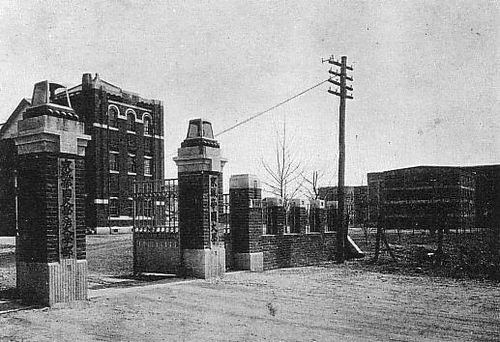
Keijo Imperial University Site
京城帝国大学跡
Site of Keijo Imperial University (1924–1946), the only imperial university established in colonial Korea. Founded as Japan's sixth imperial university in the Dongsung-dong area of Jongno-gu, Seoul, it comprised faculties of Law and Literature, Medicine, and Engineering. The institution served colonial administration and wartime research needs before being reorganized into Seoul National University in 1946.

Hsinking (Changchun) Urban Plan Remains
新京(長春)都市計画跡
Hsinking (新京, now Changchun) served as the capital of the Japanese puppet state of Manchukuo from 1932 to 1945. Japanese urban planners designed an ambitious "Metropolitan Plan of Great Hsinking" covering 200 km², influenced by Parisian boulevards, the garden city movement, and 1920s American city planning. The central axis was Datong Avenue (大同大街, now Renmin Avenue/人民大街), a grand boulevard lined with government buildings and commercial facilities. With 47 km² of public land including parks and athletic grounds and 70.7 km² of greenery, Hsinking earned the nickname "Forest Capital" (森の都). Many Japanese-era buildings — including the Eight Grand Ministries (八大部), banks, hotels, and cultural institutions — survive in central Changchun and are now protected as historical sites.

Former Bank of Chosen Headquarters (Bank of Korea Money Museum)
朝鮮銀行本店跡(韓国銀行貨幣博物館)
The former headquarters of the Bank of Chosen (朝鮮銀行), the central bank of colonial Korea, completed in 1912 in Seoul's Jung-gu district. Designed by Tatsuno Kingo — the architect of Tokyo Station and the Bank of Japan — in a French Renaissance-inspired eclectic style with granite walls, the building served as the nerve center of Japan's colonial monetary system, issuing currency and financing Japanese enterprises across Korea and Manchuria. Heavily damaged during the Korean War, it was restored in 1958 and designated National Historic Site No. 280 in 1981. The Bank of Korea relocated in 1987, and the building reopened in 2001 as the Bank of Korea Money Museum (韓國銀行貨幣博物館), preserving one of the finest examples of Japanese colonial architecture on the Korean Peninsula.

South Manchuria Railway Dalian Yamato Hotel
満鉄大連ヤマトホテル
The flagship Yamato Hotel in Dalian (Dairen), built by the South Manchuria Railway Company (Mantetsu) and opened on August 1, 1914. Attributed to Mantetsu architect Ota Takeshi and built in Renaissance style with Ionic giant-order granite columns, the four-story steel-framed brick building with 115 rooms served as the premier luxury hotel in Manchuria, hosting Japanese officials, foreign dignitaries, and international travelers transiting between Europe and Asia. It was the equivalent of the Raffles Hotel in Singapore or the Astor House Hotel in Shanghai. After Japan's defeat in 1945, the Soviet Red Army briefly used it as a garrison command post before it was transferred to Chinese authorities. Renamed Dalian Hotel (大连宾馆) in 1956, the building is now a nationally protected cultural heritage site on Zhongshan Square in central Dalian.

Mukden Incident Site (September 18th History Museum)
柳条湖事件跡(九・一八歴史博物館)
Site of the Mukden Incident (September 18, 1931), the staged railway bombing by the Kwantung Army that served as the pretext for Japan's invasion of Manchuria. Lieutenant Suemori Kawamoto detonated dynamite on the South Manchuria Railway near Mukden (modern Shenyang), blaming Chinese soldiers. This false flag operation led directly to the Japanese occupation of Manchuria and the creation of the puppet state Manchukuo, setting Japan on its path toward full-scale war in Asia.

Fushun War Criminals Management Centre
撫順戦犯管理所
A postwar Chinese facility in Fushun, Liaoning Province, used from 1950 to reform and re-educate Japanese war criminals transferred from Soviet custody. Originally built as a Japanese prison in 1936, it held approximately 1,000 Japanese detainees as well as Manchukuo prisoners including the former emperor Puyi. Known for its "lenient policy" approach, it released all its Japanese prisoners by 1964 and the remaining Manchukuo and Kuomintang prisoners by 1975. Converted into a museum in 1986.

Former Manchukuo State Council (Xinjing/Changchun)
満洲国国務院跡(新京/長春)
The State Council (国務院) of Manchukuo served as the executive administrative headquarters of the Japanese puppet state from 1932 to 1945. Designed by Japanese architect Tatsuro Ishii and completed in 1936, the imposing reinforced-concrete building with its distinctive pseudo-oriental roof stood at the northern end of Xinmin Avenue, at the head of the government quarter popularly known as the "Eight Grand Ministries" (八大部), in the purpose-built capital of Xinjing (modern-day Changchun). While Manchukuoan ministers nominally headed each department, Japanese vice-ministers appointed by the Kwantung Army wielded the real power. After Japan's defeat in 1945, the building passed through Soviet and Chinese Nationalist hands before becoming part of Jilin University. Designated a Major Historical and Cultural Site Protected at the National Level in 2013, the building now houses the College of Basic Medical Sciences of Jilin University and stands as one of Changchun's most prominent landmarks of the Manchukuo era.

Harbin Yamato Hotel
哈爾浜ヤマトホテル
The Harbin Yamato Hotel (哈爾浜ヤマトホテル) was a luxury hotel operated by the South Manchuria Railway Company (Mantetsu) in Harbin, the largest city in northern Manchuria. Originally constructed in 1901–1903 as the Chinese Eastern Railway Hotel by the Russian-controlled CER administration opposite Harbin's main railway station, the building was extensively renovated and reopened on February 1, 1937 as a 56-room Yamato Hotel — Mantetsu's flagship property in the Harbin zone. It served as the social and diplomatic center for Japanese residents and officials in northern Manchuria throughout the Manchukuo era. The Art Nouveau building survives today as the Longmen Dasha VIP Hotel (龙门大厦贵宾楼) at 85 Hongjun Street, Nangang District, and is designated a Harbin Grade 1 Protected Building.