Tokyo National Museum
東京国立博物館
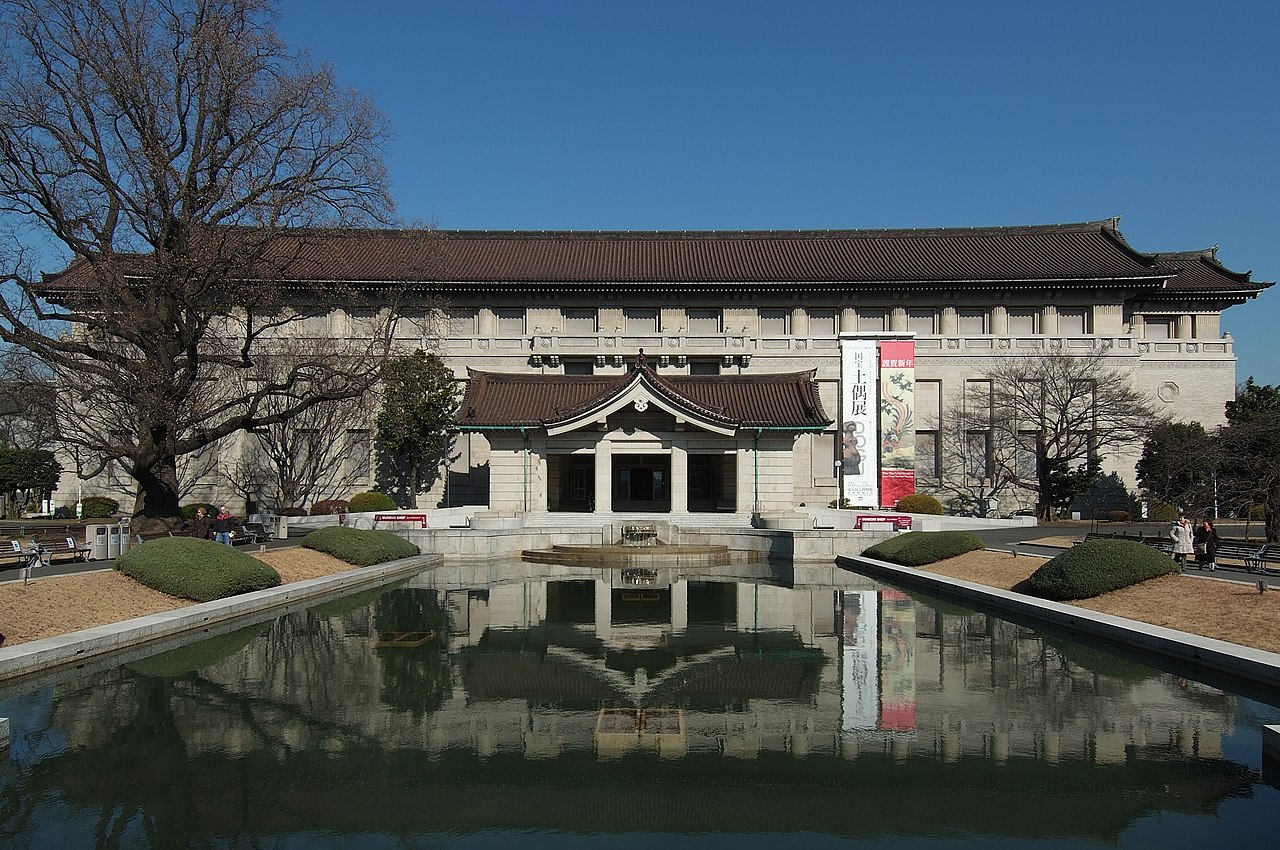
Japan's oldest and largest museum, founded in 1872 and located in Ueno Park, Tokyo. During WWII, the museum evacuated its art treasures and national treasures to protect them from air raids, beginning in 1941 with 334 precious items sent to the Nara Museum. The museum was ordered closed on March 10, 1945, as bombing intensified, and its gardens were used to grow crops for food production. The museum survived the war undamaged and reopened on March 24, 1946. In 1947, when the new Constitution took effect, the Imperial Museums became National Museums under the Education Ministry.
Images


History
The Tokyo National Museum (東京国立博物館, Tōkyō Kokuritsu Hakubutsukan) is Japan's oldest and largest museum, situated in Ueno Park in Taito Ward, Tokyo. Founded in 1872 during the early Meiji era, it was originally established as part of Japan's efforts to modernize and catalogue its cultural heritage. The museum houses over 120,000 objects, including 89 National Treasures and 653 Important Cultural Properties (as of April 2025), spanning Japanese art, Asian antiquities, and archaeological artifacts.
The museum's main building, the Honkan, was completed in 1937 and opened in 1938 in the Imperial Crown Style (帝冠様式), a distinctive architectural fusion of Western reinforced-concrete construction with a traditional Japanese tiled roof. Designed by Watanabe Jin, the Honkan replaced an earlier Josiah Conder-designed building damaged in the 1923 Great Kanto Earthquake. Other notable structures on the grounds include the Hyokeikan (1909), a Meiji-era Western-style building, and the Toyokan (1968), which houses the Asian art collection.
During World War II, the museum played a critical role in safeguarding Japan's cultural heritage. Beginning in 1941, as the war expanded and the threat of air raids grew, the museum began evacuating its most precious items. Between August and November 1941 an initial 334 treasures were sent to the Nara Imperial Household Museum (today's Nara National Museum) for safekeeping, followed by further evacuations to dispersed locations across the country. Museum staff accompanied the collections to ensure their protection. As American strategic bombing of Tokyo intensified in early 1945, the museum was ordered to close on March 10, 1945 — the same day as the devastating firebombing of Tokyo that destroyed much of the city's eastern districts. During the war years, the museum's gardens were converted to growing food crops, reflecting the severe wartime shortages affecting civilian life.
The museum survived the war without significant structural damage. It reopened on March 24, 1946, though many evacuated collections had not yet been returned. On May 3, 1947, when Japan's post-war Constitution took effect, the former Imperial Museums were reorganized as National Museums under the Ministry of Education. The Tokyo National Museum assumed broader administrative responsibilities, including oversight of the Nara National Museum and management of the Art Research Institute. In October 1952, the institution was officially renamed the Tokyo National Museum and celebrated its 80th anniversary.
Today the Tokyo National Museum remains one of Japan's foremost cultural institutions, attracting millions of visitors annually. Its wartime experience — the massive evacuation effort that successfully preserved irreplaceable national treasures — stands as a testament to the dedication of museum staff and the importance placed on cultural preservation even amid total war.