Former NHK Tokyo Broadcasting Hall
NHK東京放送会館跡
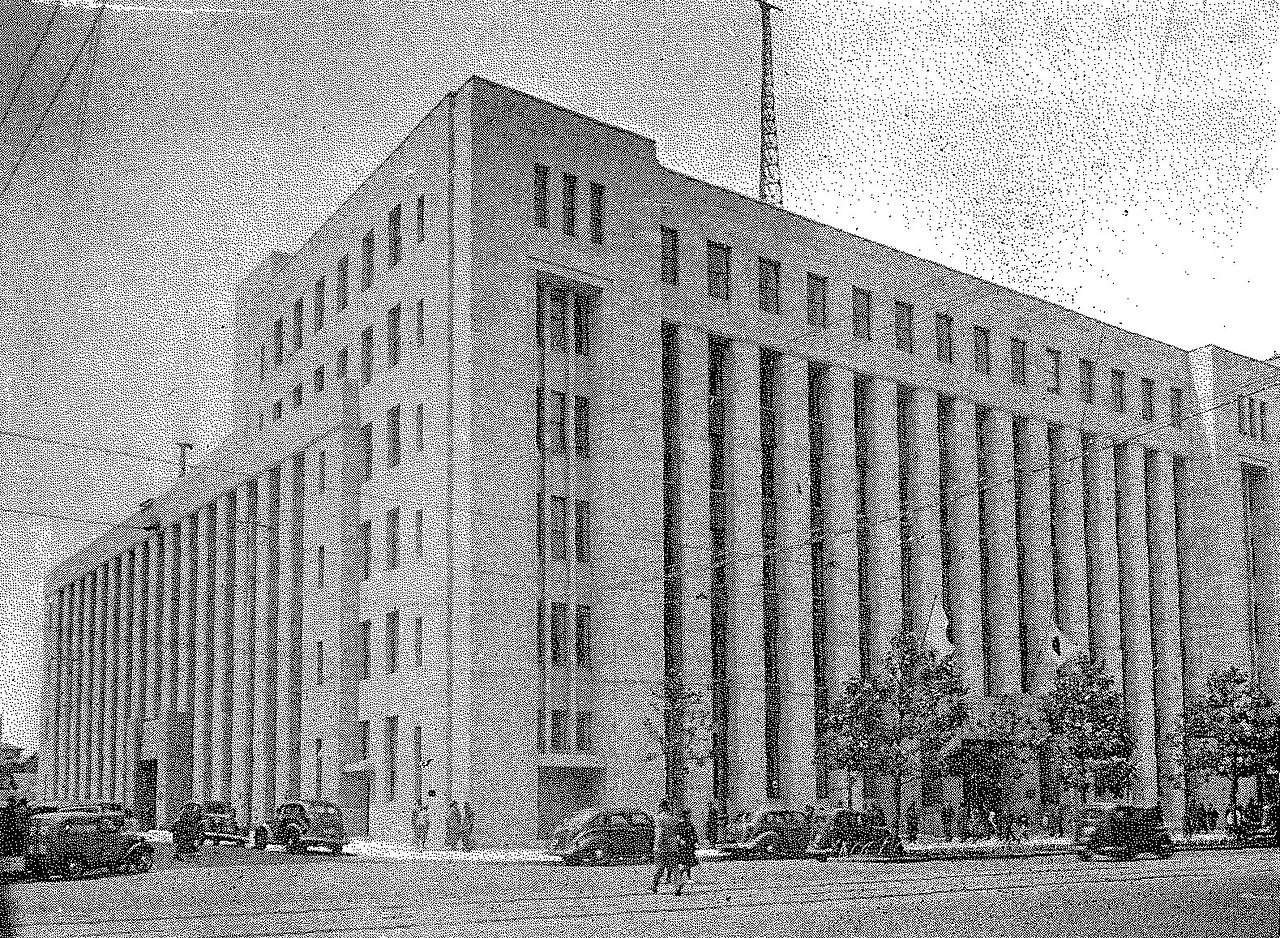
The former headquarters of NHK (Japan Broadcasting Corporation) in Uchisaiwaicho, Chiyoda, Tokyo, operational from 1938 to 1973. On August 15, 1945, Emperor Hirohito's historic Gyokuon-hōsō (Jewel Voice Broadcast) announcing Japan's surrender was transmitted from Studio 8 (R-208) in this building. During the preceding night, rebel officers of the Kyūjō Incident attempted to seize the building to prevent the broadcast, confining approximately 60 staff members in Studio 1. The building was demolished in 1978 and the site is now occupied by Hibiya City, with a broadcasting memorial monument marking the location.
Images


History
The NHK Tokyo Broadcasting Hall (NHK東京放送会館) was the headquarters of the Japan Broadcasting Corporation (Nippon Hōsō Kyōkai), located at 2-2-3 Uchisaiwaicho, Chiyoda Ward, Tokyo. Designed by the Yamashita Toshirō Architectural Office (now Yamashita Sekkei) and constructed by Takenaka Corporation, the reinforced concrete building was completed on December 20, 1938, and served as Japan's central broadcasting facility for 35 years.
The building's most historic moment came on August 15, 1945, when the Gyokuon-hōsō (玉音放送, Jewel Voice Broadcast) was transmitted from Studio 8 (R-208), a 57.5-square-meter lecture broadcast studio on the second floor. At noon, NHK announcer Nobukata Wada introduced the broadcast, and Emperor Hirohito's pre-recorded voice was heard across the nation for the first time, reading the Imperial Rescript on the Termination of the War. For most Japanese citizens, this was the first time they had ever heard the Emperor's voice. The recording had been made the previous evening at the Imperial Palace using special lacquer discs (gyokuon-ban).
In the early hours of August 15, during the Kyūjō Incident (宮城事件), rebel officers led by Major Kenji Hatanaka attempted to prevent the surrender broadcast. Major Hatanaka entered the broadcasting hall around 4:30 AM, occupied a studio, and demanded airtime to broadcast a call for continued resistance. Staff members refused, citing regulations that prohibited broadcasting during air raid alerts. Separately, Major Koga dispatched troops from the Imperial Guards to seize the building. Approximately 60 NHK staff members were confined in Studio 1 (R-301), the building's largest studio at 373 square meters. The coup ultimately failed, and the broadcast proceeded as planned at noon.
After the war, the building was requisitioned by American occupation forces. The Civil Information and Educational Section conducted broadcast censorship operations from the facility, and a precursor to the Armed Forces Network (AFN) operated from within the building. NHK also launched Japan's first analog television broadcast from this location on February 1, 1953, marking another milestone in Japanese broadcasting history.
The building was sold to Mitsubishi Estate for 35.46 billion yen on December 8, 1972, and NHK operations ceased on July 31, 1973, when the corporation relocated to its current Broadcasting Center in Jinnan, Shibuya. Demolition began in November 1978. The site was redeveloped as Hibiya City (日比谷シティ), which opened on November 10, 1981. A broadcasting memorial monument (放送記念碑) stands along the Hibiya-dori side of the complex, inscribed: "The Japan Broadcasting Corporation was in this location from 1938 to 1973."
Categories
Related events
Related themes
Sources
- NHK東京放送会館 - WikipediaWebsite