Surrender, Occupation & Repatriation
終戦・占領・引揚
The end of the war, the Allied occupation, war crimes trials and repatriation.
History
This theme covers places connected with the end of the war and its aftermath: where surrender was decided and signed, the headquarters and courts of the Allied occupation, and the ports through which millions of Japanese were repatriated. It runs from August 1945 into the 1950s, the transition between wartime and postwar Japan.
Japan accepted the Potsdam Declaration on August 14, 1945, and the decision was announced to the nation at noon the next day in the Emperor's recorded broadcast. General MacArthur, the Supreme Commander for the Allied Powers, landed at Atsugi on August 30, and the Instrument of Surrender was signed aboard USS Missouri in Tokyo Bay on September 2. GHQ/SCAP, housed in the Dai-Ichi Life Building at Hibiya, ruled indirectly through the Japanese government; the Allied occupation that followed dismantled the armed forces and tried war criminals, purged officials, dissolved the zaibatsu, carried out land reform and directed the drafting of the Constitution of Japan, in force from 1947. The International Military Tribunal for the Far East opened at Ichigaya in May 1946 and delivered judgment in November 1948; Tōjō Hideki and six others were hanged on December 23. Class B and C trials were held at Yokohama, Manila, Singapore and elsewhere in Asia. As the Cold War deepened, occupation policy shifted from about 1948 towards economic recovery. Japan regained sovereignty when the San Francisco Peace Treaty took effect on April 28, 1952, though Okinawa remained under U.S. administration until 1972.
Some 6.6 million Japanese soldiers and civilians were overseas at the defeat. Their return (hikiage) from Manchuria, Korea, China, Taiwan, Southeast Asia and the Pacific passed through ports such as Hakata, Sasebo (Uragashira), Maizuru, Senzaki and Uraga. In Soviet-occupied Manchuria, northern Korea and southern Sakhalin, civilian deaths in flight and the children left behind were especially grave problems; about 575,000 Japanese servicemen and others were taken to Siberia and elsewhere in the Soviet Union for internment and forced labour, of whom Japan's Ministry of Health, Labour and Welfare estimates about 55,000 died. Maizuru received repatriation ships until 1958. Meanwhile Koreans, Chinese and Taiwanese who had been in Japan during the war moved in the opposite direction or chose to remain, the starting point of the postwar question of foreign residents.
Under this theme visitors will find places associated with the decision to end the war and the signing of the surrender, buildings requisitioned by the occupation forces, the war crimes courtrooms and the site of Sugamo Prison, landing piers and quarantine-station remains at the repatriation ports, and museums such as the Maizuru Repatriation Memorial Museum and the Uragashira Repatriation Memorial Peace Park.
Related sites (86)
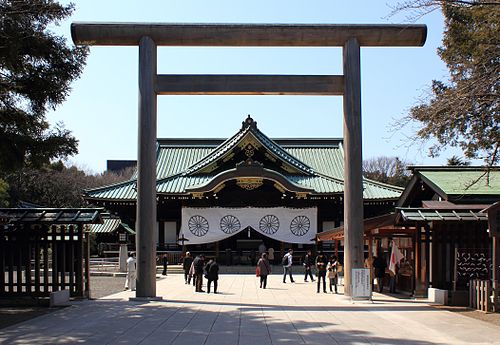
Yasukuni Shrine and Yūshūkan Museum
靖國神社・遊就館
A Shinto shrine in Chiyoda, Tokyo, established in 1869 to enshrine Japan's war dead, and its affiliated military museum Yūshūkan. The shrine enshrines approximately 2,466,532 souls including 14 Class A war criminals.
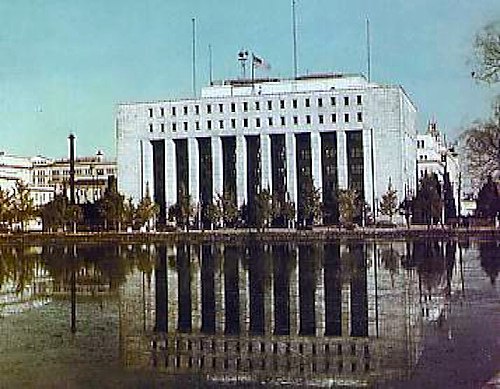
Dai-ichi Life Insurance Building (GHQ SCAP Headquarters)
第一生命館(GHQ総司令部)
The Dai-ichi Life Insurance Building in Tokyo served as General Douglas MacArthur's SCAP headquarters from 1945 to 1952, overseeing the occupation and reconstruction of Japan.

Kyushu University Vivisection Incident — Faculty of Medicine
九州大学生体解剖事件(九大医学部)
Site of the Kyushu Imperial University vivisection incident (May–June 1945), in which eight captured American B-29 crewmen from the 29th Bombardment Group were subjected to live experimental surgeries — including lung removal, seawater blood injection, and organ excision — at the university's anatomy department. All eight died. In 1948, thirty defendants faced a B/C-class war crimes tribunal in Yokohama; twenty-three were convicted. The Kyushu University Medical History Museum on the Maidashi campus now documents the atrocity as part of its medical ethics and peace education mission.

Sugamo Prison Site (Sunshine 60)
巣鴨プリズン跡(東池袋中央公園)
Sugamo Prison, originally built in 1895, was commandeered by Allied occupation forces after WWII to hold suspected war criminals awaiting trial before the International Military Tribunal for the Far East. On December 23, 1948, seven Class-A war criminals — including former Prime Minister Hideki Tojo — were executed by hanging here. A total of 60 war criminals were executed at the site. The war-criminal prison closed in 1958 (1962 by some accounts); the buildings were demolished in 1971 and replaced by the Sunshine City commercial complex (anchored by the 240-meter Sunshine 60 skyscraper) which opened in 1978. A small stone monument inscribed "Pray for Eternal Peace" (永久平和を願って) stands in adjacent Higashi-Ikebukuro Central Park, near the former gallows location.

Imperial Japanese Army Nakano School Site
陸軍中野学校跡
Site of the Imperial Japanese Army Nakano School (陸軍中野学校, Rikugun Nakano Gakkō), Japan's primary intelligence and covert operations training academy from 1938 to 1945. Over 2,500 graduates were trained in espionage, sabotage, guerrilla warfare, propaganda, and counterintelligence. Notable alumni include Second Lieutenant Hiroo Onoda, who continued guerrilla operations on Lubang Island in the Philippines until 1974. The original campus at Nakano 4-chome, Tokyo, has been completely redeveloped; a stone monument (陸軍中野学校址碑) stands in the grounds of the Tokyo Metropolitan Police Hospital, with an information panel in adjacent Nakano Shiki no Mori Park.

Iwahana Explosives Factory Ruins (Gunma-no-Mori Park)
岩鼻火薬製造所跡(群馬の森)
Site of the Iwahana Explosives Manufacturing Plant (1882–1945), established as the Tokyo Artillery Arsenal's gunpowder factory in Takasaki, Gunma Prefecture. It was the Imperial Japanese Army's sole black-powder and dynamite production facility — and the birthplace of dynamite manufacturing in Japan (1906). The sprawling 1.07-million-square-meter complex produced black powder, smokeless powder, and up to 180 tons of dynamite per month at peak capacity with nearly 4,000 workers. A catastrophic explosion in December 1938 killed 13 workers and damaged 560 nearby homes. After Japan's surrender in 1945, the grounds were divided among Nippon Kayaku Co., the Japan Atomic Energy Agency, and the prefectural Gunma-no-Mori Park (opened 1974). The park preserves blast-protection earthworks, concrete tunnel passages, ammunition magazine ruins, a firing-range embankment, and the "Birthplace of Dynamite in Japan" memorial stone (erected 1973).

Ichigaya Memorial Hall
市ヶ谷記念館
Ichigaya Memorial Hall preserves the auditorium of the former Imperial Japanese Army Ministry Building No. 1, which served as the Army Ministry and Imperial General Headquarters during WWII, the courtroom for the International Military Tribunal for the Far East (Tokyo Trials, 1946–1948), and the site of Yukio Mishima's attempted coup and ritual suicide in 1970. The hall was relocated and reconstructed within the Ministry of Defense compound in 2000.

Memorial Ship Mikasa
記念艦三笠
The last surviving pre-dreadnought battleship in the world, preserved as a museum ship in Mikasa Park, Yokosuka. Built by Vickers in Britain and commissioned in 1902, Mikasa served as Admiral Togo Heihachiro's flagship during the decisive Battle of Tsushima (1905) in the Russo-Japanese War. Designated one of the "World's Three Great Memorial Warships" alongside HMS Victory and USS Constitution, Mikasa was enshrined in concrete in 1926 as a national memorial. During the 1930s–1940s the ship served as a potent symbol of Imperial Navy spirit and was central to Navy Day (May 27) commemorations that fueled wartime morale and militarist propaganda. After 1945 she was stripped of her superstructure and guns and for a time housed a cabaret and an aquarium; she was restored in 1961 with the support of Fleet Admiral Chester Nimitz and the Japanese public.

Maizuru Repatriation Memorial Museum
舞鶴引揚記念館
A memorial museum in Maizuru, Kyoto Prefecture, commemorating the 664,531 Japanese military personnel and civilians repatriated through the Port of Maizuru between 1945 and 1958, primarily from Soviet forced-labor camps in Siberia. In 2015, 570 items from its collection were inscribed on the UNESCO Memory of the World Register.

Suzuki Kantarō Memorial Museum
鈴木貫太郎記念館
Memorial museum in Sekiyado, Noda City, Chiba Prefecture, dedicated to Baron Kantarō Suzuki (1868–1948), the 42nd Prime Minister of Japan who led the nation to accept the Potsdam Declaration and end World War II. Opened in 1963, the museum preserves over 1,000 personal belongings, ceremonial attire, and documents, as well as an oil painting depicting the fateful Imperial Conference (Gozen Kaigi) of August 9–10, 1945. The museum has been closed since October 2019 due to damage from Typhoon Hagibis and structural concerns.

Yokosuka Naval Base
横須賀海軍施設
A major Imperial Japanese Navy base near Tokyo, now a US Navy installation.

Sasebo Naval Base
佐世保海軍基地
A major IJN fleet base in Kyushu, key for operations in the East China Sea and the southern Pacific.

Tokyo Bay Surrender Site
東京湾降伏調印地点
The waters of Tokyo Bay where Japan formally surrendered aboard USS Missouri on September 2, 1945.

Imperial General Headquarters
大本営
The supreme military command center of the Japanese armed forces during World War II, located in central Tokyo.

Kyoto Imperial University — F-Go Nuclear Research Project
京都帝国大学理学部(F号研究)
Site of the F-Go Project (F号研究), the Imperial Japanese Navy's secret nuclear weapons research program conducted at Kyoto Imperial University from 1943 to 1945. Led by physicist Bunsaku Arakatsu, the project pursued uranium-235 separation via ultracentrifuge technology. The team included future Nobel laureate Hideki Yukawa. The project never achieved a working weapon before Japan's surrender.

Tsuchizaki Minato History Museum (Tsuchizaki Air Raid Exhibition)
土崎みなと歴史伝承館(土崎空襲展示室)
The Tsuchizaki Minato History Museum preserves the memory of the Tsuchizaki Air Raid of August 14-15, 1945 — Japan's last aerial bombardment in WWII. On the night Emperor Hirohito had already decided to surrender, 132 B-29 bombers of the 315th Bombardment Wing struck the Nippon Oil Akita Refinery, dropping 12,047 bombs (953.9 tons) over four hours. Over 250 people were killed. The museum's air raid exhibition hall displays a bomb-damaged warehouse column from the refinery, with projection mapping recreating the devastation.

Former Navy Owada Communications Unit
旧海軍大和田通信隊(大和田通信所)
The Imperial Japanese Navy's primary signals intelligence and radio interception facility, established in 1936 on the Musashino Plateau straddling Niiza (Saitama) and Kiyose (Tokyo). The Owada Communications Unit intercepted the "Tora Tora Tora" message confirming the Pearl Harbor attack on December 8, 1941, tracked B-29 bomber communications from Tinian and Saipan, noted the aircraft that dropped the atomic bombs on Hiroshima and Nagasaki as unusual planes operating from Tinian, and received the Potsdam Declaration broadcast — symbolically bookending Japan's Pacific War from first strike to final surrender. After 1945 the site was requisitioned by U.S. forces and remains an active American communications facility (USAF Owada Communication Site, FAC 3056) to this day.

Miho Naval Air Base
美保海軍航空基地
Miho Naval Air Base was an Imperial Japanese Navy airfield constructed from 1939 on the Yumigahama Peninsula in Sakaiminato, Tottori Prefecture, under the jurisdiction of the Maizuru Naval District. Commissioned in October 1943 as the Miho Naval Air Group (美保海軍航空隊), it served primarily as a preliminary flight training base for naval aviation cadets, processing up to 1,200 trainees from the Yokaren (予科練) Kō-class 13th intake. A second unit, the 2nd Miho Naval Air Group, was established in January 1944 for elementary flight training. The base was attacked once by USAAF B-24 Liberator bombers in July 1945. After Japan's surrender, it was occupied by the British Commonwealth Occupation Force (BCOF), with RAAF No. 77 Squadron stationed there until 1950, followed by USAF units during the Korean War. Returned to Japanese control in 1957–58, it became JASDF Miho Air Base, currently the only transport aviation base in western Japan, operating C-2 and KC-46A aircraft.

Former 32nd Infantry Regiment Barracks Site (Kajō Park)
旧歩兵第三十二連隊兵営跡(霞城公園)
The former garrison site of the Imperial Japanese Army 32nd Infantry Regiment, located within the Ninomaru (second bailey) of Yamagata Castle (also known as Kajō, "Mist Castle"). The regiment was formed at Akita in 1896 and brought to Yamagata in 1898, after the city purchased the castle grounds and donated them to the Army; it kept the castle as its home garrison for nearly half a century until Japan's surrender in 1945. The 32nd Regiment fought in every major conflict of modern Japan — the Russo-Japanese War, the Siberian Intervention, the invasion of Manchuria, the Second Sino-Japanese War, and ultimately the Battle of Okinawa, where the regiment was virtually annihilated. After the war, the military land was transferred to Yamagata City and opened in 1949 as Kajō Park. Today the park preserves the reconstructed Ninomaru Higashi-Ōtemon Gate (1991), the Honmaru Ichimonji Gate, stone monument markers for the 32nd Regiment, and approximately 1,500 cherry trees originally planted by returning soldiers in 1906. It remains one of the most significant former military garrison sites in the Tōhoku region.

Maizuru Red Brick Park (Maizuru Red Brick Warehouses)
舞鶴赤れんがパーク(舞鶴赤レンガ倉庫群)
A complex of twelve red brick warehouses built between 1901 and 1921 for the Imperial Japanese Navy's Maizuru Naval District (Maizuru Chinjufu), used as munitions depots, torpedo stores, and arsenal warehouses. Eight of the twelve buildings were designated National Important Cultural Properties in 2008. Five warehouses were renovated and reopened in 2012 as Maizuru Red Brick Park, a tourism and cultural facility. The site is part of the Japan Heritage "Four Cities of Former Naval Ports" designation (2016), distinct from the nearby Maizuru Repatriation Memorial Museum which focuses on postwar repatriation rather than naval infrastructure.

Army Aeronautical Inspection Department (Tama Army Airfield)
陸軍航空審査部(多摩陸軍飛行場)
The Imperial Japanese Army's central organization for testing, evaluating, and approving all new aircraft and aviation weapons, established in October 1942 at the Tama Army Airfield (present-day Yokota Air Base) in Fussa, western Tokyo. Staffed by Japan's most elite test pilots, the department evaluated every prototype fighter, bomber, and reconnaissance aircraft — including the Ki-61 Hien, Ki-84 Hayate, and captured Allied aircraft such as the P-51 Mustang and B-17. In the final months of the war, its fighter squadron served as an emergency interceptor unit defending the capital against B-29 raids. After Japan's surrender in September 1945, the U.S. 1st Cavalry Division occupied the intact airfield, discovering approximately 280 of the IJA's most advanced aircraft. The site was renamed Yokota Air Base and remains a major U.S. Air Force installation today.

NHK Museum of Broadcasting
NHK放送博物館
The NHK Museum of Broadcasting stands atop Atago Hill in Minato, Tokyo — the birthplace of Japanese broadcasting. Station JOAK made Japan's first radio broadcast on March 22, 1925, from a temporary studio in Shibaura, and began regular broadcasting from its permanent station on this hill that July. On August 15, 1945, the Gyokuon-hōsō (Jewel Voice Broadcast) — Emperor Hirohito's historic radio address announcing Japan's surrender — was transmitted via NHK's broadcasting network, and the original Gyokuon-ban recording disc is preserved in this museum. Opened in 1956 as the world's first museum dedicated to broadcasting.

Konoe Fumimaro's Tekigaiso Villa
荻外荘(近衞文麿旧宅)
Tekigaiso was the private residence of Prince Konoe Fumimaro, three-time Prime Minister of Japan, located in the quiet residential area of Ogikubo, Suginami Ward, Tokyo. Originally built in 1927 by architect Itō Chūta as a villa for Imperial physician Irisawa Tatsukichi, the estate was purchased by Konoe in 1937 and named 'Tekigaiso' by elder statesman Saionji Kinmochi. The villa served as a de facto second seat of government during Konoe's premierships. The 'Ogikubo Conference' of July 19, 1940, held here between Konoe, Tōjō Hideki, Matsuoka Yōsuke, and Yoshida Zengo, laid the groundwork for the Tripartite Pact with Nazi Germany and Fascist Italy and the concept of the Greater East Asia Co-Prosperity Sphere. The 'Tekigaiso Conference' of October 12, 1941, where Tōjō refused any concession on withdrawing from China, led directly to Konoe's resignation and Tōjō's appointment as Prime Minister, setting Japan on an irreversible path to war with the United States. On December 16, 1945, Konoe took his own life by potassium cyanide in his study at Tekigaiso, the day he was to report to GHQ on war crimes charges. Designated a National Historic Site in 2016, the villa was restored by Suginami Ward and opened to the public in December 2024.

Former Residence of Hideki Tojo
東條英機邸跡
Site of wartime Prime Minister Hideki Tojo's private residence in Yoga, Setagaya, Tokyo. On September 11, 1945, when GHQ military police arrived to arrest him as a suspected Class-A war criminal, Tojo shot himself in the chest with a pistol in his study but missed his heart and survived. American journalists and photographers who had gathered outside captured the dramatic scene, and the resulting photographs — showing Tojo slumped in a chair, bleeding from his self-inflicted wound — were transmitted worldwide and became some of the most iconic images of the immediate postwar period. After receiving emergency blood transfusions from American military doctors, Tojo recovered and was transferred to Sugamo Prison. He was tried before the International Military Tribunal for the Far East and executed on December 23, 1948. The residence no longer exists; the site is now occupied by a Rissho Kosei-kai (立正佼成会) church building, with a small stone marker reading "東條英機邸跡" on the grounds.

Former Imperial Guards Division Headquarters
旧近衛師団司令部庁舎
The Former Imperial Guards Division Headquarters is a red-brick Gothic-style building completed in 1910 in Kitanomaru Park, Tokyo. As the command center of the elite Imperial Guards Division (近衛師団), it was the nerve center of the Kyūjō Incident on the night of August 14–15, 1945, when young army officers led by Major Kenji Hatanaka occupied the Imperial Palace grounds in a failed coup to prevent Japan's surrender. Lieutenant General Takeshi Mori, commander of the 1st Imperial Guards Division, was murdered here when he refused to join the conspiracy. Designated a National Important Cultural Property in 1972, the building formerly housed the National Museum of Modern Art Crafts Gallery (1977–2020).

Imperial Palace / Obunko Annex
皇居・御文庫附属室
The Obunko Annex (御文庫附属室) is an underground bunker within the Fukiage Gardens of the Imperial Palace in Tokyo, constructed by the Imperial Japanese Army in 1941 as a bomb-proof shelter for Emperor Showa. With 3-meter-thick reinforced concrete walls and a total protective layer of 14.3 meters, it was among the strongest air defense facilities in wartime Japan. Its 60-square-meter conference room was the site of the two most consequential meetings of the Pacific War: the Supreme War Direction Council on August 10, 1945, and the Imperial Conference (御前会議) on August 14, 1945, where Emperor Hirohito issued the "Sacred Decision" (聖断, Seidan) to accept the Potsdam Declaration and end the war. The Obunko Annex is not open to the public, as it lies within the restricted Fukiage Gardens; visitors can access the Imperial Palace Outer Gardens (皇居外苑) and view the palace from the Nijubashi Bridge area.

Yokohama War Crimes Tribunal (BC-Class Trials)
横浜軍事法廷(BC級戦犯裁判)
The Yokohama War Crimes Tribunal was held at the Yokohama District Court from 1946 to 1949 by the U.S. Eighth Army to try Class-B and Class-C Japanese war criminals. A total of 319 trials involving 996 defendants were conducted, resulting in 854 convictions including 124 death sentences (51 carried out). The courtroom has been preserved and relocated to the Toin Gakuen Memorial Academium.

Former Ministry of Foreign Affairs Building
外務省旧庁舎
The Ministry of Foreign Affairs at Kasumigaseki, Chiyoda Ward, Tokyo, was the nerve center of Japanese wartime diplomacy. The original Western-style building designed by French architect Boinville was completed in 1881 but destroyed in the 1923 Great Kanto Earthquake. The rebuilt ministry served as the site where the Potsdam Declaration was received, translated, and deliberated upon in July–August 1945, and where the Instrument of Surrender was prepared. Foreign Minister Mamoru Shigemitsu departed from this building on September 2, 1945 to sign the surrender aboard USS Missouri. The wartime building was destroyed in the May 25, 1945 air raids on Tokyo. The current complex (North Building 1960, Central/South Buildings 1970) designed by Hideo Kosaka occupies the same Kasumigaseki site.

Kumagaya Army Air School
熊谷陸軍飛行学校
The Imperial Japanese Army's primary training center for young aviation soldiers (少年飛行兵), established in December 1935 in Saitama Prefecture. The school trained thousands of teenage pilot cadets at its main campus and branch schools including the Okegawa sub-school. Kumagaya city was devastated by one of the last B-29 firebombing raids of the war on the night of August 14-15, 1945 — less than 12 hours before Japan's surrender announcement. Today the former school site is JASDF Kumagaya Air Base, while the restored Okegawa branch is a peace memorial hall.

Former Yokohama Specie Bank Headquarters (Kanagawa Prefectural Museum of Cultural History)
旧横浜正金銀行本店本館
The former headquarters of the Yokohama Specie Bank (横浜正金銀行), Japan's preeminent wartime foreign-exchange bank, completed in 1904 in German Neo-Baroque style. Designed by Tsumaki Yorinaka and Endo Oto, the three-story stone-and-brick building with its iconic octagonal dome served as the nerve center of Japan's international financial operations, including wartime foreign-exchange controls and management of enemy-nation assets under the 1941 Enemy Property Control Law. After Japan's surrender, the bank was designated a Closed Institution by GHQ/SCAP in 1946 and dissolved, with operations transferred to the newly established Bank of Tokyo. The building survived both the 1923 Great Kanto Earthquake (losing its dome to fire) and the devastating 1945 Yokohama air raids. Designated a National Important Cultural Property in 1969, it now houses the Kanagawa Prefectural Museum of Cultural History.

Former Ministry of Finance Building (Current MOF Headquarters)
旧大蔵省庁舎(現財務省本庁舎)
The former Ministry of Finance headquarters in Kasumigaseki, Chiyoda Ward, Tokyo, served as the nerve center of Japan's wartime economic control apparatus. Construction began in 1934 under architect Okuma Yoshikuni of the Ministry of Finance Construction Bureau, but was interrupted by the Second Sino-Japanese War. The building reached provisional completion in 1940 and official completion in 1943. Its robust reinforced concrete structure with protective layers on the roof allowed it to survive the devastating Tokyo air raids of 1945, while many buildings in the area — including the German Embassy in nearby Nagatachō — were destroyed. The surviving exterior walls were retained and incorporated into the postwar restoration. After being requisitioned by GHQ as U.S. military offices and barracks from 1945 to 1955, the building was returned to Japan and underwent extensive renovation through 1963. It remains in active use as the Ministry of Finance and National Tax Agency headquarters, and underwent major base-isolation seismic retrofitting between 2015 and 2020.

Former Home Ministry Site (Central Government Building No. 2)
旧内務省跡(中央合同庁舎第2号館)
The Ministry of Home Affairs (内務省, Naimu-shō) was the most powerful cabinet ministry of the Empire of Japan, controlling police, civil administration, Shinto affairs, public works, and local government from 1873 to 1947. During WWII it served as the nerve center of domestic control, operating the Special Higher Police (特高警察, Tokkō) for thought-crime suppression, administering the Air Defense General Headquarters (防空総本部) for civilian air-raid preparedness, and enforcing wartime mobilization of the populace. Its Kasumigaseki headquarters, a reinforced-concrete building completed in 1933 (Shōwa 8), was demolished after the ministry's forced dissolution by GHQ/SCAP on December 31, 1947. The site is now occupied by Central Government Building No. 2 (中央合同庁舎第2号館), housing the Ministry of Internal Affairs and Communications, National Police Agency, and other agencies — the direct bureaucratic successors of the wartime Home Ministry.

Old Prime Minister's Official Residence (Surrender Rescript Drafting Site)
旧内閣総理大臣官邸(終戦の詔書起草地)
The old Prime Minister's Official Residence (旧官邸, completed 1929) in Nagatacho, Chiyoda, Tokyo, was where Chief Cabinet Secretary Sakomizu Hisatsune and his team drafted the Imperial Rescript on the Termination of the War (終戦の詔書) between August 10 and 14, 1945. Working under extreme secrecy within the Cabinet Secretariat offices of the Kantei, Sakomizu, Chinese classics scholar Kawata Mizuho, and other Cabinet staff produced the historic document through which Emperor Hirohito announced Japan's acceptance of the Potsdam Declaration. The rescript was finalized during the Cabinet meeting on August 14 and broadcast to the nation at noon the following day. The 1929 building now serves as the Prime Minister's Residential Quarters (首相公邸).

Kanmon Railway Tunnel
関門トンネル
Japan's first undersea tunnel (1942), a 3,614-meter railway passage beneath the Kanmon Strait connecting Shimonoseki (Honshu) and Moji (Kyushu). A critical wartime infrastructure achievement that maintained rail links between the two main islands. The Kanmon Strait was the primary target of the U.S. B-29 "Operation Starvation" aerial mining campaign in 1945, and the OSS planned a sabotage mission with 250 agents and 23 tons of explosives — cancelled only by Japan's surrender. A parallel pedestrian tunnel (780 m, opened 1958) allows visitors to walk beneath the strait.

Mitsui Main Building
三井本館
The Mitsui Main Building (三井本館) is a seven-storey neoclassical office building in Nihonbashi-Muromachi, Chuo Ward, Tokyo, completed in 1929 as the headquarters of the Mitsui Zaibatsu — the largest and oldest of Japan's four great zaibatsu conglomerates. Designed by the American firm Trowbridge & Livingston in Beaux-Arts style after the previous building was destroyed in the 1923 Great Kanto Earthquake, it served as the nerve center of Mitsui's wartime economic empire encompassing some 270 companies involved in banking, trading, mining, shipbuilding, and munitions. During WWII, Mitsui played a central role in Japan's wartime economic control system, channeling resources for military procurement, expanding into occupied territories, and employing forced labor including Allied POWs. Following Japan's surrender, GHQ ordered the dissolution of Mitsui as part of zaibatsu dismantlement. Designated a National Important Cultural Property in 1998, the building today houses Mitsui Fudosan headquarters and the Mitsui Memorial Museum.

Yoshimi Hyakuana (Underground Munitions Factory Ruins)
吉見百穴(地下軍需工場跡)
A nationally designated historic site in Yoshimi Town, Saitama Prefecture, comprising 219 lateral cave tombs (yokoana) carved into a tuff hillside during the Kofun period (6th–7th century). In 1944–1945, the Imperial Japanese military commandeered the site to construct a massive underground factory for the Nakajima Aircraft Company, intended to produce aircraft engines safe from American air raids. An estimated 3,000 to 3,500 Korean laborers, working in round-the-clock shifts, excavated what is reported as approximately 8.4 kilometers of interconnected tunnels in a grid pattern beneath and around the ancient tombs, destroying over 10 designated cave tombs in the process. The factory never reached full production before Japan's surrender in August 1945. Today, visitors can view both the ancient burial caves and the sealed entrances to the wartime tunnel network—a striking juxtaposition of 1,400-year-old funerary archaeology and 20th-century wartime industrial desperation.

Former Army Kaikōsha (Kudan Kaikan Terrace)
旧陸軍偕行社(九段会館テラス)
Originally built in 1934 as the Gunjin Kaikan (Military Personnel Hall) in the Imperial Crown Style, this building at Kudan in Chiyoda served as the martial law headquarters during the February 26 Incident (1936), was requisitioned by GHQ as "Army Hall" after the war, and later operated as Kudan Kaikan by the Japan War-Bereaved Families Association. After earthquake damage in 2011, the site was redeveloped as Kudan Kaikan Terrace (2022), preserving the registered tangible cultural property façade while adding a modern 17-story tower.

South Manchuria Railway Tokyo Office Site
南満州鉄道株式会社東京支社跡
The South Manchuria Railway Company (南満州鉄道株式会社, commonly known as Mantetsu/満鉄) maintained its Tokyo branch office as the critical liaison between the colonial enterprise in Manchuria and the Japanese government in the capital. Originally established at Azabu-Mamiana-chō in 1907 when the headquarters relocated to Dalian, the Tokyo office later moved to Akasaka-ku Aoi-chō 2-banchi (present-day Toranomon 2-chōme), where a purpose-built reinforced concrete building was completed in 1936 during President Yōsuke Matsuoka's tenure. The "Mantetsu Building" (満鉄ビル) served as the nerve center for the company's Japan-side operations — lobbying the Diet, coordinating with the military and zaibatsu, managing investment flows, and operating the Manchuria Resource Exhibition Hall (満洲資源陳列所) which showcased Manchurian natural resources and industrial potential to investors and policymakers. After Japan's defeat in 1945, the building was requisitioned by SCAP/GHQ and repurposed as a U.S. Embassy annex and residence for occupation forces families. The original structure was demolished and replaced by the current Mitsui O.S.K. Lines Building (商船三井ビルディング, formerly Toranomon Dai Building) completed in 1979.

Former Soviet Embassy (now Embassy of Russia)
旧ソビエト連邦大使館(現ロシア大使館)
The former Soviet Embassy in Tokyo's Azabudai district (now the Embassy of Russia) was the site where Soviet Ambassador Yakov Malik was to deliver the formal declaration of war against Japan on August 8–9, 1945, abrogating the Soviet–Japanese Neutrality Pact of 1941. Foreign Minister Molotov informed Ambassador Satō in Moscow at 5 p.m. Moscow time (11 p.m. JST) on August 8, and Malik subsequently met Foreign Minister Tōgō in Tokyo on August 10 to formally deliver the notification. The Soviet invasion of Manchuria commenced at midnight on August 9, becoming a decisive factor in Japan's surrender.

Moji Port (Former Moji Customs & Mojiko Retro)
門司港(旧門司税関・門司港レトロ)
Imperial Japan's most critical continental gateway port, handling over 2 million troops and vast quantities of military supplies shipped to Manchuria, China, and Korea from the 1930s through 1945. The 1912 Renaissance-style red-brick Former Moji Customs building — designed under the supervision of master architect Tsumaki Yorinaka — survives as the district's iconic landmark. After the war, Moji Port served as a major repatriation port receiving hundreds of thousands of returning soldiers and civilians. Designated a Japan Heritage site as part of the "Nostalgic Kanmon Strait" cultural landscape.

Former US Embassy Tokyo (Current US Embassy)
旧アメリカ大使館(現アメリカ大使館)
The US Embassy compound in Akasaka, Minato, Tokyo, has occupied the same site since 1890. The Ambassador's Residence, completed in 1931 by architects H. Van Buren Magonigle and Antonin Raymond, was the venue for pre-war US-Japan negotiations (1941) led by Ambassador Joseph C. Grew. On December 8, 1941 (Japan time), following Pearl Harbor, diplomatic relations were severed and embassy staff were interned on the compound grounds until repatriation via exchange ship in June 1942. During the Allied Occupation (1945–1952), General Douglas MacArthur used the Ambassador's Residence as his personal quarters. On September 27, 1945, Emperor Hirohito made a historic visit to MacArthur at this residence — their famous photograph together, taken by Lt. Gaetano Faillace, became one of the most iconic images of the postwar era. Hirohito and MacArthur met eleven times in all between 1945 and 1951, beginning with this visit.

Taiwan Grand Shrine
臺灣神宮
The Taiwan Grand Shrine (Taiwan Jingū) was the highest-ranking Shinto shrine in colonial Taiwan, originally established in 1901 as the Taiwan Shrine (Taiwan Jinja) on Jiantan Mountain beside Maruyama (Yuanshan) in Taihoku (Taipei). Dedicated to Prince Kitashirakawa Yoshihisa and the three pioneering deities (Kaitaku Sanjin), it was elevated to Grand Shrine status in 1944 when Amaterasu was enshrined. On October 23, 1944, a Japanese military aircraft crashed beside the newly built shrine precinct, and the resulting fire destroyed many of its structures. The shrine was never repaired; after Japan's surrender the original site was cleared for the Taiwan Hotel, which was renamed the Grand Hotel Taipei in 1952 and still stands on the original Jiantan Mountain site today.

Taipei Prefecture Office
台北州庁
The Taipei Prefecture Office (台北州廳), completed in 1915 as the office of Taihoku-chō (台北廳), was from 1920 the administrative headquarters of Taihoku Prefecture (台北州) during Japanese colonial rule over Taiwan (1895–1945). Designed by prominent colonial architect Matsunosuke Moriyama (森山松之助), the Renaissance-style red brick building served as the seat of government for northern Taiwan — encompassing modern-day Taipei, Keelung, and Yilan. After Japan's surrender in 1945 the building passed to the Republic of China authorities, and since 1958 it has housed the Control Yuan (監察院). It is designated a National Monument (國定古蹟) and is considered one of the best-preserved post-Renaissance colonial buildings in Taiwan.

Former Kaohsiung City Hall (Kaohsiung Museum of History)
旧高雄市役所(高雄市立歴史博物館)
The former Kaohsiung City Hall (高雄市役所, Takao Shiyakusho), completed in September 1939 during the Japanese colonial period, is one of the finest surviving examples of Imperial Crown Style (帝冠式) architecture in Taiwan. Designed by architect Ōno Yonezirō of the Shimizu Corporation, the reinforced-concrete building was erected on the banks of the Love River (formerly Takao River) in the Sakaemachi district (present-day Yancheng District). The building served as the administrative centre of Takao City under Japanese rule, functioning within the broader colonial governance structure headed by the Takao Prefecture Hall (高雄州廳). After Japan's surrender in August 1945, the building was taken over as the Kaohsiung City Government office, serving this role until January 1992. Designated a municipal historic site in 2004, it reopened in October 1998 as the Kaohsiung Museum of History — Taiwan's first municipal history museum.

Shirakawa POW Camp (Taiwan Camp No. 4)
白河捕虜収容所(臺灣俘虜収容所第四分所)
Shirakawa POW Camp (Taiwan POW Camp No. 4) was a Japanese prisoner-of-war camp established in June 1943 at the former Neijiao Army Exercise Ground (內角陸軍演習所) in Baihe District, Tainan, colonial Taiwan. Known as the "officers' camp," it held 300–500 Allied prisoners — predominantly senior military officers and colonial officials from the United States, United Kingdom, Netherlands, and Australia — although the very highest-ranking captives held at Karenko, the group of Lt-Gen Arthur Percival (the British commander who surrendered Singapore) and governors such as Sir Shenton Thomas (Straits Settlements), are recorded as having been sent to Taihoku Camp No. 5 rather than to Shirakawa. Transferred primarily from Karenko (Hualien) Camp, prisoners were forced to perform agricultural labour on starvation rations. The camp served as a de facto hospital camp from late 1944 after most of the senior officers were transferred to Manchuria in the autumn of 1944. The camp operated until August 1945 and was liberated following Japan's surrender. In November 2013, the Taiwan POW Camps Memorial Society dedicated a memorial stone at the site entrance. Today the former camp grounds remain under military control as the Neijiao Military Camp (內角營區), now the Army Southern Region Testing and Evaluation Center.

Former Taiwan Army Headquarters
台湾軍司令部跡
The Taiwan Army Headquarters (台湾軍司令部) was the supreme military command of the Imperial Japanese Army on Taiwan, established in 1919, with its headquarters at Shoin-chō 3-chōme (now 172 Bo'ai Road, Zhongzheng District), Taipei. Originally commanding garrison forces on the island, it became the basis of the 10th Area Army (第十方面軍), formed on September 22, 1944, to prepare for the anticipated Allied invasion of Taiwan (Operation Causeway). General Rikichi Andō served as the last commander, simultaneously holding the post of Governor-General of Taiwan. The headquarters building, constructed around 1920, was among the buildings damaged in the U.S. Fifth Air Force's Taipei Air Raid of May 31, 1945. After Japan's surrender, Andō signed the instrument of surrender at the nearby Taipei Public Auditorium (now Zhongshan Hall) on October 25, 1945. The former headquarters building survives and is now used by the Ministry of National Defense's reserve command.

Shinchiku Prefecture Office (now Hsinchu City Government)
新竹州庁(現・新竹市政府)
The former Shinchiku Prefecture Office (新竹州廳) is a two-story reinforced-brick building, begun in 1925 and brought into use after its ridge-raising ceremony in November 1927 (1926 is often given as the completion date), at the administrative heart of Hsinchu City, Taiwan. Constructed during the Japanese colonial period as the seat of Shinchiku Prefecture — one of five prefectures (州) governing Taiwan from 1920 — the building is a landmark example of Japanese-Western hybrid (和洋混合) colonial architecture, combining a Western neoclassical body with an Eastern-style sloped tile roof. Its U-shaped plan features a prominent double-columned portico entrance flanked by twin towers, interior Roman-arched corridors, and balconies on three sides designed for Taiwan's subtropical climate. The portico was extended in 1932. During the Pacific War, the building served as the nerve centre for Shinchiku Prefecture's wartime mobilization, civil defence, and resource allocation across a vast jurisdiction encompassing modern-day Hsinchu City, Hsinchu County, Taoyuan City, and Miaoli County. In 1944–45 Hsinchu suffered repeated Allied bombing raids targeting its airfield and railway facilities; the Prefecture Office survived. After Japan's surrender on 15 August 1945, the building was handed over to the Republic of China administration on 25 October 1945 and has since served alternately as the Hsinchu County and Hsinchu City government offices, housing the city government continuously since the county government moved to Zhubei in 1989. Designated a provincial monument in 1998 and later reclassified as a National Monument (國定古蹟), the building continues to house city government functions; the nearby former Hsinchu City Hall (新竹市役所), a separate building, has housed the Hsinchu City Art Gallery (新竹市美術館) since 2007.

Remains of Taipei Prison (Huaguang Community Ruins)
台北刑務所跡(華光社区遺構)
The Taipei Prison (臺北刑務所, Taihoku Keimushō) was a major colonial detention facility built by the Japanese Government-General of Taiwan around 1904, modeled on European radial prison designs. Located around present-day Jinshan South Road in Taipei, it served as the primary incarceration site for political prisoners throughout the Japanese colonial period (1895–1945). Following the 1923 "Police Incident" (治警事件), prominent anti-Japanese activists including Chiang Wei-shui (蔣渭水), Lin Youchun (林幼春), Tsai Pei-huo (蔡培火), and Lai He (賴和) were imprisoned here. During WWII, the prison also held captured Allied airmen — on June 19, 1945, fourteen American airmen were executed there after a perfunctory trial, just 57 days before Japan's surrender. After the war, the prison grounds became government dormitories known as the Huaguang Community (華光社區). Sections of the original stone prison wall survive along Jinshan South Road: a north wall of about 90 meters, designated a Taipei City monument in 1998, and a south wall designated in 2013. The walls were constructed using stones recycled from the dismantled Qing Dynasty Taipei City Wall.

Taiwan Governor-General High Court (Judicial Building)
台湾総督府高等法院
The highest court of colonial Taiwan under Japanese rule, housed in the landmark 1934 Judicial Building in Taipei. After Japan's surrender, the building served as a venue for war crimes tribunals and later became the seat of the Republic of China's Judicial Yuan.

Taihoku Imperial University (now National Taiwan University)
台北帝国大学(現・国立台湾大学)
Taihoku Imperial University (台北帝国大学), established on March 16, 1928, was the seventh of Japan's nine imperial universities and the highest institution of learning in colonial Taiwan. Located in Taihoku (Taipei) with faculties of Literature & Politics, Science & Agriculture, Medicine (1936), and Engineering (1943), it served as the academic center for Japan's "southward advance" (南進) policy. Wartime research institutes — the Tropical Medicine Research Institute (1939), the Southern Humanities Research Institute (1943), and the Southern Resources Science Research Institute (1943) — conducted strategic studies on tropical diseases, Southeast Asian resources, and ethnography to support the empire's expansion into the South Seas. Students were mobilized under the 1943 gakuto shutsujin (学徒出陣) conscription. The university hospital was damaged during the May 31, 1945 Taipei Air Raid. After Japan's surrender, the university was renamed National Taiwan University (國立臺灣大學) in November 1945 under ROC administration.

Former IJA Taiwan Infantry 2nd Regiment Barracks
原日軍臺灣歩兵第二聯隊営舎
The former barracks of the Imperial Japanese Army Taiwan Infantry 2nd Regiment (臺灣步兵第二聯隊), located on what is now the Guangfu Campus of National Cheng Kung University (NCKU) in Tainan's East District. Established in 1907 (Meiji 40) as one of only two infantry regiments garrisoned in Taiwan — both uniquely bearing the prefix "Taiwan" (臺灣) in their designation — the 2nd Regiment was responsible for defending all of southern Taiwan south of the Zhuoshui River, with its headquarters and main barracks in Tainan's Asahi-chō (旭町). The permanent barracks were constructed in two phases: the first phase (1902–1904) established basic facilities, while the second phase (1910–1912) produced the ornate red-brick buildings with Roman arched colonnades that survive today as National Monuments. During WWII, as the Taiwan Army (臺灣軍) was reorganized into the 10th Area Army in 1944 for the decisive defense of Taiwan against anticipated Allied invasion, the barracks — whose regiment had left with the 48th Division in 1940–41 — continued in use as an army base in the south. After Japan's surrender in August 1945, the compound was taken over by ROC Army units (the 2nd, 8th, and 10th Armies) and renamed Guangfu Camp (光復營區). In 1966, the site was transferred to NCKU, becoming the Guangfu Campus. Three surviving barracks buildings — now housing the Department of History, the Department of Industrial Design (Dacheng Hall), and the Institute of Art Studies (Lixian Building) — were designated National Monuments on 10 November 2003, representing the most complete surviving Japanese-era permanent military barracks in Taiwan.

Kensei Elementary School (postwar Taipei City Hall, now MOCA Taipei)
建成小学校(戦後の台北市政府、現・台北当代芸術館)
This building — the post-war Taipei City Government office, not the Japanese-era Taihoku City Office (台北市役所), which stood on the site of today's Executive Yuan — was originally constructed in 1921 as the Kensei Elementary School (建成小學校) for Japanese children during the colonial period. After Japan's surrender in 1945, it was converted into the Taipei City Government headquarters, serving as the administrative centre of the city for nearly five decades until 1994. Designated a municipal historic site in 1996, the building was transformed into the Museum of Contemporary Art Taipei (MOCA Taipei), which opened in May 2001 as the first museum in Taiwan dedicated exclusively to contemporary art.

Taipei Public Hall (Zhongshan Hall)
台北公会堂
Taipei Public Hall (台北公会堂, Taihoku Kōkaidō), completed in 1936, was the largest public assembly hall in colonial Taiwan. On 25 October 1945, the Japanese surrender ceremony for Taiwan took place on its second floor, where Governor-General Andō Rikichi formally surrendered to General Chen Yi, marking the end of fifty years of Japanese colonial rule over Taiwan. Renamed Zhongshan Hall (中山堂) after the war, it is now designated a National Historic Site and serves as a civic cultural centre in Taipei.

Taipei Broadcasting Bureau (Taihoku Hōsōkyoku)
台北放送局(JFAK)
The Taipei Broadcasting Bureau (台北放送局, call sign JFAK) was the central radio broadcasting station of colonial Taiwan; it began experimental broadcasts in 1928, and its surviving performance hall was built by the Governor-General's Office in 1930. On August 15, 1945, it relayed the Emperor's Gyokuon-hōsō surrender broadcast to the people of Taiwan, marking the end of Japanese rule. In 1947, the station was seized by protesters during the 228 Incident to broadcast calls for resistance. Since 1997 the building has served as the Taipei 228 Memorial Museum.

Taiwan Shrine Sandō (Chokushi Road)
臺灣神社參道(勅使街道)
The Taiwan Shrine Sandō was the grand ceremonial approach road leading from central Taihoku (Taipei) to the Taiwan Grand Shrine on Jiantan Mountain beside Maruyama. Originally constructed in 1901 and known as Chokushi Kaidō (Imperial Envoy's Road), the route was significantly widened in the 1930s into a broad tree-lined boulevard, reported as about 40 meters wide, to project Japanese imperial authority. Lined with stone lanterns, torii gates, and culminating at the Meiji Bridge over the Keelung River, it served as the sacred axis connecting the colonial capital to its highest-ranking Shinto shrine. After Japan's defeat, the road was renamed in 1946 Zhongshan North Road (中山北路) after Sun Yat-sen, and it remains one of Taipei's most important north-south thoroughfares today.

Imperial Japanese Army Provisions Depot (Etchujima)
陸軍糧秣本廠
The central provisions depot of the Imperial Japanese Army, located at Etchujima in Fukagawa (present-day Koto Ward, Tokyo). Established in 1897 on the site of a former military drill ground, the depot was responsible for procuring, manufacturing, and storing food provisions for soldiers and fodder for military horses across the entire army. The facility operated continuously until Japan's surrender in 1945 and was heavily damaged in the Tokyo firebombing raids of March 1945. The site was subsequently used as a JGSDF camp until 1960 and has since been completely redeveloped.

Former Tokyo Army Garrison Hospital (National Center for Global Health and Medicine)
旧陸軍衛戍病院跡(国立国際医療研究センター)
Site of the former Tokyo First Army Garrison Hospital (東京第一陸軍病院), the Imperial Japanese Army's principal hospital in Tokyo and one of its oldest. Established in 1868 as a provisional army hospital to treat Boshin War casualties, it was relocated to its current site in Toyama, Shinjuku in 1929. Throughout the Pacific War the hospital treated vast numbers of wounded soldiers from all theaters and established branch hospitals nationwide. After Japan's surrender in 1945 it was transferred to the Ministry of Health and Welfare as the National Tokyo First Hospital, and has since evolved into the National Center for Global Health and Medicine (NCGM), a leading research hospital.

Hikari Naval Arsenal
光海軍工廠
Hikari Naval Arsenal was the Imperial Japanese Navy's seventh naval arsenal, established in Hikari City, Yamaguchi Prefecture in 1940. The sprawling 4-square-kilometer coastal facility produced steel, torpedoes, engines, cannon, and bombs, and from 1944 housed a training and sortie base for kaiten human torpedoes. At its peak the arsenal employed approximately 30,000 workers including 6,500 mobilized students. On August 14, 1945 — the day before Japan's surrender — 167 B-29 bombers devastated the complex in five waves, killing 738 people.
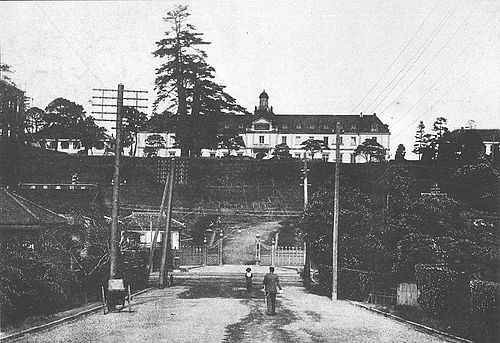
Former Army Ministry Site (Ichigaya Heights)
旧陸軍省跡(市ヶ谷台)
The site of the former Imperial Japanese Army Ministry (陸軍省) at Ichigaya Heights in Shinjuku, Tokyo — the supreme administrative headquarters of the Japanese Army, which moved here from Miyakezaka in December 1941 and remained until 1945. During the Pacific War, it housed the Army Ministry, the Army General Staff Office, and the Imperial General Headquarters Army Section, serving as the nerve center for all wartime military decision-making. On the night of August 14–15, 1945, the compound became the focal point of the Kyūjō Incident (宮城事件), an attempted military coup by army officers seeking to prevent Emperor Hirohito's surrender broadcast.

Former Residence of Prime Minister Koiso Kuniaki
小磯國昭旧邸跡
Site of the former Tokyo residence of General Kuniaki Koiso (1880–1950), the 41st Prime Minister of Japan who led the wartime cabinet from July 1944 to April 1945 during the final desperate phase of World War II. Koiso, previously Governor-General of Korea and known as "The Tiger of Korea," was convicted as a Class A war criminal at the International Military Tribunal for the Far East and sentenced to life imprisonment. He died of esophageal cancer in Sugamo Prison in 1950.

Ukishima Maru Victims Memorial
浮島丸殉難の碑
A memorial monument in Maizuru, Kyoto Prefecture, commemorating the victims of the Ukishima Maru Incident of August 24, 1945, when a Japanese Navy transport ship carrying Korean repatriates exploded and sank in Maizuru Bay just nine days after Japan's surrender, killing 524 Koreans and 25 Japanese crew members. The cause — whether an American mine or deliberate scuttling — remains disputed to this day.

Johnson Air Base Site (JASDF Iruma Air Base)
ジョンソン基地跡(航空自衛隊入間基地)
Originally established in 1938 as Irumagawa Airfield for the Imperial Japanese Army Air Force Academy, this base served as a training facility during WWII. After Japan's surrender in 1945, the U.S. Fifth Air Force took control and renamed it Johnson Air Base in honor of Lt. Col. Gerald R. Johnson, a USAAF ace killed during a typhoon approach. Fully returned to Japan in 1978, it now operates as JASDF Iruma Air Base and hosts a popular annual air show on Culture Day.

Taihoku Higher School (now National Taiwan Normal University)
台湾総督府台北高等学校
Taihoku Higher School (台北高等学校) was the most elite preparatory institution in colonial Taiwan, established in 1922 by the Government-General of Taiwan. As the only higher school (高等学校) on the island, it was, until a university preparatory course opened in 1941, the only route on the island into the imperial universities, most notably Taihoku Imperial University. Admission was highly competitive and Taiwanese students were a small minority; the school educated future leaders including Lee Teng-hui, who later became President of the Republic of China. During the final years of the war, students were mobilized for the war effort. After Japan's surrender in 1945, the institution was reorganized and its campus became the foundation of what is now National Taiwan Normal University (NTNU), whose heritage buildings from the Japanese colonial era are designated historic sites by Taipei City.

Taiwan Development Company Headquarters Site
台湾拓殖株式会社本社跡
Former headquarters of the Taiwan Development Company (Taiwan Takushoku Kabushiki Kaisha), a major Japanese "national policy company" (kokusaku kaisha) established in 1936 to direct colonial resource exploitation across Taiwan and Southeast Asia. Located in the Sakaemachi (榮町) commercial district of Taipei, the company controlled mining, agriculture, forestry, fisheries, and industrial development, playing a central role in wartime resource mobilization before it was closed down after the war and formally dissolved in 1947.

Former Sanbankyo Japanese Cemetery (now Linsen Park & Kangle Park)
三板橋日本人共同墓地跡(現・林森公園・康樂公園)
Site of the largest Japanese communal cemetery in colonial Taipei, established in 1896 and formally laid out in 1900 with a capacity of approximately 8,000 graves across 6,000 tsubo. Notable burials included Governor-General Akashi Motojirō (1919) and the mother of Governor-General Nogi Maresuke (1896). After Japan's defeat in 1945, the cemetery was overrun by Nationalist military dependents and refugees who used tombstones as building materials, creating Taipei's largest illegal settlement with over 1,000 households by the 1980s. Forcibly cleared in 1997 under Mayor Chen Shui-bian, the area was redeveloped as Kangle Park (west, 2002) and Linsen Park (east, 2003). Two Shinto torii gates — originally erected in 1920 for Akashi's grave and in 1935 for his aide Kamata Masatake — were relocated to 228 Peace Memorial Park in 1997, then returned to Linsen Park in 2010, where they stand today.

Former NHK Tokyo Broadcasting Hall
NHK東京放送会館跡
The former headquarters of NHK (Japan Broadcasting Corporation) in Uchisaiwaicho, Chiyoda, Tokyo, operational from 1938 to 1973. On August 15, 1945, Emperor Hirohito's historic Gyokuon-hōsō (Jewel Voice Broadcast) announcing Japan's surrender was transmitted from Studio 8 (R-208) in this building. During the preceding night, rebel officers of the Kyūjō Incident attempted to seize the building to prevent the broadcast, confining approximately 60 staff members in Studio 1. The building was demolished in 1978 and the site is now occupied by Hibiya City, with a broadcasting memorial monument marking the location.

Domei News Agency Headquarters (Shisei Kaikan)
同盟通信社本社跡(市政会館)
The Domei News Agency (同盟通信社, Dōmei Tsūshinsha) was the sole official news agency of the Empire of Japan from 1936 to 1945. Operating under direct government control from its Tokyo headquarters, Domei monopolized all domestic and international news distribution, serving as a critical instrument of wartime propaganda and information management. With approximately 5,500 employees and bureaus spanning from China to Southeast Asia, the agency controlled the flow of information throughout the Japanese empire. After GHQ ordered a halt to its overseas foreign-language service, Domei dissolved itself on October 31, 1945. Its operations were split between Kyodo News (general reporting) and Jiji Press (economic reporting) on November 1, 1945. From 1942 its headquarters was in the Shisei Kaikan (市政会館) in Hibiya Park, which still stands; the successor Kyodo News moved from there in 1966 to its own Kyodo Tsushin Kaikan (共同通信会館) in Toranomon, Minato-ku.

Meiji Bridge Site (Zhongshan Bridge)
明治橋跡(中山橋)
The Meiji Bridge (明治橋), later renamed Zhongshan Bridge (中山橋), was an iconic reinforced concrete arch bridge spanning the Keelung River in Taipei, connecting the colonial capital to the Taiwan Grand Shrine on Maruyama hill. Originally built as an iron truss bridge in 1901, it was reconstructed in 1933 as a graceful three-arch concrete bridge with granite railings from Tokuyama, Yamaguchi Prefecture, and ornamental bronze lamp columns — widely regarded as the most beautiful bridge in colonial Taiwan. In the 1927 "Eight Scenic Spots of Taiwan" selection, Taiwan Shrine was named one of two special sites ranked apart from the eight, and the bridge served as the ceremonial gateway on the approach road (參道) to the Taiwan Shrine. After Japan's defeat it was renamed Zhongshan Bridge in 1946. The bridge was controversially dismantled from December 2002 under Mayor Ma Ying-jeou's administration, ostensibly for flood control along the Keelung River. Its 435 stone and concrete components were stored at a riverside site for potential future reconstruction, but as of 2026 they remain in open-air storage, weathering and deteriorating with no confirmed relocation plan.

Tainan Broadcasting Bureau (Tainan Hōsōkyoku)
臺南放送局(JFBK)
The Tainan Broadcasting Bureau (臺南放送局, call sign JFBK) was the regional radio broadcasting station for southern Taiwan, established in 1932 by the Taiwan Broadcasting Association within South Gate Park. It broadcast news, cultural programming, wartime propaganda, and relayed the Emperor's surrender announcement on August 15, 1945. Now a designated municipal historic monument, the building serves as the Tainan South Gate Film Center.

Former Taiwan Provincial Administrative Executive Office (now Executive Yuan)
台湾省行政長官公署跡(現・行政院)
Built between 1937 and 1940 as the Taipei Municipal Office during the Japanese colonial period, this building became the headquarters of the Taiwan Provincial Administrative Executive Office (台灣省行政長官公署) after Japan's surrender in 1945. Under Chief Administrator Chen Yi, it served as the highest governing authority during the turbulent postwar transition. On February 28, 1947, protesters marching to this building were fired upon by guards, a pivotal moment in the February 28 Incident (228事件) that triggered island-wide unrest. The building later housed the Taiwan Provincial Government and has served as the Executive Yuan (行政院) of the Republic of China since 1957. Designated a national historic site in 1998, it remains one of the most significant colonial-era government buildings in Taiwan.

Imperial Japanese Army Academy Site (Camp Zama)
陸軍士官学校跡(座間キャンプ)
Site of the Imperial Japanese Army Academy (陸軍士官学校, Rikugun Shikan Gakkō), the principal officer training school for the Imperial Japanese Army, which relocated from Ichigaya, Tokyo to Sagamihara-Zama in 1937. Emperor Hirohito personally named the campus "Sōbudai" (相武台) and attended graduation ceremonies. From 1937 to 1945, approximately 18,476 officer cadets were trained here before being deployed across the Pacific theater. After Japan's surrender in September 1945, the U.S. 1st Cavalry Division occupied the grounds, which subsequently became "Camp Zama." The base remains an active U.S. Army installation today, serving as the headquarters of U.S. Army Japan, while preserving several wartime-era monuments including the restored Sōbudai stone marker and original barracks buildings.

Meiji Seimei Kan (GHQ Annex)
明治生命館(GHQ別館)
A masterpiece of Greek Revival architecture completed in 1934 in Marunouchi, Tokyo. Requisitioned by GHQ after WWII, the building served as the U.S. Far East Air Forces (FEAF) headquarters and hosted the Allied Council for Japan, where General MacArthur delivered his opening address in April 1946. Designated as a National Important Cultural Property in 1997 — the first Showa-era building to receive this honor.

Imperial Hotel (Frank Lloyd Wright Building Site)
旧帝国ホテル(フランク・ロイド・ライト館跡)
The Imperial Hotel in Tokyo, designed by Frank Lloyd Wright and completed in 1923, was Japan's most prestigious hotel and famously survived the Great Kanto Earthquake on its opening day. During WWII, the south wing was gutted by incendiary bombs in the 1945 air raids on Tokyo (dated May 25 in English-language accounts and March 10–11 in Japanese ones), though the main structure survived. After Japan's surrender, the hotel was commandeered by the Allied occupation forces from 1945 to 1952, serving as billets for senior SCAP and GHQ personnel. The iconic Wright building was demolished in 1967-68 due to accumulated war damage, deferred maintenance, and the need for expansion; the entrance lobby was preserved and relocated to the Meiji Mura architecture museum in Aichi Prefecture.

Former Prime Minister's Official Residence (Suzuki Kantarō Era)
鈴木貫太郎首相官邸跡(内閣総理大臣官邸旧庁舎)
The former Prime Minister's Official Residence (旧官邸) in Nagatacho, Chiyoda, Tokyo, served as the nerve center of Japan's wartime government. It was here that Prime Minister Suzuki Kantarō (April–August 1945) navigated the final months of World War II, and convened the critical cabinet meetings on the Potsdam Declaration; the Imperial Conferences at which the decision to surrender was made were held in the Imperial Palace. The original 1929 building also bore the scars of the February 26 Incident (1936), during which Suzuki, then Grand Chamberlain, was shot and nearly killed at his own official residence elsewhere in Tokyo. In the early hours of August 15, 1945, a rebel group acting in concert with the Kyūjō Incident coup attempt attacked the Kantei and tried to set it on fire. The old building was relocated and renovated in 2005 and now serves as the Prime Minister's Official Residence (公邸).

Former Imperial Household Ministry (Imperial Household Agency)
旧宮内省跡(宮内庁)
The former Imperial Household Ministry (宮内省) building within the Tokyo Imperial Palace grounds served as the administrative center managing all affairs of the Imperial household during WWII. On the night of August 14, 1945, Emperor Showa recorded the Gyokuon-hōsō (Jewel Voice Broadcast) announcing Japan's surrender in a room of this building. Hours later, rebel officers of the Kyūjō Incident stormed the palace searching for the recording discs to prevent the broadcast, but failed to find them. The building now serves as the Imperial Household Agency (宮内庁).

Taiwan Governor-General Higher Agricultural and Forestry School
臺灣總督府高等農林學校
The Taiwan Governor-General Higher Agricultural and Forestry School (臺灣總督府高等農林學校) was a leading institution of agricultural higher education in colonial Taiwan, established in 1919 in Taipei under the orders of the Governor-General of Taiwan. Founded as the Advanced Academy of Agronomy and Forestry with Japanese academic Fumio Abe as its first principal, the school trained agricultural specialists who managed colonial resource exploitation across Taiwan. In 1928 it was incorporated into Taihoku Imperial University as an affiliated department, then regained independence in 1943 and relocated to Taichung. During wartime, students were mobilized for food production efforts to support Japan's war campaign. After Japan's surrender in 1945, the school was reorganized as the Taiwan Provincial Taichung Agricultural Junior College, eventually evolving into National Chung Hsing University (NCHU), one of Taiwan's leading research universities.

Sagami Army Arsenal Ruins
相模陸軍造兵廠跡
Site of the Sagami Army Arsenal (1938–1945), one of the Imperial Japanese Army's major ordnance factories in Sagamihara, Kanagawa Prefecture. The arsenal manufactured tanks, armored vehicles, and heavy weapons, employing up to 30,000 workers at its wartime peak. After Japan's surrender in 1945, the facility was seized by the U.S. Army and converted into the Sagami General Depot, which remains an active American military logistics base today.

NYK Line Hikawa Maru
日本郵船氷川丸
NYK Line ocean liner Hikawa Maru, completed in 1930, served as a naval hospital ship during WWII and as a repatriation ship afterwards. Now permanently moored at Yamashita Park, Yokohama as a museum ship and Important Cultural Property.

Mito Air Raid Site
水戸空襲跡
On August 2, 1945, 160 B-29 Superfortress bombers from the Mariana Islands firebombed Mito, the capital of Ibaraki Prefecture, dropping approximately 1,150 tons of incendiary bombs over 105 minutes. The raid burned out most of the city, killed more than 300 civilians, and obliterated irreplaceable cultural treasures including the National Treasure Mito Toshogu Shrine and Mito Castle's three-story turret. It was one of the last major strategic bombing raids before Japan's surrender.

Hakata Port Repatriation Memorial
博多港引揚記念碑(那の津往還)
A 15-meter-tall weathering steel monument at Hakata Port in Fukuoka, erected in 1996 to commemorate the 1.39 million Japanese repatriates who returned through this port from mainland Asia and the Korean Peninsula after World War II, as well as the 500,000 Koreans and Chinese who departed from here to return to their homelands. Sculpted by Toyofuku Tomonori, the work titled "Nanotsu Oukan" won the 1996 Fukuoka City Urban Landscape Award.

Former Senzaki Repatriation Port Site
旧仙崎引揚港跡(海外引揚げ上陸跡地)
The site of a major postwar repatriation port in Senzaki, Nagato City, Yamaguchi Prefecture, where approximately 414,000 Japanese repatriates landed and 340,000 Korean residents departed between September 1945 and October 1946. Selected as an alternative to Shimonoseki — whose harbor was blocked by mines and sunken vessels — Senzaki became the fifth-largest repatriation port in Japan.

Uragashira Repatriation Memorial Peace Park
浦頭引揚記念平和公園
A memorial park and museum in Sasebo, Nagasaki Prefecture, commemorating the approximately 1.4 million Japanese military personnel and civilians who were repatriated through Uragashira Port between 1945 and 1950. Sasebo was one of Japan's major repatriation ports, primarily receiving returnees from mainland China and Southeast Asia.

Yongsan Garrison
龍山基地
Yongsan Garrison in Seoul was the principal Imperial Japanese Army base on the Korean Peninsula, home from 1908 to the headquarters of the Korea Garrison Army and its successor the Korea Army (朝鮮軍). Established during the Russo-Japanese War when Japan purchased approximately 3 million tsubo of land in Yongsan, the base became the nerve center of Japanese military control over Korea throughout the colonial period (1910-1945). After Japan's defeat, U.S. Army forces of the 7th Infantry Division occupied the garrison in September 1945. It subsequently served as the headquarters of United States Forces Korea (USFK) and the U.S. Eighth Army for over seven decades. As of 2018, USFK relocated to Camp Humphreys in Pyeongtaek, and the roughly 2.5 km² site — which still contains many Japanese-era brick buildings — is being returned to South Korea for conversion into a major public park.

Huludao Repatriation Port
葫芦島引揚港
The largest postwar Japanese repatriation port in Manchuria. Between May 1946 and August 1948, approximately 1.05 million Japanese civilians and prisoners of war were repatriated from Huludao to Japan, making it the single most significant embarkation point for the mass return of Japanese settlers from Northeast China after World War II.

Fushun War Criminals Management Centre
撫順戦犯管理所
A postwar Chinese facility in Fushun, Liaoning Province, used from 1950 to reform and re-educate Japanese war criminals transferred from Soviet custody. Originally built as a Japanese prison in 1936, it held approximately 1,000 Japanese detainees as well as Manchukuo prisoners including the former emperor Puyi. Known for its "lenient policy" approach, it released all its Japanese prisoners by 1964 and the remaining Manchukuo and Kuomintang prisoners by 1975. Converted into a museum in 1986.

Port of Dalian (Dairen)
大連港
The largest commercial port in Manchuria during Japanese rule (1905–1945), operated by the South Manchuria Railway Company. Originally developed by Russia as the port of Dalny from 1899, it was expanded by Japan after the Russo-Japanese War into a major hub for exporting Manchurian resources—coal, steel, and soybeans—to the Japanese home islands. By 1932, approximately 75% of all Manchukuo trade flowed through Dalian. The port also served as the primary gateway for Japanese settlers entering Manchuria and the departure point for repatriation after 1945.