Former Nippon Kogaku (Nikon) Oi Plant
日本光学工業大井製作所跡

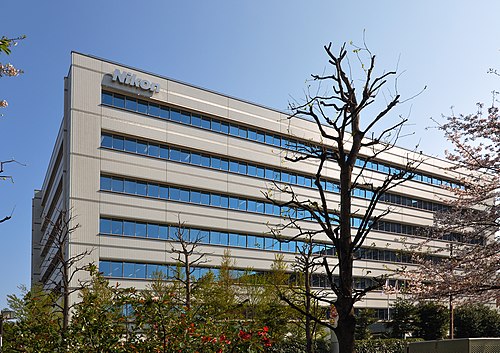
Site of the former Nippon Kogaku Kogyo (now Nikon Corporation) Oi Plant in Shinagawa, Tokyo — the company's founding factory established in 1918. During WWII, this facility was the nerve center of Japan's military optical industry, producing bombsights, rangefinders, periscopes, and binoculars for the Imperial Japanese Navy and Army. At its wartime peak, Nippon Kogaku operated up to 20 factories with 25,000 employees. The Oi Plant notably produced the massive 15-meter rangefinders installed on the battleships Yamato and Musashi. After the war the company reinvented itself as the camera maker Nikon; in 2024 Nikon moved its headquarters back to the site.
Images


History
Nippon Kogaku Kogyo K.K. (日本光学工業株式会社, Japan Optical Industries Co., Ltd.) was founded on July 25, 1917, through the merger of the optical division of Tokyo Keiki Seisakusho and the mirror department of Iwaki Glass Manufacturing, with funding from Iwasaki Koyata of the Mitsubishi zaibatsu. The company was established with the explicit mission of domestically producing military optical instruments, which Japan had previously imported from Germany.
The Oi Plant (大井製作所) was constructed in 1918 in the Oi district of Shinagawa Ward, Tokyo, and became the company's main factory and headquarters. German optical engineers were brought to the site, and company housing was built within the plant grounds to accommodate them. Their expertise enabled Nippon Kogaku to rapidly master advanced European optical and precision manufacturing techniques.
During World War II, Nippon Kogaku became the Imperial military's primary supplier of optical ordnance. The Oi Plant and its satellite facilities produced an extensive range of military optical instruments: aerial bombsights for Navy and Army aircraft, shipboard rangefinders of various sizes, submarine periscopes, artillery sighting telescopes, rifle scopes, and military-grade binoculars in multiple configurations. The company's most celebrated wartime achievement was the design and manufacture of the 15-meter baseline rangefinders installed aboard the super-battleships Yamato and Musashi — the largest optical rangefinders ever built, capable of measuring distances up to 40 kilometers.
At the height of wartime production in 1944–1945, Nippon Kogaku had expanded to approximately 20 factories across Japan (including dispersal sites in Nagano Prefecture to escape Allied bombing) and employed some 25,000 workers. The Oi Plant served as the central coordination hub for this vast production network.
The factory complex survived the war largely intact, though Allied bombing raids on the Shinagawa area in 1945 damaged surrounding neighborhoods. After Japan's surrender, the company was stripped of military contracts and reduced to a single factory. Nippon Kogaku pivoted to civilian products — cameras, microscopes, surveying instruments, and semiconductor lithography equipment — eventually becoming world-renowned under the Nikon brand name, first used for its 35 mm camera in 1948; the company itself was renamed Nikon Corporation in 1988.
The Oi Plant site has been continuously occupied by the company for over a century. The historic Building 101, which had been the heart of camera production since the postwar era, was demolished in 2016 to make way for redevelopment. In July 2024, Nikon relocated its corporate headquarters to a newly constructed Innovation Center on the Oi Plant grounds at 1-5-20 Nishi-Oi, Shinagawa-ku. The street connecting Oi and Nishi-Oi stations is known locally as "Kogaku-dori" (Optical Street) in honor of the company's longstanding presence.
Categories
Related themes
Sources
- ニコン - WikipediaWebsite
- ニコン 沿革年表|The社史Website