Science & Technology
科学技術
Wartime scientific research, weapons development, and technological programs.
History
This theme covers scientific research and weapons and technology development in wartime Japan: the technical research institutes of the Army and Navy, universities and bodies such as RIKEN, and the programmes they pursued in radar, nuclear physics, rocket and jet propulsion, biological and chemical weapons, and covert-warfare equipment.
Japan's research system took shape after the First World War around RIKEN, founded in 1917, and the imperial universities. From the 1930s the Army set up technical research institutes around Tokyo, while the Navy centred its work on the Air Technical Arsenal at Yokosuka and its Technical Research Institute at Meguro. A Board of Technology was created in 1942 to coordinate scientific mobilisation, but the Army and Navy continued to work separately without sharing results. Radar is one example: the directional antenna invented by Yagi Hidetsugu and colleagues was long neglected at home, and Japan's operational radars lagged behind British and American sets in performance and numbers. Japan pursued various scientific and technological programs during the war, including radar development, biological research, jet and rocket propulsion, and even nuclear research (the Ni-Go and F-Go projects): the Army commissioned Nishina Yoshio of RIKEN and the Navy commissioned Arakatsu Bunsaku of Kyoto Imperial University, and both efforts remained at a basic stage for want of scale and resources. Late-war developments included the Ōka rocket-powered special attack aircraft, the Shūsui rocket fighter, the Kikka jet, and the balloon bombs launched across the Pacific.
The theme also includes the darkest side of wartime science. The Kwantung Army's Epidemic Prevention and Water Purification Department (Unit 731) near Harbin developed bacteriological weapons and carried out human experimentation; after the war the United States did not prosecute its leading members in exchange for their data. Poison gas was produced on Ōkunoshima in the Inland Sea, and the Army's Noborito Research Institute at Kawasaki made counterfeit currency, poisons and covert devices. The wartime cooperation of scientists and their postwar responsibility remain live questions. Under the occupation GHQ banned nuclear and aeronautical research and destroyed the cyclotrons at RIKEN and elsewhere, while wartime-trained engineers became the backbone of the postwar electronics, car and railway industries. Research institutions and universities played key roles in these efforts.
Under this theme visitors will find former institute buildings and laboratory remains, the ruins of poison-gas plants and stores, foundations of radar and communications stations, rocket and engine test sites, and wartime buildings preserved on university campuses. Museums such as the Meiji University Noborito Laboratory Museum for Education in Peace and the Ōkunoshima Poison Gas Museum give systematic accounts of this less familiar history.
Related sites (55)

RIKEN Institute
理化学研究所
Japan's premier scientific research institute, involved in wartime nuclear research (Ni-Go project).

Noborito Laboratory (IJA 9th Technical Research Institute)
登戸研究所(陸軍第九技術研究所)
A top-secret Imperial Japanese Army research institute that developed covert warfare tools including counterfeit currency, balloon bombs, and biological weapons, now preserved as a peace education museum.

Kyoto Imperial University — F-Go Nuclear Research Project
京都帝国大学理学部(F号研究)
Site of the F-Go Project (F号研究), the Imperial Japanese Navy's secret nuclear weapons research program conducted at Kyoto Imperial University from 1943 to 1945. Led by physicist Bunsaku Arakatsu, the project pursued uranium-235 separation via ultracentrifuge technology. The team included future Nobel laureate Hideki Yukawa. The project never achieved a working weapon before Japan's surrender.

Okunoshima Poison Gas Museum
大久野島毒ガス資料館
A museum on Okunoshima Island documenting Japan's secret chemical weapons program that produced over 6,000 tons of poison gas between 1929 and 1945. The island was erased from wartime maps to conceal its mustard gas and lewisite production facilities, at what was the Imperial Japanese Army's only poison gas factory, whose output grew with the demands of the war in China.

Kyushu University Vivisection Incident — Faculty of Medicine
九州大学生体解剖事件(九大医学部)
Site of the Kyushu Imperial University vivisection incident (May–June 1945), in which eight captured American B-29 crewmen from the 29th Bombardment Group were subjected to live experimental surgeries — including lung removal, seawater blood injection, and organ excision — at the university's anatomy department. All eight died. In 1948, thirty defendants faced a B/C-class war crimes tribunal in Yokohama; twenty-three were convicted. The Kyushu University Medical History Museum on the Maidashi campus now documents the atrocity as part of its medical ethics and peace education mission.

Otsu Fu-Go Balloon Bomb Launch Base Site
風船爆弾大津放球基地跡
Remnants of the largest of three launch bases used for Operation Fu-Go (ふ号作戦), Japan's intercontinental balloon bomb campaign of 1944–1945. Located on the Pacific coast of Kitaibaraki, the Otsu base was the regimental headquarters with its own hydrogen plant and 18 launch pads (27 by some accounts); the balloon regiment as a whole numbered about 2,000 men. A concrete launch pad and the "Wasureji Peace Monument" (わすれじ平和の碑) mark the site today.

Imperial Japanese Army Nakano School Site
陸軍中野学校跡
Site of the Imperial Japanese Army Nakano School (陸軍中野学校, Rikugun Nakano Gakkō), Japan's primary intelligence and covert operations training academy from 1938 to 1945. Over 2,500 graduates were trained in espionage, sabotage, guerrilla warfare, propaganda, and counterintelligence. Notable alumni include Second Lieutenant Hiroo Onoda, who continued guerrilla operations on Lubang Island in the Philippines until 1974. The original campus at Nakano 4-chome, Tokyo, has been completely redeveloped; a stone monument (陸軍中野学校址碑) stands in the grounds of the Tokyo Metropolitan Police Hospital, with an information panel in adjacent Nakano Shiki no Mori Park.
Haranomachi Army Airfield
原町陸軍飛行場
Former Imperial Japanese Army airfield in Minamisōma, Fukushima Prefecture, established in 1936 as the Hibarigahara Airfield and converted to a military flight training facility in 1940. During the final year of the Pacific War it served as a kamikaze special-attack training base, training pilots of 14 tokkōtai units that fought in the Philippines, off Okinawa and in the homeland. The Nakoso Fu-Go balloon bomb launch base lay about 90 km to the south on the same Hamadōri coast, though no operational link between the two is documented. A memorial at Jingasaki Park Cemetery, erected in 1971, records 71 airmen from the airfield who died in special-attack units.

Kashiwa Airfield & Shusui Rocket Interceptor Site
柏飛行場・秋水関連遺跡
The Imperial Japanese Army airfield in Kashiwa, Chiba Prefecture, designated as the operational base for the J8M/Ki-200 "Shusui" — Japan's only rocket-powered interceptor, reverse-engineered from the German Me 163 Komet. Underground fuel storage bunkers for the Shusui's volatile hydrogen peroxide and hydrazine propellants survive in the Hanano-i residential area, representing Japan's most ambitious late-war aviation technology program.

Yosami Radio Transmitting Station
依佐美送信所
One of the world's largest VLF (Very Low Frequency) radio transmitting stations, built in 1929 in Kariya, Aichi Prefecture with eight 250-meter steel towers and German-made Telefunken high-frequency generators. The station established Japan's first wireless communications with Europe and was employed by the Imperial Japanese Navy during WWII for submarine communications. It is believed to have relayed the coded Pearl Harbor attack order "Niitakayama Nobore 1208" via VLF on December 2, 1941. After the war, the station was requisitioned by the US Navy and operated until 1993. The towers were demolished in 1997 and station buildings in 2006. The site is now Floral Garden Yosami, with a memorial museum preserving the original transmitting equipment. Recognized as an IEEE Milestone in 2009.

Naval Technical Research Institute
海軍技術研究所
The Imperial Japanese Navy's foremost scientific and engineering research establishment, headquartered in Meguro, Tokyo from 1930 to 1945. Founded in 1923 by merging the Naval Ordnance Arsenal Research Department, Naval Ship Type Test Institute, and Naval Aircraft Test Institute, the institute conducted advanced research across chemistry, physics, electrical engineering, shipbuilding, and aviation. Its massive hydrodynamic test tanks were used to refine the hull design of the battleship Yamato. The Electrical Research Division was the center of Japan's naval radar (電探, dentan) development, where engineers including Commander Yoji Ito developed cavity magnetrons and the Type 22 shipborne search radar. The site now serves as the Ministry of Defense Meguro District, housing the Acquisition, Technology & Logistics Agency (ATLA) Ship Equipment Research Institute and JSDF staff colleges.

Narashino Army School
陸軍習志野学校
The Imperial Japanese Army's primary chemical warfare (poison gas) training school, established in 1933 in Narashino, Chiba Prefecture. Complementary to Okunoshima Island (which manufactured chemical weapons), Narashino specialized in the operational use, defense, and tactical deployment of chemical agents. The school graduated 3,074 officers between 1939 and 1945, and was described by US intelligence as "splendidly equipped, well staffed, and effective." The former site in Izumi-cho now includes "Narashino no Mori" (Narashino Forest), where concrete foundations and an animal memorial tower remain.

Army Aeronautical Inspection Department (Tama Army Airfield)
陸軍航空審査部(多摩陸軍飛行場)
The Imperial Japanese Army's central organization for testing, evaluating, and approving all new aircraft and aviation weapons, established in October 1942 at the Tama Army Airfield (present-day Yokota Air Base) in Fussa, western Tokyo. Staffed by Japan's most elite test pilots, the department evaluated every prototype fighter, bomber, and reconnaissance aircraft — including the Ki-61 Hien, Ki-84 Hayate, and captured Allied aircraft such as the P-51 Mustang and B-17. In the final months of the war, its fighter squadron served as an emergency interceptor unit defending the capital against B-29 raids. After Japan's surrender in September 1945, the U.S. 1st Cavalry Division occupied the intact airfield, discovering approximately 280 of the IJA's most advanced aircraft. The site was renamed Yokota Air Base and remains a major U.S. Air Force installation today.

2nd Naval Gunpowder Arsenal Ruins
第二海軍火薬廠跡
Ruins of the Imperial Japanese Navy's principal gunpowder, propellant, and explosives manufacturing arsenal in Hiratsuka, Kanagawa Prefecture. Originally established in 1905 as a British-capital venture (Nihon Kayaku Seizō K.K.) by Armstrong, Nobel and a third British firm (given as Chilworth or as Vickers, depending on the source) to produce British MD cordite for the IJN, the factory was purchased outright by the Navy in 1919 and designated the Naval Gunpowder Arsenal (海軍火薬廠). In 1941 it was reorganized as the 2nd Naval Gunpowder Arsenal (第二海軍火薬廠) as part of a three-arsenal system — with the 1st at Funaoka (Miyagi) and the 3rd at Maizuru (Kyoto). Covering approximately 380,000 tsubo (1.26 million m²), its seven plants produced smokeless powder for guns and rockets, nitrocellulose, nitroglycerin, machine-gun propellant and the acids needed to make them. The facility was devastated during the Hiratsuka air raid of 16–17 July 1945 by 138 B-29 bombers dropping about 1,173 tons of incendiary bombs. After Japan's surrender, the site was occupied by Allied forces until 1950, then transferred primarily to Yokohama Rubber Company, which still operates its Hiratsuka Manufacturing Plant on the grounds. The surviving Western-style building of about 1912 — built by the Anglo-Japanese powder company and later used as the naval officers' club — was donated to Hiratsuka City and relocated to Hachimanyama Park in 2009 as the registered tangible cultural property "八幡山の洋館" (Hachimanyama no Yōkan).

Army Technical Research Institute (Tama Army Technical Research Institute)
陸軍技術研究所(多摩陸軍技術研究所)
Site of the Imperial Japanese Army's vast weapons and electronics research complex (陸軍技術研究所, Rikugun Gijutsu Kenkyūjo) in Koganei and Kodaira, western Tokyo. Spanning approximately 175 hectares of farmland forcibly acquired between 1940 and 1942, the facility housed six numbered research institutes investigating firearms, explosives, communications, radar (denpa heiki), and materials science. In June 1943, the radar-specialized Tama Army Technical Research Institute (多摩陸軍技術研究所) was established here by consolidating electromagnetic-wave weapons divisions, becoming the Imperial Army's primary radar development center. The "Ta" prefix in all Army radar designations — Tachi (ground), Tase (shipborne), Taki (airborne) — derives from "Tama." Over 60 types of radar and electronic warfare devices were developed here before 1945. The site was converted postwar into Tokyo Gakugei University, the National Institute of Information and Communications Technology (NICT), and Tokyo Salesio Gakuen; only boundary stones inscribed "陸軍" survive as physical traces.

Kyushu Aircraft Zasshonokuma Plant
九州飛行機雑餉隈工場
The main factory of Kyushu Aircraft Company (formerly Watanabe Iron Works) at Zasshonokuma, Fukuoka — birthplace of the J7W1 Shinden, Imperial Japan's radical canard-configuration interceptor designed to counter B-29 raids. The Shinden's forward-swept canard wings and rear-mounted pusher propeller made it one of the most unconventional aircraft of WWII. Only one prototype was completed; it flew three times (August 3, 6, and 8, 1945) from nearby Mushiroda Airfield before Japan's surrender. The 120,000-tsubo factory site was seized by US forces after the war and is now occupied by JGSDF Camp Fukuoka, where wartime factory buildings still serve as military warehouses.

Imperial Japanese Army Medical School Site
陸軍軍医学校跡
Site of the Imperial Japanese Army Medical School (陸軍軍医学校, Rikugun Gun'i Gakkō) in Toyama, Shinjuku — the parent institution of Unit 731 and home to the Epidemic Prevention Research Laboratory (防疫研究室) directed by Shirō Ishii. Established in 1886 and relocated to Toyama in 1929, it served as the intellectual and organizational nucleus for Japan's biological and chemical warfare programs. In July 1989, construction workers unearthed over 100 human skeletal remains from the site, many bearing marks of surgical experimentation — a discovery widely believed to be linked to Unit 731's human experiments. The school grounds are now occupied by the National Institute of Infectious Diseases, beside the former National Center for Global Health and Medicine (国立国際医療研究センター); the two were merged into the Japan Institute for Health Security in 2025.

Shin-Tanna Tunnel (Bullet Train Project Wartime Remnant)
新丹那トンネル(弾丸列車計画遺構)
The Shin-Tanna Tunnel is the longest tunnel on the Tokaido Shinkansen (7,959 m), running beneath the Tanna Mountains between Atami and Mishima in Shizuoka Prefecture. Construction began in August 1941 as part of the wartime Dangan Ressha (弾丸列車, "Bullet Train") plan — an ambitious Tokyo–Shimonoseki high-speed railway conceived in 1939. By the time work was halted in 1943 due to deteriorating war conditions, approximately 2 km of pilot tunnels had been excavated from both portals. The tunnel was left abandoned until 1959, when it was resumed for the new Tokaido Shinkansen, opening on 1 October 1964. It is the most significant surviving remnant of the wartime bullet train project.

Sun Moon Lake Hydroelectric Power Plant (Daguan / Mingtan Power Plants)
日月潭水力發電所
Colonial Taiwan's largest hydroelectric complex, built by Taiwan Electric Power Company (台灣電力株式會社) between 1919 and 1934 at Sun Moon Lake, Nantou Prefecture. With five 22 MW generators (about 100 MW rated output), it was the largest hydroelectric power plant in Asia upon completion. The facility supplied over 60% of Taiwan's total electricity, powering wartime industries including aluminum smelting, chemical manufacturing, and military production. Heavily bombed by US aircraft in March 1945, destroying the main transformers and crippling Taiwan's industrial power supply. Now preserved as the Daguan Power Plant (大觀發電廠) and Mingtan Power Plant (明潭發電廠), both still operated by Taipower.

Taihoku Imperial University (now National Taiwan University)
台北帝国大学(現・国立台湾大学)
Taihoku Imperial University (台北帝国大学), established on March 16, 1928, was the seventh of Japan's nine imperial universities and the highest institution of learning in colonial Taiwan. Located in Taihoku (Taipei) with faculties of Literature & Politics, Science & Agriculture, Medicine (1936), and Engineering (1943), it served as the academic center for Japan's "southward advance" (南進) policy. Wartime research institutes — the Tropical Medicine Research Institute (1939), the Southern Humanities Research Institute (1943), and the Southern Resources Science Research Institute (1943) — conducted strategic studies on tropical diseases, Southeast Asian resources, and ethnography to support the empire's expansion into the South Seas. Students were mobilized under the 1943 gakuto shutsujin (学徒出陣) conscription. The university hospital was damaged during the May 31, 1945 Taipei Air Raid. After Japan's surrender, the university was renamed National Taiwan University (國立臺灣大學) in November 1945 under ROC administration.

Taiwan Governor-General Medical School (now NTU College of Medicine / NTUH Old Building)
台湾総督府医学校(現・国立台湾大学医学院/台大病院旧館)
Founded in 1899 as the first modern medical school in Taiwan under the Japanese colonial government, the Taiwan Governor-General Medical School (台灣總督府醫學校) became a leading centre for tropical medicine research. The iconic Renaissance-style red-brick hospital building, designed by architect Juro Kondoh (近藤十郎), was built from 1912 and completed in 1921, and served as the affiliated teaching hospital. During the colonial era the institution trained generations of Taiwanese physicians — including Tu Tsung-ming (杜聰明), Taiwan's first medical doctorate holder — and conducted pioneering research on malaria, plague, scrub typhus, and other tropical diseases. Renamed Taihoku Medical College in 1922, it was attached to Taihoku Imperial University in 1936 as the affiliated Medical Specialised Division (附屬醫學專門部) when the university opened its Faculty of Medicine. After Japan's defeat in 1945, it became the College of Medicine of National Taiwan University. The old hospital building (台大醫院舊館) is now a Taipei municipal historic monument in Zhongzheng District, Taipei.

Taihoku Imperial University Library (now NTU Gallery of History)
台北帝国大学附属図書館(現・国立台湾大学校史館)
The Taihoku Imperial University Library (台北帝国大学附属図書館) was built in 1929–30 as the main library of Japan's seventh imperial university in colonial Taiwan. Designed in a Western eclectic style with distinctive arched windows, the two-story reinforced concrete building served as the intellectual heart of the university, housing academic collections that by 1944 ranked third among all nine imperial universities. The library supported the university's strategic "southward advance" research on tropical medicine, Southeast Asian resources, and colonial studies. After the war, it continued as the National Taiwan University Main Library until 1998; since 2005 it has housed the Gallery of NTU History (臺大校史館), preserving artifacts and documents from the colonial and postwar eras.

Former Nippon Kogaku (Nikon) Oi Plant
日本光学工業大井製作所跡
Site of the former Nippon Kogaku Kogyo (now Nikon Corporation) Oi Plant in Shinagawa, Tokyo — the company's founding factory established in 1918. During WWII, this facility was the nerve center of Japan's military optical industry, producing bombsights, rangefinders, periscopes, and binoculars for the Imperial Japanese Navy and Army. At its wartime peak, Nippon Kogaku operated up to 20 factories with 25,000 employees. The Oi Plant notably produced the massive 15-meter rangefinders installed on the battleships Yamato and Musashi. After the war the company reinvented itself as the camera maker Nikon; in 2024 Nikon moved its headquarters back to the site.

Former Tokyo Army Garrison Hospital (National Center for Global Health and Medicine)
旧陸軍衛戍病院跡(国立国際医療研究センター)
Site of the former Tokyo First Army Garrison Hospital (東京第一陸軍病院), the Imperial Japanese Army's principal hospital in Tokyo and one of its oldest. Established in 1868 as a provisional army hospital to treat Boshin War casualties, it was relocated to its current site in Toyama, Shinjuku in 1929. Throughout the Pacific War the hospital treated vast numbers of wounded soldiers from all theaters and established branch hospitals nationwide. After Japan's surrender in 1945 it was transferred to the Ministry of Health and Welfare as the National Tokyo First Hospital, and has since evolved into the National Center for Global Health and Medicine (NCGM), a leading research hospital.

Yokosuka Naval Air Technical Arsenal
横須賀海軍航空技術廠
The Imperial Japanese Navy's premier aviation research and development center, established in 1932 at Yokosuka. Renamed Kūgishō (空技廠) in 1939, it designed some of Japan's most iconic WWII aircraft including the D4Y Suisei dive bomber and the MXY-7 Ohka rocket-powered kamikaze weapon, though production was outsourced to manufacturers like Aichi and Nakajima.

Noborito Research Institute — Ikuta Branch (Balloon Bomb Production Facility)
陸軍登戸研究所 生田分室
Main compound of the Imperial Japanese Army's Ninth Technical Research Institute (Noborito Research Institute), located in the Ikuta hills of Kawasaki City. It served as a key site for the First Department's Fu-Go balloon bomb program, where research, development, and coordination of the intercontinental balloon weapon took place from 1937 to 1945. The washi-paper balloon envelopes, bonded with konnyaku paste, were made by mobilized students and workers at sites across Japan. Today the site is preserved as the Meiji University Peace Education Noborito Research Institute Museum on the Ikuta Campus, housed in the surviving Building 36.

Nagasaki Medical College (Atomic Bomb Ruins)
長崎医科大学(被爆遺構)
Nagasaki Medical College, established in 1923 as the successor to Japan's oldest Western medical school (founded 1857), stood just 600 meters from the hypocenter of the atomic bomb dropped on August 9, 1945. The blast and fires destroyed all campus buildings and killed 892 faculty, students, nurses, and staff. Today, the tilted stone gate pillars of the former campus survive as a nationally designated historic site — part of the Nagasaki Atomic Bomb Ruins — serving as a physical measure of the bomb's blast pressure and a memorial to the devastated medical community.

Fukuryu Special Attack Unit Training Base
伏龍特攻隊訓練基地
Training base at Yokosuka for the Fukuryu (Crouching Dragon) special attack unit — human mine divers equipped with explosive charges on bamboo poles, intended to destroy Allied landing craft during the anticipated invasion of the Japanese home islands. One of the most desperate suicide weapons conceived at the end of WWII, with training conducted at Nobi Beach in Yokosuka under the Yokosuka Anti-Submarine School.

Tokyo Shibaura Electric (Toshiba) Horikawa-cho Plant
東京芝浦電気堀川町工場
A major Toshiba industrial facility in Kawasaki that produced military electronics, vacuum tubes, wireless communication equipment, and radar components during WWII. Established in 1908 as the Tokyo Electric Kawasaki Factory in the Keihin Industrial Zone, it was severely damaged in the April 15, 1945 Kawasaki air raids. The site was redeveloped as Lazona Kawasaki after the factory closed in 2000.

Tokyo Imperial University — Second Faculty of Engineering
東京帝国大学第二工学部
The Second Faculty of Engineering of Tokyo Imperial University was established in Chiba City in 1942 for wartime military research and engineer training. Its ten departments — including ordnance, aeronautics, shipbuilding, and applied chemistry — trained engineers for wartime industry. The campus later became part of Chiba University.

Tokyo Second Army Arsenal (Itabashi Powder Works)
東京第二陸軍造兵廠(板橋火薬製造所)
Site of the Imperial Japanese Army's Second Tokyo Arsenal, Japan's first government-operated gunpowder factory established in 1876 on the former Kaga Domain estate in Itabashi. The facility produced explosives, propellants, and ammunition components, and housed the Army Explosives Research Institute. Designated a National Historic Site in 2017, the surviving brick structures and ballistic testing tunnels are preserved in Kaga Park.

Numazu Naval Arsenal
沼津海軍工廠
A major Imperial Japanese Navy arsenal established in June 1943 in Numazu, Shizuoka Prefecture, specializing in radar equipment, electronic detection instruments, and aviation wireless systems. Employing approximately 20,000 workers including mobilized students, the arsenal was a key target during the devastating July 17, 1945 air raid that destroyed 89.5% of Numazu. The site was returned to civilian use after the war and is now an urbanized area with factories, schools, and residential neighborhoods.

Former Tainan Waterworks
旧台南水道
The Former Tainan Waterworks is a colonial-era water supply facility in Shanshang District, Tainan, built between 1912 and 1922 under the direction of Japanese engineer Hamano Yashirō. Designated a National Historic Monument, it is one of Taiwan's best-preserved examples of Japanese colonial civil infrastructure and now operates as the Tainan Shan-Shang Garden and Old Waterworks Museum.

Wushantou Reservoir & Hatta Yoichi Memorial Park
烏山頭水庫(八田與一記念園区)
Wushantou Reservoir in Guantian District, Tainan, is the core of the Chianan Irrigation System (嘉南大圳), the largest irrigation project in East Asia at the time of its completion in 1930. Designed by Japanese engineer Hatta Yoichi (八田與一), the reservoir transformed the Chianan Plain into Taiwan's most productive agricultural region, vital for wartime rice and sugarcane production. The adjacent Hatta Yoichi Memorial Park preserves his residence and bronze statue.

Taipei Water Source Site (Museum of Drinking Water)
台北水道水源地
A colonial-era Baroque-style water purification plant completed in 1908 during Japanese rule of Taiwan. Designed based on recommendations by British sanitary engineer William K. Burton and built by Japanese engineer Hamano Yajiro, it modernized Taipei's water supply as critical public health infrastructure. Now preserved as the Museum of Drinking Water, it is one of the finest architectural legacies of the Japanese colonial period in Taiwan.

Taiwan Governor-General Central Research Institute
台湾総督府中央研究所
The Central Research Institute of the Taiwan Governor-General's Office (台湾総督府中央研究所) was established in 1921 by merging earlier research bodies into a unified institution in Taipei. It conducted comprehensive research across agriculture, forestry, industry, and tropical hygiene — fields directly supporting colonial resource exploitation and wartime logistics. The institute was dissolved in 1939 and split into four successor organizations. Its original French Renaissance-style building (built 1907–1909) was damaged during WWII bombing and later demolished in stages (1971 and 1996).

Taiwan Governor-General Weather Observatory
臺灣總督府氣象臺
Established in 1896 as the Taihoku (Taipei) Observatory during Japanese colonial rule and upgraded in 1938, the Taiwan Governor-General Weather Observatory was the central meteorological institution for the island, providing critical typhoon warnings, aviation weather support, and military meteorological intelligence during WWII. The site continues as the headquarters of the Central Weather Administration (formerly Central Weather Bureau) in Taipei.

Taiwan Governor-General Telephone Exchange Bureau
臺灣總督府電話交換局
The central telephone exchange building for colonial Taiwan, completed in 1937 in the modernist style by architect Suzuoki Ryoichi under the Communications Bureau (遞信部) of the Governor-General's Office. Located on Shoin-cho (書院町) in Taipei, it housed the first automatic telephone switching system in Taiwan, replacing the earlier manual exchange. Designated a Taipei Municipal Historic Site in 1998, the building now serves as the Chunghwa Telecom Bo'ai Service Center.

Taiwan Governor-General Central Research Institute, Hygiene Department
台湾総督府中央研究所衛生部
The Hygiene Department of the Taiwan Governor-General's Central Research Institute was the principal public health research facility in colonial Taiwan. Established in 1909 and reorganized in 1921, it conducted critical research on tropical diseases including malaria, plague, and dengue fever, and produced vaccines and serums essential for military and civilian health throughout the Japanese colonial period and during WWII.

Taiwan Governor-General Tea Research Station
臺灣總督府殖產局附屬製茶試驗場
Established in 1903 as the Tea Manufacture Experiment Station under the Production Bureau of the Formosa Governor-General's Office, this was Taiwan's first professional tea research institution. Located in what is now Yangmei District, Taoyuan City, the station played a central role in improving Taiwan's tea cultivation, processing techniques, and pest control during the Japanese colonial period, when tea was one of Taiwan's most important export commodities.

Taiwan Governor-General Keelung Quarantine Station
台湾総督府基隆検疫所
A port quarantine station established by the Taiwan Governor-General's Office in Keelung in 1899 as part of Japan's systematic public health modernization of colonial Taiwan. The facility was critical for preventing plague, cholera, and other infectious diseases from entering the island through its busiest international port.

Imperial Japanese Army Toyama School Site
陸軍戸山学校跡
Site of the Imperial Japanese Army Toyama School (陸軍戸山学校, Rikugun Toyama Gakkō), established in 1873 in Shinjuku, Tokyo as the army's premier institution for infantry combat research and training. The school specialized in marksmanship, bayonet techniques, swordsmanship, gymnastics, and military music, and its military band was one of the most celebrated in Japan. During WWII, the adjacent Army Medical School conducted bacteriological warfare research linked to Unit 731. In 1989, the discovery of over 100 human remains at the nearby former Army Medical School site sparked major controversy over Japan's wartime biological experimentation program. The school closed in September 1945; today the area hosts the Japan Institute for Health Security (into which the National Center for Global Health and Medicine was reorganized in April 2025), Toyama Park, and residential developments, with memorial markers preserving the site's history.

Chisso Minamata Chemical Factory
日本窒素肥料水俣工場
The Minamata factory of Nihon Chisso Hiryo (Japan Nitrogen Fertilizer Company) was one of Japan's most important wartime chemical plants, producing acetaldehyde, acetic acid, butanol, ammonia, and explosives for the military effort from 1908 through 1945. Founded by Shitagau Noguchi to exploit local hydroelectric power for carbide and fertilizer production, the factory grew into the centerpiece of the Nichitsu zaibatsu (日窒コンツェルン), which by the 1930s operated a vast chemical empire spanning Japan and colonial Korea. The factory is globally infamous as the source of Minamata disease (水俣病), caused by methylmercury discharged from its acetaldehyde production process from 1932 to 1968 — one of the worst industrial pollution disasters in history.

Former IJA Central Special Intelligence Division Site
旧陸軍中央特種情報部跡
Site of the Imperial Japanese Army's Central Special Intelligence Division (中央特種情報部, Chūō Tokushu Jōhōbu), one of Japan's most secretive wartime signals intelligence organizations. Originally established in 1933 as the North Tama Army Communications Station in present-day Higashi-Kurume City, the unit was responsible for radio intercept, code-breaking, and cryptanalysis of Allied and foreign military communications. As the war situation deteriorated, operations were partially relocated to a welfare facility in the Takaido area of Suginami Ward, Tokyo. The division played a critical role in Japan's SIGINT efforts throughout the Pacific War.

Former Tainan Weather Observatory
旧台南測候所
Built in 1898 during Japanese colonial rule, the Former Tainan Weather Observatory is the oldest surviving meteorological station in Taiwan. Its unique eighteen-sided (octadecagonal) building with a central cylindrical observation tower — nicknamed the "Pepper Tube" — is the only surviving example of this early weather-station design in Taiwan. Designated a national historic monument in 2003, it now serves as the Museum of Meteorology.

Taiwan Sugar Research Institute
臺灣糖業試驗所
Founded in 1901 during the Japanese colonial period, the Taiwan Sugar Research Institute in Tainan served as the central research facility for Taiwan's colonial sugar industry. Originally established as a sugarcane testing station, it grew into an independent research institute by 1932, conducting comprehensive research on sugarcane cultivation, disease control, and sugar processing that underpinned Taiwan's most important colonial export commodity.

Kōtōsho (Orchid Island)
紅頭嶼(蘭嶼)
During the Japanese colonial period (1895–1945), Orchid Island (Lanyu), then known as Kōtōsho (紅頭嶼), was designated by the Taiwan Governor-General's Office as an ethnological research area closed to the general public. The island served as a living anthropological laboratory where Japanese scholars—beginning with Torii Ryūzō's pioneering 1897 survey—studied the Tao (Yami) indigenous people and the island's tropical ecology. The colonial government prohibited settlement and development to preserve the indigenous culture in situ, in effect making it a protected anthropological research zone.

Taiwan Governor-General Tainan Higher Technical School
台湾総督府台南高等工業学校
The only higher engineering education institution in colonial Taiwan until 1943, established in 1931 in Tainan by the Taiwan Governor-General. The school trained engineers in mechanical, electrical, and applied chemistry fields to support Taiwan's industrial development. During WWII, students and facilities were mobilized for wartime production. Now the campus of National Cheng Kung University (NCKU), one of Taiwan's top research universities.

Nakoso Fu-Go Balloon Bomb Launch Base Site
風船爆弾勿来放球基地跡
Site of the Third Battalion launch base for Operation Fu-Go (ふ号作戦), one of three coastal facilities from which Japan launched hydrogen balloon bombs toward North America during 1944–1945. Located in the Nakoso district of Iwaki City, Fukushima Prefecture, the base operated six launch stations with approximately 600 personnel. Today only railway bridge abutments from the former supply spur line survive as physical evidence.

Ichinomiya Fu-Go Balloon Bomb Launch Base Site
風船爆弾一宮打上基地跡
Site of the Second Battalion launch base for Operation Fu-Go (ふ号作戦), located on the Pacific coast of Ichinomiya Town, Chiba Prefecture. One of three bases that launched approximately 9,300 hydrogen balloon bombs toward North America between November 1944 and April 1945. The base operated six launch stations with 700 personnel. Today only an informational panel put up by the town of Ichinomiya commemorates the site.

Former Imperial Japanese Army Meteorological Department
陸軍気象部跡
Site of the Imperial Japanese Army Meteorological Department (陸軍気象部, later renamed Army Central Meteorological Department 陸軍中央気象部), the military weather intelligence organization that provided critical meteorological forecasting for Imperial Army operations throughout the Pacific War. Established in 1938 at Mabashi 4-chome (now Koenji-kita 4-chome), Suginami Ward, Tokyo, the department conducted research on military meteorology, tested weather instruments, and operated a vast network of observation stations across Japan, Korea, Manchuria, and occupied territories. The site is now Mabashi Park (馬橋公園); the Kishō Shrine (気象神社), originally built within the compound in 1944, survives as a relocated sub-shrine at nearby Koenji Hikawa Shrine — said to be Japan's only weather shrine.

Sup'ung Dam (Suiho Dam)
水豊ダム
Completed in 1941 on the Yalu River at the China-Korea border, the Sup'ung Dam was the largest hydroelectric dam in Asia and the third largest in the world at the time of construction. Built by two Yalu River hydroelectric companies headed by Noguchi Shitagau of Nichitsu (Japan Nitrogen Fertilizer Company), with its output shared between Korea and Manchukuo, the dam represented one of the greatest engineering achievements of the Japanese Empire. With a planned output of 700,000 kW from seven generating units driven by 105,000 kW Francis turbines, the dam supplied electricity throughout the Korean peninsula and southern Manchuria. During the Korean War, its power station was bombed repeatedly by UN forces in 1952-1953. The dam remains operational today, jointly managed by China and North Korea, and is featured on North Korea's national emblem.

Unit 731 Site (Pingfang, Harbin)
731部隊跡(ハルビン平房区)
The former headquarters of Unit 731 (731部隊), the Imperial Japanese Army's covert biological and chemical warfare research unit, located in the Pingfang District of Harbin, Manchuria (now Heilongjiang Province, China). Operational from 1936 to 1945 and led by Surgeon Lieutenant General Shiro Ishii (with Masaji Kitano in command from 1942 to 1945), the facility conducted large-scale human experimentation and developed biological weapons including plague, anthrax, and cholera. At least 3,000 prisoners, and by some estimates 10,000 or more — referred to by the dehumanizing codename "maruta" (丸太, logs) — perished in experiments. The site is now preserved as the Unit 731 Museum (侵華日軍第七三一部隊罪証陳列館), a national-level memorial and war crimes evidence exhibition hall that opened in 1985 and was extensively renovated with a new main building in 2015.
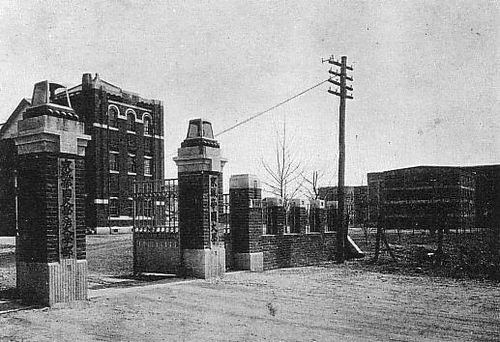
Keijo Imperial University Site
京城帝国大学跡
Site of Keijo Imperial University (1924–1946), the only imperial university established in colonial Korea. Founded as Japan's sixth imperial university in the Dongsung-dong area of Jongno-gu, Seoul, it comprised faculties of Law and Literature, Medicine, and Engineering. The institution served colonial administration and wartime research needs before being reorganized into Seoul National University in 1946.
Ushio Naval Experimental Station Site
第二海軍技術廠牛尾実験所跡
An unfinished 1945 dispersal site for naval microwave research beside the Oi River. Excavations recorded its electrical facilities before river widening removed the principal foundations.