Saga Air Raid Site
佐賀空襲跡

Site of the August 5, 1945 firebombing of Saga City by 65 B-29 Superfortress bombers of the USAAF 58th Bombardment Wing. Launching from Tinian in the Mariana Islands, the aircraft dropped 459 tons of incendiary and high-explosive ordnance on southern Saga and surrounding villages between 11:30 PM and 1:00 AM, destroying 443 structures and killing 61 civilians. A memorial stone inscribed "B29空爆焦土" (B-29 Bombing Scorched Earth) stands in the city to commemorate the victims.
Images


History
The Saga Air Raid (佐賀空襲) of August 5-6, 1945 was one of the final strategic bombing missions conducted against Japanese cities in the closing days of World War II. As part of the broader American campaign to destroy Japan's remaining urban and industrial capacity, the USAAF targeted dozens of smaller cities across the country in the summer of 1945.
On the evening of August 5, sixty-five B-29 Superfortress bombers of the 58th Bombardment Wing departed Tinian airfield in the Mariana Islands at approximately 4:00 PM. Arriving over Saga after nightfall, they commenced their attack at around 11:30 PM and continued until approximately 1:00 AM on August 6. The bombers dropped a total of 459 tons of high-explosive bombs and incendiary munitions on the city and its surroundings.
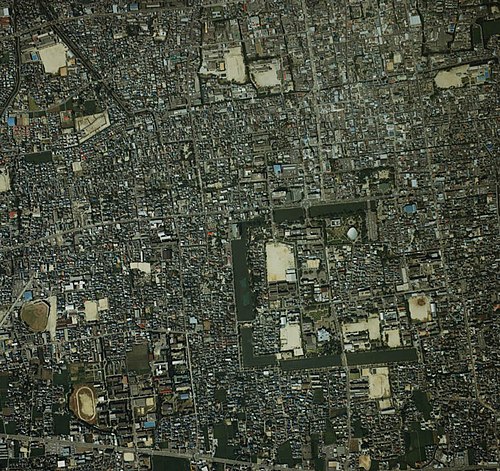
The raid devastated a wide area south of the Saga city center. The hardest-hit communities included northern Kawasoe Village (91 structures destroyed, 21 deaths), eastern areas of the present-day Morotomi district (147 structures, 18 deaths), western Kawasoe Village (20 structures, 7 deaths), Kubota Village (72 structures, 4 deaths), and the Mizue district within Saga city proper (approximately 150 structures). Educational facilities suffered severely — the North Kawasoe National School (now Saga Municipal Kita-Kawasoe Elementary School) had its auditorium and school buildings completely burned down. The area around the Army's Takagise training ground (高木瀬練兵場) was also struck.
Prior to the attack, the Americans had employed psychological warfare tactics, dropping leaflets over the city warning residents that Saga would be bombed. This was part of the broader "LeMay leaflet" campaign designed to undermine civilian morale and encourage evacuation. Accounts of the campaign note, however, that police and fire brigades hurried to collect such leaflets, so that few residents learned of the warning.
A week later, on August 12, Saga city center suffered additional bombing damage. The cumulative toll of these raids left lasting scars on the community. Today, a memorial stone inscribed "B29空爆焦土" (B-29 Bombing Scorched Earth) stands in the Mizugae district of the city as a permanent reminder of the destruction. It was erected in August 2011 by a survivor of the raid on private land, and is listed in the Ministry of Internal Affairs and Communications' nationwide register of memorials to civilian war dead.
Categories
Related events
Related themes
Sources
- 佐賀空襲WebsiteWikipedia日本語版
- 記念碑「B29空爆焦土」Government総務省