Xiluo Bridge
西螺大橋
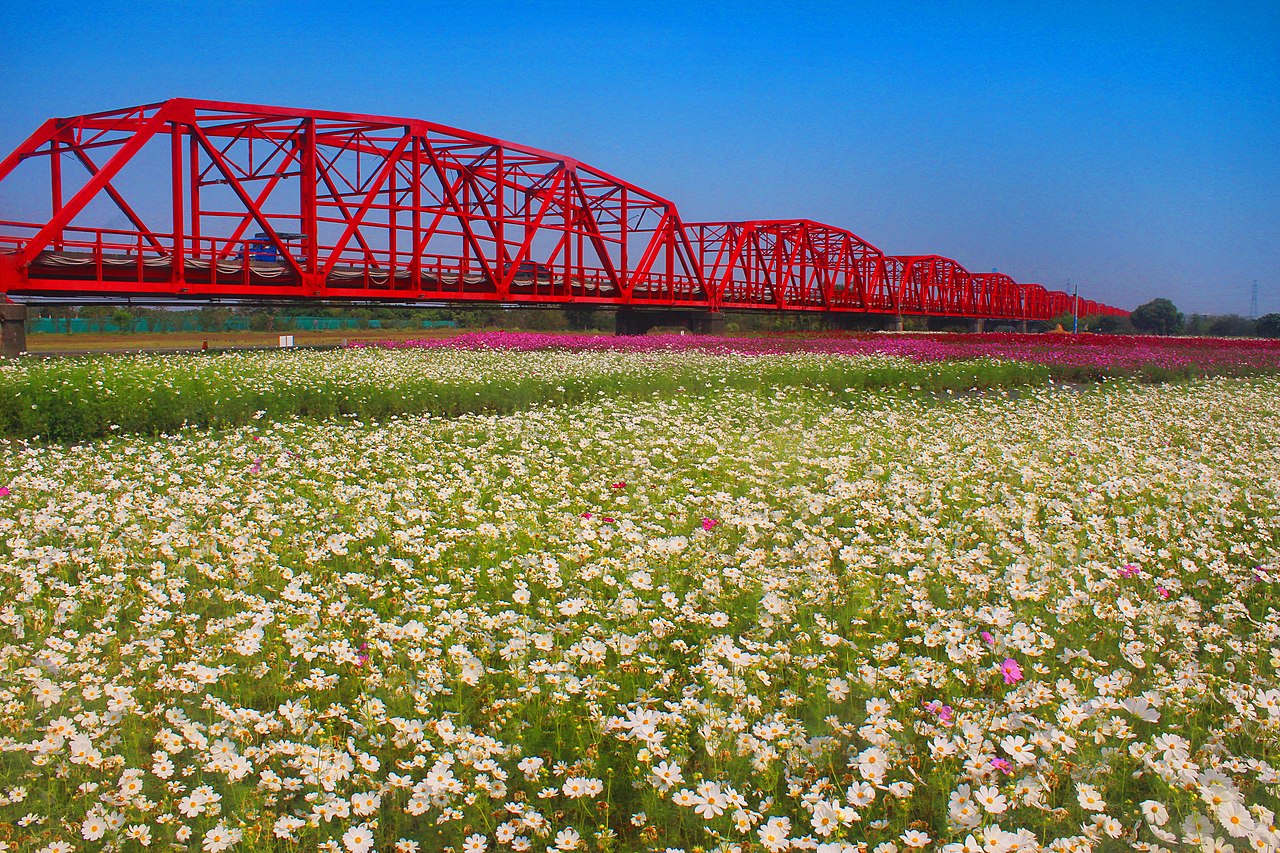
A landmark bridge spanning the Zhuoshui River in Yunlin County, Taiwan. Designed by Japanese colonial engineers, with the contract let in December 1937 and work begun in 1938, construction was halted during WWII when Japan requisitioned steel materials for the war effort. Thirty piers and two abutments were completed during the Japanese period. The bridge was finally completed in 1953 with US aid, stretching 1,939 meters and hailed at the time as the longest bridge in the Far East.
Images


History
Xiluo Bridge (西螺大橋) spans the Zhuoshui River, connecting Xiluo Township in Yunlin County to Xizhou Township in Changhua County, Taiwan. The bridge is a defining symbol of colonial-era infrastructure planning interrupted by the Pacific War, and its eventual postwar completion with American assistance.
Organized campaigning for the bridge culminated on May 24, 1936, when local leaders from five districts founded a bridge-construction league in Xiluo to address the longstanding need for a permanent crossing of the Zhuoshui River — Taiwan's longest river and a major barrier to north-south transportation. Japanese colonial engineers designed a steel Warren truss bridge, the contract was awarded to the Ōta-gumi firm in December 1937, and construction commenced in 1938. By 1941, thirty reinforced concrete piers and the two abutments had been completed (often counted together as "32 piers"). However, following the attack on Pearl Harbor on December 7, 1941, and Japan's escalating military commitments across the Pacific, the colonial government halted construction and requisitioned the bridge's steel materials for military use, reportedly shipping them to Hainan Island.
After Japan's surrender in 1945, the unfinished bridge piers stood as silent monuments to the interrupted colonial project. A reconstruction committee was formed in 1948 under the Republic of China government, and a site survey was conducted on January 26, 1950. In 1951, the United States provided $1.3 million in steel materials through its aid program, while the Taiwan Provincial Government funded the rest of the work. Construction resumed in May 1952, and was completed on December 25 of the same year.
The bridge was inaugurated on January 28, 1953, with great fanfare. At 1,939.03 meters in length with 31 Warren truss spans, it was hailed at the time of its completion as the longest bridge in the Far East and as second in the world only to San Francisco's Golden Gate Bridge. The bridge became an icon of postwar reconstruction and Taiwan's modernization.
Today, Xiluo Bridge remains in use for light vehicles and has been registered as a historic building (歷史建築) by Yunlin County (2001) and Changhua County (2005). The distinctive steel trusses, painted red since 1986, are an iconic sight in Yunlin County. The bridge stands as a testament to the complex legacy of Japanese colonial infrastructure planning, wartime disruption, and postwar international cooperation.
Categories
Related themes
Sources
- 西螺大橋 - 維基百科Website