All historic sites
Sites in the Japanese home islands are shown by default; switch the Region menu to see Taiwan, Korea and Manchuria.
417 sites · page 5 of 18

Urakami Cathedral (Immaculate Conception Cathedral)
浦上天主堂
Once the largest Catholic cathedral in East Asia, Urakami Cathedral stood just 500 meters from the hypocenter of the Nagasaki atomic bomb on August 9, 1945. The blast utterly destroyed the Romanesque brick structure that had taken 30 years to build (1895–1925), killing approximately 8,500 of the parish's 12,000 faithful. Rebuilt in reinforced concrete by 1959 and clad in brick in 1980, the cathedral remains a working parish church, a symbol of both atomic devastation and the resilience of Nagasaki's Hidden Christian community.

Yamato Museum (Kure Maritime Museum)
大和ミュージアム(呉市海事歴史科学館)
The Yamato Museum in Kure features a 26.3-meter 1/10 scale model of the battleship Yamato, Zero fighter aircraft, Kaiten human torpedoes, and artifacts from Japan's largest wartime naval shipbuilding center.
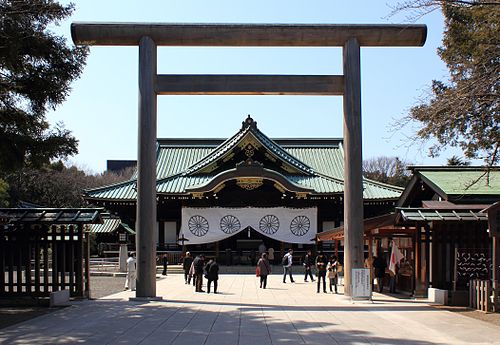
Yasukuni Shrine and Yūshūkan Museum
靖國神社・遊就館
A Shinto shrine in Chiyoda, Tokyo, established in 1869 to enshrine Japan's war dead, and its affiliated military museum Yūshūkan. The shrine enshrines approximately 2,466,532 souls including 14 Class A war criminals.

Yokaren Peace Memorial Museum
予科練平和記念館
A peace museum in Ami, Ibaraki Prefecture dedicated to the memory of the Naval Aviator Preparatory Course (Yokaren) trainees — boys aged 14 to 17 who were recruited and trained as Imperial Japanese Navy pilots from 1930 to 1945. Of approximately 240,000 boys enlisted over 15 years, 24,000 completed combat training; about 80 percent of graduates perished in battle, many as kamikaze pilots. Opened in 2010, the museum stands on the grounds of the former Tsuchiura Naval Air Corps, the central Yokaren training facility.

Yokohama War Crimes Tribunal (BC-Class Trials)
横浜軍事法廷(BC級戦犯裁判)
The Yokohama War Crimes Tribunal was held at the Yokohama District Court from 1946 to 1949 by the U.S. Eighth Army to try Class-B and Class-C Japanese war criminals. A total of 319 trials involving 996 defendants were conducted, resulting in 854 convictions including 124 death sentences (51 carried out). The courtroom has been preserved and relocated to the Toin Gakuen Memorial Academium.

Yokosuka Naval Air Technical Arsenal
横須賀海軍航空技術廠
The Imperial Japanese Navy's premier aviation research and development center, established in 1932 at Yokosuka. Renamed Kūgishō (空技廠) in 1939, it designed some of Japan's most iconic WWII aircraft including the D4Y Suisei dive bomber and the MXY-7 Ohka rocket-powered kamikaze weapon, though production was outsourced to manufacturers like Aichi and Nakajima.

Yokosuka Naval Base
横須賀海軍施設
A major Imperial Japanese Navy base near Tokyo, now a US Navy installation.

Yomitan Airfield Ruins (Yontan Airfield)
読谷飛行場跡
Ruins of a Japanese Army airfield built in 1944 at Yomitan Village on Okinawa's west coast. On April 1, 1945 — the first day of the Battle of Okinawa (Operation Iceberg) — U.S. forces seized it within hours of landing, making it the first airfield captured on Okinawa. It later served as a major American air base; the B-29 Bockscar landed here after the Nagasaki atomic bombing. Nearby Chibichiri-gama cave witnessed a mass civilian suicide on April 2, 1945.

Aichi Aircraft Eitoku Plant
愛知航空機永徳工場
The principal airframe assembly plant of Aichi Aircraft Company (愛知航空機), located in Minato-ku, Nagoya on the Shonai River estuary. Operational from 1941, the Eitoku Plant mass-produced Imperial Japanese Navy aircraft including the D4Y Suisei (Judy) carrier dive bomber, E16A Zuiun (Paul) reconnaissance seaplane, and the top-secret M6A Seiran submarine-launched attack floatplane — built in a secluded corner building akin to Lockheed's Skunk Works. The plant grew to approximately 95 buildings covering 197 acres with a workforce peaking at over 26,000. The plant was bombed by B-29s on June 26, 1945 and suffered its heaviest damage in a second raid on July 24, 1945. Today, the concrete seaplane slipway (滑走台) — a 35m-wide ramp extending into the Fujimae tidal flats — survives as the most tangible war relic of this once-vital naval aircraft production complex.

Aichi Aircraft Funakata Plant (Atsuta Air Raid Site)
愛知航空機船方工場(熱田空襲跡)
The original airframe factory of Aichi Tokei Denki / Aichi Aircraft in Atsuta-ku, Nagoya. On June 9, 1945, B-29s obliterated the Funakata factory complex in approximately 10 minutes, killing 2,068 workers including mobilized students. A memorial Jizo statue and bombed canal embankment survive at the former factory gate as solemn reminders of one of the deadliest single industrial air raids of the Pacific War.

Akasaka Palace (State Guest House)
旧赤坂離宮(迎賓館赤坂離宮)
Akasaka Palace is a Neo-Baroque palace in Moto-Akasaka, Minato, Tokyo, designed by architect Katayama Tōkuma and completed in 1909 as the Crown Prince's Palace (Tōgū Gosho). It represented the pinnacle of Meiji-era Western architectural achievement in Japan. During WWII, the palace survived the devastating Tokyo air raids of 1945. After Japan's surrender, ownership was transferred from the Imperial Household to the Japanese government in 1948, and the building served as the National Diet Library and various governmental offices. Following a major renovation (1968-1974) led by architect Tōgo Murano, the palace reopened as Japan's State Guest House (Geihinkan), hosting world leaders including U.S. presidents and G7 summits. Designated a National Treasure in 2009, it remains one of the finest examples of Western palatial architecture in East Asia.

Akashi Air Raid Site (Akashi Park)
明石空襲跡(明石公園)
Akashi Park in Akashi City, Hyogo Prefecture preserves memorials to the devastating 1945 air raids that targeted the Kawasaki Aircraft Akashi Plant. Six raids between January and July 1945 (seven by U.S. records) killed 1,496 people and destroyed over 11,000 homes, reducing about 61% of the urban area to ashes.

Akeno Army Flying School
明野陸軍飛行学校
The Imperial Japanese Army's premier fighter pilot training center, established in 1921 as a branch of the Army Aviation School and independent from 1924. Located in Mie Prefecture, the school specialized in aerial gunnery and air combat tactics, producing Japan's top fighter aces including Tateo Kato of the famed "Kato Hayabusa Squadron." Today the site is JGSDF Camp Akeno, home to the Ground Self-Defense Force Aviation School and the Akeno Aviation Memorial Hall.

Army Aeronautical Inspection Department (Tama Army Airfield)
陸軍航空審査部(多摩陸軍飛行場)
The Imperial Japanese Army's central organization for testing, evaluating, and approving all new aircraft and aviation weapons, established in October 1942 at the Tama Army Airfield (present-day Yokota Air Base) in Fussa, western Tokyo. Staffed by Japan's most elite test pilots, the department evaluated every prototype fighter, bomber, and reconnaissance aircraft — including the Ki-61 Hien, Ki-84 Hayate, and captured Allied aircraft such as the P-51 Mustang and B-17. In the final months of the war, its fighter squadron served as an emergency interceptor unit defending the capital against B-29 raids. After Japan's surrender in September 1945, the U.S. 1st Cavalry Division occupied the intact airfield, discovering approximately 280 of the IJA's most advanced aircraft. The site was renamed Yokota Air Base and remains a major U.S. Air Force installation today.

Army Technical Research Institute (Tama Army Technical Research Institute)
陸軍技術研究所(多摩陸軍技術研究所)
Site of the Imperial Japanese Army's vast weapons and electronics research complex (陸軍技術研究所, Rikugun Gijutsu Kenkyūjo) in Koganei and Kodaira, western Tokyo. Spanning approximately 175 hectares of farmland forcibly acquired between 1940 and 1942, the facility housed six numbered research institutes investigating firearms, explosives, communications, radar (denpa heiki), and materials science. In June 1943, the radar-specialized Tama Army Technical Research Institute (多摩陸軍技術研究所) was established here by consolidating electromagnetic-wave weapons divisions, becoming the Imperial Army's primary radar development center. The "Ta" prefix in all Army radar designations — Tachi (ground), Tase (shipborne), Taki (airborne) — derives from "Tama." Over 60 types of radar and electronic warfare devices were developed here before 1945. The site was converted postwar into Tokyo Gakugei University, the National Institute of Information and Communications Technology (NICT), and Tokyo Salesio Gakuen; only boundary stones inscribed "陸軍" survive as physical traces.
Asakawa Underground Aircraft Engine Factory
浅川地下壕(中島飛行機地下工場)
Wartime tunnels beneath the hills near Takao housed a dispersed Nakajima aircraft-engine factory. Part of the surviving I district can be visited through advance-booked preservation-group tours.

Bombing of Aomori
青森大空襲
On the night of July 28–29, 1945, 62 B-29 Superfortress bombers of the USAAF 58th Bombardment Wing firebombed Aomori, a prefectural capital and critical transportation hub linking Honshu to Hokkaido via the Seikan Ferry. The resulting firestorm destroyed 88% of the city, burned 18,045 homes, and left an estimated 1,767 civilians dead or wounded; the city's memorial records 1,018 deaths. Aomori ranked among the most thoroughly devastated cities in the entire strategic bombing campaign against Japan.

Bombing of Hachioji
八王子空襲
On the night of August 1–2, 1945, 169 B-29 Superfortress bombers firebombed Hachioji, a critical railway junction west of Tokyo where the Chuo, Yokohama, and Hachiko lines converged. In approximately two hours, 1,600 tons of incendiary bombs destroyed 80% of the city center (2.9 km² of 3.6 km²), killing 445 people, injuring over 2,000, and displacing 70,000 residents. It was the third-largest incendiary bomb tonnage dropped in a single raid on the Japanese mainland.

Cabinet Information Bureau
情報局(内閣情報局)
The Cabinet Information Bureau (情報局, Jōhōkyoku) was the wartime Japanese government's central organ for propaganda, censorship, press control, and information management. Established on December 6, 1940 under Prime Minister Konoe Fumimaro, it consolidated the information functions of the Army, Navy, Foreign Ministry, and Home Ministry into a single agency of several hundred staff. It directed the control of press, publishing and broadcasting, and published the influential propaganda magazine Shashin Shūhō. Its offices were initially housed in the Imperial Theatre (帝国劇場) in Marunouchi, Chiyoda-ku, Tokyo, before moving in 1942 to Miyakezaka and then to the Home Ministry building. Abolished on December 31, 1945.

Chiba Air Raid Site
千葉空襲跡
Site of the devastating July 7, 1945 firebombing of Chiba City by 129 B-29 Superfortress bombers. The nighttime incendiary raid lasting from 01:39 to 03:05 dropped approximately 889 tons of bombs, burning out 205 hectares of the urban center and leaving 1,204 people dead or wounded. Combined with the earlier June 10 raid, roughly 70% of central Chiba was reduced to ashes.

Chisso Minamata Chemical Factory
日本窒素肥料水俣工場
The Minamata factory of Nihon Chisso Hiryo (Japan Nitrogen Fertilizer Company) was one of Japan's most important wartime chemical plants, producing acetaldehyde, acetic acid, butanol, ammonia, and explosives for the military effort from 1908 through 1945. Founded by Shitagau Noguchi to exploit local hydroelectric power for carbide and fertilizer production, the factory grew into the centerpiece of the Nichitsu zaibatsu (日窒コンツェルン), which by the 1930s operated a vast chemical empire spanning Japan and colonial Korea. The factory is globally infamous as the source of Minamata disease (水俣病), caused by methylmercury discharged from its acetaldehyde production process from 1932 to 1968 — one of the worst industrial pollution disasters in history.

Chitose Naval Air Base
千歳海軍航空基地
A major Imperial Japanese Navy air base in Hokkaido established in 1939, serving as the primary northern defense and Soviet surveillance station. The base housed the Chitose Naval Air Group and the 41st Naval Air Arsenal, with two runways and 53 aircraft shelters across 200 hectares. Now JASDF Chitose Air Base and adjacent New Chitose Airport.

Chiune Sugihara Memorial Hall
杉原千畝記念館
Memorial museum in Yaotsu, Gifu Prefecture — the hometown of Chiune Sugihara (1900–1986), a Japanese diplomat known as "Japan's Schindler." As vice-consul in Kaunas, Lithuania in the summer of 1940, Sugihara defied Foreign Ministry orders and hand-wrote over 2,100 transit visas for Jewish refugees fleeing Nazi persecution, ultimately saving an estimated 6,000 lives. Opened in 2000 on Jindō-no-Oka (Hill of Humanity), the museum preserves his legacy through a replica of the Lithuanian consulate office, original visa documents, and testimonials from survivors and their descendants.

Chofu Airfield
調布飛行場
A major Imperial Japanese Army airfield in western Tokyo, home to the elite 244th Flight Regiment (飛行第244戦隊) that defended the capital against B-29 Superfortress raids using Ki-61 Hien (飛燕) fighters. The 244th became famous for ramming attacks (体当たり) against B-29s, and its commander Major Teruhiko Kobayashi was the youngest sentai leader in the IJAAF. Four concrete aircraft revetments (掩体壕) survive in the surrounding parks and neighborhoods.