All historic sites
Sites in the Japanese home islands are shown by default; switch the Region menu to see Taiwan, Korea and Manchuria.
104 sites · page 5 of 5

Urakami Cathedral (Immaculate Conception Cathedral)
浦上天主堂
Once the largest Catholic cathedral in East Asia, Urakami Cathedral stood just 500 meters from the hypocenter of the Nagasaki atomic bomb on August 9, 1945. The blast utterly destroyed the Romanesque brick structure that had taken 30 years to build (1895–1925), killing approximately 8,500 of the parish's 12,000 faithful. Rebuilt in reinforced concrete by 1959 and clad in brick in 1980, the cathedral remains a working parish church, a symbol of both atomic devastation and the resilience of Nagasaki's Hidden Christian community.

Yamato Museum (Kure Maritime Museum)
大和ミュージアム(呉市海事歴史科学館)
The Yamato Museum in Kure features a 26.3-meter 1/10 scale model of the battleship Yamato, Zero fighter aircraft, Kaiten human torpedoes, and artifacts from Japan's largest wartime naval shipbuilding center.
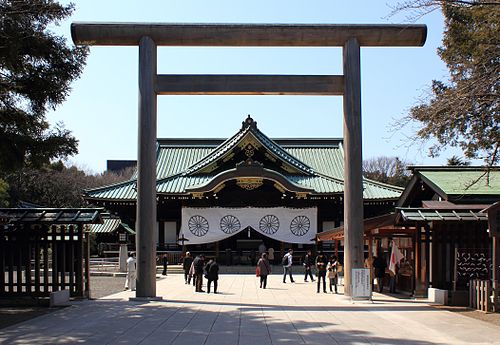
Yasukuni Shrine and Yūshūkan Museum
靖國神社・遊就館
A Shinto shrine in Chiyoda, Tokyo, established in 1869 to enshrine Japan's war dead, and its affiliated military museum Yūshūkan. The shrine enshrines approximately 2,466,532 souls including 14 Class A war criminals.

Yokaren Peace Memorial Museum
予科練平和記念館
A peace museum in Ami, Ibaraki Prefecture dedicated to the memory of the Naval Aviator Preparatory Course (Yokaren) trainees — boys aged 14 to 17 who were recruited and trained as Imperial Japanese Navy pilots from 1930 to 1945. Of approximately 240,000 boys enlisted over 15 years, 24,000 completed combat training; about 80 percent of graduates perished in battle, many as kamikaze pilots. Opened in 2010, the museum stands on the grounds of the former Tsuchiura Naval Air Corps, the central Yokaren training facility.

Yokohama War Crimes Tribunal (BC-Class Trials)
横浜軍事法廷(BC級戦犯裁判)
The Yokohama War Crimes Tribunal was held at the Yokohama District Court from 1946 to 1949 by the U.S. Eighth Army to try Class-B and Class-C Japanese war criminals. A total of 319 trials involving 996 defendants were conducted, resulting in 854 convictions including 124 death sentences (51 carried out). The courtroom has been preserved and relocated to the Toin Gakuen Memorial Academium.

Yokosuka Naval Air Technical Arsenal
横須賀海軍航空技術廠
The Imperial Japanese Navy's premier aviation research and development center, established in 1932 at Yokosuka. Renamed Kūgishō (空技廠) in 1939, it designed some of Japan's most iconic WWII aircraft including the D4Y Suisei dive bomber and the MXY-7 Ohka rocket-powered kamikaze weapon, though production was outsourced to manufacturers like Aichi and Nakajima.

Yokosuka Naval Base
横須賀海軍施設
A major Imperial Japanese Navy base near Tokyo, now a US Navy installation.

Yomitan Airfield Ruins (Yontan Airfield)
読谷飛行場跡
Ruins of a Japanese Army airfield built in 1944 at Yomitan Village on Okinawa's west coast. On April 1, 1945 — the first day of the Battle of Okinawa (Operation Iceberg) — U.S. forces seized it within hours of landing, making it the first airfield captured on Okinawa. It later served as a major American air base; the B-29 Bockscar landed here after the Nagasaki atomic bombing. Nearby Chibichiri-gama cave witnessed a mass civilian suicide on April 2, 1945.