Former Hiro Naval Air Arsenal (11th Naval Air Arsenal)
旧海軍航空廠 広工廠跡(第11海軍航空廠)
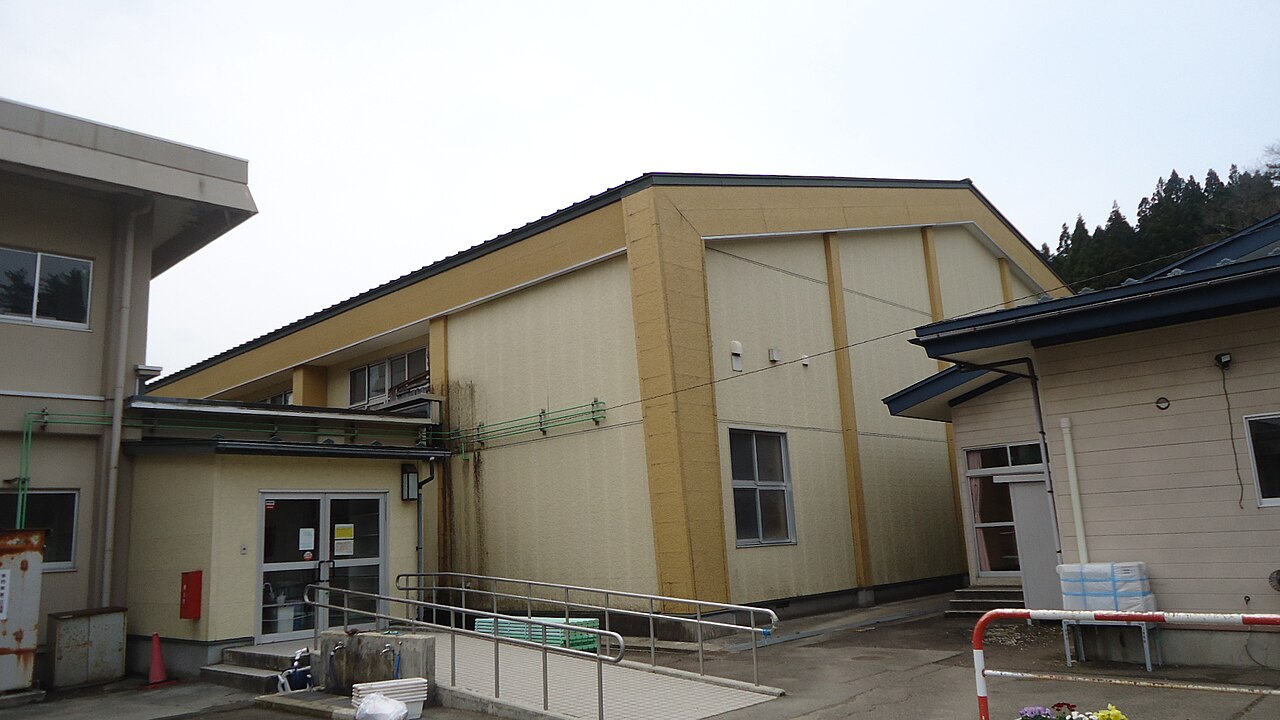
The Hiro Naval Arsenal, established in 1921 as a branch of the Kure Naval Arsenal in Hiro Village (now Kure City), Hiroshima Prefecture, was Imperial Japan's premier facility for designing and manufacturing flying boats, seaplanes, and aero engines. Elevated to independent status as Hiro Naval Arsenal (広海軍工廠) in 1923, its aircraft division separated in 1941 to form the 11th Naval Air Arsenal (第11海軍航空廠). The facility produced pioneering aircraft including the Hiro H1H Type 15 flying boat, H4H patrol flying boat, and G2H long-range bomber, while later mass-producing the Yokosuka D4Y Suisei (Judy) carrier dive bomber. On May 5, 1945, 148 B-29 Superfortresses dropped 578 tons of bombs from 20,000 feet, devastating the complex and halving production capacity. The site is now occupied by the Oji Materia Kure Paper Mill, with scattered wartime remnants including tunnel shelters and gate pillar ruins along the coast.
Images


History
The Hiro Naval Arsenal (広海軍工廠, Hiro Kaigun Kōshō) was one of Imperial Japan's most important naval aviation production facilities, situated in the Hiro district of Kure City, Hiroshima Prefecture, on the shores of the Seto Inland Sea. Its history spans the entire arc of Japanese naval aviation development, from early biplane flying boats to advanced carrier-based dive bombers.
The facility originated on January 15, 1921, when the Imperial Japanese Navy established the Kure Naval Arsenal Hiro Branch Factory (呉海軍工廠広支廠) in Hiro Village, Kamo District. The location was strategically chosen for its sheltered coastal waters ideal for seaplane and flying boat operations, and its proximity to the main Kure Naval Arsenal. On April 1, 1923, the branch was elevated to independent status as the Hiro Naval Arsenal (広海軍工廠), reflecting its growing importance in naval aviation.
The arsenal's aircraft division quickly became Japan's leading center for flying boat design and production. Its early achievements include the Hiro H1H (Navy Type 15 Flying Boat), an improved development of the British Felixstowe F.5 that the arsenal had built under licence; it first flew in 1925 and was manufactured from 1927. This was followed by the Hiro H4H patrol flying boat (first flight 1931, in service from 1933), which served as a frontline maritime patrol aircraft, and the ambitious Hiro G2H (Navy Type 95 Attack Bomber), a twin-engine long-range land-based bomber that first flew in 1933 and represented one of Japan's earliest attempts at strategic bombing capability.
The arsenal also played a crucial role in aero engine development and testing. Its engine experiment section and foundry experiment section developed manufacturing techniques that advanced Japan's indigenous aircraft engine capabilities. The facility maintained a complete production chain from design through prototype construction, testing on the adjacent waters, and series production.
On October 1, 1941, as Japan prepared for war, the aircraft division was separated from the Hiro Naval Arsenal and reorganized as the 11th Naval Air Arsenal (第11海軍航空廠, Dai-Jūichi Kaigun Kōkū-shō), commonly abbreviated as "Hiroshō" (広廠). This reorganization reflected the Navy's urgent need to expand aircraft production capacity. The remaining sections of the original Hiro Naval Arsenal continued operations focused on ordnance and other naval equipment.
During the Pacific War, the 11th Naval Air Arsenal became a major production center for the Yokosuka D4Y Suisei (彗星, "Comet", Allied code name "Judy"), a high-performance carrier-based dive bomber. The D4Y was notable for its inline Aichi Atsuta engine (a licensed copy of the German Daimler-Benz DB 601), which gave it exceptional speed for a dive bomber. The facility produced multiple variants including the D4Y1, D4Y2, and D4Y3 models. The D4Y series was employed extensively from the Battle of the Philippine Sea in June 1944 through the final kamikaze operations of 1945.
The arsenal complex was a sprawling industrial facility occupying approximately 300,000 square meters along the coast at the mouth of the Kurose River. The site included aircraft assembly halls, engine manufacturing workshops, testing facilities, administrative buildings, and worker housing. Underground tunnel shelters were excavated into the surrounding hillsides as air raid protection.
On May 5, 1945, the United States Army Air Forces launched a devastating precision bombing raid against the Hiro Naval Aircraft Factory. A force of 148 B-29 Superfortress heavy bombers attacked from approximately 20,000 feet (6,000 meters), dropping 578 tons of 2,000-pound and 1,000-pound high-explosive bombs. The raid inflicted catastrophic damage: many buildings were destroyed, over 500 machine tools were wrecked, and production capacity was cut nearly in half. The devastation was so severe that on June 26, 1945, the remnants of the original Hiro Naval Arsenal were formally dissolved and absorbed into the 11th Naval Air Arsenal.
The facility suffered additional damage during the broader bombing campaign against Kure in the final months of the war. Further raids by B-29s on June 22, 1945, targeted industrial facilities across the Kure area, and the massive carrier-based attacks of July 24-28, 1945, by the US Third Fleet struck the entire Kure naval complex.
After Japan's surrender in August 1945, the site was occupied by Allied forces and the remaining arsenal infrastructure was dismantled. In 1951, the Toyo Pulp Company (東洋パルプ) was invited to establish a kraft pulp production facility on the former arsenal grounds — the first major industrial enterprise to occupy the site in the postwar era. The company later became part of the Oji Paper Group, and the site is now operated as the Oji Materia Kure Plant (王子マテリア呉工場), producing kraft paper and packaging materials.
Despite the industrial redevelopment, several wartime remnants survive. Gate pillar ruins of the 11th Naval Air Arsenal can be seen along Prefectural Road 279 within what was formerly the National Institute of Advanced Industrial Science and Technology (AIST) Chugoku Center grounds. Along the Nagahama coast to the south, a series of numbered tunnel shelters (the 16th, 17th, 20th, 21st, 22nd, and 23rd tunnels) remain accessible or visible, some bearing evidence of machine gun strafing by American fighter aircraft. These tunnels served as air raid shelters for workers and for dispersed storage of equipment and materiel.
The Hiro Naval Arsenal site forms an integral part of the broader Kure military heritage corridor. Together with the Kure Naval Arsenal (now the Japan Maritime Self-Defense Force Kure Naval Base), the Yamato Museum (大和ミュージアム, officially the Kure Maritime Museum), and the JMSDF Kure Museum (てつのくじら館, the "Iron Whale" submarine museum), the Hiro district's wartime remains complete the story of Kure's role as Imperial Japan's foremost naval-industrial complex. The city of Kure has designated several of these naval heritage sites as part of a Japan Heritage route celebrating the city's maritime military history.
Categories
Related themes
Sources
- 広海軍工廠 - WikipediaWebsite
- Bombing of Kure - WikipediaWebsite
- Hiro H1H - WikipediaWebsite