Aviation
航空
Military aviation, aircraft production, and air power in wartime Japan.
History
This theme covers military aviation in wartime Japan: Army and Navy airfields and air units, the schools that trained aircrew, the factories that built airframes and engines, and the technical establishments that developed new aircraft. Japan had no independent air force; air power was divided between the Army and the Navy, each with its own aircraft types, factories, training system and base network, and their rivalry over materials and technology ran through the war.
Aviation was critical to Japan's military strategy. The industry relied on imported Western technology and licensed production in the 1920s and achieved design independence from the mid-1930s. Companies like Mitsubishi, Nakajima, and Kawanishi — and Kawasaki, Aichi and Tachikawa — produced fighters, bombers, and reconnaissance aircraft. Navy land-based bombers flew trans-oceanic raids in the war with China, and the Zero fighter of 1940 held an advantage in range and manoeuvrability early in the Pacific War. But Japanese aircraft generally lacked armour protection, high-powered engines came slowly, and trained pilots could not be replaced as fast as they were lost. Output peaked in 1944 at roughly 28,000 aircraft; from the end of that year B-29 raids on airframe and engine plants, the Tōnankai earthquake and shortages of fuel and aluminium sent production sharply down. Major aircraft factories were located across the Kanto, Chubu, and Kansai regions. By late war, dispersed underground production became common to evade Allied bombing, air power was increasingly used for special attacks, and the jet-powered Kikka did not make its first flight until August 7, 1945.
Aviation is a key to understanding Japanese society under total war. Aircraft factories were among the largest concentrations of mobilised students, the Women's Volunteer Corps, conscripted workers and Korean labourers; airfield construction often involved land requisition and labour service by residents and pupils; and the youth pilot and Yokaren systems sent teenagers into the air war. After the war GHQ banned all aviation activity in Japan until 1952, and former aeronautical engineers moved into the car and railway industries.
Under this theme visitors will find the remains of runways, hangars and headquarters buildings; concrete aircraft shelters scattered among fields and housing; engine test cells and underground factory tunnels; former flying schools; and aviation museums displaying restored aircraft and wreckage.
Related sites (118)

Nakajima Aircraft Musashino Factory
中島飛行機武蔵野工場
The largest aircraft engine factory in Japan, a primary target of American strategic bombing.

Tachiarai Peace Memorial Museum
筑前町立大刀洗平和記念館
A museum built on the former site of the Tachiarai Army Airfield, once the largest military airfield in Kyushu. It preserves approximately 1,800 wartime artifacts, including the world's only intact Nakajima Ki-27 fighter and a Mitsubishi A6M Zero, commemorating the airfield's history, the devastating March 1945 air raid, and the young pilots who trained there before kamikaze missions.

Former Matsuyama Naval Air Base
松山海軍航空基地跡
The site of the former Matsuyama Naval Air Base in Ehime Prefecture, home to the elite 343rd Naval Air Group (Tsurugi Unit) commanded by Captain Minoru Genda. Equipped with the Kawanishi N1K2-J Shiden Kai, the unit was Japan's last elite interceptor force. Three wartime aircraft revetments (entaigo) survive near Matsuyama Airport, one designated as a Matsuyama City tangible cultural property.

Chiran Peace Museum for Kamikaze Pilots
知覧特攻平和会館
The Chiran Peace Museum commemorates the 1,036 Imperial Japanese Army pilots who flew kamikaze missions during the Battle of Okinawa in 1945, many departing from the adjacent Chiran Airfield.

Mitsubishi Nagoya Aircraft Works (Oe Plant)
三菱重工業名古屋航空機製作所(大江工場)
The primary design and manufacturing facility of the Mitsubishi A6M Zero fighter, where engineer Jiro Horikoshi led development of Japan's most iconic WWII combat aircraft.
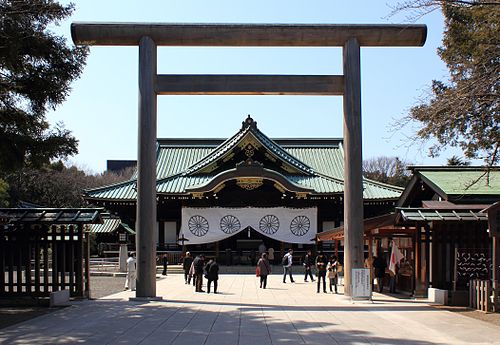
Yasukuni Shrine and Yūshūkan Museum
靖國神社・遊就館
A Shinto shrine in Chiyoda, Tokyo, established in 1869 to enshrine Japan's war dead, and its affiliated military museum Yūshūkan. The shrine enshrines approximately 2,466,532 souls including 14 Class A war criminals.

Kanoya Air Base Museum
鹿屋航空基地史料館
The principal Imperial Japanese Navy base for kamikaze sorties during the final months of WWII. Almost half of all naval kamikaze attacks departed from Kanoya between March and August 1945. The site is now a JMSDF air station with a museum housing over 5,500 artifacts.

Naval Air Facility Atsugi
厚木海軍飛行場
A major Imperial Japanese Navy airfield in Kanagawa Prefecture, begun in 1938 and opened in 1943, home to the elite 302nd Naval Air Group that defended Tokyo against B-29 raids. On August 30, 1945, General Douglas MacArthur landed here aboard his C-54 "Bataan," marking the first step of the Allied occupation of Japan.

Yokaren Peace Memorial Museum
予科練平和記念館
A peace museum in Ami, Ibaraki Prefecture dedicated to the memory of the Naval Aviator Preparatory Course (Yokaren) trainees — boys aged 14 to 17 who were recruited and trained as Imperial Japanese Navy pilots from 1930 to 1945. Of approximately 240,000 boys enlisted over 15 years, 24,000 completed combat training; about 80 percent of graduates perished in battle, many as kamikaze pilots. Opened in 2010, the museum stands on the grounds of the former Tsuchiura Naval Air Corps, the central Yokaren training facility.

Shiden Kai Exhibition Hall
紫電改展示館
The only museum in Japan displaying an authentic Kawanishi N1K2-J Shiden Kai ("Violet Lightning") fighter, salvaged in 1979 from the seabed of Kura Bay where it had lain since being ditched during combat on July 24, 1945. The aircraft belonged to the elite 343rd Naval Air Group.

Usa Naval Air Base Ruins
宇佐海軍航空基地跡
The best-preserved WWII naval air base ruin complex in Kyushu, with approximately 10 concrete aircraft revetments (entaigo) still standing amid rice paddies. Established in 1939 as a training base for carrier-based attack and dive-bomber crews, it later became a kamikaze staging base whose special attack units sortied in April 1945 — 81 planes and 154 airmen never returned. The devastating April 21, 1945 air raid killed over 320 personnel in just 11 minutes. The Jōi No. 1 Revetment, a city-designated historic site, and the Usa City Peace Memorial Museum now anchor the preservation effort.

Hamamatsu Army Flying School
浜松陸軍飛行学校
The Imperial Japanese Army's primary bombing and heavy aviation training center, established in 1933 around a bombing training section created in 1925. Hamamatsu was among the first Japanese cities attacked by B-29 Superfortresses and suffered devastating firebombing raids in 1945. Today the site is JASDF Hamamatsu Air Base, home to the Air Park (浜松広報館) aviation museum.

Ohka Park (Konoike Air Base Ruins)
桜花公園(神之池基地跡)
Memorial park on the site of the former Konoike Naval Air Base in Kashima, Ibaraki Prefecture — the primary training facility for the Yokosuka MXY-7 Ohka, the only rocket-propelled manned suicide weapon ever used in combat. A full-scale Ohka Model 11 replica is displayed inside the sole surviving aircraft revetment (entaigo). The park commemorates the 721st Naval Air Group "Jinrai Butai" (Thunder Gods Corps), which trained here from November 1944, and the 722nd Naval Air Group "Tatsumaki Butai" (Tornado Corps), the Ohka training unit formed in February 1945.

Akeno Army Flying School
明野陸軍飛行学校
The Imperial Japanese Army's premier fighter pilot training center, established in 1921 as a branch of the Army Aviation School and independent from 1924. Located in Mie Prefecture, the school specialized in aerial gunnery and air combat tactics, producing Japan's top fighter aces including Tateo Kato of the famed "Kato Hayabusa Squadron." Today the site is JGSDF Camp Akeno, home to the Ground Self-Defense Force Aviation School and the Akeno Aviation Memorial Hall.

Izumi Naval Air Base Ruins
出水海軍航空基地跡
Former Imperial Japanese Navy air base in Izumi City, Kagoshima Prefecture, which served as a major kamikaze staging base in the final months of WWII. The site preserves well-maintained aircraft revetments (entaigō), an underground command bunker, and a guard tower with visible bullet damage. Over 200 special attack pilots departed from Izumi between March and April 1945.

Kushira Naval Air Base Ruins (Kushira Peace Park)
串良海軍航空基地跡(串良平和公園)
Ruins of one of Japan's major kamikaze sortie bases, now Kushira Peace Park. The former 1,300 m east-west and 1,200 m north-south runways are lined with cherry trees, and a memorial tower honors the 363 special attack aviators and more than 200 conventional attack aviators who perished. An underground telegraph command room used to receive final transmissions from departing pilots is preserved on site.

Yomitan Airfield Ruins (Yontan Airfield)
読谷飛行場跡
Ruins of a Japanese Army airfield built in 1944 at Yomitan Village on Okinawa's west coast. On April 1, 1945 — the first day of the Battle of Okinawa (Operation Iceberg) — U.S. forces seized it within hours of landing, making it the first airfield captured on Okinawa. It later served as a major American air base; the B-29 Bockscar landed here after the Nagasaki atomic bombing. Nearby Chibichiri-gama cave witnessed a mass civilian suicide on April 2, 1945.

Metabaru Airfield Ruins
目達原飛行場跡
Former Imperial Japanese Army airfield in Yoshinogari Town, Saga Prefecture, established in 1943 as a branch of the Tachiarai Army Flight School. The base trained student pilots and served as a staging point for Army special attack (tokubetsu kōgeki) operations during the final months of WWII, with the 273rd Shinbu Squadron and other kamikaze units departing via Metabaru en route to forward bases in southern Kyushu. The site is now JGSDF Camp Metabaru, with the former main gate pillars and a 1992 memorial monument preserved outside the base perimeter.

Tokorozawa Aviation Memorial Park & Museum
所沢航空記念公園・所沢航空発祥記念館
The birthplace of Japanese aviation, established in 1911 as Japan's first military airfield. On April 5, 1911, Captain Tokugawa Yoshitoshi piloted a Henri Farman biplane in the inaugural flight from Tokorozawa. The site evolved into the Imperial Japanese Army's central aviation training and research complex, housing the Army Aviation School (1919), the Army Aviation Technical School (1935), and the Army Aviation Maintenance School (1938). During WWII, the airfield served as a key Army Air Force installation; in June 1945, a tokkotai (special attack) unit was formed here. After Japan's surrender, the site was seized by the U.S. military as the Tokorozawa Communications Base. Land was gradually returned from 1971, and the 50.2-hectare Tokorozawa Aviation Memorial Park opened in 1978, with the Tokorozawa Aviation Museum (所沢航空発祥記念館) inaugurated in 1993.

Miyakonojo Airfield Ruins (East & West)
都城飛行場跡(都城東・西飛行場)
Site of two Imperial Japanese Army airfields in southern Kyushu from which 79 Shinbu (Army special attack) pilots flew Ki-84 Hayate fighters on 17 kamikaze sorties against the U.S. fleet off Okinawa between April 6 and July 1, 1945. The West Airfield (built 1934, expanded to 1,200 m runway by 1945) launched the first mission on April 6; after devastating air raids on April 27–28 destroyed it, operations shifted to the East Airfield (built 1944 on converted rice paddies by the Navy, later transferred to Army use). Today, stone monuments at both former airfield sites and the Hayate Shinbu Special Attack Corps Memorial in Toshima Park (former Army cemetery) preserve the memory of the young pilots, most aged 18–23, who never returned.

Former Komatsu Naval Air Base Revetment
旧海軍小松航空基地 掩体壕
A WWII-era reinforced concrete aircraft revetment (entaigo) surviving within the grounds of JASDF Komatsu Air Base in Ishikawa Prefecture. Built around 1944 by the Imperial Japanese Navy Maizuru Naval District to shelter Zero fighters and Saiun reconnaissance aircraft, this covered shelter is one of very few remnants of the Komatsu Naval Air Station — a late-war dispersal base on the Sea of Japan coast. Originally the base had 35 medium covered shelters, 40 medium open shelters, 31 small covered shelters, and 15 small concealed positions; today only a handful survive. The JASDF has preserved this revetment as a heritage monument, housing a camouflage-painted T-6G trainer inside to honor wartime aviators.

Tokushima Naval Air Group Ruins
徳島海軍航空隊跡
Former Imperial Japanese Navy air training base in Matsushige, Tokushima Prefecture, where the Shiragiku Special Attack Unit was formed in 1945. Trainee pilots flew obsolete Kyushu K11W Shiragiku trainer aircraft on one-way kamikaze missions against Allied ships off Okinawa. Of the 108 men who perished, 56 were killed in special attack sorties launched from Kushira Air Base between May and June 1945. The site is now shared by Tokushima Airport and JMSDF Tokushima Air Base, which houses a small memorial museum with a Kannon statue honoring the fallen.

Kakamigahara Airfield (Gifu Air Base)
各務原飛行場
Japan's second-oldest military airfield, established in 1917 in Gifu Prefecture. On April 1, 1939, test pilot Katsuzo Shima made the maiden flight of the Mitsubishi A6M Zero prototype here — the fighter that would become Imperial Japan's most iconic warplane. During WW2, the adjacent Kawasaki aircraft factory mass-produced Ki-61 Hien fighters at peak rates of 200 per month. The airfield survived devastating B-29 raids in 1945 and today serves as JASDF Gifu Air Base, with the Gifu-Kakamigahara Air and Space Museum preserving the site's aviation heritage.

Taisha Naval Air Base Ruins
大社海軍航空基地跡
Former Imperial Japanese Navy air base in Hikawa-chō, Izumo City, Shimane Prefecture, constructed March–June 1945 and described as the largest military base in western Japan at the time. The base housed the 762nd Naval Air Group with Ginga (P1Y) bombers and stored 50 unassembled Ohka suicide weapons. Surviving structures include portions of a 1,700m concrete runway — one of Japan's largest war relics — plus aircraft revetments and tunnel storage facilities in the surrounding hillsides.

Haranomachi Army Airfield
原町陸軍飛行場
Former Imperial Japanese Army airfield in Minamisōma, Fukushima Prefecture, established in 1936 as the Hibarigahara Airfield and converted to a military flight training facility in 1940. During the final year of the Pacific War it served as a kamikaze special-attack training base, training pilots of 14 tokkōtai units that fought in the Philippines, off Okinawa and in the homeland. The Nakoso Fu-Go balloon bomb launch base lay about 90 km to the south on the same Hamadōri coast, though no operational link between the two is documented. A memorial at Jingasaki Park Cemetery, erected in 1971, records 71 airmen from the airfield who died in special-attack units.

Miho Naval Air Base
美保海軍航空基地
Miho Naval Air Base was an Imperial Japanese Navy airfield constructed from 1939 on the Yumigahama Peninsula in Sakaiminato, Tottori Prefecture, under the jurisdiction of the Maizuru Naval District. Commissioned in October 1943 as the Miho Naval Air Group (美保海軍航空隊), it served primarily as a preliminary flight training base for naval aviation cadets, processing up to 1,200 trainees from the Yokaren (予科練) Kō-class 13th intake. A second unit, the 2nd Miho Naval Air Group, was established in January 1944 for elementary flight training. The base was attacked once by USAAF B-24 Liberator bombers in July 1945. After Japan's surrender, it was occupied by the British Commonwealth Occupation Force (BCOF), with RAAF No. 77 Squadron stationed there until 1950, followed by USAF units during the Korean War. Returned to Japanese control in 1957–58, it became JASDF Miho Air Base, currently the only transport aviation base in western Japan, operating C-2 and KC-46A aircraft.

Yanagimoto Airfield (Yamato Naval Air Group Yamato Base)
柳本飛行場(大和海軍航空隊大和基地)
A hastily constructed Imperial Japanese Navy airfield in Nara Prefecture, built 1943–1945 as the Yamato Naval Air Group's Yamato Base. Intended as a major homeland defense installation with four runways, only one 1,500-meter runway was completed before the war ended. The base housed the Yamato Naval Air Group's training aircraft and, from July 1945, a fighter unit and the Kinki Naval Air Corps headquarters, and was reportedly earmarked for the Third Air Fleet command for the anticipated defense against Allied landings on the Kii Peninsula. Two concrete air raid shelters survive as preserved war ruins.

Bansei Tokko Peace Museum
万世特攻平和祈念館
War museum in Minamisatsuma commemorating the 201 airmen who died at Bansei Air Base, the last airfield built by the Imperial Japanese Army and a special attack (kamikaze) base. The museum displays the salvaged wreck of an Aichi E13A1 reconnaissance seaplane — the only surviving example in Japan — recovered from the nearby sea floor in 1992, along with farewell letters, photographs, and personal effects of the pilots, including the iconic 1945 photograph of 17-year-old Corporal Yukio Araki holding a puppy with his 72nd Shinbu Squadron comrades the day before their final mission.

Kadena Air Base (Former Japanese Middle Airfield)
嘉手納飛行場
Originally the Imperial Japanese Army's Middle Airfield (中飛行場), urgently constructed from May 1944 on forcibly requisitioned land in Kadena, Okinawa. Captured by the U.S. 7th Infantry Division on April 1, 1945 — the first day of the Battle of Okinawa — it was rapidly rebuilt and expanded into what became the largest U.S. Air Force installation in the Pacific. Known as the "Keystone of the Pacific," Kadena remains an active U.S. military base; together with the adjoining ammunition storage area it occupies about 82% of Kadena Town's land area, serving as a potent symbol of the continuity of American military occupation in Okinawa.

Yokaichi Airfield & Nunobiki Aircraft Revetments
八日市飛行場・布引掩体群
One of Japan's earliest military airfields, established in 1922 in Shiga Prefecture's Okinogahara plain. The site's most significant surviving remains are the Nunobiki Revetment Group — 17 aircraft shelters constructed in 1944–1945 along a 2-kilometer stretch of the Nunobiki Hills, a rare surviving wartime aircraft shelter complex in Shiga Prefecture. The airfield hosted the Army Aviation 3rd Regiment, and later the 244th Fighter Regiment that defended the homeland against B-29 raids. Actor Toshiro Mifune served here as a private first class in charge of the cookhouse.

Former Hiro Naval Air Arsenal (11th Naval Air Arsenal)
旧海軍航空廠 広工廠跡(第11海軍航空廠)
The Hiro Naval Arsenal, established in 1921 as a branch of the Kure Naval Arsenal in Hiro Village (now Kure City), Hiroshima Prefecture, was Imperial Japan's premier facility for designing and manufacturing flying boats, seaplanes, and aero engines. Elevated to independent status as Hiro Naval Arsenal (広海軍工廠) in 1923, its aircraft division separated in 1941 to form the 11th Naval Air Arsenal (第11海軍航空廠). The facility produced pioneering aircraft including the Hiro H1H Type 15 flying boat, H4H patrol flying boat, and G2H long-range bomber, while later mass-producing the Yokosuka D4Y Suisei (Judy) carrier dive bomber. On May 5, 1945, 148 B-29 Superfortresses dropped 578 tons of bombs from 20,000 feet, devastating the complex and halving production capacity. The site is now occupied by the Oji Materia Kure Paper Mill, with scattered wartime remnants including tunnel shelters and gate pillar ruins along the coast.

Iwakuni Naval Air Base
岩国海軍航空隊
An Imperial Japanese Navy air station established in 1938 in Yamaguchi Prefecture, commissioned on 8 July 1940. During WWII, Iwakuni served as a major naval aviation training and defense base, housing 96 trainers and 150 Zero fighters. A branch of the Etajima Naval Academy operated here from 1943. Bombed by American B-29s in May and August 1945, the base was occupied by U.S. Marines at war's end and continues today as MCAS Iwakuni.

Tateyama Naval Air Group Ruins (Akayama Underground Tunnels)
館山海軍航空隊跡(赤山地下壕跡)
Site of the Imperial Japanese Navy's Tateyama Naval Air Group, established in 1930 at the southern tip of the Boso Peninsula to guard the entrance to Tokyo Bay. The Akayama Underground Tunnels — a massive 1.6 km subterranean complex excavated during the final years of the war — served as a command center, hospital, power station, and aircraft workshop. Designated a Tateyama City historic site, a 250-meter section of the tunnels is open to the public.

Omura Naval Air Group (Omura Air Base)
大村海軍航空隊(大村航空基地)
Established in December 1922, the Omura Naval Air Group was one of the Imperial Japanese Navy's principal training bases in western Japan. The adjacent 21st Naval Air Arsenal — a major naval aircraft production and repair facility opened in 1941 — made Omura a prime B-29 target during Operation Matterhorn in 1944. The site continues as JMSDF Omura Air Base, home to Fleet Air Wing 22.

Oppama Naval Air Technical Arsenal
追浜海軍航空技術廠
The Imperial Japanese Navy's premier aviation research and testing facility at Oppama, Yokosuka, where nearly every naval aircraft — including the legendary A6M Zero — underwent prototype evaluation and test flights. Established in 1912 as a naval aviation research committee and expanded into the Naval Air Technical Arsenal (Kaigun Koku Gijutsu Sho) by 1939, the site was the birthplace of Japanese naval aviation technology. Today the grounds are occupied by the Nissan Motor Oppama Plant.

Kashiwa Airfield & Shusui Rocket Interceptor Site
柏飛行場・秋水関連遺跡
The Imperial Japanese Army airfield in Kashiwa, Chiba Prefecture, designated as the operational base for the J8M/Ki-200 "Shusui" — Japan's only rocket-powered interceptor, reverse-engineered from the German Me 163 Komet. Underground fuel storage bunkers for the Shusui's volatile hydrogen peroxide and hydrazine propellants survive in the Hanano-i residential area, representing Japan's most ambitious late-war aviation technology program.

Tachikawa Airfield & Army Air Arsenal
立川飛行場・立川陸軍航空工廠
The center of Imperial Japanese Army aviation industry, established in 1922 in western Tokyo. Tachikawa Airfield housed the Army Air Arsenal (陸軍航空工廠) and the Tachikawa Aircraft Company, which together produced over 6,000 aircraft including the Ki-36, Ki-55, and Ki-43 Hayabusa fighters. The complex also contained the Army Air Technical Research Institute (陸軍航空技術研究所). Devastated by 13 air raids from February 1945, the site became US Tachikawa Air Base after the war. Following reversion to Japan in 1977, the western portion was transformed into the Showa Commemorative National Government Park (国営昭和記念公園), opened in 1983.

Chofu Airfield
調布飛行場
A major Imperial Japanese Army airfield in western Tokyo, home to the elite 244th Flight Regiment (飛行第244戦隊) that defended the capital against B-29 Superfortress raids using Ki-61 Hien (飛燕) fighters. The 244th became famous for ramming attacks (体当たり) against B-29s, and its commander Major Teruhiko Kobayashi was the youngest sentai leader in the IJAAF. Four concrete aircraft revetments (掩体壕) survive in the surrounding parks and neighborhoods.

Misawa Naval Air Base
三沢海軍航空基地
Imperial Japanese Navy air base in northern Honshu, constructed from 1938 and operational by February 1942. According to U.S. Air Force histories of the base, nearby Lake Ogawara served before the Pacific War as a torpedo-bombing practice site for the Pearl Harbor attack because of its similar shallow depth. The base housed the Misawa Naval Air Group (三沢海軍航空隊), which deployed to the South Pacific as a core element of the Rabaul air forces. In 1944 the base was expanded with kamikaze Special Attack facilities. American air attacks destroyed about 90% of the base in 1945. Today it operates as a joint US Air Force / Japan Air Self-Defense Force installation, with the adjacent Misawa Aviation & Science Museum (青森県立三沢航空科学館) preserving the region's aviation heritage.

Nakajima Aircraft Ota Plant
中島飛行機太田製作所
The headquarters factory of Nakajima Aircraft Company — Japan's largest wartime aircraft manufacturer — located in Ota, Gunma Prefecture. Founded by Chikuhei Nakajima in 1917 as a modest research workshop, it grew into an industrial colossus producing iconic fighters including the Ki-43 Hayabusa, Ki-44 Shoki, Ki-84 Hayate, and Ki-49 Donryu heavy bomber. At peak wartime production the Ota complex employed over 100,000 workers. Targeted by seven major B-29 bombing raids between late 1944 and August 1945, the factory was devastated — the February 10, 1945 raid alone killed 152 people and destroyed the eastern half of the plant. After dissolution under Allied occupation, the company's legacy was reborn as Fuji Heavy Industries (1953), now SUBARU Corporation, whose Gunma Manufacturing Division Main Plant occupies the original site at Subaru-cho 1-1, Ota City.

Mitsubishi Nagoya Engine Works (Daiko Plant)
三菱重工業名古屋発動機製作所(大幸工場)
Japan's largest aero-engine production complex during WW2, located in Higashi Ward, Nagoya. Established on July 1, 1938, when the engine division was separated from the Mitsubishi Nagoya Aircraft Works (Oe Plant). The Daiko Plant produced over 40% of all Japanese aircraft engines — a staggering total of 48,996 powerplants including the Mitsubishi Kinsei (Venus), Kasei (Mars), and Zuisei (Auspicious Star) radial engines that powered fighters, bombers, and reconnaissance aircraft across both the Navy and Army. From December 13, 1944, to April 7, 1945, the plant was targeted in seven devastating B-29 precision bombing raids involving over 600 sorties and 1,700+ tons of ordnance, killing more than 2,600 factory workers, mobilized students, and volunteer corps members. The factory was completely destroyed. The site is now occupied by Vantelin Dome Nagoya (formerly Nagoya Dome), built in 1997 on the former factory grounds.

Kawasaki Aircraft Akashi Plant
川崎航空機工業明石工場跡
The Kawasaki Aircraft Akashi Plant was the largest aircraft engine manufacturing facility of the Kawasaki Aircraft Industries Co., Ltd., producing the Ha-40 liquid-cooled engine that powered the Ki-61 Hien ("Tony") fighter. Established in 1940 with nearly 38,000 workers at its peak, the plant manufactured approximately 11,000 engines before being 90% destroyed by a devastating B-29 raid on January 19, 1945 — the first major air raid on Hyogo Prefecture. The site is now occupied by Kawasaki Heavy Industries' modern Akashi Works.

Army Aeronautical Inspection Department (Tama Army Airfield)
陸軍航空審査部(多摩陸軍飛行場)
The Imperial Japanese Army's central organization for testing, evaluating, and approving all new aircraft and aviation weapons, established in October 1942 at the Tama Army Airfield (present-day Yokota Air Base) in Fussa, western Tokyo. Staffed by Japan's most elite test pilots, the department evaluated every prototype fighter, bomber, and reconnaissance aircraft — including the Ki-61 Hien, Ki-84 Hayate, and captured Allied aircraft such as the P-51 Mustang and B-17. In the final months of the war, its fighter squadron served as an emergency interceptor unit defending the capital against B-29 raids. After Japan's surrender in September 1945, the U.S. 1st Cavalry Division occupied the intact airfield, discovering approximately 280 of the IJA's most advanced aircraft. The site was renamed Yokota Air Base and remains a major U.S. Air Force installation today.

Hyakuri Naval Air Base (Hyakuri Air Base & Yuhien Park)
百里原海軍航空隊(百里基地・雄飛園)
Imperial Japanese Navy air training base established in 1938 in Ibaraki Prefecture. Hyakurihara Naval Air Group began as a primary flight-training unit, added carrier attack and dive bomber training from late 1943, and in the war's final months formed special attack (kamikaze) units that flew sorties during the Battle of Okinawa. Now home to JASDF Hyakuri Air Base — the closest fighter base to Tokyo — with the Yuhien outdoor memorial park displaying retired military aircraft and monuments to the fallen.

Tsuiki Naval Air Base
築城海軍航空基地
Imperial Japanese Navy air base in northeast Kyushu, completed in 1942 as a carrier fighter pilot training facility. The Tsuiki Naval Air Group trained Zero fighter pilots and later staged kamikaze sorties — on March 18, 1945, six Ginga bombers departed on a special attack mission against the US task force southeast of Kyushu, with five aircraft and 15 crewmen lost. On August 9, 1945, ten fighters scrambled from Tsuiki in a failed attempt to intercept the B-29 carrying the Nagasaki atomic bomb. Reinforced concrete aircraft shelters (entaigo) survive in nearby Inadou, Yukuhashi City, with the Inadou No. 1 Revetment designated a Fukuoka Prefecture historic site in 2023. The base is now JASDF Tsuiki Air Base, home of the 8th Air Wing.

Kumagaya Army Air School
熊谷陸軍飛行学校
The Imperial Japanese Army's primary training center for young aviation soldiers (少年飛行兵), established in December 1935 in Saitama Prefecture. The school trained thousands of teenage pilot cadets at its main campus and branch schools including the Okegawa sub-school. Kumagaya city was devastated by one of the last B-29 firebombing raids of the war on the night of August 14-15, 1945 — less than 12 hours before Japan's surrender announcement. Today the former school site is JASDF Kumagaya Air Base, while the restored Okegawa branch is a peace memorial hall.

Narimasu Airfield Ruins (Hikarigaoka Park)
成増飛行場跡(光が丘公園)
A hastily constructed Imperial Japanese Army airfield in northwestern Tokyo, completed in late 1943 as a B-29 interceptor base. Home to the elite 47th Air Regiment (飛行第47戦隊) equipped with Ki-44 Shoki fighters, and the Shinten Seiku Tai — a special air-to-air ramming attack unit formed to defend the capital. Postwar the site became U.S. military housing "Grant Heights" (1947–1973), then redeveloped as the Hikarigaoka residential district and park.

Ozuki Airfield (Shimonoseki Army Airfield)
小月飛行場(下関陸軍飛行場)
A military airfield in Shimonoseki, Yamaguchi Prefecture, built by the Ministry of Communications (1937–1940) and transferred to the Imperial Japanese Army in April 1940. During WWII, the 4th Sentai operated Ki-45 Toryu twin-engine fighters from Ozuki for homeland air defense, engaging B-29 bombers from the June 1944 Yawata raid onward. The 12th Air Division HQ was based here from July 1944. Post-war, the base passed through U.S./NZ occupation, police reserve, JGSDF, and JASDF hands before becoming a JMSDF installation in 1964. Today it serves as the Maritime Self-Defense Force's primary flight school operating Fuji T-5 trainers.

Ashiya Air Field
芦屋飛行場
An Imperial Japanese Army airfield in Fukuoka Prefecture, built around 1940 and established as an Army air base by 1942, used for fighter interception of B-29 raids and as a staging base for Army kamikaze (Shinbu-tai) special attack sorties during the final months of WWII. Now the JASDF Ashiya Air Base.

Kyushu Aircraft Zasshonokuma Plant
九州飛行機雑餉隈工場
The main factory of Kyushu Aircraft Company (formerly Watanabe Iron Works) at Zasshonokuma, Fukuoka — birthplace of the J7W1 Shinden, Imperial Japan's radical canard-configuration interceptor designed to counter B-29 raids. The Shinden's forward-swept canard wings and rear-mounted pusher propeller made it one of the most unconventional aircraft of WWII. Only one prototype was completed; it flew three times (August 3, 6, and 8, 1945) from nearby Mushiroda Airfield before Japan's surrender. The 120,000-tsubo factory site was seized by US forces after the war and is now occupied by JGSDF Camp Fukuoka, where wartime factory buildings still serve as military warehouses.

Nakajima Aircraft Handa Plant
中島飛行機半田製作所
Major Nakajima Aircraft Company production facility in Handa, Aichi Prefecture, operational from 1943 to 1945. The plant mass-produced the B6N Tenzan carrier torpedo bomber (977 aircraft) and C6N Saiun carrier reconnaissance aircraft (427 aircraft) for the Imperial Japanese Navy. Severely damaged by the December 1944 Tonankai Earthquake (153 killed) and by USAAF air raids in July 1945. Underground dispersal tunnels were dug in nearby Agui to shelter production from bombing. Remnants of the runway and underground tunnels survive today.

Kawasaki Aircraft Gifu Plant
川崎航空機工業 岐阜工場
Kawasaki Aircraft Industries' Gifu Works, adjacent to Kakamigahara Airfield in Gifu Prefecture, was one of Imperial Japan's most important aircraft manufacturing facilities. Established in 1922 as the Kakamigahara Branch Works of Kawasaki Dockyard, the plant was renamed Gifu Works in 1939. During World War II, the factory mass-produced the Ki-61 Hien (Flying Swallow) — the Imperial Japanese Army's only mass-produced liquid-cooled inline-engine fighter — with approximately 3,000 Ki-61s and 275 Ki-100 conversions built here. Peak production reached 200 aircraft per month. On June 22, 1945, 44 B-29 Superfortresses devastated the factory complex with 2,000-lb and 4,000-lb bombs, killing 169 people including 63 Kawasaki workers and mobilized students. Today the site continues as Kawasaki Heavy Industries' Aerospace Systems Gifu Works, manufacturing military and civilian aircraft.

Army Aviation Maintenance School
陸軍航空整備学校
The Imperial Japanese Army's central institution for training aviation maintenance personnel, established in 1938 at Tokorozawa Airfield in Saitama Prefecture. Created by transferring maintenance training from the Army Aviation Technical School, the school educated officer candidates, non-commissioned officers, and youth aviation soldiers (少年航空兵) in aircraft maintenance and repair. Renamed the Tokorozawa Army Aviation Maintenance School (所沢陸軍航空整備学校) in 1943 when a sister school opened at Kakamigahara, Gifu Prefecture. The school operated until February 1945, when it was reorganized into the 3rd Air Training Corps (第3航空教育団). Its legacy is preserved at Tokorozawa Aviation Memorial Park, where the Youth Aviation Soldier Statue (少年航空兵像) — originally erected on the school grounds in 1944 — still stands.

Kashima Naval Air Group Ruins (Oyama Lakeside Park)
鹿島海軍航空隊跡(大山湖畔公園)
One of the best-preserved IJN seaplane training base ruins in Japan, located on the southern shore of Lake Kasumigaura in Miho Village, Ibaraki Prefecture. Established on December 15, 1938, as a practice air group for seaplane pilot training under the Yokosuka Naval District, the base grew to over 1,000 personnel and 100 aircraft by 1941. Surviving structures include the reinforced-concrete headquarters building, 32-meter smokestack boiler house with original 1939 boilers, self-powered generator building, vehicle garage, seaplane catapult foundation, and lakeside slipways designated as Civil Engineering Heritage. Opened to the public as Oyama Lakeside Park in July 2023.

Aichi Aircraft Eitoku Plant
愛知航空機永徳工場
The principal airframe assembly plant of Aichi Aircraft Company (愛知航空機), located in Minato-ku, Nagoya on the Shonai River estuary. Operational from 1941, the Eitoku Plant mass-produced Imperial Japanese Navy aircraft including the D4Y Suisei (Judy) carrier dive bomber, E16A Zuiun (Paul) reconnaissance seaplane, and the top-secret M6A Seiran submarine-launched attack floatplane — built in a secluded corner building akin to Lockheed's Skunk Works. The plant grew to approximately 95 buildings covering 197 acres with a workforce peaking at over 26,000. The plant was bombed by B-29s on June 26, 1945 and suffered its heaviest damage in a second raid on July 24, 1945. Today, the concrete seaplane slipway (滑走台) — a 35m-wide ramp extending into the Fujimae tidal flats — survives as the most tangible war relic of this once-vital naval aircraft production complex.

Aichi Aircraft Funakata Plant (Atsuta Air Raid Site)
愛知航空機船方工場(熱田空襲跡)
The original airframe factory of Aichi Tokei Denki / Aichi Aircraft in Atsuta-ku, Nagoya. On June 9, 1945, B-29s obliterated the Funakata factory complex in approximately 10 minutes, killing 2,068 workers including mobilized students. A memorial Jizo statue and bombed canal embankment survive at the former factory gate as solemn reminders of one of the deadliest single industrial air raids of the Pacific War.

Yoshimi Hyakuana (Underground Munitions Factory Ruins)
吉見百穴(地下軍需工場跡)
A nationally designated historic site in Yoshimi Town, Saitama Prefecture, comprising 219 lateral cave tombs (yokoana) carved into a tuff hillside during the Kofun period (6th–7th century). In 1944–1945, the Imperial Japanese military commandeered the site to construct a massive underground factory for the Nakajima Aircraft Company, intended to produce aircraft engines safe from American air raids. An estimated 3,000 to 3,500 Korean laborers, working in round-the-clock shifts, excavated what is reported as approximately 8.4 kilometers of interconnected tunnels in a grid pattern beneath and around the ancient tombs, destroying over 10 designated cave tombs in the process. The factory never reached full production before Japan's surrender in August 1945. Today, visitors can view both the ancient burial caves and the sealed entrances to the wartime tunnel network—a striking juxtaposition of 1,400-year-old funerary archaeology and 20th-century wartime industrial desperation.

Hotarukan Tomiya Shokudo
ホタル館 富屋食堂
Restored wartime military dining hall in Chiran, Kagoshima, originally run by Tome Torihama (1902–1992) — known as the 'Mother of the Special Attack Corps' (特攻の母). During 1945, the Tomiya Shokudo served as the designated army restaurant for kamikaze pilots departing from Chiran Air Base. Torihama provided emotional support, home-cooked meals, and motherly care to young pilots on the eve of their final missions, often forwarding their last letters to families. The building was faithfully reconstructed and opened as a memorial museum displaying photographs, personal effects, and stories of the pilots and Torihama's lifelong dedication to preserving their memory.

Gangshan Naval Air Base (Aviation Education Exhibition Hall)
岡山海軍航空基地(空軍航空教育展示館)
Former Imperial Japanese Navy air base and site of the 61st Naval Air Arsenal (Dai-61 Kaigun Kōkūshō) in Gangshan, Kaohsiung. Established in 1941, the arsenal employed over 10,000 workers repairing and manufacturing aircraft, making it one of the largest Japanese naval aviation facilities in colonial Taiwan. Devastated by American B-29 bombing in mid-October 1944, among the heaviest air raids on Taiwan during the war. Now home to the ROCAF Aviation Education Exhibition Hall, displaying over 40 military aircraft.

Matsuyama Airfield (Songshan Airport)
松山飛行場(臺北飛行場)
Imperial Japanese military airfield in Taihoku (Taipei), Taiwan, operational from 1936. In 1937 it served as the launch base for the Kanoya Air Group's cross-strait bombing raids against China, marking one of the first trans-oceanic bombing missions in history. It was repeatedly bombed by Allied forces in 1944-1945; the May 31, 1945 Raid on Taipei — the largest air raid on the city during the war — was aimed mainly at the government and military quarter of the city centre. Now Taipei Songshan Airport.

Tainan Airfield (present-day Tainan Airport)
台南飛行場(現台南空港)
Major Imperial Japanese military airfield in southwestern Taiwan, operational from 1937. Home of the elite Tainan Air Group (台南海軍航空隊) whose Zero fighter pilots — including aces Saburō Sakai, Hiroyoshi Nishizawa, and Junichi Sasai — launched the devastating December 8, 1941 attack on Clark and Iba airfields in the Philippines. The base remained a naval air station (765th Naval Air Group from February 1945) while Taiwan's airfields served as staging points for special attack (tokko) sorties during the 1945 Okinawa campaign. Repeatedly bombed by American B-24 and B-25 aircraft from March to July 1945.

Hsinchu Airfield (Shinchiku Airfield)
新竹飛行場
A major Imperial Japanese military airfield in northern Taiwan established in 1936, and the target of the first American air raid on Formosa on November 25, 1943, when 14th Air Force and Chinese-American Composite Wing B-25s claimed some 40 Japanese aircraft destroyed on the ground. Shinchiku received the greatest tonnage of American bombs among all locations on Taiwan during the war. Now an active Republic of China Air Force base.

Pingtung Airfield (Pingtung Air Force Base)
屏東飛行場(屏東空軍基地)
A major Imperial Japanese Army air base in colonial Taiwan, established in 1920 as the island's first airfield. Originally used for aerial policing of indigenous areas, it became a full military base in 1927 when the IJA 8th Air Regiment relocated from Tachiarai, Kyushu. The two-field complex served as a critical staging point for Japan's southern advance and was repeatedly bombed by USAAF B-29s and carrier aircraft in 1944-1945. Now the ROCAF's Pingtung Air Force Base (north and south fields); civil flights from the north field ended in 2011.

Hualien Harbor Airfield (Karenko Airfield)
花蓮港飛行場
A major Imperial Japanese Army airfield on the east coast of Taiwan, established in 1936 as a dual military-civil airfield. During the final months of WWII, it served as one of Taiwan's principal kamikaze staging bases for Operation Ten-Go (天號作戰). Between April and July 1945, eleven kamikaze sorties launched from Hualien, sending 25 special attack pilots on one-way missions against Allied forces at Okinawa — by some accounts second only to Hakkachō Airfield in total kamikaze departures from Taiwan. The site is now ROCAF Hualien Air Base.

Huwei Sugar Factory Dormitories
虎尾糖廠宿舎群
Japanese colonial-era sugar factory dormitory complex in Huwei, Yunlin County, Taiwan, whose buildings are said to have been used in the final months of World War II to lodge special attack (kamikaze) pilots from the nearby Huwei Naval Airfield, although the sources consulted do not document this. The Huwei Naval Air Group (虎尾海軍航空隊), established in May 1944 to train roughly 260 flight cadets, was dissolved in February 1945 due to fuel and materiel shortages; its aircraft were then transferred to the Chūsei-tai (忠誠隊) special attack squadron for suicide missions against American ships near Okinawa. The sugar factory's First Official Dormitory (第一公差宿舍, also called Taishunkan / 臺春館), built in 1916, and its surrounding Japanese-style residential quarter are the buildings associated with this account. The dormitory complex (reported as 11 to 12 surviving buildings) was designated a county-level historic monument in 2015.

Kagi Airfield (Chiayi Air Base)
嘉義飛行場
A Japanese Army airfield established in 1936 in Kagi (Chiayi), southern Taiwan (Formosa), as the base of the Army's 14th Air Regiment. From early 1944 through August 1945, it was repeatedly targeted by USAAF and USN air raids, including B-29 strategic bombing from Chengdu and carrier strikes during the Formosa Air Battle. The site is now the Republic of China Air Force Chiayi Air Base, home to the 4th Tactical Fighter Wing equipped with F-16V fighters.

Yilan North Airfield (Giran Airfield)
宜蘭北飛行場
One of three Japanese military airfields in Yilan, Taiwan, the North Airfield (Giran Airfield) was established in 1936 and became a major staging base for kamikaze special attack squadrons during the final year of WWII. Sixty-two special-attack aircraft sortied from the Yilan airfield complex between April and June 1945. A number of hardened aircraft shelters survive in the area, and remains of the airfields are protected as registered historic buildings.

Taichung Shuinan Airfield
台中飛行場
The Imperial Japanese Army's largest airfield in central Taiwan, established around 1936–1940 in Taichū Prefecture. The airfield served as both a military base and the only civilian airport in the prefecture, operating scheduled flights to Japan proper. During the final months of the Pacific War, Shuinan hosted kamikaze special attack units and was heavily bombed by U.S. carrier aircraft on January 3, 1945. A surviving WW2-era machine gun bunker (機槍堡) is designated a historic building. The former airfield site is now the Shuinan Economic and Trade Park (水湳經貿園區).
Shuishang Airfield (Kagi South Airfield)
水上飛行場
A Japanese Army airfield established in 1936 in Shuishang (水上庄), Kagi District, southern Taiwan (Formosa). Home to the 14th Flying Regiment (飛行第十四聯隊) under the 3rd Air Group Command, it served as a key fighter and bomber base throughout the Second Sino-Japanese War and the Pacific War. Repeatedly attacked by USAAF and USN aircraft from 1944 to 1945, the site later became the civilian Chiayi Airport (嘉義機場, ICAO: RCKU) adjacent to the military Chiayi Air Base.

Koshun Airfield (Hengchun Airfield)
恒春飛行場
The southernmost military airfield in wartime Taiwan (Formosa), located on the Hengchun Peninsula in Pingtung County. Established by the Japanese Army by 1941, the airfield served as a forward staging base for operations against the Philippines. Aircraft of the 50th Air Regiment (飛行第50戦隊) equipped with Nakajima Ki-27 fighters launched from Koshun to attack American forces in the Philippine Islands during the opening phase of the Pacific War in December 1941. Later in the war, the airfield functioned primarily as an emergency landing field for both Army and Navy aircraft, and was subjected to repeated Allied air raids from February through June 1945. The site remained unused for decades before reopening as the civilian Hengchun Airport in 2004.

Kokan Airfield (Ching Chuan Kang Air Base Predecessor)
公館飛行場(清泉崗基地前身)
Imperial Japanese Navy airfield built on the Dadu Plateau in Taichung, central Taiwan. Originally constructed in 1936 (it was also known as Toyohara Airfield), the facility was requisitioned and expanded by the Navy in 1943 as Kokan Airfield (公館飛行場). By 1944 a satellite runway to the west was under construction. The base was attacked by US Navy carrier aircraft on January 3, 1945. After the war, the site was massively expanded as Kung Kuan Air Base, renamed Ching Chuan Kang (CCK) in 1966, and served as one of the largest US Air Force bases in the Far East during the Vietnam War era. It is now shared between the ROCAF 3rd Tactical Fighter Wing and Taichung International Airport.

Japan Aluminum Co. Kaohsiung Plant (Nippon Aluminium Takao Works)
日本アルミニウム株式会社高雄工場
Colonial Taiwan's first and principal aluminum smelter, established in 1935 as the Takao Works of Nippon Aluminium Co., Ltd. (日本アルミニウム株式会社) by a consortium including Furukawa Electric, Tokai Electrode, and Taisei Chemical. The plant began producing aluminum ingots in 1936 (November, according to Japanese sources), powered by cheap hydroelectricity from the Sun Moon Lake (日月潭) power system. It refined bauxite imported from Southeast Asia into aircraft-grade aluminum essential for Japan's wartime aviation industry. Heavily damaged by USAAF bombing in 1944–1945, the factory was taken over by the ROC government postwar and reorganized as Taiwan Aluminum Corporation (台灣鋁業公司). The original factory site in Qianzhen District has been redeveloped as MLD台鋁生活商場, preserving the iconic Y-shaped steel beam structure from the 1970s-era expansion.

Longtan Airfield
龍潭飛行場
A concealed Imperial Japanese Army airfield constructed in the second half of 1944 in Longtan (龍潭), Taoyuan, northern Taiwan (Formosa). The base housed the 20th Fighter Squadron and the Makoto 16th Special Attack Squadron, operating 26 Nakajima Ki-43 Hayabusa and 14 Ki-84 Hayate fighters. During Operation Ten (天號作戰) in spring 1945, at least one special attack (tokkou) mission departed from Longtan. After the war, the site became the Republic of China Army Aviation 601st Brigade base (龍城營區), which remains an active military installation.

Huwei Airfield
虎尾飛行場
A major Imperial Japanese Navy airfield in Huwei, Yunlin County, Taiwan, established in 1943-1944 for pilot training. After the training unit was disbanded in February 1945 the field was turned over to operational units and its abandoned trainers were passed to the Taiwan-based special attack unit Chūsei-tai; the nearby Huwei Sugar Factory produced anhydrous alcohol for fuel.

Japan Aluminum Hualien Port Factory
日本アルミニウム花蓮港工場
A wartime aluminum smelting factory established in Hualien, Taiwan by Nippon Aluminium Co. (日本アルミニウム株式会社) in the late 1930s. Powered by hydroelectric stations on the Mugua River (木瓜溪), later joined by the Liwu River (立霧溪) station, the plant produced aluminum ingots for Imperial Japan's military aircraft production until it was destroyed by American air raids in 1945.

Tsuchiura Naval Air Corps Site
土浦海軍航空隊跡
The site of the Tsuchiura Naval Air Corps (土浦海軍航空隊) in Ami, Ibaraki Prefecture — the Imperial Japanese Navy's primary training facility for the Naval Aviator Preparatory Course (Yokaren). Established in 1940 as an independent base split from the neighboring Kasumigaura Naval Air Corps, the facility exclusively trained teenage recruits aged 14–17 as naval aviators. Over 15 years approximately 240,000 boys enrolled in the Yokaren program; about 24,000 completed training and deployed to combat, with roughly 80 percent killed in action — many as kamikaze pilots. After the war, the site became JGSDF Camp Tsuchiura, home of the Ordnance School until 2026.

Akae Airfield Revetments
掩体壕群・赤江飛行場跡
Surviving WWII aircraft revetments from the former Imperial Japanese Navy Akae Airfield in Miyazaki City. Seven concrete shelters remain from the approximately 50 originally built in 1944, making them among the best-preserved examples in Japan. The airfield served as a major staging base for kamikaze operations during the final months of the war.

Maebashi Army Airfield Ruins (Tsutsumigaoka Airfield)
陸軍前橋飛行場跡(堤ヶ岡飛行場)
An Imperial Japanese Army airfield built in 1943-1944 in Gunma Prefecture for pilot training and air defense. The Utsunomiya Army Flight School operated a training unit here, and a Nakajima Aircraft branch factory assembled Ki-84 Hayate fighters on site. Maebashi city was one of the last cities firebombed by B-29s on August 5, 1945, the night before Hiroshima.

Former Hitachi Aircraft Tachikawa Factory Substation
旧日立航空機立川工場変電所
The Former Hitachi Aircraft Tachikawa Factory Transformer Substation in Higashiyamato, Tokyo, is one of the few surviving bomb-damaged industrial buildings in the Tokyo area. Built in 1938 as part of an aircraft engine factory, the reinforced concrete substation bears countless bullet holes and shrapnel scars from three U.S. air raids in 1945. Designated a cultural property by Higashiyamato City in 1995, it stands in Higashiyamato Minami Park as a powerful memorial to the devastation of strategic bombing.

Former Sumitomo Metal Industries Propeller Factory
住友金属工業プロペラ製造所跡
Site of the former Sumitomo Metal Industries Propeller Manufacturing Plant in Sakurajima, Konohana-ku, Osaka. Established in 1933 as Japan's largest aircraft propeller factory, Sumitomo produced 66% of all Japanese military aircraft propellers during WWII — approximately 89,885 units — including constant-speed propellers for the Zero fighter, under license from Hamilton Standard. The factory was devastated by U.S. incendiary bombing on June 15, 1945.

Kawanishi Aircraft Takarazuka Factory
川西航空機宝塚工場
Major wartime aircraft factory of the Kawanishi Aircraft Company in Takarazuka, Hyogo Prefecture, which produced the N1K Shiden/Shiden-Kai fighter and components for the H8K Emily flying boat. Heavily bombed on July 24, 1945, the site was demolished in 1949 and is now the Hanshin Racecourse.

Yokosuka Naval Air Technical Arsenal
横須賀海軍航空技術廠
The Imperial Japanese Navy's premier aviation research and development center, established in 1932 at Yokosuka. Renamed Kūgishō (空技廠) in 1939, it designed some of Japan's most iconic WWII aircraft including the D4Y Suisei dive bomber and the MXY-7 Ohka rocket-powered kamikaze weapon, though production was outsourced to manufacturers like Aichi and Nakajima.

Nakajima Aircraft Utsunomiya Plant
中島飛行機宇都宮製作所
Nakajima Aircraft Company's Utsunomiya Plant was a major aircraft assembly facility established in January 1944 in Utsunomiya City, Tochigi Prefecture. The plant was dedicated to producing the Ki-84 Hayate (疾風, 'Frank'), the Imperial Japanese Army's most advanced fighter of the war, completing 727 aircraft by July 1945. Some accounts also credit the plant with a share of Ki-43 Hayabusa (隼, 'Oscar') production. The site survived Allied bombing largely intact and after the war became Fuji Heavy Industries (now Subaru Corporation) Aerospace Division, which continues aircraft manufacturing at the same location today.

Mitsubishi Heavy Industries Kumamoto Aircraft Works
三菱重工業熊本航空機製作所
A major wartime aircraft factory built by Mitsubishi Heavy Industries in Kengun, Kumamoto City, as a dispersed branch of the Nagoya Aircraft Works. Operational from January 1944, the plant assembled 42 Ki-67 Hiryu (Flying Dragon) heavy bombers before war's end. The factory complex, designated the 9th Manufacturing Works (第九製作所), was a government-built, privately-operated (官設民営) facility occupying approximately 1.4 million tsubo in what is now JGSDF Camp Kengun. Subjected to devastating American air raids in March and May 1945, the factory also incorporated underground dispersal facilities at Yoneda. The sole surviving assembly building — a distinctive iron-frame structure with triangular sawtooth roofing — remained within Camp Kengun as a war heritage site until plans for its demolition due to aging were announced.

Chiran Dispersed Kamikaze Staging Sites
知覧周辺特攻基地群遺跡
Scattered across the countryside around Chiran Airfield in southern Kagoshima, these dispersed wartime sites include aircraft revetments, the triangular barracks where kamikaze pilots spent their final hours, a radio communications bunker, ammunition magazines, and other infrastructure ruins separate from the main peace museum complex.

Akashi Air Raid Site (Akashi Park)
明石空襲跡(明石公園)
Akashi Park in Akashi City, Hyogo Prefecture preserves memorials to the devastating 1945 air raids that targeted the Kawasaki Aircraft Akashi Plant. Six raids between January and July 1945 (seven by U.S. records) killed 1,496 people and destroyed over 11,000 homes, reducing about 61% of the urban area to ashes.

Chitose Naval Air Base
千歳海軍航空基地
A major Imperial Japanese Navy air base in Hokkaido established in 1939, serving as the primary northern defense and Soviet surveillance station. The base housed the Chitose Naval Air Group and the 41st Naval Air Arsenal, with two runways and 53 aircraft shelters across 200 hectares. Now JASDF Chitose Air Base and adjacent New Chitose Airport.

Koza Naval Arsenal
高座海軍工廠
A major Imperial Japanese Navy arsenal built from 1943 and formally completed in 1944 in the Zama–Yamato–Ebina area of Kanagawa Prefecture. The facility produced 128 Mitsubishi J2M Raiden ("Thunderbolt") interceptor fighters and mobilized approximately 8,400 Taiwanese teenage boys (台湾少年工) as wartime laborers — one of the most significant examples of colonial youth labor mobilization during the Pacific War.

Johnson Air Base Site (JASDF Iruma Air Base)
ジョンソン基地跡(航空自衛隊入間基地)
Originally established in 1938 as Irumagawa Airfield for the Imperial Japanese Army Air Force Academy, this base served as a training facility during WWII. After Japan's surrender in 1945, the U.S. Fifth Air Force took control and renamed it Johnson Air Base in honor of Lt. Col. Gerald R. Johnson, a USAAF ace killed during a typhoon approach. Fully returned to Japan in 1978, it now operates as JASDF Iruma Air Base and hosts a popular annual air show on Culture Day.

Washington Heights Site (Yoyogi Park)
ワシントンハイツ跡(代々木公園)
Site of the largest U.S. military dependent housing complex in occupied Japan, built in 1946 on the former Imperial Japanese Army Yoyogi Parade Ground. The 92.4-hectare compound housed 827 family units with schools, churches, and theaters. Returned to Japan in 1964 for the Tokyo Olympics, it is now Yoyogi Park and the National Gymnasium.

Tokyo Imperial University — Second Faculty of Engineering
東京帝国大学第二工学部
The Second Faculty of Engineering of Tokyo Imperial University was established in Chiba City in 1942 for wartime military research and engineer training. Its ten departments — including ordnance, aeronautics, shipbuilding, and applied chemistry — trained engineers for wartime industry. The campus later became part of Chiba University.
Kasumigaura Naval Air Group
霞ヶ浦海軍航空隊
The birthplace of Japanese naval aviation, established in 1922 as the Imperial Japanese Navy's primary land-based flight training center on the shores of Lake Kasumigaura in Ibaraki Prefecture. The largest naval aviation training facility in Japan, it trained virtually every prominent IJN pilot of the interwar and wartime periods. The base hosted the Sempill Mission (1921–1922), received visits from the Graf Zeppelin and Charles Lindbergh, and served as home to the Naval Flight Preparatory Course (Yokaren) program from 1939. The site was bombed by U.S. carrier aircraft in February 1945. Today the former airfield is divided among JGSDF Camp Kasumigaura, Ibaraki University Faculty of Agriculture, and the Yokaren Peace Memorial Museum.

Site of the Army Youth Pilot School, Tokorozawa
陸軍少年飛行兵学校跡
The site where the Imperial Japanese Army's youth pilot training system was born in 1934. The Tokorozawa Army Flying School began accepting teenage boys (initially aged 15 to under 19) as aviation cadets (少年飛行兵) to train them as pilots, navigators, and maintenance technicians for the Army Air Service. As Japan's war losses mounted, the program expanded dramatically from 170 initial recruits to thousands per cohort, eventually producing over 45,000 young airmen across multiple schools by war's end in 1945. Today the former school grounds are part of Tokorozawa Aviation Memorial Park, where the Youth Aviation Soldier Statue (少年航空兵像) stands as a memorial to the teenage cadets who served.

Kōnoike Naval Air Base Ruins
神之池海軍航空基地跡
Site of the former Kōnoike Naval Air Base in Kashima, Ibaraki Prefecture, a training air base opened in April 1944 that from November 1944 served as the training ground of the 721st Naval Air Group (Jinrai Butai) and its Ohka piloted bombs. The second-generation Genzan (Wonsan) Naval Air Group named in this entry was a separate fighter-training unit formed in August 1944 at Wonsan in colonial Korea, whose Shichishō-tai flew suicide sorties from Kanoya during the Battle of Okinawa; Japanese sources do not place it at Kōnoike. The vast 500-hectare airfield site is now occupied mainly by the Nippon Steel Kashima Works, where one aircraft shelter is preserved as Ohka Park.

Nakajima Aircraft Musashino Dispersal Factory Site (Musashino-no-Mori Park)
中島飛行機武蔵製作所疎開工場跡(武蔵野の森公園)
Park beside the former Army Chofu Airfield in the Fuchu-Chofu-Mitaka area of western Tokyo, not far from the site of the Nakajima Aircraft Musashi Plant. Fighters based at Chofu for the defence of the capital were sheltered in concrete revetments built around the airfield. Now Musashino-no-Mori Park, the site preserves concrete aircraft revetments (entaigō) as tangible reminders of Tokyo's wartime air defence.

Jiadong Shrine Ruins
佳冬神社跡
Jiadong Shrine (佳冬神社, Katō Jinja) was a Shinto shrine built in 1936 in Jiadong Township, Pingtung County, Taiwan, under Japan's "one village, one shrine" policy. Serving both the local community and soldiers stationed at the adjacent Jiadong Army Airfield, it was one of southern Taiwan's most complete shrine complexes, stretching 140 meters from its first torii gate to the main hall. After Japan's defeat in 1945 the shrine was abolished (its demolition is dated to 1946 in some accounts) and its buildings gradually disappeared, but significant remnants — including the first torii, one pillar of the second, a sacred bridge, and stone lantern bases — survive today. Designated a Pingtung County Historical Building in 2012, it is one of Taiwan's few well-preserved Japanese shrine ruins.

Taiwan Wartime Alcohol Fuel Factories
台湾酒精工場(航空燃料用無水酒精製造施設)
A network of alcohol production facilities across colonial Taiwan operated under the Governor-General's Monopoly Bureau, converted during WWII to produce anhydrous ethanol as a substitute for petroleum-based aviation fuel. Sugarcane molasses and sweet potatoes were fermented and distilled into high-purity ethanol, forming a critical component of Japan's wartime fuel self-sufficiency strategy as Allied naval blockades severed petroleum imports. Major facilities included the Banzitian anhydrous alcohol plant in present-day Tainan, the Taichung Alcohol Factory, and facilities at Houli and Huatan.

Taitung Airfield
台東飛行場
A Japanese military airfield in Taitung, eastern Taiwan, established during WWII. Both Imperial Japanese Army and Navy aviation units are reported to have been stationed here. Reportedly laid out with four parallel runways, it served as a key air defense facility for eastern Taiwan. The site is now Taitung Airport (Fongnian Airport).

Chaozhou Airfield
潮州飛行場
A Japanese Army airfield established in the 1930s in Chaozhou Township, Pingtung County, southern Taiwan. It served as a fighter base during WWII, housing Ki-43 Hayabusa and Ki-84 Hayate fighters for the defense of southern Formosa, and was divided into two sections — Chaozhou Airfield and Chaozhou East Airfield.

Beitou Museum (Kazan Ryokan)
佳山旅館(北投文物館)
Originally built in 1921 as the Kazan Ryokan, a premier Japanese hot-spring inn in colonial Taiwan, this building is said to have served as a Japanese military officers' club during WWII and to have hosted kamikaze pilots for their final meals before missions. Now the Beitou Museum, it is one of Taiwan's finest preserved two-story wooden Japanese structures and a designated historic monument.
Hsinchu Air Raid Site
新竹空襲跡
Site commemorating the first American air raid on Taiwan, on November 25, 1943, when 14 B-25 bombers of the US 14th Air Force and the Chinese-American Composite Wing struck Hsinchu from bases in China, claiming some 50 Japanese aircraft destroyed (Japanese records admit far fewer) and marking the beginning of Allied strategic bombing of Formosa.

Tachiarai Army Airfield
大刀洗陸軍飛行場
An Imperial Japanese Army airfield once described as the largest in East Asia, established in 1919 in Fukuoka Prefecture. Tachiarai served as the principal army pilot training center with 18 branch schools, and became a key staging base for kamikaze operations in the final months of WWII. Devastating B-29 raids on March 27 and 31, 1945 killed several hundred to about 1,000 people (figures vary by source), including 31 schoolchildren sheltering in Tonta Forest.
Miyazaki Naval Air Group Ruins (Miyazaki Kamikaze Base Memorial)
宮崎海軍航空隊跡(宮崎特攻基地鎮魂碑)
Site of the Imperial Japanese Navy air group at Akae Airfield (now Miyazaki Airport), which served as a major kamikaze staging base from February 1945. Forty-seven Ginga bombers with 140 crew members, together with Suisei dive bombers carrying 19 crew, took off from here on special attack missions. A memorial monument (Chinkon no Hi) was erected in 1983.

Madou (Mato) Airfield
麻豆飛行場
A Japanese military airfield constructed during WWII in Madou (then called Mato), Tainan, Taiwan. Originally part of the Meiji Sugar Company's Zongye factory complex established in 1910, the airfield was built as part of Japan's extensive network of over 50 airstrips across Taiwan. American bombers attacked the site in early 1945, finding it still partially under construction. The former sugar factory grounds now house the Tsung-Yeh Arts and Cultural Center, preserving several Japanese-era colonial buildings.

Fengshan Airfield
鳳山飛行場
A late-war Japanese military airfield in the Fengshan area of Kaohsiung, Taiwan — listed as opened in December 1944 in what is now Daliao District — and the surrounding Fengshan military complex. The area served as a military staging area for southern operations during WWII; after the war the airfield was abandoned, while the former drill grounds and depots at Fengshan became the home of the ROC Military Academy and Army Infantry School.

Taiwan Shonenko Memorial
台湾少年工記念碑
A memorial monument in the War and Peace Memorial Park in Kaohsiung's Qijin District, unveiled in 2023, honoring the approximately 8,400 Taiwanese teenagers (少年工/Shonenko) who were recruited from late 1942 and sent from 1943 onward to work at the Koza Naval Arsenal in Kanagawa Prefecture, Japan, manufacturing Raiden interceptor fighter aircraft during World War II. The boys, aged 12 to 19, left Taiwan from the port of Kaohsiung and endured wartime labor far from home.

Former Imperial Japanese Army Meteorological Department
陸軍気象部跡
Site of the Imperial Japanese Army Meteorological Department (陸軍気象部, later renamed Army Central Meteorological Department 陸軍中央気象部), the military weather intelligence organization that provided critical meteorological forecasting for Imperial Army operations throughout the Pacific War. Established in 1938 at Mabashi 4-chome (now Koenji-kita 4-chome), Suginami Ward, Tokyo, the department conducted research on military meteorology, tested weather instruments, and operated a vast network of observation stations across Japan, Korea, Manchuria, and occupied territories. The site is now Mabashi Park (馬橋公園); the Kishō Shrine (気象神社), originally built within the compound in 1944, survives as a relocated sub-shrine at nearby Koenji Hikawa Shrine — said to be Japan's only weather shrine.

Former Student Mobilization Factory Site (Mitsubishi Heavy Industries, Nagoya)
旧学徒動員工場跡(名古屋三菱重工)
Site of the former Mitsubishi Heavy Industries Nagoya Aircraft Works and Engine Plant, where thousands of mobilized students (学徒動員) were conscripted to produce Zero fighters and aircraft engines from 1943 onward. On December 13, 1944, B-29 bombers killed over 300 workers including many student laborers. The Oe factory district in Minato Ward, Nagoya, now houses the Mitsubishi Oe Clock Tower Aviation History Museum, preserving the memory of wartime aircraft production and the student mobilization program that sent over 3.4 million Japanese students into military factories.

Wonsan Port (Genzan)
元山港
A major port on Korea's east coast during the Japanese colonial period, Wonsan (Genzan) served as both a commercial hub for Sea of Japan trade and a key Imperial Japanese Navy facility. It was the original home base of the Genzan Naval Air Group (元山海軍航空隊), established in 1940, which conducted some of the war's most consequential naval air operations including the sinking of HMS Prince of Wales and HMS Repulse.
Kenebetsu No. 1 Airfield Covered Aircraft Shelter No. 1
旧陸軍計根別第一飛行場1号有蓋掩体
A surviving concrete aircraft shelter from the Army's Kenebetsu airfield complex, built around 1942–1943. It remains on private pasture in Betsukai and may not be entered or approached across the field.
Uzurano Airfield Remains (Himeji Naval Air Group)
鶉野飛行場跡(姫路海軍航空隊)
A former naval training airfield in Kasai with a surviving concrete runway, shelters and gun positions. Its wartime role also included test flights for Kawanishi aircraft assembled nearby.
Maehama Aircraft Shelters (Former Kochi Naval Air Group)
前浜掩体群(旧高知海軍航空隊)
Seven surviving concrete aircraft shelters in fields south of Kochi Airport. Built for the wartime naval airfield, the group includes a conserved public park around Shelter No. 5; shelter interiors are closed.
Tsukuba Naval Air Group Site and Former Headquarters
筑波海軍航空隊跡(旧司令部庁舎・記念館)
A surviving naval pilot-training headquarters in Kasama, now a memorial museum. The site traces the transition from flight instruction to wartime combat and special-attack training.
Okegawa Branch of the Kumagaya Army Flying School
旧熊谷陸軍飛行学校桶川分教場(桶川飛行学校平和祈念館)
The Army flying school's separate Okegawa campus preserves restored barracks and service buildings. It trained pilots before becoming a special-attack training facility in 1945 and later housing returnees.
Fuji Army Airfield Site and Reclamation Monument
富士飛行場跡(開拓記念碑)
A short-lived Army training airfield opened near the Fuji River mouth in 1944. Its grounds were reclaimed after the war; a relocated monument and the area's street pattern recall the lost airfield.
Asakawa Underground Aircraft Engine Factory
浅川地下壕(中島飛行機地下工場)
Wartime tunnels beneath the hills near Takao housed a dispersed Nakajima aircraft-engine factory. Part of the surviving I district can be visited through advance-booked preservation-group tours.
Mobara Naval Airfield Site and No. 3 Aircraft Shelter
茂原海軍航空基地跡・3号掩体壕
A surviving concrete aircraft shelter marks the former Mobara naval airfield. Nearby roads and school sites trace the base's runway, headquarters and barracks within today's city.
Inba Airfield Site and Open-Air Aircraft Revetment
印旛飛行場跡・無蓋掩体壕
An earthen aircraft revetment survives beside a flood-control pond in Inzai. It recalls the Inba pilot-training airfield's wartime conversion to an army fighter base.