Imperial Japanese Navy
大日本帝国海軍
The naval forces of the Empire of Japan, one of the most powerful navies in the Pacific War.
History
This theme covers the sites left by the Imperial Japanese Navy (IJN), the naval arm of the Empire of Japan, in the home islands and overseas territories. The Navy was directed from the Navy Ministry and Naval General Staff in Tokyo and divided the coast into naval districts under four chinjufu at Yokosuka, Kure, Sasebo and Maizuru. Each had an arsenal, barracks, hospital, and fuel and ammunition depots, and around each grew a naval-port city. There were also guard districts such as Ōminato, naval air groups and communications units across the country, and schools such as the Naval Academy at Etajima.
After its victories in the Sino-Japanese and Russo-Japanese Wars the Navy ranked with those of Britain and the United States. The Washington (1922) and London (1930) treaties capped its tonnage, and it turned to ship quality, torpedo tactics and air power; in the treaty-free years of the late 1930s it built the Yamato-class battleships alongside carrier task forces and land-based attack units. By 1941, it operated one of the largest and most technologically advanced fleets in the world, including aircraft carriers, battleships, submarines, and naval aviation. After Midway and the attrition of the Solomons it could not match American replacement of ships, aircraft and trained men; the battles of the Philippine Sea and Leyte Gulf in 1944 ended the Combined Fleet as an organised force, and in the final phase the Navy turned to special attack by air, surface and underwater craft. The Navy Ministry was abolished on November 30, 1945.
The Navy illuminates several structural problems of wartime Japan: the Army and Navy each answered directly to the Emperor and competed over strategy and resources; the huge shipbuilding and aircraft programmes drove the mobilisation of steel, fuel and labour; and the naval-port cities rose with the Navy, were destroyed by air raids, and became after the war shipbuilding towns, U.S. bases and bases of the Maritime Self-Defense Force.
Under this theme visitors will find naval district headquarters, red-brick warehouses, docks and cranes; air group headquarters, shelters and seaplane ramps; radio towers; fuel depots and magazines; and training bases for special attack weapons such as the Kaiten and Shin'yō. Its major bases, shipyards, and command centers were spread across Japan, from Yokosuka and Kure to Sasebo and Maizuru, whose naval heritage was recognised as the Japan Heritage "Chinjufu" in 2016. Some sites lie inside active Self-Defense Force or U.S. bases, so access conditions should be checked.
Related sites (137)

Kure Naval Arsenal
呉海軍工廠
One of the four major Imperial Japanese Navy arsenals and the birthplace of the battleship Yamato.

Yokosuka Naval Base
横須賀海軍施設
A major Imperial Japanese Navy base near Tokyo, now a US Navy installation.

Sasebo Naval Base
佐世保海軍基地
A major IJN fleet base in Kyushu, key for operations in the East China Sea and the southern Pacific.

Tsushima Maru Memorial Museum
対馬丸記念館
A memorial museum in Naha dedicated to the Tsushima Maru disaster of August 22, 1944, when a Japanese evacuation ship carrying over 800 schoolchildren from Okinawa was torpedoed by USS Bowfin, killing 1,484 people including 784 schoolchildren.

Former Matsuyama Naval Air Base
松山海軍航空基地跡
The site of the former Matsuyama Naval Air Base in Ehime Prefecture, home to the elite 343rd Naval Air Group (Tsurugi Unit) commanded by Captain Minoru Genda. Equipped with the Kawanishi N1K2-J Shiden Kai, the unit was Japan's last elite interceptor force. Three wartime aircraft revetments (entaigo) survive near Matsuyama Airport, one designated as a Matsuyama City tangible cultural property.

Imperial Japanese Naval Academy, Etajima
海軍兵学校
The Imperial Japanese Naval Academy at Etajima, established in 1888, was the primary officer training institution of the Imperial Japanese Navy, comparable to the US Naval Academy at Annapolis.
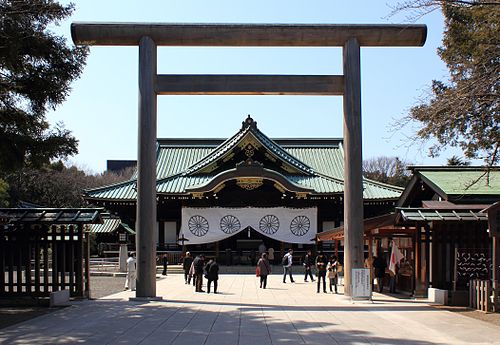
Yasukuni Shrine and Yūshūkan Museum
靖國神社・遊就館
A Shinto shrine in Chiyoda, Tokyo, established in 1869 to enshrine Japan's war dead, and its affiliated military museum Yūshūkan. The shrine enshrines approximately 2,466,532 souls including 14 Class A war criminals.
Yamato Museum (Kure Maritime Museum)
大和ミュージアム(呉市海事歴史科学館)
The Yamato Museum in Kure features a 26.3-meter 1/10 scale model of the battleship Yamato, Zero fighter aircraft, Kaiten human torpedoes, and artifacts from Japan's largest wartime naval shipbuilding center.

Former Japanese Navy Underground Headquarters
旧海軍司令部壕
An underground tunnel complex in Tomigusuku, Okinawa, built in 1944 by approximately 3,000 Navy construction troops as the headquarters of the Imperial Japanese Navy during the Battle of Okinawa. Rear Admiral Minoru Ota commanded roughly 4,000 naval personnel from this 450-meter-long, 20-meter-deep bunker until June 13, 1945, when he and his staff committed suicide as American forces closed in. Over 2,000 remains were discovered when the tunnels were unsealed in the 1950s. Approximately 300 meters of tunnels have been open to the public since 1970 as a peace memorial.

Kanoya Air Base Museum
鹿屋航空基地史料館
The principal Imperial Japanese Navy base for kamikaze sorties during the final months of WWII. Almost half of all naval kamikaze attacks departed from Kanoya between March and August 1945. The site is now a JMSDF air station with a museum housing over 5,500 artifacts.

Maizuru Repatriation Memorial Museum
舞鶴引揚記念館
A memorial museum in Maizuru, Kyoto Prefecture, commemorating the 664,531 Japanese military personnel and civilians repatriated through the Port of Maizuru between 1945 and 1958, primarily from Soviet forced-labor camps in Siberia. In 2015, 570 items from its collection were inscribed on the UNESCO Memory of the World Register.

Naval Air Facility Atsugi
厚木海軍飛行場
A major Imperial Japanese Navy airfield in Kanagawa Prefecture, begun in 1938 and opened in 1943, home to the elite 302nd Naval Air Group that defended Tokyo against B-29 raids. On August 30, 1945, General Douglas MacArthur landed here aboard his C-54 "Bataan," marking the first step of the Allied occupation of Japan.

Kyoto Imperial University — F-Go Nuclear Research Project
京都帝国大学理学部(F号研究)
Site of the F-Go Project (F号研究), the Imperial Japanese Navy's secret nuclear weapons research program conducted at Kyoto Imperial University from 1943 to 1945. Led by physicist Bunsaku Arakatsu, the project pursued uranium-235 separation via ultracentrifuge technology. The team included future Nobel laureate Hideki Yukawa. The project never achieved a working weapon before Japan's surrender.

Kaiten Memorial Museum
回天記念館
Museum on Ozushima island dedicated to the kaiten human torpedo program — the Imperial Japanese Navy's underwater special attack weapon. Located at the site of the first and best-preserved kaiten training base (est. September 1944), the museum houses over 1,000 artifacts including farewell letters, uniforms, and personal belongings of the young pilots who perished. Access requires a ferry from Tokuyama Port.

Ōminato Guard District
大湊警備府
The Imperial Japanese Navy's northernmost guard district, responsible for defending the Tsugaru Strait and patrolling waters around Hokkaidō, Karafuto, and the Kurile Islands. Home port of the IJN 5th Fleet, from which the Aleutian Islands campaign was launched in June 1942. Now the JMSDF Ōminato Base, the keystone of Japan's northern maritime defense.

Mutsu Memorial Museum
陸奥記念館
Museum on Suo-Oshima island in Yamaguchi Prefecture commemorating the battleship Mutsu (陸奥), a Nagato-class dreadnought that mysteriously exploded and sank at the Hashirajima fleet anchorage on June 8, 1943, killing 1,121 of the 1,474 men aboard. The museum displays salvaged artifacts from the wreck including hull sections, personal effects of the crew, ship fittings, and a Shin Meiwa PS-1 flying boat. A memorial service is held every June 8.

Usa Naval Air Base Ruins
宇佐海軍航空基地跡
The best-preserved WWII naval air base ruin complex in Kyushu, with approximately 10 concrete aircraft revetments (entaigo) still standing amid rice paddies. Established in 1939 as a training base for carrier-based attack and dive-bomber crews, it later became a kamikaze staging base whose special attack units sortied in April 1945 — 81 planes and 154 airmen never returned. The devastating April 21, 1945 air raid killed over 320 personnel in just 11 minutes. The Jōi No. 1 Revetment, a city-designated historic site, and the Usa City Peace Memorial Museum now anchor the preservation effort.

Sarushima (Monkey Island) — Tokyo Bay Fortress Battery Ruins
猿島(東京湾要塞跡 猿島砲台跡)
The largest natural island in Tokyo Bay, Sarushima served as Japan's first daiba (battery island) from 1847 and was developed into a full coastal defense fortress between 1881 and 1884. Featuring remarkably preserved Meiji-era brick tunnels built in Flemish bond, ammunition magazines, and gun battery emplacements, the island was armed with anti-aircraft guns during WWII in 1941. After the war, American forces dismantled all functional military equipment. Designated a National Historic Site in 2015, the uninhabited island is now accessible by a 10-minute ferry from Yokosuka and is celebrated for its atmospheric brick-lined passages overgrown with vegetation, often compared to Studio Ghibli's Laputa.

Yamamoto Isoroku Memorial Museum
山本五十六記念館
A memorial museum in Nagaoka, Niigata Prefecture, dedicated to Admiral Isoroku Yamamoto (1884–1943), Commander-in-Chief of the Imperial Japanese Navy Combined Fleet and architect of the attack on Pearl Harbor. Born in Nagaoka as Isoroku Takano into a samurai family of Confucian scholars, Yamamoto rose to become Japan's most prominent naval strategist. The museum, operated by the NPO Yamamoto Gensui Keigyo-kai, displays personal effects, wartime correspondence, his subscriptions to National Geographic, and the recovered left wing of the Mitsubishi G4M "Betty" bomber in which he was killed over Bougainville on April 18, 1943 during Operation Vengeance. Nagaoka itself was devastated by a massive firebombing raid on August 1, 1945, when 125 B-29 Superfortresses dropped 925 tons of incendiary bombs, killing 1,488 people by Nagaoka City's count and destroying over 65% of the urban area.

Tomogashima (Yura Fortress Battery Ruins)
友ヶ島(由良要塞 砲台群跡)
A group of four uninhabited islands in the Kitan Strait between Wakayama and Awaji Island, fortified from 1890 as part of the Yura Fortress system to defend the western entrance to Osaka Bay. The Imperial Japanese Army built five artillery batteries with modern guns on the main island of Okinoshima over a 16-year period. Designated a restricted military zone and erased from maps during WWII, the fortress was never used in combat as war shifted to aerial warfare. Abandoned after 1945, the overgrown brick-and-stone battery ruins — especially the iconic Third Battery — have earned Tomogashima the nickname "Japan's Castle in the Sky" (Laputa). Now part of the Setonaikai National Park.

Japan Steel Works Muroran Plant
日本製鋼所室蘭製作所
Founded in 1907 with British capital from Vickers and Armstrong Whitworth, the Japan Steel Works Muroran Plant was Imperial Japan's premier heavy ordnance factory. It manufactured large-calibre gun barrels, including the 41 cm main guns of the battleship Mutsu; the often-repeated claim that it made the 46 cm guns of Yamato and Musashi is mistaken, as those were built at Kure Naval Arsenal. On July 15, 1945, a US Navy task unit of three Iowa-class battleships bombarded the plant with 860 sixteen-inch shells, killing over 400 people in Muroran.

Ofuna POW Camp Site
大船捕虜収容所跡
A secret Imperial Japanese Navy interrogation center established in April 1942 near Kamakura, Kanagawa Prefecture, where high-value Allied prisoners of war — including downed aviators and submarine commanders — were held and interrogated outside the protections of the Geneva Convention. The camp was never reported to the International Red Cross and was known among inmates as the "Torture Farm." Notable prisoners included Louis Zamperini, Gregory "Pappy" Boyington, and Richard O'Kane. An estimated 500 to 1,000 prisoners passed through the facility before its liberation on 21 August 1945.

Memorial Ship Mikasa
記念艦三笠
The last surviving pre-dreadnought battleship in the world, preserved as a museum ship in Mikasa Park, Yokosuka. Built by Vickers in Britain and commissioned in 1902, Mikasa served as Admiral Togo Heihachiro's flagship during the decisive Battle of Tsushima (1905) in the Russo-Japanese War. Designated one of the "World's Three Great Memorial Warships" alongside HMS Victory and USS Constitution, Mikasa was enshrined in concrete in 1926 as a national memorial. During the 1930s–1940s the ship served as a potent symbol of Imperial Navy spirit and was central to Navy Day (May 27) commemorations that fueled wartime morale and militarist propaganda. After 1945 she was stripped of her superstructure and guns and for a time housed a cabaret and an aquarium; she was restored in 1961 with the support of Fleet Admiral Chester Nimitz and the Japanese public.

Ohka Park (Konoike Air Base Ruins)
桜花公園(神之池基地跡)
Memorial park on the site of the former Konoike Naval Air Base in Kashima, Ibaraki Prefecture — the primary training facility for the Yokosuka MXY-7 Ohka, the only rocket-propelled manned suicide weapon ever used in combat. A full-scale Ohka Model 11 replica is displayed inside the sole surviving aircraft revetment (entaigo). The park commemorates the 721st Naval Air Group "Jinrai Butai" (Thunder Gods Corps), which trained here from November 1944, and the 722nd Naval Air Group "Tatsumaki Butai" (Tornado Corps), the Ohka training unit formed in February 1945.

Hario Radio Transmission Station
旧佐世保無線電信所(針尾送信所)
Three massive reinforced concrete radio towers about 136 meters tall built in 1922 by the Imperial Japanese Navy for long-wave fleet communications. The station is famously — though inconclusively — linked to the transmission of the coded order "Niitakayama Nobore 1208" that launched the Pearl Harbor attack on December 2, 1941. Designated a National Important Cultural Property in 2013 and a Japan Heritage site in 2016.

Shimonoseki Fortress (Hinoyama Battery)
下関要塞跡(火の山砲台)
Meiji-era coastal fortress complex guarding the strategic Kanmon Strait between Honshu and Kyushu. The Hinoyama Battery, perched atop 268-meter Mount Hinoyama, was armed with 28cm howitzers and 24cm cannons to prevent enemy fleets from entering the Seto Inland Sea. During WWII, the fortress was upgraded with anti-aircraft defenses to protect the vital Kokura industrial zone, and the Kanmon Strait became the primary target of the devastating American B-29 Operation Starvation mine-laying campaign in 1945. Designated a JSCE Civil Engineering Heritage site.

Izumi Naval Air Base Ruins
出水海軍航空基地跡
Former Imperial Japanese Navy air base in Izumi City, Kagoshima Prefecture, which served as a major kamikaze staging base in the final months of WWII. The site preserves well-maintained aircraft revetments (entaigō), an underground command bunker, and a guard tower with visible bullet damage. Over 200 special attack pilots departed from Izumi between March and April 1945.

Hiyoshidai Underground Bunker (Keio University)
日吉台地下壕
A vast underground tunnel complex beneath Keio University's Hiyoshi Campus in Yokohama, constructed from July 1944 as the wartime headquarters of the Imperial Japanese Navy Combined Fleet. Usually described as about 2.6 kilometers long (more than 5 kilometers by Keio University's count of all the bunkers) and 30 meters underground, the bunker housed the Combined Fleet Headquarters, Naval General Staff Section 3, the Aeronautical Headquarters, and the Personnel Bureau. From September 1944 until Japan's surrender in August 1945, Admiral Soemu Toyoda, later succeeded by Vice Admiral Jisaburō Ozawa, and the fleet staff directed the battles of Leyte Gulf, Iwo Jima, and Okinawa from these tunnels. Guided tours are offered periodically by the Association for the Preservation of the Hiyoshidai Tunnels.

Kushira Naval Air Base Ruins (Kushira Peace Park)
串良海軍航空基地跡(串良平和公園)
Ruins of one of Japan's major kamikaze sortie bases, now Kushira Peace Park. The former 1,300 m east-west and 1,200 m north-south runways are lined with cherry trees, and a memorial tower honors the 363 special attack aviators and more than 200 conventional attack aviators who perished. An underground telegraph command room used to receive final transmissions from departing pilots is preserved on site.

Former Navy Owada Communications Unit
旧海軍大和田通信隊(大和田通信所)
The Imperial Japanese Navy's primary signals intelligence and radio interception facility, established in 1936 on the Musashino Plateau straddling Niiza (Saitama) and Kiyose (Tokyo). The Owada Communications Unit intercepted the "Tora Tora Tora" message confirming the Pearl Harbor attack on December 8, 1941, tracked B-29 bomber communications from Tinian and Saipan, noted the aircraft that dropped the atomic bombs on Hiroshima and Nagasaki as unusual planes operating from Tinian, and received the Potsdam Declaration broadcast — symbolically bookending Japan's Pacific War from first strike to final surrender. After 1945 the site was requisitioned by U.S. forces and remains an active American communications facility (USAF Owada Communication Site, FAC 3056) to this day.

Tsushima Fortress
対馬要塞
Massive coastal fortress complex spanning the entire Tsushima Island in the Korea Strait, constructed from 1887 to defend against Russian naval threats. Comprising 31 battery positions armed with weapons ranging from 12cm cannons to the world-class 40cm guns of the Toyo Battery, it formed the frontline of Japan's strait-blocking defense network alongside Iki Fortress and Shimonoseki Fortress. Active through the Russo-Japanese War and WWII, most batteries were dismantled by American forces post-war, with impressive ruins remaining across the island.

Shinyo Special Attack Base Ruins (18th Shinyo Squadron, Nominoura)
震洋特攻基地跡(第18震洋隊・呑之浦)
Ruins of the 18th Shinyo Special Attack Squadron base at Nominoura inlet on Kakeromajima Island, part of the Amami archipelago in the Nansei Islands. Established in November 1944, the base housed 52 explosive motorboats and 186 personnel under the command of Toshio Shimao, who later became one of Japan's most celebrated postwar novelists. Twelve concrete storage tunnels carved into the hillside survive, one containing a full-scale Shinyo replica. The squadron received sortie orders on August 13, 1945, but the war ended before the attack could be launched.

Sagami Naval Arsenal Ruins
相模海軍工廠跡
Ruins of the Imperial Japanese Navy's dedicated chemical weapons and pyrotechnics arsenal, established in May 1943 in Samukawa Town, Kanagawa Prefecture. The facility was promoted from the Chemical Research Division of the Naval Technical Research Institute (Hiratsuka) to enable mass production of mustard gas (yperite) bombs, gas masks, and incendiary ordnance. At peak capacity over 3,500 workers — including conscripted laborers, Women's Volunteer Corps members, and mobilized students — operated within the 700,000 m² compound. In 2002, buried mustard gas bottles were discovered at the former site during expressway construction, injuring 11 workers and confirming the enduring contamination legacy.

Miyakonojo Airfield Ruins (East & West)
都城飛行場跡(都城東・西飛行場)
Site of two Imperial Japanese Army airfields in southern Kyushu from which 79 Shinbu (Army special attack) pilots flew Ki-84 Hayate fighters on 17 kamikaze sorties against the U.S. fleet off Okinawa between April 6 and July 1, 1945. The West Airfield (built 1934, expanded to 1,200 m runway by 1945) launched the first mission on April 6; after devastating air raids on April 27–28 destroyed it, operations shifted to the East Airfield (built 1944 on converted rice paddies by the Navy, later transferred to Army use). Today, stone monuments at both former airfield sites and the Hayate Shinbu Special Attack Corps Memorial in Toshima Park (former Army cemetery) preserve the memory of the young pilots, most aged 18–23, who never returned.

Former Komatsu Naval Air Base Revetment
旧海軍小松航空基地 掩体壕
A WWII-era reinforced concrete aircraft revetment (entaigo) surviving within the grounds of JASDF Komatsu Air Base in Ishikawa Prefecture. Built around 1944 by the Imperial Japanese Navy Maizuru Naval District to shelter Zero fighters and Saiun reconnaissance aircraft, this covered shelter is one of very few remnants of the Komatsu Naval Air Station — a late-war dispersal base on the Sea of Japan coast. Originally the base had 35 medium covered shelters, 40 medium open shelters, 31 small covered shelters, and 15 small concealed positions; today only a handful survive. The JASDF has preserved this revetment as a heritage monument, housing a camouflage-painted T-6G trainer inside to honor wartime aviators.

Tokushima Naval Air Group Ruins
徳島海軍航空隊跡
Former Imperial Japanese Navy air training base in Matsushige, Tokushima Prefecture, where the Shiragiku Special Attack Unit was formed in 1945. Trainee pilots flew obsolete Kyushu K11W Shiragiku trainer aircraft on one-way kamikaze missions against Allied ships off Okinawa. Of the 108 men who perished, 56 were killed in special attack sorties launched from Kushira Air Base between May and June 1945. The site is now shared by Tokushima Airport and JMSDF Tokushima Air Base, which houses a small memorial museum with a Kannon statue honoring the fallen.

Taisha Naval Air Base Ruins
大社海軍航空基地跡
Former Imperial Japanese Navy air base in Hikawa-chō, Izumo City, Shimane Prefecture, constructed March–June 1945 and described as the largest military base in western Japan at the time. The base housed the 762nd Naval Air Group with Ginga (P1Y) bombers and stored 50 unassembled Ohka suicide weapons. Surviving structures include portions of a 1,700m concrete runway — one of Japan's largest war relics — plus aircraft revetments and tunnel storage facilities in the surrounding hillsides.

Miho Naval Air Base
美保海軍航空基地
Miho Naval Air Base was an Imperial Japanese Navy airfield constructed from 1939 on the Yumigahama Peninsula in Sakaiminato, Tottori Prefecture, under the jurisdiction of the Maizuru Naval District. Commissioned in October 1943 as the Miho Naval Air Group (美保海軍航空隊), it served primarily as a preliminary flight training base for naval aviation cadets, processing up to 1,200 trainees from the Yokaren (予科練) Kō-class 13th intake. A second unit, the 2nd Miho Naval Air Group, was established in January 1944 for elementary flight training. The base was attacked once by USAAF B-24 Liberator bombers in July 1945. After Japan's surrender, it was occupied by the British Commonwealth Occupation Force (BCOF), with RAAF No. 77 Squadron stationed there until 1950, followed by USAF units during the Korean War. Returned to Japanese control in 1957–58, it became JASDF Miho Air Base, currently the only transport aviation base in western Japan, operating C-2 and KC-46A aircraft.

Yanagimoto Airfield (Yamato Naval Air Group Yamato Base)
柳本飛行場(大和海軍航空隊大和基地)
A hastily constructed Imperial Japanese Navy airfield in Nara Prefecture, built 1943–1945 as the Yamato Naval Air Group's Yamato Base. Intended as a major homeland defense installation with four runways, only one 1,500-meter runway was completed before the war ended. The base housed the Yamato Naval Air Group's training aircraft and, from July 1945, a fighter unit and the Kinki Naval Air Corps headquarters, and was reportedly earmarked for the Third Air Fleet command for the anticipated defense against Allied landings on the Kii Peninsula. Two concrete air raid shelters survive as preserved war ruins.

Ourazaki P-Base (Midget Submarine Base)
大浦崎特殊潜航艇基地(P基地)
Secret wartime base on Kurahashi Island near Kure where the Imperial Japanese Navy manufactured Ko-hyoteki (Type A) midget submarines and trained approximately 2,600 crew members. The Kure Naval Arsenal branch factory here commenced operations in March 1943, producing the same class of two-man submarines deployed in the Pearl Harbor attack of December 1941. Today the site is Ourazaki Park, with concrete ruins, brick structures, air raid shelters, and gun emplacements still visible.

Former Hiro Naval Air Arsenal (11th Naval Air Arsenal)
旧海軍航空廠 広工廠跡(第11海軍航空廠)
The Hiro Naval Arsenal, established in 1921 as a branch of the Kure Naval Arsenal in Hiro Village (now Kure City), Hiroshima Prefecture, was Imperial Japan's premier facility for designing and manufacturing flying boats, seaplanes, and aero engines. Elevated to independent status as Hiro Naval Arsenal (広海軍工廠) in 1923, its aircraft division separated in 1941 to form the 11th Naval Air Arsenal (第11海軍航空廠). The facility produced pioneering aircraft including the Hiro H1H Type 15 flying boat, H4H patrol flying boat, and G2H long-range bomber, while later mass-producing the Yokosuka D4Y Suisei (Judy) carrier dive bomber. On May 5, 1945, 148 B-29 Superfortresses dropped 578 tons of bombs from 20,000 feet, devastating the complex and halving production capacity. The site is now occupied by the Oji Materia Kure Paper Mill, with scattered wartime remnants including tunnel shelters and gate pillar ruins along the coast.

Iwakuni Naval Air Base
岩国海軍航空隊
An Imperial Japanese Navy air station established in 1938 in Yamaguchi Prefecture, commissioned on 8 July 1940. During WWII, Iwakuni served as a major naval aviation training and defense base, housing 96 trainers and 150 Zero fighters. A branch of the Etajima Naval Academy operated here from 1943. Bombed by American B-29s in May and August 1945, the base was occupied by U.S. Marines at war's end and continues today as MCAS Iwakuni.

Hashirajima Anchorage
柱島泊地
The primary anchorage of the Imperial Japanese Navy Combined Fleet throughout the Pacific War, located in southern Hiroshima Bay near Hashira Island (柱島), Iwakuni, Yamaguchi Prefecture. From this vast sheltered anchorage, Admiral Yamamoto Isoroku issued the historic "Niitaka Yama Nobore" (Climb Mount Niitaka) order on 2 December 1941 from the bridge of flagship Nagato, signaling the Kido Butai to proceed with the attack on Pearl Harbor. The anchorage witnessed the catastrophic explosion and sinking of battleship Mutsu on 8 June 1943, killing 1,121 crew. Yamato served as Combined Fleet flagship here from February 1942. As Allied air raids intensified in 1945, the fleet dispersed to coves near Kure.

JMSDF Kure Museum (Iron Whale Museum)
海上自衛隊呉史料館(てつのくじら館)
The JMSDF Kure Museum, nicknamed "Tetsu no Kujira Kan" (Iron Whale Museum), is a free-admission military museum operated by the Japan Maritime Self-Defense Force in Kure, Hiroshima Prefecture. Opened on April 5, 2007, its centerpiece is the decommissioned Yūshio-class diesel-electric submarine Akishio (SS-579), a 76.2-meter, 2,250-ton vessel displayed above ground — the first real submarine to be put on outdoor display in Japan. The museum's three floors cover JMSDF history and its ties to the Kure Naval District, postwar minesweeping operations that cleared thousands of American mines from Japan's waterways, and submarine technology and crew life. Adjacent to the Yamato Museum but a separate facility, it stands on the historic waterfront of Kure, once home to the Imperial Japanese Navy's most important naval arsenal.

Verny Memorial Museum & Verny Park
ヴェルニー記念館・ヴェルニー公園
A 2.6-hectare waterfront park and museum in Yokosuka directly opposite the former Yokosuka Naval Arsenal (now U.S. Fleet Activities Yokosuka), honoring François Léonce Verny, the French naval engineer who directed construction of the arsenal from 1865 to 1876. The museum displays Japan's oldest surviving steam hammers (designated Important Cultural Properties), made in the Netherlands in 1865 for the Yokosuka Iron Works. The park features bronze busts of Verny and Oguri Tadamasa, French-style rose gardens with 1,400 plants of 130 varieties, a seaside boardwalk with panoramic views of the naval base and JMSDF facilities, and memorial monuments to the warships Nagato, Yamashiro and Okinoshima.

Maizuru Red Brick Park (Maizuru Red Brick Warehouses)
舞鶴赤れんがパーク(舞鶴赤レンガ倉庫群)
A complex of twelve red brick warehouses built between 1901 and 1921 for the Imperial Japanese Navy's Maizuru Naval District (Maizuru Chinjufu), used as munitions depots, torpedo stores, and arsenal warehouses. Eight of the twelve buildings were designated National Important Cultural Properties in 2008. Five warehouses were renovated and reopened in 2012 as Maizuru Red Brick Park, a tourism and cultural facility. The site is part of the Japan Heritage "Four Cities of Former Naval Ports" designation (2016), distinct from the nearby Maizuru Repatriation Memorial Museum which focuses on postwar repatriation rather than naval infrastructure.

JMSDF Sasebo Museum "Sail Tower" (Former Sasebo Naval Arsenal Site)
海上自衛隊佐世保史料館(セイルタワー)
The JMSDF Sasebo Museum, nicknamed "Sail Tower" for its sail-shaped rooftop, is a seven-story naval history museum located in Sasebo, Nagasaki Prefecture. Its lower two floors incorporate the restored 1898 Sasebo Suikosha (Naval Officers' Club), making it both a functioning museum and a preserved Meiji-era naval heritage structure. The museum houses approximately 4,400 artifacts spanning from the establishment of Sasebo Naval District (1889) through the Imperial Japanese Navy era — including the Sasebo Naval Arsenal's peak wartime operations employing 50,000 workers — to the modern Japan Maritime Self-Defense Force. Opened on March 10, 1997, it stands on the grounds of the former Sasebo Chinjufu (Naval Station), which was one of four principal naval districts that defended the Japanese home islands.

IJN Submarine School (Sonar Training Hall Monument)
海軍潜水学校(探知講堂跡)
Site of the Imperial Japanese Navy Submarine School, which trained all IJN submarine crews from 1920 until 1945. Originally established in Kure, the school relocated to Otake in 1942. The sole surviving remnant is the Sonar Training Hall (探知講堂) monument — a section of the concrete wall from a unique over-water facility where submariners trained to identify enemy vessels by propeller sound. The monument stands in the Toei District Waterfront Green Park in Otake.

Kawatana Naval Arsenal Ruins & Katashima Torpedo Testing Range
川棚海軍工廠跡・片島魚雷発射試験場
The Katashima Torpedo Testing Range was established in 1918 on a peninsula jutting into Omura Bay as a branch facility of the Sasebo Naval Arsenal. It served as the Imperial Japanese Navy's dedicated torpedo launch testing and final inspection site for nearly three decades, handling torpedoes manufactured at the Sasebo Naval Arsenal, Kawatana Naval Arsenal, and Mitsubishi Nagasaki Ordnance Works. Six types of torpedoes were tested here, including the Type 91 aerial torpedo used at Pearl Harbor and the revolutionary Type 93 oxygen-propelled "Long Lance" torpedo. The facility includes a rare artificial island firing platform built approximately 50 meters offshore, an observation post atop the peninsula hill, and machine rooms for torpedo fueling and adjustment. Registered as a national tangible cultural property in 2024, the atmospheric ruins remain freely accessible amid reclaimed forest.

Tateyama Naval Air Group Ruins (Akayama Underground Tunnels)
館山海軍航空隊跡(赤山地下壕跡)
Site of the Imperial Japanese Navy's Tateyama Naval Air Group, established in 1930 at the southern tip of the Boso Peninsula to guard the entrance to Tokyo Bay. The Akayama Underground Tunnels — a massive 1.6 km subterranean complex excavated during the final years of the war — served as a command center, hospital, power station, and aircraft workshop. Designated a Tateyama City historic site, a 250-meter section of the tunnels is open to the public.

Omura Naval Air Group (Omura Air Base)
大村海軍航空隊(大村航空基地)
Established in December 1922, the Omura Naval Air Group was one of the Imperial Japanese Navy's principal training bases in western Japan. The adjacent 21st Naval Air Arsenal — a major naval aircraft production and repair facility opened in 1941 — made Omura a prime B-29 target during Operation Matterhorn in 1944. The site continues as JMSDF Omura Air Base, home to Fleet Air Wing 22.

Oppama Naval Air Technical Arsenal
追浜海軍航空技術廠
The Imperial Japanese Navy's premier aviation research and testing facility at Oppama, Yokosuka, where nearly every naval aircraft — including the legendary A6M Zero — underwent prototype evaluation and test flights. Established in 1912 as a naval aviation research committee and expanded into the Naval Air Technical Arsenal (Kaigun Koku Gijutsu Sho) by 1939, the site was the birthplace of Japanese naval aviation technology. Today the grounds are occupied by the Nissan Motor Oppama Plant.

Misawa Naval Air Base
三沢海軍航空基地
Imperial Japanese Navy air base in northern Honshu, constructed from 1938 and operational by February 1942. According to U.S. Air Force histories of the base, nearby Lake Ogawara served before the Pacific War as a torpedo-bombing practice site for the Pearl Harbor attack because of its similar shallow depth. The base housed the Misawa Naval Air Group (三沢海軍航空隊), which deployed to the South Pacific as a core element of the Rabaul air forces. In 1944 the base was expanded with kamikaze Special Attack facilities. American air attacks destroyed about 90% of the base in 1945. Today it operates as a joint US Air Force / Japan Air Self-Defense Force installation, with the adjacent Misawa Aviation & Science Museum (青森県立三沢航空科学館) preserving the region's aviation heritage.

Yosami Radio Transmitting Station
依佐美送信所
One of the world's largest VLF (Very Low Frequency) radio transmitting stations, built in 1929 in Kariya, Aichi Prefecture with eight 250-meter steel towers and German-made Telefunken high-frequency generators. The station established Japan's first wireless communications with Europe and was employed by the Imperial Japanese Navy during WWII for submarine communications. It is believed to have relayed the coded Pearl Harbor attack order "Niitakayama Nobore 1208" via VLF on December 2, 1941. After the war, the station was requisitioned by the US Navy and operated until 1993. The towers were demolished in 1997 and station buildings in 2006. The site is now Floral Garden Yosami, with a memorial museum preserving the original transmitting equipment. Recognized as an IEEE Milestone in 2009.

Naval Technical Research Institute
海軍技術研究所
The Imperial Japanese Navy's foremost scientific and engineering research establishment, headquartered in Meguro, Tokyo from 1930 to 1945. Founded in 1923 by merging the Naval Ordnance Arsenal Research Department, Naval Ship Type Test Institute, and Naval Aircraft Test Institute, the institute conducted advanced research across chemistry, physics, electrical engineering, shipbuilding, and aviation. Its massive hydrodynamic test tanks were used to refine the hull design of the battleship Yamato. The Electrical Research Division was the center of Japan's naval radar (電探, dentan) development, where engineers including Commander Yoji Ito developed cavity magnetrons and the Type 22 shipborne search radar. The site now serves as the Ministry of Defense Meguro District, housing the Acquisition, Technology & Logistics Agency (ATLA) Ship Equipment Research Institute and JSDF staff colleges.

2nd Naval Gunpowder Arsenal Ruins
第二海軍火薬廠跡
Ruins of the Imperial Japanese Navy's principal gunpowder, propellant, and explosives manufacturing arsenal in Hiratsuka, Kanagawa Prefecture. Originally established in 1905 as a British-capital venture (Nihon Kayaku Seizō K.K.) by Armstrong, Nobel and a third British firm (given as Chilworth or as Vickers, depending on the source) to produce British MD cordite for the IJN, the factory was purchased outright by the Navy in 1919 and designated the Naval Gunpowder Arsenal (海軍火薬廠). In 1941 it was reorganized as the 2nd Naval Gunpowder Arsenal (第二海軍火薬廠) as part of a three-arsenal system — with the 1st at Funaoka (Miyagi) and the 3rd at Maizuru (Kyoto). Covering approximately 380,000 tsubo (1.26 million m²), its seven plants produced smokeless powder for guns and rockets, nitrocellulose, nitroglycerin, machine-gun propellant and the acids needed to make them. The facility was devastated during the Hiratsuka air raid of 16–17 July 1945 by 138 B-29 bombers dropping about 1,173 tons of incendiary bombs. After Japan's surrender, the site was occupied by Allied forces until 1950, then transferred primarily to Yokohama Rubber Company, which still operates its Hiratsuka Manufacturing Plant on the grounds. The surviving Western-style building of about 1912 — built by the Anglo-Japanese powder company and later used as the naval officers' club — was donated to Hiratsuka City and relocated to Hachimanyama Park in 2009 as the registered tangible cultural property "八幡山の洋館" (Hachimanyama no Yōkan).

Former Navy Ministry
海軍省
The Ministry of the Navy (海軍省, Kaigun-shō) was a cabinet-level ministry of the Empire of Japan responsible for the administrative affairs of the Imperial Japanese Navy from 1872 to 1945. Located in a distinctive red-brick building designed by Josiah Conder in Kasumigaseki, Chiyoda Ward, it served as the administrative nerve center of the IJN throughout WWII, complementing the Army Ministry (陸軍省) at Ichigaya. The building was demolished postwar and replaced by Central Government Building No. 1, which now houses the Ministry of Agriculture, Forestry and Fisheries (農林水産省).

Hyakuri Naval Air Base (Hyakuri Air Base & Yuhien Park)
百里原海軍航空隊(百里基地・雄飛園)
Imperial Japanese Navy air training base established in 1938 in Ibaraki Prefecture. Hyakurihara Naval Air Group began as a primary flight-training unit, added carrier attack and dive bomber training from late 1943, and in the war's final months formed special attack (kamikaze) units that flew sorties during the Battle of Okinawa. Now home to JASDF Hyakuri Air Base — the closest fighter base to Tokyo — with the Yuhien outdoor memorial park displaying retired military aircraft and monuments to the fallen.

Kure Naval Cemetery (Nagasako Park)
旧呉海軍墓地(長迫公園)
A former Imperial Japanese Navy cemetery, established in 1890 in Kure, Hiroshima Prefecture. Now preserved as Nagasako Park, it contains 157 individual graves and 80 cenotaphs honoring crew members of warships including battleship Yamato. The 2.9-hectare site also holds pre-war gravestones of foreign sailors and serves as the annual venue for a joint memorial service for the naval war dead.

Tsuiki Naval Air Base
築城海軍航空基地
Imperial Japanese Navy air base in northeast Kyushu, completed in 1942 as a carrier fighter pilot training facility. The Tsuiki Naval Air Group trained Zero fighter pilots and later staged kamikaze sorties — on March 18, 1945, six Ginga bombers departed on a special attack mission against the US task force southeast of Kyushu, with five aircraft and 15 crewmen lost. On August 9, 1945, ten fighters scrambled from Tsuiki in a failed attempt to intercept the B-29 carrying the Nagasaki atomic bomb. Reinforced concrete aircraft shelters (entaigo) survive in nearby Inadou, Yukuhashi City, with the Inadou No. 1 Revetment designated a Fukuoka Prefecture historic site in 2023. The base is now JASDF Tsuiki Air Base, home of the 8th Air Wing.

Irifuneyama Memorial Museum (Former Kure Naval District Commander's Residence)
入船山記念館(旧呉鎮守府司令長官官舎)
The Irifuneyama Memorial Museum preserves the former official residence of the Commander-in-Chief of the Kure Naval District (呉鎮守府), one of the Imperial Japanese Navy's four major naval districts. The main building, a distinctive blend of Western half-timbered and Japanese architectural styles designed by Sakurai Kotaro and reconstructed in 1905 after the 1905 Geiyo Earthquake destroyed the original 1889 structure, was designated a National Important Cultural Property in 1998. The Western-style wing features English half-timber exteriors, natural slate fish-scale roofing, imported British stained glass, and walls lined with rare kinkarakami (金唐紙) gold-embossed leather-style wallpaper — one of very few surviving examples in Japan. The museum complex in Irifuneyama Park also includes a relocated cottage where Admiral Togo Heihachiro resided during his tenure as Chief of Staff of the Kure Naval District (1890-1891), a clock tower from the former Kure Naval Arsenal, and a Meiji-era powder magazine. Thirty-two successive naval commanders occupied this residence from 1889 through 1945, after which it housed Allied occupation forces before being transferred to Kure City in 1966.
Former Naval General Staff Headquarters
軍令部跡
The Naval General Staff (軍令部, Gunreibu) was the highest operational command organ of the Imperial Japanese Navy, separate from the Navy Ministry (海軍省) which handled administration. Directly subordinate to the Emperor, the Naval General Staff was responsible for all naval strategy, war planning, and fleet operations, including the planning of the Pearl Harbor attack in 1941. Located in Kasumigaseki, Chiyoda Ward, adjacent to the Navy Ministry, the original building was demolished postwar. A stone monument erected in 1985 at Central Government Building No. 5 marks the site.

Ozuki Airfield (Shimonoseki Army Airfield)
小月飛行場(下関陸軍飛行場)
A military airfield in Shimonoseki, Yamaguchi Prefecture, built by the Ministry of Communications (1937–1940) and transferred to the Imperial Japanese Army in April 1940. During WWII, the 4th Sentai operated Ki-45 Toryu twin-engine fighters from Ozuki for homeland air defense, engaging B-29 bombers from the June 1944 Yawata raid onward. The 12th Air Division HQ was based here from July 1944. Post-war, the base passed through U.S./NZ occupation, police reserve, JGSDF, and JASDF hands before becoming a JMSDF installation in 1964. Today it serves as the Maritime Self-Defense Force's primary flight school operating Fuji T-5 trainers.

Naval Paymaster School Site (Tsukiji)
海軍経理学校跡
Site of the Imperial Japanese Naval Paymaster School (海軍経理学校, Kaigun Keiri Gakkō), the elite training academy for naval logistics, accounting, and supply officers. Founded in 1874 as the Naval Accounting Academy (海軍会計学舎) and reorganized multiple times, it was officially designated the Naval Paymaster School in 1907. The school relocated to a new campus near the west end of Kachidoki Bridge in Tsukiji 6-chome in 1932, where it operated until Japan's defeat in 1945. One of the "Three Great Naval Schools" (海軍三校) alongside the Naval Academy at Etajima and the Naval Engineering School, it trained thousands of paymaster officers and ratings in supply chain management, military accounting, provisioning, and general administration. Notable alumni include Prime Minister Yasuhiro Nakasone, who completed the short-service reserve officer program here in 1941. The original campus was demolished; a black granite memorial stele stands in a small green space near the southwest approach to Kachidoki Bridge, erected in 1976 by alumni to commemorate the school's 70-year legacy. The site later became part of the Tsukiji fish market complex, itself a successor to the naval facilities that once dominated this waterfront district.

Kashima Naval Air Group Ruins (Oyama Lakeside Park)
鹿島海軍航空隊跡(大山湖畔公園)
One of the best-preserved IJN seaplane training base ruins in Japan, located on the southern shore of Lake Kasumigaura in Miho Village, Ibaraki Prefecture. Established on December 15, 1938, as a practice air group for seaplane pilot training under the Yokosuka Naval District, the base grew to over 1,000 personnel and 100 aircraft by 1941. Surviving structures include the reinforced-concrete headquarters building, 32-meter smokestack boiler house with original 1939 boilers, self-powered generator building, vehicle garage, seaplane catapult foundation, and lakeside slipways designated as Civil Engineering Heritage. Opened to the public as Oyama Lakeside Park in July 2023.

Former Sasebo Naval District Victory Memorial Hall (Sasebo Citizens' Cultural Hall)
旧海軍佐世保鎮守府凱旋記念館
Built in May 1923 with donations from 12 prefectures (Kyushu, Shikoku, and Okinawa) under the Sasebo Naval District's jurisdiction, this reinforced concrete two-story hall commemorated the achievements of the Second Special Squadron (第二特務艦隊) during World War I. The squadron, centered on Sasebo-based warships, earned the title "Guardian of the Mediterranean" for its 358 sorties escorting Allied vessels and rescuing over 4,000 personnel from U-boat attacks. The building served as a venue for naval ceremonies throughout the interwar and WWII periods. After the war it was requisitioned by U.S. forces, returned in 1977, and transferred to Sasebo City in 1982 as a civic cultural hall. Registered as a National Tangible Cultural Property in 1997, it was designated a component of the Japan Heritage site "Naval Stations: Yokosuka, Kure, Sasebo, Maizuru" in 2016.

Aichi Aircraft Eitoku Plant
愛知航空機永徳工場
The principal airframe assembly plant of Aichi Aircraft Company (愛知航空機), located in Minato-ku, Nagoya on the Shonai River estuary. Operational from 1941, the Eitoku Plant mass-produced Imperial Japanese Navy aircraft including the D4Y Suisei (Judy) carrier dive bomber, E16A Zuiun (Paul) reconnaissance seaplane, and the top-secret M6A Seiran submarine-launched attack floatplane — built in a secluded corner building akin to Lockheed's Skunk Works. The plant grew to approximately 95 buildings covering 197 acres with a workforce peaking at over 26,000. The plant was bombed by B-29s on June 26, 1945 and suffered its heaviest damage in a second raid on July 24, 1945. Today, the concrete seaplane slipway (滑走台) — a 35m-wide ramp extending into the Fujimae tidal flats — survives as the most tangible war relic of this once-vital naval aircraft production complex.

Aichi Aircraft Funakata Plant (Atsuta Air Raid Site)
愛知航空機船方工場(熱田空襲跡)
The original airframe factory of Aichi Tokei Denki / Aichi Aircraft in Atsuta-ku, Nagoya. On June 9, 1945, B-29s obliterated the Funakata factory complex in approximately 10 minutes, killing 2,068 workers including mobilized students. A memorial Jizo statue and bombed canal embankment survive at the former factory gate as solemn reminders of one of the deadliest single industrial air raids of the Pacific War.

Maizuru Naval District Headquarters (JMSDF Maizuru District HQ)
舞鶴鎮守府跡(舞鶴地方総監部)
One of the Imperial Japanese Navy's four major naval districts (鎮守府), established on 1 October 1901 at Maizuru Bay on the Sea of Japan coast. The first commander was Vice Admiral Tōgō Heihachirō, later the hero of Tsushima. Responsible for the Sea of Japan coast of Honshū (as of 1940, from Yamagata to Shimane Prefecture), the district was downgraded to a fortified port (要港部) in 1923 under the Washington Naval Treaty, restored to full naval district status in 1939, and served as a critical logistics, training, and coastal defense hub throughout the Pacific War. Now the headquarters of JMSDF Maizuru District (海上自衛隊舞鶴地方総監部), with several Meiji-era buildings preserved as Japan Heritage sites.

Former Kure Naval District Headquarters (JMSDF Kure Regional Command)
呉鎮守府跡(海上自衛隊呉地方総監部)
The Kure Naval District (呉鎮守府, Kure Chinjufu), established on July 1, 1889, was the second of the Imperial Japanese Navy's four major naval districts (alongside Yokosuka, Sasebo, and Maizuru). Its jurisdiction encompassed the Seto Inland Sea and the Pacific coasts from Wakayama to Yamaguchi, eastern/northern Kyushu, and all of Shikoku — the strategic heart of Japan's maritime defense. The current headquarters building (第一庁舎), completed in 1907 (Meiji 40), is a two-story brick-and-granite Western-style structure with a central dome, replacing the original 1889 building that was damaged in the 1905 Geiyo Earthquake. During WWII, the district administered the Kure Naval Arsenal (Japan's largest shipyard, builder of battleship Yamato), submarine bases, torpedo factories, naval hospitals, and training centers. In the war's final months, devastating American air raids on July 1-2 and July 24-28, 1945, destroyed much of the base and city, burning the headquarters building to its brick shell. Reconstructed postwar, the building has served as the JMSDF Kure Regional Command (呉地方総監部) headquarters since the mid-1950s, making it one of Japan's longest continuously used naval administrative facilities. Designated as part of Japan Heritage Story #035 "Guardports" (鎮守府), the complex includes historic red-brick warehouses (built c.1900) and underground air-raid shelter tunnels.

Gangshan Naval Air Base (Aviation Education Exhibition Hall)
岡山海軍航空基地(空軍航空教育展示館)
Former Imperial Japanese Navy air base and site of the 61st Naval Air Arsenal (Dai-61 Kaigun Kōkūshō) in Gangshan, Kaohsiung. Established in 1941, the arsenal employed over 10,000 workers repairing and manufacturing aircraft, making it one of the largest Japanese naval aviation facilities in colonial Taiwan. Devastated by American B-29 bombing in mid-October 1944, among the heaviest air raids on Taiwan during the war. Now home to the ROCAF Aviation Education Exhibition Hall, displaying over 40 military aircraft.

Zuoying Naval Base (Former 6th Naval Fuel Arsenal)
左営軍港・第六海軍燃料廠
The Imperial Japanese Navy's largest base in Taiwan, established at Zuoying (Toshien/左營) in southern Takao (Kaohsiung). Headquarters of the Takao Guard District from April 1943, the complex included the 6th Naval Fuel Arsenal (第六海軍燃料廠), which was established on 1 April 1944 to produce aviation fuel and other petroleum products. Bombed by US aircraft from October 1944 onward. Now the Republic of China Navy's largest naval base and home to the ROC Fleet Command.

Makō Guard District
馬公要港部
The Imperial Japanese Navy's principal base in the Pescadores (Penghu) Islands and the core of Taiwan Strait defense. Established in 1901, it served as a staging point for southward advance operations, supporting fleet actions across the South China Sea and Southeast Asia. Now the Republic of China Navy's Magong Base.

Keelung Port (Kiirun Naval Port)
基隆港
The largest port in northern Taiwan and a major Imperial Japanese Navy base during World War II. Originally developed as a commercial gateway between Taiwan and Japan, Keelung Port also served as a naval base, repair facility, and military shipping hub for operations toward China, the Philippines, and Palau. It was subjected to devastating US Army Air Force bombing raids in 1944–1945, culminating in the catastrophic June 1945 Keelung Air Raid.

Penghu Xiyu Battery Group (Xiyu East Fort & West Fort)
澎湖西嶼砲台群(西嶼東臺・西台古堡)
Paired Qing Dynasty coastal batteries on Xiyu (Fisherman Island) in the Penghu Archipelago, guarding the Taiwan Strait. Xiyu West Fort (西台古堡, completed 1889) is the largest and best-preserved historic battery in Penghu at about 8 hectares, with massive tunnel networks concealed within basalt cliffs and four Armstrong breech-loading cannons. Xiyu East Fort (西嶼東臺, completed 1889) is a smaller, roughly rectangular work of about 1.3 hectares with three gun emplacements. Both were built under Governor Liu Mingchuan after the Sino-French War of 1885, reinforced during Japanese colonial rule from 1896 as part of the Penghu Island Fortress (澎湖島要塞) system, and served through the Pacific War. Designated National Historic Monuments (國定古蹟).

Cihou Fort & Xiongzhen North Gate
旗后砲台・雄鎮北門
Twin Qing-dynasty coastal defense fortifications guarding the entrance to Kaohsiung Harbor, built in 1875 after the Mudan Incident under the direction of Imperial Commissioner Shen Baozhen. Cihou Fort (威震天南) commanded the high ground on Qihou Mountain while Xiongzhen North Gate (雄鎮北門) covered the low approach at Shaochuantou. During the Japanese colonial period, the original Armstrong cannons were removed; in WWII the Japanese military converted the fort into an anti-aircraft battery position and added concrete bunkers. Cihou Fort is a national monument of Taiwan (since 2019) and Xiongzhen North Gate a Kaohsiung municipal monument.

Keelung Fortress (Baimiweng Fort and Battery Complex)
基隆要塞(白米甕砲台)
The Keelung Fortress was the principal coastal defense system protecting northern Taiwan, centered on the strategic port of Keelung (Kiirun). Originally established during the Qing Dynasty with batteries guarding the harbor approaches, the fortress complex was substantially expanded and modernized by the Imperial Japanese Army from 1899 under the "Keelung Fortress Defense (Permanent) Essentials" plan. The most prominent surviving installation is the Baimiweng Fort (白米甕砲台), completed in 1902 with four 203.5mm Armstrong cannons at 70 meters elevation, representing the apex of Japanese colonial coastal artillery design in Taiwan. The fortress system included batteries at Dawulun, Gangziliao, Sheliao East, Ershawan, and Shiqiuling, collectively forming a ring of fire around Keelung Harbor. During WWII, the fortress defended against Allied air and naval operations targeting Keelung port. Today the batteries are designated as municipal monuments and national historic sites.

Port of Kaohsiung (Former Takao Harbor)
高雄港(旧打狗港)
Taiwan's largest commercial port and Japan's critical southern resource relay hub during World War II. Originally a shallow lagoon known as Takao (打狗), the port underwent three phases of Japanese colonial harbor construction (1908–1944) that transformed it into a deep-water industrial port. Under the wartime southern advance policy (南進政策), Kaohsiung served as the primary transshipment node for Southeast Asian raw materials — oil, rubber, bauxite, and tin — routed to Japan's home islands. Adjacent zaibatsu factories processed bauxite into aluminum for aircraft production. Complementing the nearby Zuoying Naval Base (左營軍港/高雄警備府), the port itself handled military logistics, troop transport, and supply staging for operations toward the Philippines and Southeast Asia. From October 1944, US carrier and land-based aircraft devastated the harbor in repeated raids; the Japanese Navy ultimately scuttled five large vessels to block the harbor entrance against anticipated American landings. The Enoura Maru POW transport was bombed in the harbor on 9 January 1945, killing approximately 300–400 Allied prisoners of war.

Hobe Fort (Huwei Fort / Tamsui Fort)
滬尾砲台(淡水砲台)
A late-Qing coastal defense fort in Tamsui, New Taipei, built in 1886 under Governor Liu Mingchuan after the Sino-French War. Featuring 4.3-metre-thick iron-cement walls, Armstrong and Krupp breechloaders, and the calligraphic gate inscription "北門鎖鑰" (Key to the Northern Gate), the fort never saw combat. After Japan took Taiwan in 1895, the Imperial Japanese Army removed all four cannons and converted the site into an artillery training ground. The fort remained under military control throughout the colonial period, preserving its structure. Designated a National Monument (國定古蹟) in 1985, it is today one of the best-preserved Qing-era forts in Taiwan.

Ershawan Battery (Tenable Gate of the Sea)
二沙湾砲台(海門天険)
A national historic monument in Keelung, Taiwan, originally built in 1840 during the Opium War by Qing official Yao Ying to repel British naval forces. Destroyed during the Sino-French War in 1884, the battery was rebuilt at its current hilltop location by Governor Liu Mingchuan between 1886 and 1889, incorporating German-engineered Armstrong breech-loading guns. Occupied by French forces (who renamed it Fort La Galissonnière) during the Keelung Campaign of 1884–1885, and briefly bombarded by five Japanese warships during the 1895 Battle of Keelung. Under Japanese colonial rule the fort lost its military significance and fell into disrepair. Designated a Class One National Historic Monument in 1983, the site preserves Qing-era stone gates, gun emplacements, ammunition depots, barracks, and wells.

Sheliao Island Battery Group (Heping Island / Peace Island)
社寮島砲台群(和平島)
A multi-layered coastal defense fortification complex on Heping Island (formerly Sheliao Island) at the entrance to Keelung Harbor in northern Taiwan. The site bears traces of four successive colonial powers — Spain (1626), the Dutch (1642), the Qing dynasty (1886–1891), and Imperial Japan (1901–1945). The extant East and West batteries were entirely rebuilt by the Imperial Japanese Army between 1901 and 1903 as part of the Keelung Fortress system in preparation for the Russo-Japanese War. Armed with 27 cm Canet-pattern (加式) guns, the batteries employed a "mountain-embracing" (抱山式) concealment design that hid gun positions from seaward observation. The batteries were registered as historic buildings in 2004 and upgraded to Keelung municipal monuments in 2006.

Kokan Airfield (Ching Chuan Kang Air Base Predecessor)
公館飛行場(清泉崗基地前身)
Imperial Japanese Navy airfield built on the Dadu Plateau in Taichung, central Taiwan. Originally constructed in 1936 (it was also known as Toyohara Airfield), the facility was requisitioned and expanded by the Navy in 1943 as Kokan Airfield (公館飛行場). By 1944 a satellite runway to the west was under construction. The base was attacked by US Navy carrier aircraft on January 3, 1945. After the war, the site was massively expanded as Kung Kuan Air Base, renamed Ching Chuan Kang (CCK) in 1966, and served as one of the largest US Air Force bases in the Far East during the Vietnam War era. It is now shared between the ROCAF 3rd Tactical Fighter Wing and Taichung International Airport.

Keelung Shipyard (Taiwan Dock Co.)
基隆船渠(台湾船渠株式会社)
Founded in 1919 as Keelung Dock Co. (基隆船渠株式會社) by industrialist Kimura Kyūtarō, then reorganized in 1937 as Taiwan Dock Co. (臺灣船渠株式會社) with Mitsubishi Heavy Industries and major Japanese capital groups. Located on Sheliao Island (社寮島, now Heping Island) in Keelung, it was colonial Taiwan's foremost modern shipbuilding and ship-repair facility. During the Pacific War, the yard served as a critical repair depot for Imperial Japanese Navy warships operating in the South Seas theater. Allied air raids in 1945 heavily damaged the facility and surrounding port.

Huwei Airfield
虎尾飛行場
A major Imperial Japanese Navy airfield in Huwei, Yunlin County, Taiwan, established in 1943-1944 for pilot training. After the training unit was disbanded in February 1945 the field was turned over to operational units and its abandoned trainers were passed to the Taiwan-based special attack unit Chūsei-tai; the nearby Huwei Sugar Factory produced anhydrous alcohol for fuel.

Su'ao Port
蘇澳港
A strategic natural deep-water harbor on Taiwan's northeast coast, used by the Imperial Japanese Navy as a secondary naval facility during WWII. The port area included fuel depots, observation stations, and anti-aircraft positions, and was a key defensive point against anticipated Allied landings in the Yilan Plain.

Hualien Port
花蓮港
A major port on the east coast of Taiwan constructed by the Japanese colonial government between 1931 and 1939. Originally built as a commercial harbor using innovative land-excavation engineering, it was converted to military use during WWII for naval logistics and resource shipment, and was heavily damaged by Allied air raids in 1945.

Anping Port
安平港
Anping Port (安平港) is a historic harbor in Anping District, Tainan, Taiwan, with origins dating back to the Dutch colonial era in the 17th century. During the Japanese colonial period (1895–1945), the port underwent significant modernization: the Taiwan Governor-General's Office dredged the old canal waterways and constructed a new Tainan Canal (臺南運河) between 1921 and 1926 to reconnect Tainan city center with the port. A new harbor facility was built 2 km south of the old port between 1935 and 1936 at a cost of 770,000 yen. During World War II, Anping served as a logistics and shipping node for the Japanese military in southern Taiwan. The port area and surrounding Tainan city were heavily targeted by Allied air raids from late 1944, and the port's facilities sustained significant wartime damage. Anping is also associated with some of the first Taiwanese military laborers (軍夫) to die in the Second Sino-Japanese War, commemorated by the Tomb of the Twelve Military Porters built in 1938–39. After the war, the damaged port was gradually rebuilt, and a completely new commercial port was constructed in the 1970s. Today Anping Port operates as both a fishing harbor and an international commercial port.

Tsuchiura Naval Air Corps Site
土浦海軍航空隊跡
The site of the Tsuchiura Naval Air Corps (土浦海軍航空隊) in Ami, Ibaraki Prefecture — the Imperial Japanese Navy's primary training facility for the Naval Aviator Preparatory Course (Yokaren). Established in 1940 as an independent base split from the neighboring Kasumigaura Naval Air Corps, the facility exclusively trained teenage recruits aged 14–17 as naval aviators. Over 15 years approximately 240,000 boys enrolled in the Yokaren program; about 24,000 completed training and deployed to combat, with roughly 80 percent killed in action — many as kamikaze pilots. After the war, the site became JGSDF Camp Tsuchiura, home of the Ordnance School until 2026.

Otsushima Kaiten Base
大津島回天基地
The Imperial Japanese Navy's first and best-preserved training and launch base for kaiten (回天) human torpedoes, established on Otsushima Island in September 1944. The island's torpedo testing facilities, in use since the late 1930s, were converted to support the manned suicide torpedo program. Remains include a 250-meter transport tunnel, launch platforms with concrete caissons, and maintenance facilities — the only kaiten base nationwide where original wartime structures survive substantially intact.

Akae Airfield Revetments
掩体壕群・赤江飛行場跡
Surviving WWII aircraft revetments from the former Imperial Japanese Navy Akae Airfield in Miyazaki City. Seven concrete shelters remain from the approximately 50 originally built in 1944, making them among the best-preserved examples in Japan. The airfield served as a major staging base for kamikaze operations during the final months of the war.

Togo Shrine
東郷神社
Togo Shrine is a Shinto shrine in Harajuku, Shibuya, Tokyo, dedicated to Admiral Togo Heihachiro (1848–1934), commander-in-chief of the Combined Fleet who achieved a decisive victory over the Russian Baltic Fleet at the Battle of Tsushima in 1905. Established on May 27, 1940 — Navy Day commemorating the Tsushima victory — the shrine was built during the height of wartime militarism and served as a site for spiritual mobilization, venerating Togo as a symbol of Japanese naval supremacy. The original wooden shrine buildings were destroyed by Allied firebombing during the Tokyo air raids of spring 1945. The shrine was rebuilt in reinforced concrete in 1964 and remains an active Shinto shrine today.

NKK (Nihon Kokan) Tsurumi Shipyard
日本鋼管鶴見造船所
NKK Tsurumi Shipyard was a major wartime shipbuilding facility in Yokohama that produced escort ships (kaibōkan), submarine chasers, and other naval vessels for the Imperial Japanese Navy during World War II. Established in 1940 when Nippon Kokan merged with the Tsurumi Steelmaking and Shipbuilding Company, the yard was a key component of Japan's wartime naval construction program in the Keihin Industrial Zone.
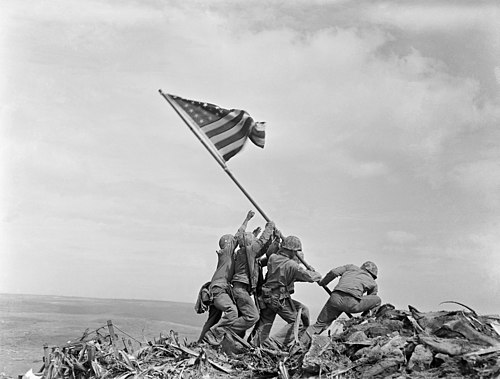
Iwo Jima (Battle of Iwo Jima)
硫黄島
Iwo Jima was the site of one of the bloodiest battles of the Pacific War (February 19 – March 26, 1945). Defended by 21,000 Japanese troops under Lt. General Kuribayashi Tadamichi using an innovative network of tunnels and fortified positions, the island was stormed by U.S. Marines in a 36-day battle that killed roughly 18,000–20,000 Japanese and nearly 7,000 Americans. The iconic flag-raising on Mount Suribachi remains one of the most famous images of World War II.

Hikari Naval Arsenal
光海軍工廠
Hikari Naval Arsenal was the Imperial Japanese Navy's seventh naval arsenal, established in Hikari City, Yamaguchi Prefecture in 1940. The sprawling 4-square-kilometer coastal facility produced steel, torpedoes, engines, cannon, and bombs, and from 1944 housed a training and sortie base for kaiten human torpedoes. At its peak the arsenal employed approximately 30,000 workers including 6,500 mobilized students. On August 14, 1945 — the day before Japan's surrender — 167 B-29 bombers devastated the complex in five waves, killing 738 people.

Yokosuka Naval Air Technical Arsenal
横須賀海軍航空技術廠
The Imperial Japanese Navy's premier aviation research and development center, established in 1932 at Yokosuka. Renamed Kūgishō (空技廠) in 1939, it designed some of Japan's most iconic WWII aircraft including the D4Y Suisei dive bomber and the MXY-7 Ohka rocket-powered kamikaze weapon, though production was outsourced to manufacturers like Aichi and Nakajima.

Jōgashima Artillery Battery Ruins (Tokyo Bay Fortress)
城ヶ島砲台跡(東京湾要塞)
A coastal defense battery on Jōgashima Island at the southern tip of the Miura Peninsula, built as part of the Tokyo Bay Fortress system. Begun in 1924 after the Great Kantō Earthquake and completed in 1927, the battery was armed with twin 25.4 cm gun turrets taken from the decommissioned battleship Aki. Though the battery never saw combat, it served as a key element of the capital's seaward defense until the end of World War II. Today, underground ammunition magazines and a 50-meter passage survive beneath Jōgashima Park.

NKK Kawasaki Steel Works (Nippon Kokan)
日本鋼管川崎製鉄所
Founded in 1912 as Japan's first privately owned steelmaker, the NKK Kawasaki Works in the Keihin Industrial Zone was a critical wartime producer of steel plates, seamless pipes, and heavy plates for the Imperial Japanese Navy's warships and military equipment. Severely damaged by Allied bombing raids in 1945, the works were rebuilt post-war and the site continues operation today as JFE Steel East Japan Works (Keihin District).

Second Naval Fuel Depot (Yokkaichi)
第二海軍燃料廠
The Second Naval Fuel Depot (第二海軍燃料廠) in Yokkaichi, Mie Prefecture was Imperial Japan's largest oil refinery, with a daily capacity of 25,000 barrels. Established in 1941 in the Shiohama district, it produced aviation gasoline, liquid fuels, and lubricating oil for the Imperial Japanese Navy. The facility and its associated Utsube River Oil Refinery were ranked first among Japan's aviation fuel production centers by 1945. From June to August 1945, US B-29 bombers of the 315th Bombardment Wing conducted repeated precision raids that destroyed the refinery complex. Yokkaichi itself was firebombed on June 18, 1945, killing 736 civilians. After the war, the site was converted to civilian petrochemical use and became the foundation of the Yokkaichi industrial kombinat.

Tokuyama Naval Fuel Depot
徳山海軍燃料廠
One of the Imperial Japanese Navy's principal fuel storage and refining facilities, established in 1905 as a coal briquette plant in Tokuyama, Yamaguchi Prefecture, and reorganized as a naval fuel depot in 1921. Redesignated the Third Naval Fuel Depot in 1941, it processed petroleum, aviation fuel, and synthetic fuels for the Combined Fleet. Devastated by B-29 bombing raids on May 10 and July 26-27, 1945, its destruction crippled the Navy's remaining fuel supply. The site was transferred to Idemitsu Kosan in 1956 and now forms the core of the Shunan petrochemical complex.

Chitose Naval Air Base
千歳海軍航空基地
A major Imperial Japanese Navy air base in Hokkaido established in 1939, serving as the primary northern defense and Soviet surveillance station. The base housed the Chitose Naval Air Group and the 41st Naval Air Arsenal, with two runways and 53 aircraft shelters across 200 hectares. Now JASDF Chitose Air Base and adjacent New Chitose Airport.
Wakkanai Naval Communications Base (Red Brick Communications Station)
旧海軍大湊通信隊稚内分遣隊幕別送信所(赤れんが通信所)
A former Imperial Japanese Navy communications base in Wakkanai, Hokkaido, established in 1931 as a transmitter station for northern defense. Directly linked to Navy General Headquarters, the station relayed the coded Pearl Harbor attack order "Niitakayama Nobore 1208" in December 1941, received General Kuribayashi's final message from Iwo Jima in March 1945, and remained in contact with the northern front through the end of the war. The distinctive red brick buildings, completed in 1941, were designated Wakkanai Municipal Cultural Properties in 2023.

Harima Shipyard (Aioi Works)
播磨造船所
Harima Shipyard in Aioi, Hyogo Prefecture was one of Imperial Japan's key wartime shipbuilding facilities. Acquired by Suzuki Shoten in 1916, it grew from 250 to over 20,000 workers during WWII. Its Matsunoura plant, built in 1943-44 under Navy directive, mass-produced wartime standard ships (戦時標準船) using assembly-line methods, completing 163 vessels totaling 136,490 gross tons — ranking first among modified E-type builders. On July 28, 1945, approximately 30 US carrier aircraft bombed the shipyard, killing 39 people.

Ukishima Maru Victims Memorial
浮島丸殉難の碑
A memorial monument in Maizuru, Kyoto Prefecture, commemorating the victims of the Ukishima Maru Incident of August 24, 1945, when a Japanese Navy transport ship carrying Korean repatriates exploded and sank in Maizuru Bay just nine days after Japan's surrender, killing 524 Koreans and 25 Japanese crew members. The cause — whether an American mine or deliberate scuttling — remains disputed to this day.

Ishikawajima Shipyard
石川島造船所
Established in 1853 on Ishikawajima at the mouth of the Sumida River (present-day Tsukuda, Chūō-ku), Tokyo, Ishikawajima Shipyard was Japan's first Western-style shipyard and a major warship builder for the Imperial Japanese Navy during WWII. It produced destroyers, escort vessels, and other naval craft, and is the predecessor of today's IHI Corporation.

Mitsubishi Arms Sumiyoshi Tunnel Factory Ruins
三菱兵器住吉トンネル工場跡
Remains of an underground torpedo factory built in 1944 by Mitsubishi Arms inside six parallel tunnels in northern Nagasaki. Located 2.3 km from the atomic bomb hypocenter, the tunnels survived the August 9, 1945 bombing largely intact and served as emergency shelters. Two tunnels are now open to the public as a peace memorial site.

Fukuryu Special Attack Unit Training Base
伏龍特攻隊訓練基地
Training base at Yokosuka for the Fukuryu (Crouching Dragon) special attack unit — human mine divers equipped with explosive charges on bamboo poles, intended to destroy Allied landing craft during the anticipated invasion of the Japanese home islands. One of the most desperate suicide weapons conceived at the end of WWII, with training conducted at Nobi Beach in Yokosuka under the Yokosuka Anti-Submarine School.

Koza Naval Arsenal
高座海軍工廠
A major Imperial Japanese Navy arsenal built from 1943 and formally completed in 1944 in the Zama–Yamato–Ebina area of Kanagawa Prefecture. The facility produced 128 Mitsubishi J2M Raiden ("Thunderbolt") interceptor fighters and mobilized approximately 8,400 Taiwanese teenage boys (台湾少年工) as wartime laborers — one of the most significant examples of colonial youth labor mobilization during the Pacific War.

Numazu Naval Arsenal
沼津海軍工廠
A major Imperial Japanese Navy arsenal established in June 1943 in Numazu, Shizuoka Prefecture, specializing in radar equipment, electronic detection instruments, and aviation wireless systems. Employing approximately 20,000 workers including mobilized students, the arsenal was a key target during the devastating July 17, 1945 air raid that destroyed 89.5% of Numazu. The site was returned to civilian use after the war and is now an urbanized area with factories, schools, and residential neighborhoods.
Kasumigaura Naval Air Group
霞ヶ浦海軍航空隊
The birthplace of Japanese naval aviation, established in 1922 as the Imperial Japanese Navy's primary land-based flight training center on the shores of Lake Kasumigaura in Ibaraki Prefecture. The largest naval aviation training facility in Japan, it trained virtually every prominent IJN pilot of the interwar and wartime periods. The base hosted the Sempill Mission (1921–1922), received visits from the Graf Zeppelin and Charles Lindbergh, and served as home to the Naval Flight Preparatory Course (Yokaren) program from 1939. The site was bombed by U.S. carrier aircraft in February 1945. Today the former airfield is divided among JGSDF Camp Kasumigaura, Ibaraki University Faculty of Agriculture, and the Yokaren Peace Memorial Museum.

Kōnoike Naval Air Base Ruins
神之池海軍航空基地跡
Site of the former Kōnoike Naval Air Base in Kashima, Ibaraki Prefecture, a training air base opened in April 1944 that from November 1944 served as the training ground of the 721st Naval Air Group (Jinrai Butai) and its Ohka piloted bombs. The second-generation Genzan (Wonsan) Naval Air Group named in this entry was a separate fighter-training unit formed in August 1944 at Wonsan in colonial Korea, whose Shichishō-tai flew suicide sorties from Kanoya during the Battle of Okinawa; Japanese sources do not place it at Kōnoike. The vast 500-hectare airfield site is now occupied mainly by the Nippon Steel Kashima Works, where one aircraft shelter is preserved as Ohka Park.

Monument to the Philippines War Dead
比島戦没者の碑
Official Japanese government memorial at Caliraya, Laguna Province, Philippines, dedicated to the approximately 518,000 Japanese military personnel and civilians who perished in the Philippines during World War II. The Philippines campaign was the single deadliest theater of operations for the Imperial Japanese Armed Forces, encompassing the Battle of Leyte, the Battle of Manila, and guerrilla resistance across the archipelago from 1941 to 1945.

Xiyu Ammunition Depot (Penghu)
西嶼弾薬本庫
A rare early Japanese colonial-era underground ammunition depot complex in Nei'an Village, Xiyu Township, Penghu County, Taiwan. Built in 1902 as part of the Penghu Island Fortress system, the facility comprises cavern-style and above-ground cooling magazines lined with copper sheeting for electromagnetic shielding. Designated a national historic site in 2024, the depot opened to the public as a military culture park in 2021.

Nagaoka Air Raid Site & Yamamoto Isoroku Memorial Park
長岡空襲跡・山本五十六記念公園
Site of the devastating August 1, 1945 air raid on Nagaoka — the hometown of Admiral Yamamoto Isoroku — where 125 B-29 bombers dropped 163,000 incendiary bombs, killing 1,488 people and destroying up to 80% of the city. The Yamamoto Isoroku Memorial Park, built on the site of his former family home which was destroyed in the raid, preserves a reconstructed birthplace and bronze bust of the admiral.

Former Japanese Navy Fengshan Wireless Communications Station
海軍鳳山無線電信所
Built between 1917 and 1919 by the Imperial Japanese Navy, the Fengshan Wireless Communications Station was one of three major long-wave radio facilities — alongside Funabashi (Chiba, near Tokyo) and Hario (Sasebo, Kyushu) — designed to relay naval communications across the Pacific. During WWII, the station maintained southwest Pacific communications, conducted radio jamming, and monitored Allied fleet movements. After the war, the ROC Navy converted the site into a political prisoner interrogation and detention facility during the White Terror period. Designated a National Monument of Taiwan in 2010, the site is now open to the public as a heritage landmark.
Miyazaki Naval Air Group Ruins (Miyazaki Kamikaze Base Memorial)
宮崎海軍航空隊跡(宮崎特攻基地鎮魂碑)
Site of the Imperial Japanese Navy air group at Akae Airfield (now Miyazaki Airport), which served as a major kamikaze staging base from February 1945. Forty-seven Ginga bombers with 140 crew members, together with Suisei dive bombers carrying 19 crew, took off from here on special attack missions. A memorial monument (Chinkon no Hi) was erected in 1983.

Zuoying Old City (Old City of Fongshan County)
左営旧城(鳳山県旧城)
A Qing-dynasty walled city in present-day Zuoying District, Kaohsiung, first enclosed with earthen walls in 1722 and rebuilt in stone in 1825–26; it is often billed as Taiwan's first stone city, although Changhua's masonry walls are recorded as earlier. During the Japanese colonial period, the walled city was designated a military restricted zone to protect the adjacent Zuoying Naval Port from 1940 onward, with over fifty households forcibly relocated and the West Gate demolished. The Japanese Imperial Navy deployed Shinyo suicide motorboat squadrons within the old city area during WWII. Designated a first-class (now national) historic site in 1985, the East, North, and South Gates survive along with portions of the stone walls.

Shoushan Cave Fortification Complex
高雄寿山洞窟陣地群
An extensive network of Japanese military tunnels, cave fortifications, and underground positions excavated into Shoushan (Monkey Mountain) in Kaohsiung during WWII. As the headquarters of the Kaohsiung Fortress (高雄要塞), the mountain was honeycombed with dozens of tunnel systems serving as coastal defense gun emplacements, ammunition magazines, command posts, communications centers, and air-raid shelters. Distinct from the individual Gushan Cave tourist site, this complex encompasses the broader network of military cave positions spread across Shoushan that formed the core of Japan's southwestern Taiwan defense system.

Hirao Kaiten Base Remains
平生回天基地跡
Remains of the Imperial Japanese Navy's third kaiten (human torpedo) training and launch base, established on the Atata Peninsula of Hirao Town in March 1945. The base dispatched submarine I-58 with six kaiten on July 18, 1945; five pilots were killed in action in the Philippine Sea. A memorial monument (erected 1959) and the Atata Exchange Hall (opened 2004) now preserve the memory of the nine men who died.

Former Tsukiji Naval Academy Site
旧築地海軍兵学校跡
Site of the original Imperial Japanese Naval Academy (海軍兵学校, Kaigun Heigakkō) at Tsukiji, Tokyo, where modern Japanese naval officer education was born. Established in 1869 and operating until the academy relocated to Etajima, Hiroshima Prefecture in 1888, this was the birthplace of the Imperial Japanese Navy's officer corps. The site subsequently housed the Naval War College, which was damaged in the 1923 Great Kantō Earthquake and moved away in 1932; the area became the legendary Tsukiji Fish Market from 1935 to 2018. A stone monument commemorating the Naval Academy and Naval Medical School stands at the nearby National Cancer Center.

NYK Line Hikawa Maru
日本郵船氷川丸
NYK Line ocean liner Hikawa Maru, completed in 1930, served as a naval hospital ship during WWII and as a repatriation ship afterwards. Now permanently moored at Yamashita Park, Yokohama as a museum ship and Important Cultural Property.

Kure Naval Base Air Raid Site
呉軍港空襲跡
Site of the devastating Allied air raids on Kure Naval Base from July 24-28, 1945, which destroyed most of the remaining Imperial Japanese Navy fleet at anchor. U.S. Third Fleet carrier aircraft sank the battleships Haruna, Hyūga, and Ise, the aircraft carrier Amagi, and the cruisers Tone, Aoba, Ōyodo, Iwate, and Izumo, while the British Pacific Fleet struck other targets around the Inland Sea — effectively eliminating Japan's surface fleet as a fighting force in one of the final major naval engagements of WWII.

Uragashira Repatriation Memorial Peace Park
浦頭引揚記念平和公園
A memorial park and museum in Sasebo, Nagasaki Prefecture, commemorating the approximately 1.4 million Japanese military personnel and civilians who were repatriated through Uragashira Port between 1945 and 1950. Sasebo was one of Japan's major repatriation ports, primarily receiving returnees from mainland China and Southeast Asia.

Jinhae Guard District (Chinkai Naval Base)
鎮海警備府
The Imperial Japanese Navy's largest naval base on the Korean Peninsula, established in 1904 during the Russo-Japanese War on Jinhae Bay. Elevated to Guard District (警備府) status in November 1941, it served as a key operational hub for naval operations in the Sea of Japan and Korea Strait throughout the Pacific War. The site remains a major Republic of Korea Navy base.

Busan Port (Kanpu Ferry Terminal)
釜山港(関釜連絡船発着地)
Busan Port was the Korean terminus of the Kanpu (関釜) Ferry route connecting Shimonoseki, Japan to colonial Korea. Opened in 1905, the ferry service became a critical artery of Japan's colonial empire, transporting troops, settlers, and — most notoriously — hundreds of thousands of forcibly mobilized Korean laborers to wartime Japan between 1939 and 1945. The port's piers (1st through 4th and central) were built between 1912 and 1943 to handle growing military and commercial traffic. The Konron Maru, a Kanpu ferry, was sunk by the USS Wahoo in October 1943 with 583 casualties. By June 1945, Allied mining of the Korea Strait and air raids effectively shut the route down. Today the site is a modern international ferry terminal, and the National Memorial Museum of Forced Mobilization under Japanese Occupation stands in nearby Busan as a testament to the port's dark wartime legacy.

Incheon Port (Jinsen)
仁川港
Incheon Port was the principal colonial trade gateway to Seoul during the Japanese occupation of Korea (1910–1945). Opened as a treaty port in 1883, it witnessed Japan's military landings during the Sino-Japanese War (1894) and the Russo-Japanese War (1904), and was developed into a major hub for heavy industry and munitions production during WWII. The Open Port Area in Jung-gu retains significant Japanese colonial-era architecture, including former bank buildings and the Nippon Yusen shipping office.

Port Arthur Fortress & Naval Base
旅順要塞・旅順軍港
Port Arthur (Lüshun), situated at the tip of the Liaodong Peninsula in southern Manchuria, was one of the most strategically significant naval bases in East Asian history. The site of the epic Russo-Japanese War siege of 1904–1905, including the legendary battle for 203 Meter Hill, Port Arthur was held by Japan for four decades as part of the Kwantung Leased Territory; the Imperial Japanese Navy kept a naval district here until 1914 and a lesser guard station for most of the period afterwards. The fortress complex, naval port, and surrounding fortifications — originally built by Qing China, expanded by Imperial Russia, and operated by Japan from 1905 to 1945 — witnessed some of the most intense military engagements of the early 20th century. Soviet forces seized Port Arthur on 22 August 1945 during the Soviet invasion of Manchuria, ending Japanese control.

Wonsan Port (Genzan)
元山港
A major port on Korea's east coast during the Japanese colonial period, Wonsan (Genzan) served as both a commercial hub for Sea of Japan trade and a key Imperial Japanese Navy facility. It was the original home base of the Genzan Naval Air Group (元山海軍航空隊), established in 1940, which conducted some of the war's most consequential naval air operations including the sinking of HMS Prince of Wales and HMS Repulse.
Uzurano Airfield Remains (Himeji Naval Air Group)
鶉野飛行場跡(姫路海軍航空隊)
A former naval training airfield in Kasai with a surviving concrete runway, shelters and gun positions. Its wartime role also included test flights for Kawanishi aircraft assembled nearby.
Maehama Aircraft Shelters (Former Kochi Naval Air Group)
前浜掩体群(旧高知海軍航空隊)
Seven surviving concrete aircraft shelters in fields south of Kochi Airport. Built for the wartime naval airfield, the group includes a conserved public park around Shelter No. 5; shelter interiors are closed.
Uraga Dock (Former Uraga Dock Company Shipyard)
浦賀ドック(浦賀船渠跡)
The surviving brick dry dock of a shipyard that built Imperial Japanese Navy destroyers through 1945. The works closed in 2003; entry now depends on organized tours or designated events.
Oga Kaiten Training Base Remains
大神回天訓練基地跡
Remains of a 1945 naval training base for kaiten manned suicide torpedoes on Beppu Bay. A public memorial park displays a full-size replica, while original support structures and storage tunnels survive at scattered locations.
Tsukuba Naval Air Group Site and Former Headquarters
筑波海軍航空隊跡(旧司令部庁舎・記念館)
A surviving naval pilot-training headquarters in Kasama, now a memorial museum. The site traces the transition from flight instruction to wartime combat and special-attack training.
Tagajo Naval Arsenal Site (Tagajo Garrison Area)
多賀城海軍工廠跡(多賀城駐屯地周辺)
A wartime naval factory for aircraft machine guns and ammunition transformed southeastern Tagajo. Part of its buildings and protective earthworks survives within an active garrison; the wider site has become industrial and other developed land.
Mitsui Tamano Shipyard (Former Tama Shipyard)
三井造船玉野造船所(旧玉造船所)
A shipbuilding centre founded in 1917 that produced naval vessels and wartime standard merchant ships. Parts of the waterfront remain in industrial use, including modern shipbuilding; unrestricted public entry is not established.
Ushio Naval Experimental Station Site
第二海軍技術廠牛尾実験所跡
An unfinished 1945 dispersal site for naval microwave research beside the Oi River. Excavations recorded its electrical facilities before river widening removed the principal foundations.
Seki Underground Factory of Suzuka Naval Arsenal
鈴鹿海軍工廠関防空工場跡(関地下工場)
Sealed tunnel entrances in Kannon-yama recall an underground dispersal factory producing aircraft machine-gun ammunition in 1945. The surrounding park is accessible, but ordinary visits are limited to exterior viewing.
Mobara Naval Airfield Site and No. 3 Aircraft Shelter
茂原海軍航空基地跡・3号掩体壕
A surviving concrete aircraft shelter marks the former Mobara naval airfield. Nearby roads and school sites trace the base's runway, headquarters and barracks within today's city.