Ichigaya Memorial Hall
市ヶ谷記念館

Ichigaya Memorial Hall preserves the auditorium of the former Imperial Japanese Army Ministry Building No. 1, which served as the Army Ministry and Imperial General Headquarters during WWII, the courtroom for the International Military Tribunal for the Far East (Tokyo Trials, 1946–1948), and the site of Yukio Mishima's attempted coup and ritual suicide in 1970. The hall was relocated and reconstructed within the Ministry of Defense compound in 2000.
Images


History
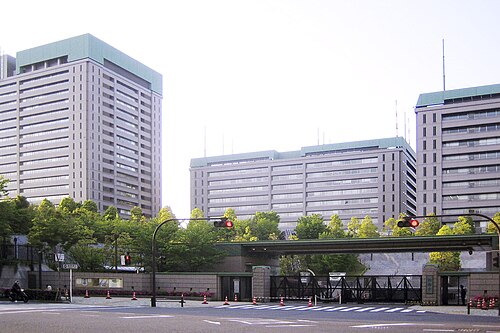
Ichigaya Memorial Hall (市ヶ谷記念館) stands within the Ministry of Defense compound in Ichigaya, Shinjuku Ward, Tokyo. It preserves the historically significant portions of the former Building No. 1 (一号館) of the Imperial Japanese Army, originally constructed in June 1937 as the main building of the Imperial Japanese Army Academy (陸軍士官学校).
From 1941, the building housed the Army Ministry (陸軍省), the Army General Staff Office (参謀本部), and the Imperial General Headquarters Army Section (大本営陸軍部), making it the nerve center of Japan's wartime military command. Critical decisions regarding the conduct of the Pacific War were made within these walls.
Following Japan's surrender in August 1945, the building was requisitioned by the Allied occupation forces. Its grand auditorium was converted into the courtroom for the International Military Tribunal for the Far East (IMTFE), commonly known as the Tokyo Trials. The tribunal convened on May 3, 1946, with eleven judges representing the Allied nations presiding over the cases of twenty-eight Class-A war criminals, including former Prime Minister Hideki Tojo. The proceedings lasted over two and a half years, concluding on November 12, 1948, with seven defendants sentenced to death by hanging.
The building subsequently served as the headquarters of the Japan Ground Self-Defense Force Eastern Army. On November 25, 1970, celebrated novelist Yukio Mishima and members of his private militia, the Tatenokai (楯の会), entered the Commandant's office on the second floor, took the Commandant hostage, and attempted to incite a coup d'état. After his speech from the balcony failed to rally the assembled troops, Mishima committed seppuku (ritual suicide) in the Commandant's office. Sword marks from the incident remain visible on the door frame and are preserved in the memorial hall today.
When the Japan Defense Agency relocated from Roppongi to Ichigaya in 2000, the original Building No. 1 was demolished due to age. However, owing to its immense historical significance, three key sections were carefully dismantled and reconstructed at the current location within the compound: the grand auditorium (大講堂, the Tokyo Trials courtroom), the former Imperial Waiting Room (旧便殿の間), and the former Army Minister's Office (旧陸軍大臣室, the Mishima incident room). The relocated memorial hall opened to the public in 2000 as part of guided tours of the Ministry of Defense Ichigayadai compound.
Categories
Related events
Related themes
Sources
- 防衛省市ヶ谷地区 - WikipediaWebsite
- 大本営 - WikipediaWebsite