Matsumoto Castle
松本城
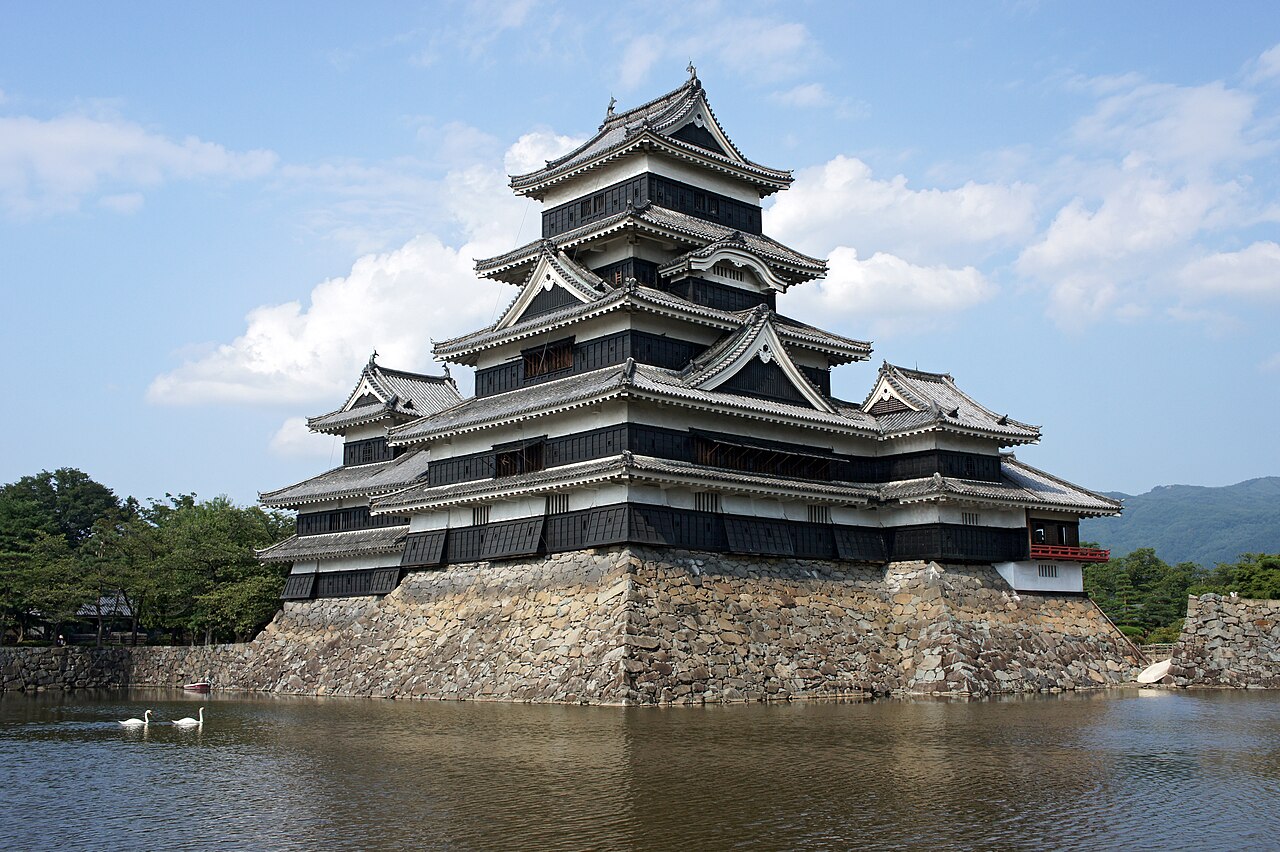
Matsumoto Castle, one of Japan's twelve original castles and a designated National Treasure, is said to have been identified during 1945 as a potential relocation site for the Eastern Army District Command (東部軍管区司令部) under the Ketsu-Go homeland defense plan. Located in central Nagano Prefecture alongside the nearby Matsushiro Underground Imperial Headquarters, the castle and its surrounding area were being prepared as part of a last-stand defense zone in the mountainous interior of Honshu, far from vulnerable coastal cities. The castle itself, built between 1504 and 1594, survived the war intact and remains one of the finest preserved original castle keeps in Japan.
Images


History
Matsumoto Castle (松本城, Matsumoto-jō), also known as the "Crow Castle" (烏城, Karasu-jō) for its striking black exterior, stands in the heart of Matsumoto City, Nagano Prefecture, in Japan's mountainous Chubu region. It is one of only twelve original castle keeps surviving in Japan and one of five designated as National Treasures. The castle's main keep complex was constructed between 1593 and 1594 by Ishikawa Kazumasa and his son Yasunaga, though the site's fortification history dates back to the Eisho era (1504-1520) when the Shimadachi clan built the original Fukashi Castle (深志城) on this location.
During the final months of World War II, as Japan prepared for the anticipated Allied invasion of the home islands under Operation Downfall, the Japanese military developed the Ketsu-Go (決号作戦) homeland defense strategy. This plan divided the country into defensive zones and called for the relocation of key command structures away from vulnerable coastal cities to more defensible inland locations. Nagano Prefecture, shielded by the Japanese Alps and centrally located in Honshu, became a focal point for these preparations. The most significant project was the construction of the Matsushiro Underground Imperial Headquarters (松代大本営), in present-day Nagano City, to the north of Matsumoto, which was intended to house the Imperial General Headquarters, the Emperor, and key government ministries.
Matsumoto Castle and its surrounding area are said to have been considered as a potential relocation site for the Eastern Army District Command (東部軍管区司令部), which was responsible for the defense of the Kanto region including Tokyo. The city of Matsumoto had a pre-existing military presence — the Imperial Japanese Army's 50th Infantry Regiment (歩兵第50連隊) had been garrisoned there since 1908, and the regiment's supply depot and barracks infrastructure provided a ready foundation for expanded military operations. The castle's strategic position in a mountain-ringed basin made it a natural choice for a command post that would be difficult for enemy aircraft to reach and attack.
The war ended before these relocation plans could be fully implemented. Unlike many Japanese cities, Matsumoto was largely spared from American strategic bombing, and the castle survived the war intact. In 1946, a GHQ art advisor named Charles Gallager inspected the castle and recommended urgent restoration work, recognizing its extraordinary architectural and historical value. Subsequent restoration campaigns in the 1950s and beyond have preserved the castle complex to a high standard.
Today, Matsumoto Castle is one of Japan's most visited cultural heritage sites and a symbol of the city. Its five-story, six-floor main keep, with the distinctive black walls and white plaster accents, houses a museum including an extensive collection of firearms from the Sengoku and Edo periods. The castle grounds feature the original inner moat, and the complex includes the unique Tsukimi Yagura (Moon-Viewing Tower), added around 1633 during peacetime. The site stands as a powerful reminder of both Japan's feudal military heritage and the plans for a devastating final battle that, fortunately, never came to pass.
Categories
Related themes
Sources
- 松本城 - Wikipedia(日本語版)Website
- 松代大本営跡 - Wikipedia(日本語版)Website
- 歩兵第50連隊 - Wikipedia(日本語版)Website