Ohka Park (Konoike Air Base Ruins)
桜花公園(神之池基地跡)

Memorial park on the site of the former Konoike Naval Air Base in Kashima, Ibaraki Prefecture — the primary training facility for the Yokosuka MXY-7 Ohka, the only rocket-propelled manned suicide weapon ever used in combat. A full-scale Ohka Model 11 replica is displayed inside the sole surviving aircraft revetment (entaigo). The park commemorates the 721st Naval Air Group "Jinrai Butai" (Thunder Gods Corps), which trained here from November 1944, and the 722nd Naval Air Group "Tatsumaki Butai" (Tornado Corps), the Ohka training unit formed in February 1945.
Images


History
Ohka Park (桜花公園) stands on the grounds of the former Konoike Naval Air Base (神之池航空基地) in Kashima, Ibaraki Prefecture. Established in April 1944 as a naval air training facility beside Lake Kaminoike, the base became the cradle of Japan's most radical special attack weapon: the Yokosuka MXY-7 Ohka — a rocket-propelled, pilot-guided suicide aircraft and the only weapon of its kind ever deployed in combat.
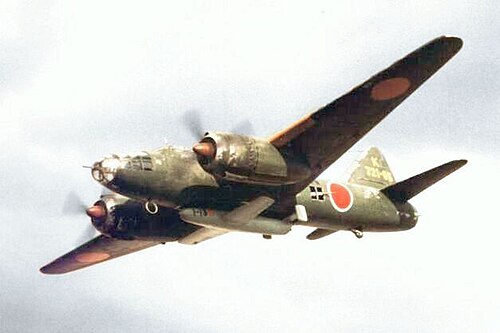
The Ohka (桜花, "cherry blossom") was conceived in mid-1944 by Special Service Ensign Shōichi Ōta (大田正一; called "Mitsuo Ohta" in some English-language sources) of the 1081st Kōkūtai as Japan's military situation grew desperate. The design was a deceptively simple airframe: a 6.07-meter wooden glider with stubby wings (span 5.12 m), carrying a massive 1,200 kg (2,646 lb) tri-nitro-anisol warhead in the nose, propelled by three Type 4 Mark 1 Model 20 solid-fuel rocket motors in the tail. Total weight was 2,140 kg. The weapon was carried aloft beneath the fuselage of a Mitsubishi G4M2e "Betty" mother-ship bomber and released at altitude; the pilot would glide toward the target and ignite the rockets for a terminal dive at speeds exceeding 900 km/h (560 mph) — far too fast for Allied anti-aircraft guns to track.
On October 1, 1944, the Imperial Japanese Navy formed the 721st Naval Air Group (第七二一海軍航空隊) under Captain Motoharu Okamura at Hyakurihara Air Base. Designated the Jinrai Butai (神雷部隊, Thunder Gods Corps), the unit transferred to Konoike on November 7, 1944, to begin Ohka training in earnest. On February 15, 1945, after the 721st had moved to Kyushu, the 722nd Naval Air Group — the Tatsumaki Butai (竜巻部隊, Tornado Corps) — was formed around the 721st's Ohka squadron to take over Ohka training.
The first Ohka combat mission was launched on March 21, 1945, when 18 Betty bombers, 15 of them carrying Ohka weapons, departed Kanoya Air Base in Kagoshima to attack the US Fifth Fleet off Kyushu. All 18 Bettys were intercepted and shot down by American fighters before reaching release range, killing approximately 160 crew members. Subsequent operations during the Okinawa campaign proved more effective: on April 12, 1945, an Ohka sank the destroyer USS Mannert L. Abele (DD-733) — the only ship confirmed sunk by an Ohka. In total, seven Allied ships were hit by Ohka attacks between March and June 1945, of which one was sunk and two were damaged beyond repair. In all, 55 Ohka pilots died in combat missions, and many more perished in the destruction of their mother ships.
Around 755 Ohka Model 11s were manufactured (155 at Yokosuka and 600 at Kasumigaura). Advanced variants — the jet-powered Model 22 and turbojet Model 33 — were under development but never saw combat.
The base at Konoike had dozens of covered and open-air aircraft revetments (entaigo, 掩体壕) built to protect planes from Allied air raids. Today, only a single covered concrete revetment survives, preserved as the centerpiece of Ohka Park. Inside this bunker, a full-scale replica of the Ohka Model 11 — complete with painted cherry blossom motifs — is on permanent display. In front of the revetment stands a stone monument inscribed with the characters "桜花" and commemorating both the Thunder Gods Corps and the Tornado Corps. Cherry trees donated by the Thunder Gods Association line the park grounds.
The park is freely accessible year-round, located adjacent to the former Sumitomo Metals (now Nippon Steel) Kashima Works, which occupies most of the former airfield.
Categories
Related events
Related institutions
Related themes
Sources
- 桜花 (航空機) - WikipediaWebsite
- 第七二一海軍航空隊 - Wikipedia(日本語)Website
- Yokosuka MXY-7 Ohka - WikipediaWebsite