All historic sites
Sites in the Japanese home islands are shown by default; switch the Region menu to see Taiwan, Korea and Manchuria.
169 sites · page 2 of 8
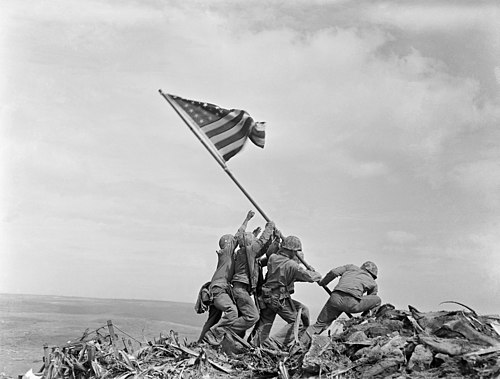
Iwo Jima (Battle of Iwo Jima)
硫黄島
Iwo Jima was the site of one of the bloodiest battles of the Pacific War (February 19 – March 26, 1945). Defended by 21,000 Japanese troops under Lt. General Kuribayashi Tadamichi using an innovative network of tunnels and fortified positions, the island was stormed by U.S. Marines in a 36-day battle that killed roughly 18,000–20,000 Japanese and nearly 7,000 Americans. The iconic flag-raising on Mount Suribachi remains one of the most famous images of World War II.

Kasumigaura Naval Air Group
霞ヶ浦海軍航空隊
The birthplace of Japanese naval aviation, established in 1922 as the Imperial Japanese Navy's primary land-based flight training center on the shores of Lake Kasumigaura in Ibaraki Prefecture. The largest naval aviation training facility in Japan, it trained virtually every prominent IJN pilot of the interwar and wartime periods. The base hosted the Sempill Mission (1921–1922), received visits from the Graf Zeppelin and Charles Lindbergh, and served as home to the Naval Flight Preparatory Course (Yokaren) program from 1939. The site was bombed by U.S. carrier aircraft in February 1945. Today the former airfield is divided among JGSDF Camp Kasumigaura, Ibaraki University Faculty of Agriculture, and the Yokaren Peace Memorial Museum.

Konoe Fumimaro's Tekigaiso Villa
荻外荘(近衞文麿旧宅)
Tekigaiso was the private residence of Prince Konoe Fumimaro, three-time Prime Minister of Japan, located in the quiet residential area of Ogikubo, Suginami Ward, Tokyo. Originally built in 1927 by architect Itō Chūta as a villa for Imperial physician Irisawa Tatsukichi, the estate was purchased by Konoe in 1937 and named 'Tekigaiso' by elder statesman Saionji Kinmochi. The villa served as a de facto second seat of government during Konoe's premierships. The 'Ogikubo Conference' of July 19, 1940, held here between Konoe, Tōjō Hideki, Matsuoka Yōsuke, and Yoshida Zengo, laid the groundwork for the Tripartite Pact with Nazi Germany and Fascist Italy and the concept of the Greater East Asia Co-Prosperity Sphere. The 'Tekigaiso Conference' of October 12, 1941, where Tōjō refused any concession on withdrawing from China, led directly to Konoe's resignation and Tōjō's appointment as Prime Minister, setting Japan on an irreversible path to war with the United States. On December 16, 1945, Konoe took his own life by potassium cyanide in his study at Tekigaiso, the day he was to report to GHQ on war crimes charges. Designated a National Historic Site in 2016, the villa was restored by Suginami Ward and opened to the public in December 2024.

Meiji Seimei Kan (GHQ Annex)
明治生命館(GHQ別館)
A masterpiece of Greek Revival architecture completed in 1934 in Marunouchi, Tokyo. Requisitioned by GHQ after WWII, the building served as the U.S. Far East Air Forces (FEAF) headquarters and hosted the Allied Council for Japan, where General MacArthur delivered his opening address in April 1946. Designated as a National Important Cultural Property in 1997 — the first Showa-era building to receive this honor.

Memorial Ship Mikasa
記念艦三笠
The last surviving pre-dreadnought battleship in the world, preserved as a museum ship in Mikasa Park, Yokosuka. Built by Vickers in Britain and commissioned in 1902, Mikasa served as Admiral Togo Heihachiro's flagship during the decisive Battle of Tsushima (1905) in the Russo-Japanese War. Designated one of the "World's Three Great Memorial Warships" alongside HMS Victory and USS Constitution, Mikasa was enshrined in concrete in 1926 as a national memorial. During the 1930s–1940s the ship served as a potent symbol of Imperial Navy spirit and was central to Navy Day (May 27) commemorations that fueled wartime morale and militarist propaganda. After 1945 she was stripped of her superstructure and guns and for a time housed a cabaret and an aquarium; she was restored in 1961 with the support of Fleet Admiral Chester Nimitz and the Japanese public.

Nakajima Aircraft Musashino Factory
中島飛行機武蔵野工場
The largest aircraft engine factory in Japan, a primary target of American strategic bombing.

Nakajima Aircraft Ota Plant
中島飛行機太田製作所
The headquarters factory of Nakajima Aircraft Company — Japan's largest wartime aircraft manufacturer — located in Ota, Gunma Prefecture. Founded by Chikuhei Nakajima in 1917 as a modest research workshop, it grew into an industrial colossus producing iconic fighters including the Ki-43 Hayabusa, Ki-44 Shoki, Ki-84 Hayate, and Ki-49 Donryu heavy bomber. At peak wartime production the Ota complex employed over 100,000 workers. Targeted by seven major B-29 bombing raids between late 1944 and August 1945, the factory was devastated — the February 10, 1945 raid alone killed 152 people and destroyed the eastern half of the plant. After dissolution under Allied occupation, the company's legacy was reborn as Fuji Heavy Industries (1953), now SUBARU Corporation, whose Gunma Manufacturing Division Main Plant occupies the original site at Subaru-cho 1-1, Ota City.

National Diet Building
国会議事堂
The National Diet Building in Nagatacho, Chiyoda, Tokyo, completed in 1936 after 17 years of construction, served as the seat of the Imperial Diet throughout WWII. Within its chambers, wartime Japan's most consequential legislation was enacted — the National Mobilization Law (1938), extraordinary military budgets, and declarations of war. The 1942 Yokusan Election, the only wartime general election, filled these halls with Imperial Rule Assistance Association-endorsed representatives who rubber-stamped the Tojo government's war policies. The building was deliberately spared from Allied firebombing.

Naval Air Facility Atsugi
厚木海軍飛行場
A major Imperial Japanese Navy airfield in Kanagawa Prefecture, begun in 1938 and opened in 1943, home to the elite 302nd Naval Air Group that defended Tokyo against B-29 raids. On August 30, 1945, General Douglas MacArthur landed here aboard his C-54 "Bataan," marking the first step of the Allied occupation of Japan.

Noborito Laboratory (IJA 9th Technical Research Institute)
登戸研究所(陸軍第九技術研究所)
A top-secret Imperial Japanese Army research institute that developed covert warfare tools including counterfeit currency, balloon bombs, and biological weapons, now preserved as a peace education museum.

Old Prime Minister's Official Residence (Surrender Rescript Drafting Site)
旧内閣総理大臣官邸(終戦の詔書起草地)
The old Prime Minister's Official Residence (旧官邸, completed 1929) in Nagatacho, Chiyoda, Tokyo, was where Chief Cabinet Secretary Sakomizu Hisatsune and his team drafted the Imperial Rescript on the Termination of the War (終戦の詔書) between August 10 and 14, 1945. Working under extreme secrecy within the Cabinet Secretariat offices of the Kantei, Sakomizu, Chinese classics scholar Kawata Mizuho, and other Cabinet staff produced the historic document through which Emperor Hirohito announced Japan's acceptance of the Potsdam Declaration. The rescript was finalized during the Cabinet meeting on August 14 and broadcast to the nation at noon the following day. The 1929 building now serves as the Prime Minister's Residential Quarters (首相公邸).

RIKEN Institute
理化学研究所
Japan's premier scientific research institute, involved in wartime nuclear research (Ni-Go project).

Sugamo Prison Site (Sunshine 60)
巣鴨プリズン跡(東池袋中央公園)
Sugamo Prison, originally built in 1895, was commandeered by Allied occupation forces after WWII to hold suspected war criminals awaiting trial before the International Military Tribunal for the Far East. On December 23, 1948, seven Class-A war criminals — including former Prime Minister Hideki Tojo — were executed by hanging here. A total of 60 war criminals were executed at the site. The war-criminal prison closed in 1958 (1962 by some accounts); the buildings were demolished in 1971 and replaced by the Sunshine City commercial complex (anchored by the 240-meter Sunshine 60 skyscraper) which opened in 1978. A small stone monument inscribed "Pray for Eternal Peace" (永久平和を願って) stands in adjacent Higashi-Ikebukuro Central Park, near the former gallows location.

Tachikawa Airfield & Army Air Arsenal
立川飛行場・立川陸軍航空工廠
The center of Imperial Japanese Army aviation industry, established in 1922 in western Tokyo. Tachikawa Airfield housed the Army Air Arsenal (陸軍航空工廠) and the Tachikawa Aircraft Company, which together produced over 6,000 aircraft including the Ki-36, Ki-55, and Ki-43 Hayabusa fighters. The complex also contained the Army Air Technical Research Institute (陸軍航空技術研究所). Devastated by 13 air raids from February 1945, the site became US Tachikawa Air Base after the war. Following reversion to Japan in 1977, the western portion was transformed into the Showa Commemorative National Government Park (国営昭和記念公園), opened in 1983.

Tokyo Air Raids Memorial / Center for Tokyo Raids
東京大空襲・戦災資料センター
The area of eastern Tokyo devastated by the March 10, 1945 firebombing, the single deadliest air raid in history.

Tokyo Bay Surrender Site
東京湾降伏調印地点
The waters of Tokyo Bay where Japan formally surrendered aboard USS Missouri on September 2, 1945.

Tokyo Memorial Hall (Yokoamicho Park)
東京都慰霊堂(横網町公園)
Tokyo Memorial Hall (東京都慰霊堂) in Yokoamicho Park, Sumida Ward, is the principal memorial for victims of both the Great Kanto Earthquake (1923) and the Bombing of Tokyo (1944–1945). Designed by architect Ito Chuta and completed in 1930, it was originally named the Earthquake Memorial Hall (震災記念堂) to enshrine the remains of approximately 58,000 earthquake victims. Following WWII, the ashes of some 105,400 victims of the Tokyo air raids were also interred here between 1948 and 1951, and the hall was renamed Tokyo Memorial Hall in 1951. In total, approximately 163,000 sets of remains are enshrined in the three-story, 40.9-meter pagoda (納骨堂) behind the main hall. Annual memorial services are held on September 1 (earthquake anniversary) and March 10 (anniversary of the deadliest firebombing raid). The main hall fuses Japanese temple architecture with Indian and Chinese influences, built in earthquake- and fire-resistant reinforced concrete.

Tsuchiura Naval Air Corps Site
土浦海軍航空隊跡
The site of the Tsuchiura Naval Air Corps (土浦海軍航空隊) in Ami, Ibaraki Prefecture — the Imperial Japanese Navy's primary training facility for the Naval Aviator Preparatory Course (Yokaren). Established in 1940 as an independent base split from the neighboring Kasumigaura Naval Air Corps, the facility exclusively trained teenage recruits aged 14–17 as naval aviators. Over 15 years approximately 240,000 boys enrolled in the Yokaren program; about 24,000 completed training and deployed to combat, with roughly 80 percent killed in action — many as kamikaze pilots. After the war, the site became JGSDF Camp Tsuchiura, home of the Ordnance School until 2026.
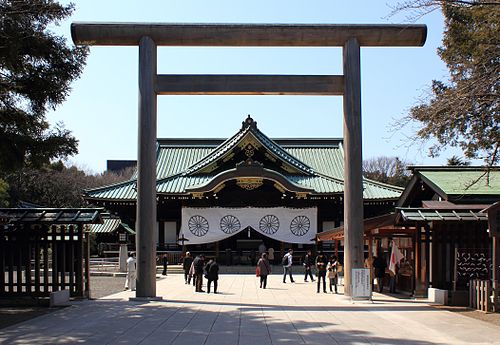
Yasukuni Shrine and Yūshūkan Museum
靖國神社・遊就館
A Shinto shrine in Chiyoda, Tokyo, established in 1869 to enshrine Japan's war dead, and its affiliated military museum Yūshūkan. The shrine enshrines approximately 2,466,532 souls including 14 Class A war criminals.

Yokaren Peace Memorial Museum
予科練平和記念館
A peace museum in Ami, Ibaraki Prefecture dedicated to the memory of the Naval Aviator Preparatory Course (Yokaren) trainees — boys aged 14 to 17 who were recruited and trained as Imperial Japanese Navy pilots from 1930 to 1945. Of approximately 240,000 boys enlisted over 15 years, 24,000 completed combat training; about 80 percent of graduates perished in battle, many as kamikaze pilots. Opened in 2010, the museum stands on the grounds of the former Tsuchiura Naval Air Corps, the central Yokaren training facility.

Yokohama War Crimes Tribunal (BC-Class Trials)
横浜軍事法廷(BC級戦犯裁判)
The Yokohama War Crimes Tribunal was held at the Yokohama District Court from 1946 to 1949 by the U.S. Eighth Army to try Class-B and Class-C Japanese war criminals. A total of 319 trials involving 996 defendants were conducted, resulting in 854 convictions including 124 death sentences (51 carried out). The courtroom has been preserved and relocated to the Toin Gakuen Memorial Academium.

Yokosuka Naval Air Technical Arsenal
横須賀海軍航空技術廠
The Imperial Japanese Navy's premier aviation research and development center, established in 1932 at Yokosuka. Renamed Kūgishō (空技廠) in 1939, it designed some of Japan's most iconic WWII aircraft including the D4Y Suisei dive bomber and the MXY-7 Ohka rocket-powered kamikaze weapon, though production was outsourced to manufacturers like Aichi and Nakajima.

Yokosuka Naval Base
横須賀海軍施設
A major Imperial Japanese Navy base near Tokyo, now a US Navy installation.

Akasaka Palace (State Guest House)
旧赤坂離宮(迎賓館赤坂離宮)
Akasaka Palace is a Neo-Baroque palace in Moto-Akasaka, Minato, Tokyo, designed by architect Katayama Tōkuma and completed in 1909 as the Crown Prince's Palace (Tōgū Gosho). It represented the pinnacle of Meiji-era Western architectural achievement in Japan. During WWII, the palace survived the devastating Tokyo air raids of 1945. After Japan's surrender, ownership was transferred from the Imperial Household to the Japanese government in 1948, and the building served as the National Diet Library and various governmental offices. Following a major renovation (1968-1974) led by architect Tōgo Murano, the palace reopened as Japan's State Guest House (Geihinkan), hosting world leaders including U.S. presidents and G7 summits. Designated a National Treasure in 2009, it remains one of the finest examples of Western palatial architecture in East Asia.